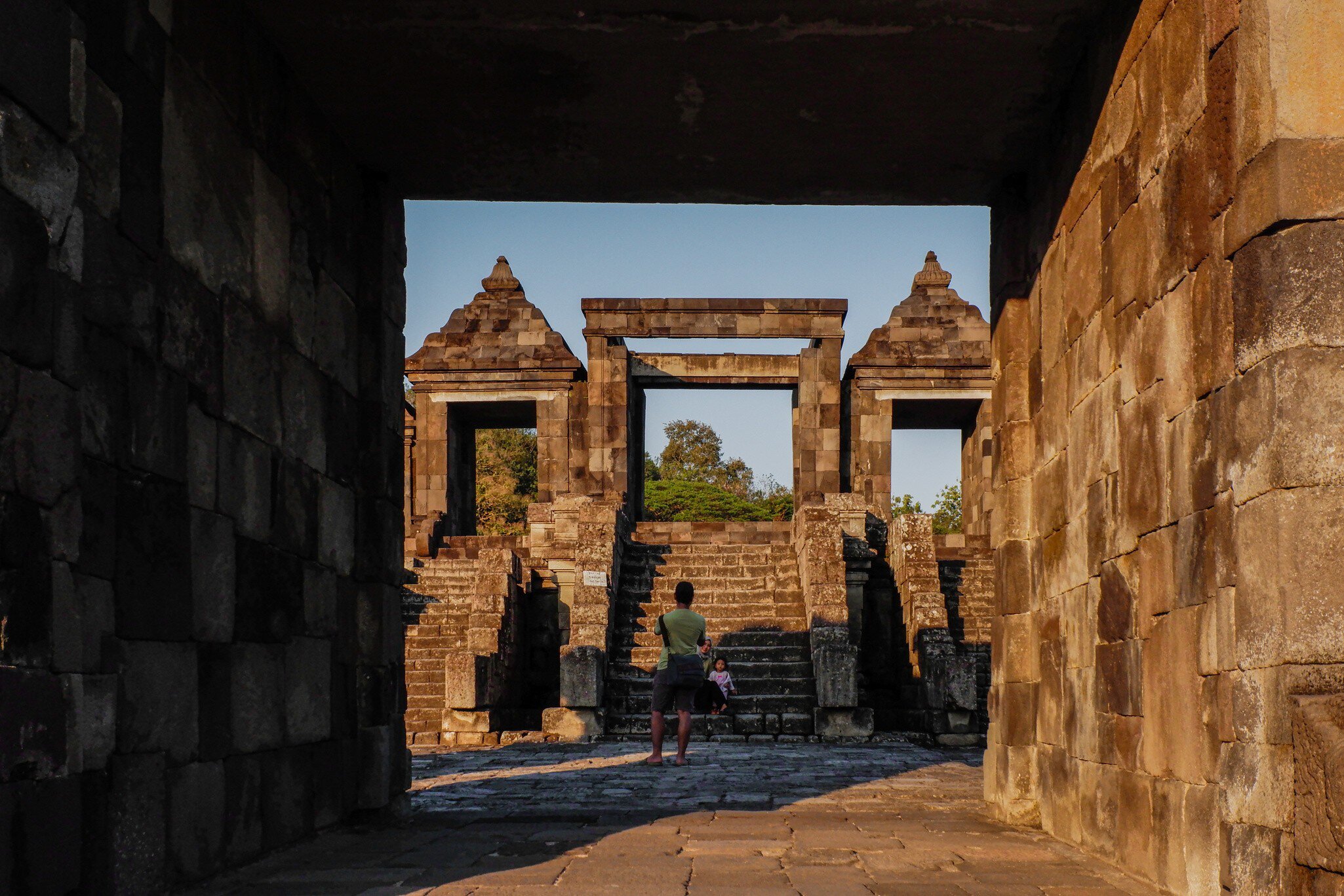
Just a 10-minute drive south of busy Prambanan (which receives more than 1.3 million visitors a year) lie the serene hilltop ruins of Kraton Ratu Boko (ratuboko.injourneydestination.id; adult/child 275,000/200,000Rp). This sprawling compound – more royal palace than temple, although it does contain some religious elements – was "discovered" by the Dutch in 1790. Of course, local farmers and villagers had always been well aware of the great hand-carved stones that were heaped across the hilltop.
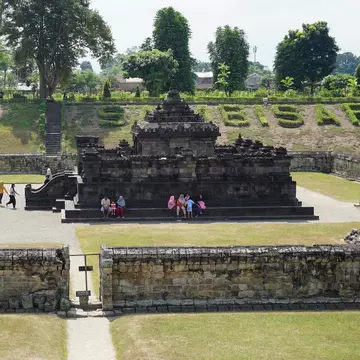
While it’s commonly known as Kraton Ratu Boko (the Palace of Queen Boko), the oldest inscription found here, which dates to 792 CE, identifies the 16-hectare complex as Abhayagiri Wihara (meaning "Peaceful Buddhist Monastery"). In comparison with Prambanan – with its selfie-snapping crowds – Ratu Boko is a serene stroll among weathered stones with sweeping views. You’ll see Buddhist inscriptions and Hindu statues but, in this land of a thousand temples, it’s important to remember that this was in fact a living palace, with holy wells (for bathing), human-made caves (for meditation) and a spectacularly grand pendopo (audience hall). The sunset view over the Prambanan Plain is magnificent.
The surprisingly high entrance fee attracts a lot of comment from travelers and it is debatable whether the site warrants the same admission charge as its more illustrious neighbors. The cost can be partially allayed, however, by buying a Kraton Ratu Boko–Prambanan combination ticket. This includes a free shuttle between the two complexes, which are located 3km from each other.