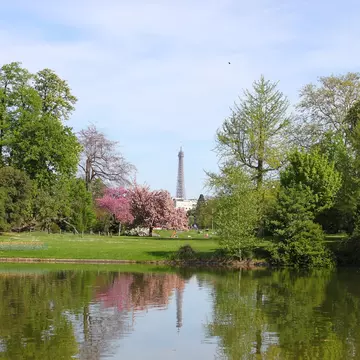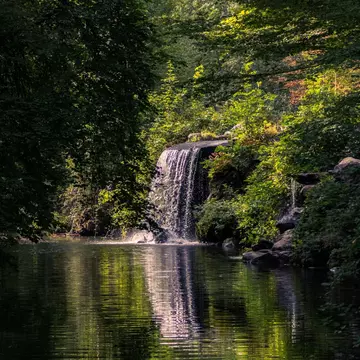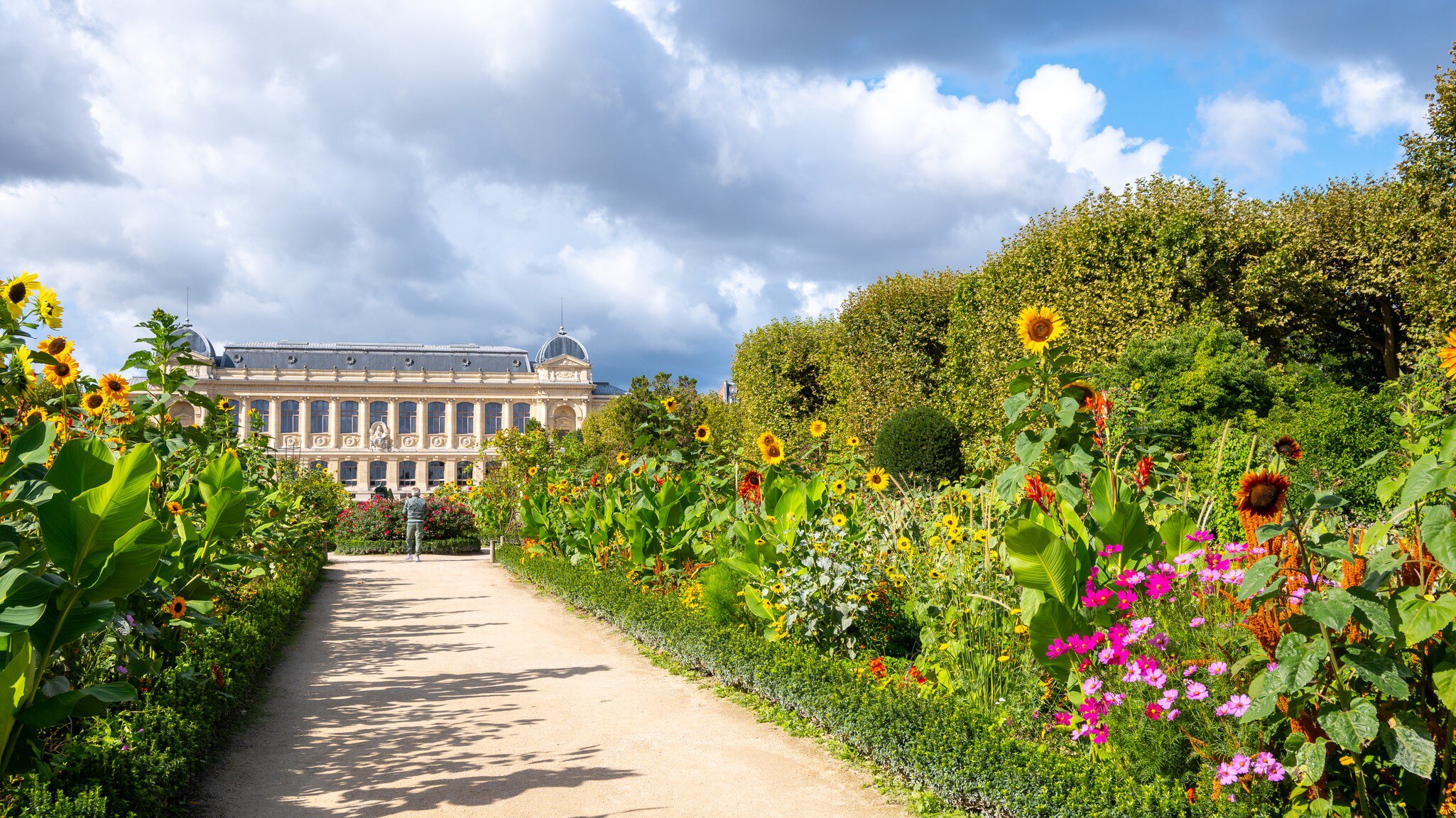
A garden oasis with a wealth of museums – and even a dinosaur or two – the 24-hectare botanical garden lined by a double alley of plane trees, was originally created as a medicinal herb garden in 1626. There’s plenty to see here, like the wealth of exotic plants inside four elegant greenhouses (the Grandes Serres), each growing like mini-worlds of their own.
Gardens & Four Greenhouses
Wander through the Jardin des Plantes and you’ll find more than just a botanical garden – it’s a living museum. Paths wind past centuries-old trees, seasonal blooms, and themed gardens, from medicinal plants to the tranquil Alpine Garden. Step into the soaring art deco greenhouses for a sensory journey through tropical rainforests and arid deserts.
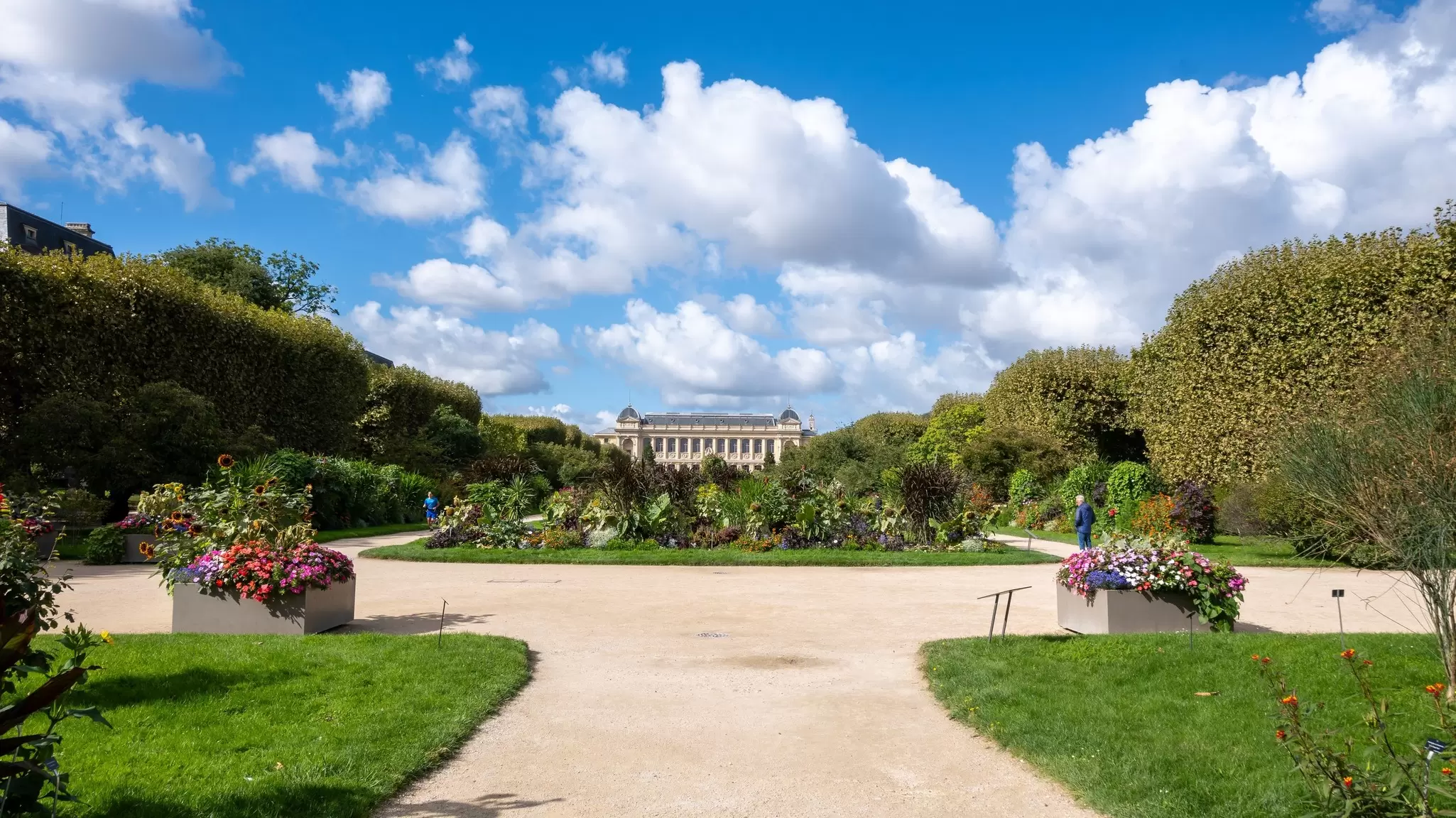
Inside, mist clings to lush leaves, orchids hang like jewels, and the air is thick with green. Open year-round, the gardens are free to enter, while the greenhouses require a ticket. Arrive early for a quiet stroll, or linger at golden hour when the light feels cinematic.
Gallery of Paleontology & Compared Anatomy
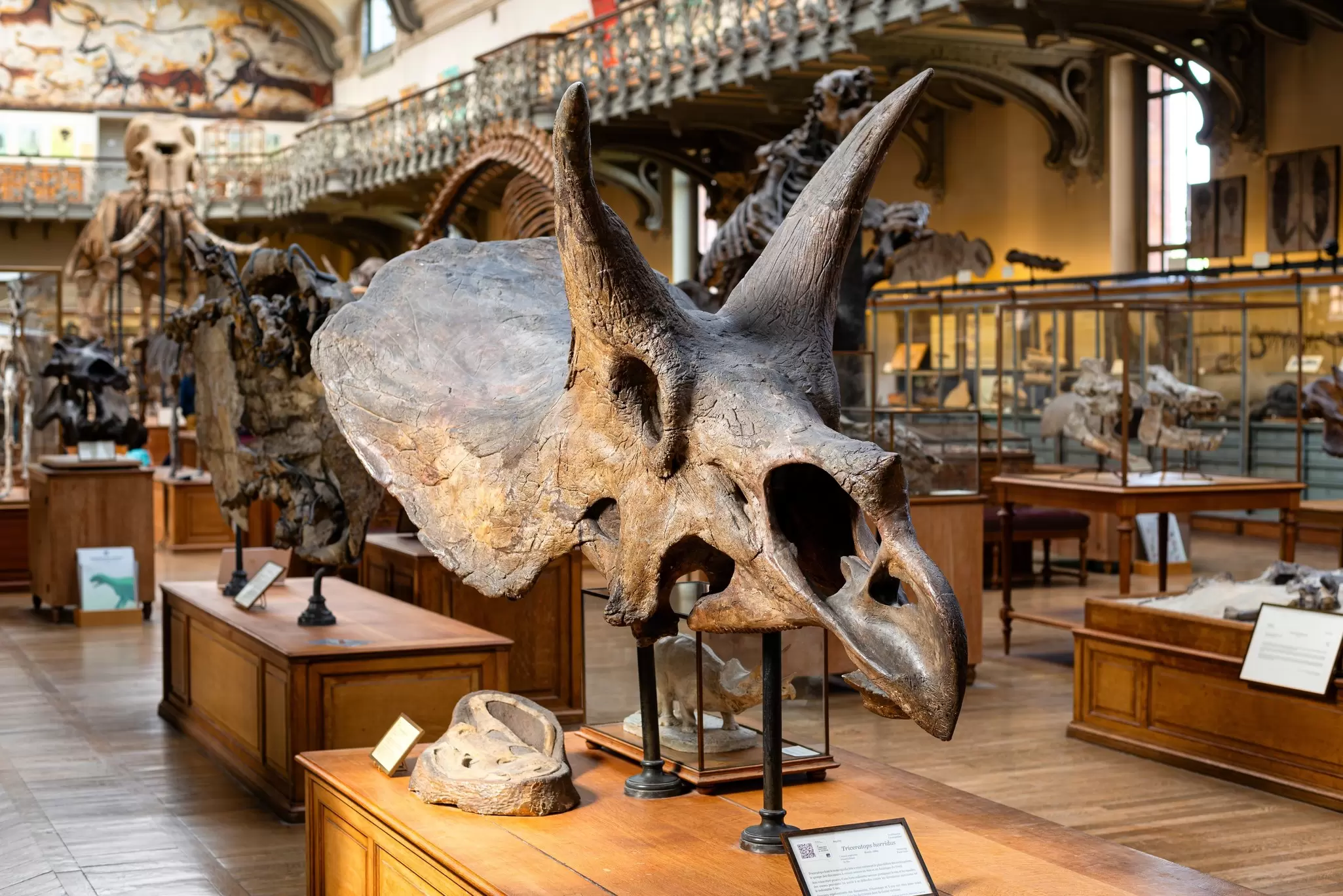
The spectacle is striking: a majestic herd of large terrestrial and aquatic vertebrates stretches out before you in one of Paris’ most transportive museums. The Gallery of Paleontology and Comparative Anatomy invites you to journey through 460 million years of evolution, with more than 2,000 fossils – including 316 complete skeletons – on display. Marvel at the 25m-long diplodocus, a cast of a tyrannosaurus rex skull, cynthiacetus the whale ancestor, and even Sacabambaspis janvieri, one of the oldest known vertebrates. Upstairs on the balcony, more than 5,000 fossils trace the delicate imprints of ancient life – from insect wings to the petals of the first flowers. It’s worth taking your time here as there is so much to see.
Gallery of Evolution
They don’t speak, but they tell the story of life itself. In the Grande Galerie de l’Évolution, over 7,000 preserved specimens trace the astonishing diversity of the natural world. Opened in 1994 within a soaring 19th-century hall designed by Jules André, the space marries history and science under a luminous 1,000-sq-m glass roof. On the ground floor, skeletons of marine giants – the southern right whale, blue whale, and sperm whale – greet visitors. Upper levels showcase land mammals and birds, with sweeping galleries offering views of the great 'procession of life' below. It’s a theatrical, immersive celebration of Earth’s biodiversity and evolution.
Geology & Mineralogy Gallery
The Galerie de Géologie et de Minéralogie dazzles with one of the world’s oldest and most prestigious collections. Inside its elegant neoclassical hall, stretching 187m and framed by columned porticoes, visitors enter the spectacular 'Earth Treasures' room. Here, Martian meteorites, colossal crystals, rare rocks, and luminous minerals reveal the extraordinary story of our planet and solar system. Named after mineralogy pioneer René Just Haüy, the gallery is both a scientific and visual marvel. As you explore, learn to distinguish sulfur from quartz and cooking salt, though they have different chemical formulas, the same composition can create two distinct minerals, depending on their crystal structure. Carbon, for example, appears both as a pencil lead and as a diamond!