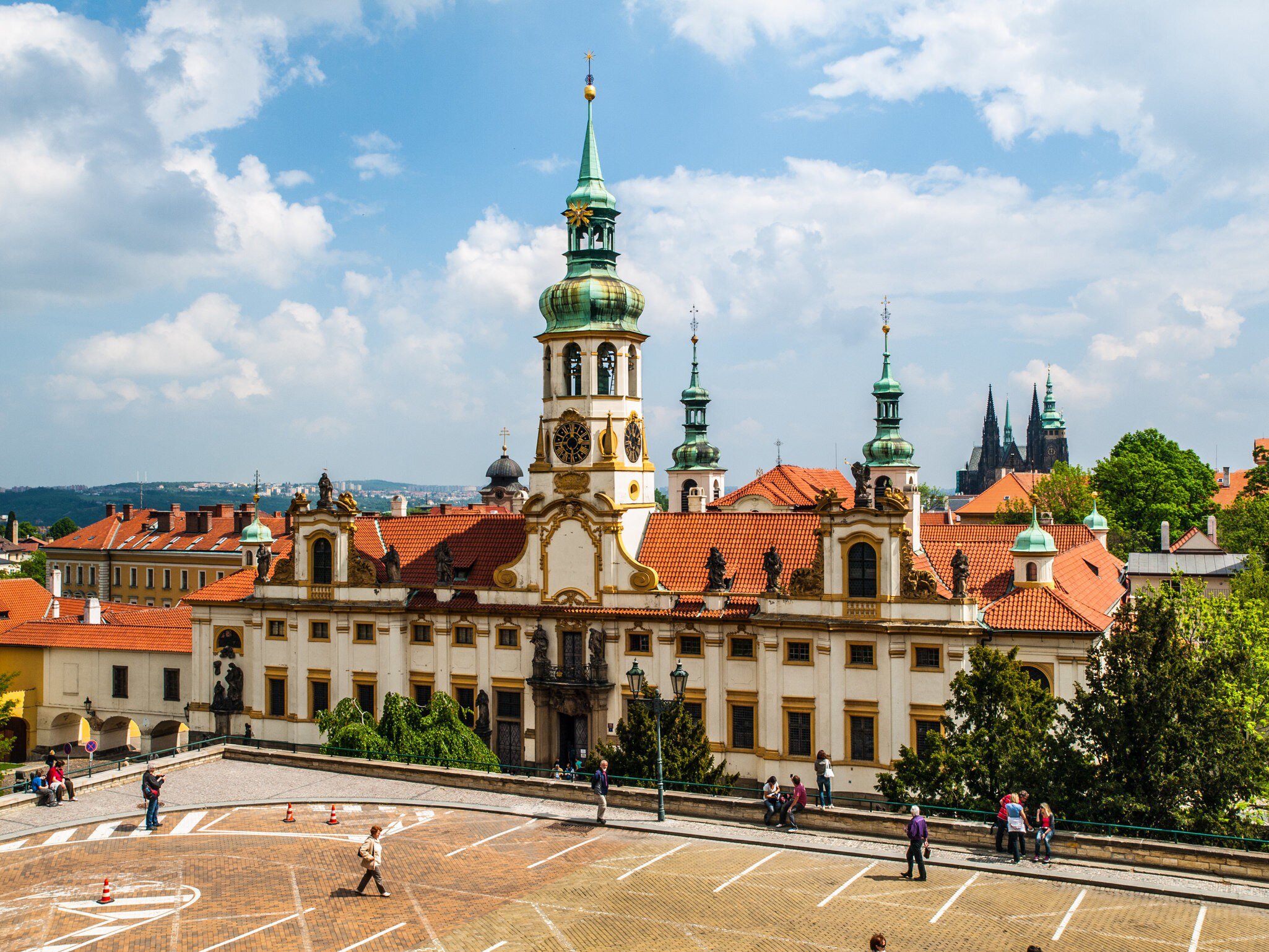
The Loreta (loreta.cz) religious complex, built to serve as a place of pilgrimage, originated from the 17th-century Counter-Reformation, when the Catholic Church was trying to win back converts to the fold. Founded by Benigna Kateřina Lobkowic, it was originally conceived to dazzle the masses and still does today.
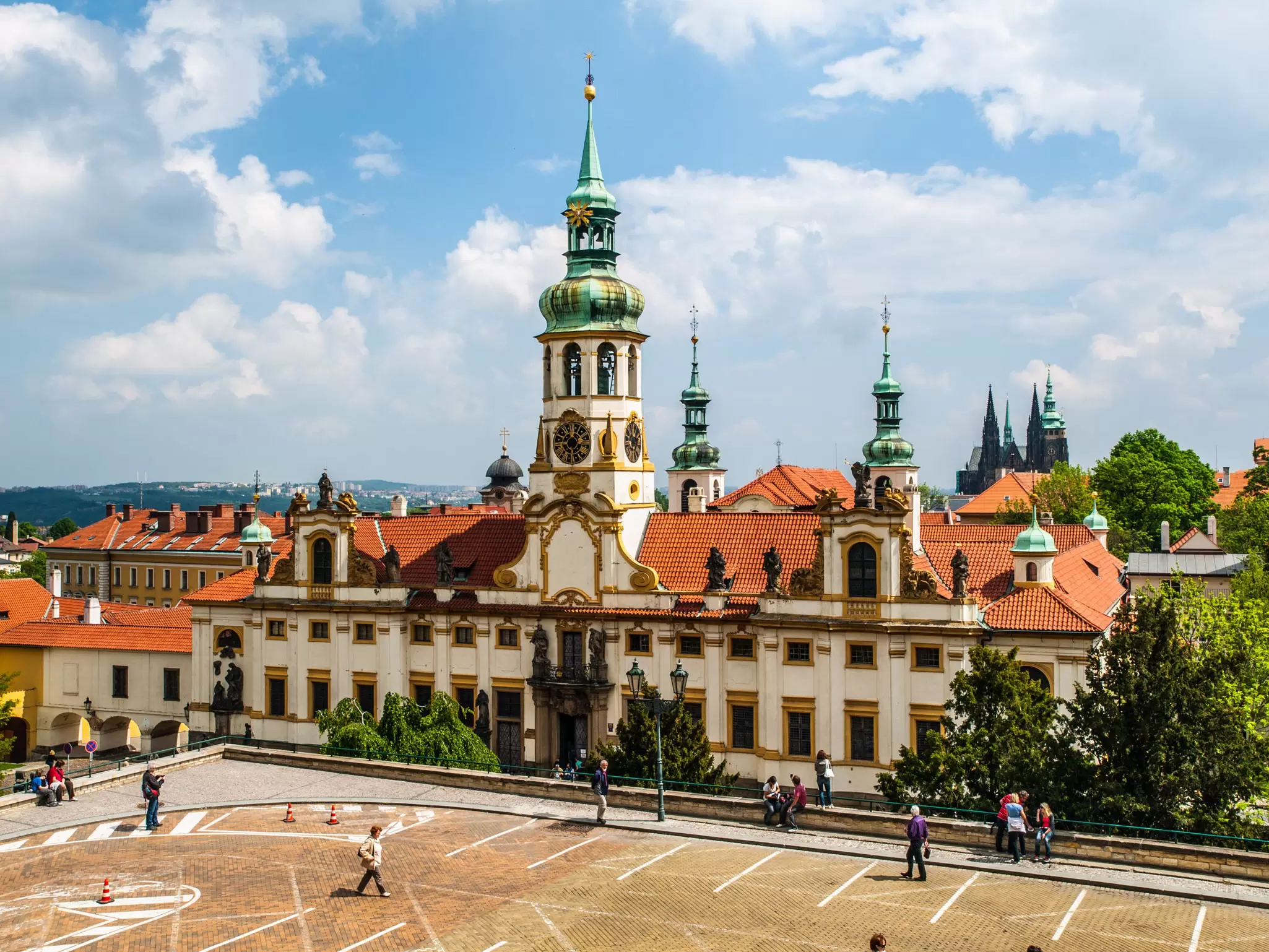
Among the highlights are a replica of the "Santa Casa" (Holy House) of the Holy Lands, at the center of the complex, surrounded by cloistered arcades, churches and chapels. The interior is adorned with 17th-century frescoes and reliefs depicting the life of the Virgin Mary, and an ornate silver altar with a wooden effigy of Our Lady of Loreto. Above the entrance to the courtyard, 27 bells, made in Amsterdam in the 17th century, play "We Greet Thee a Thousand Times" on the hour.
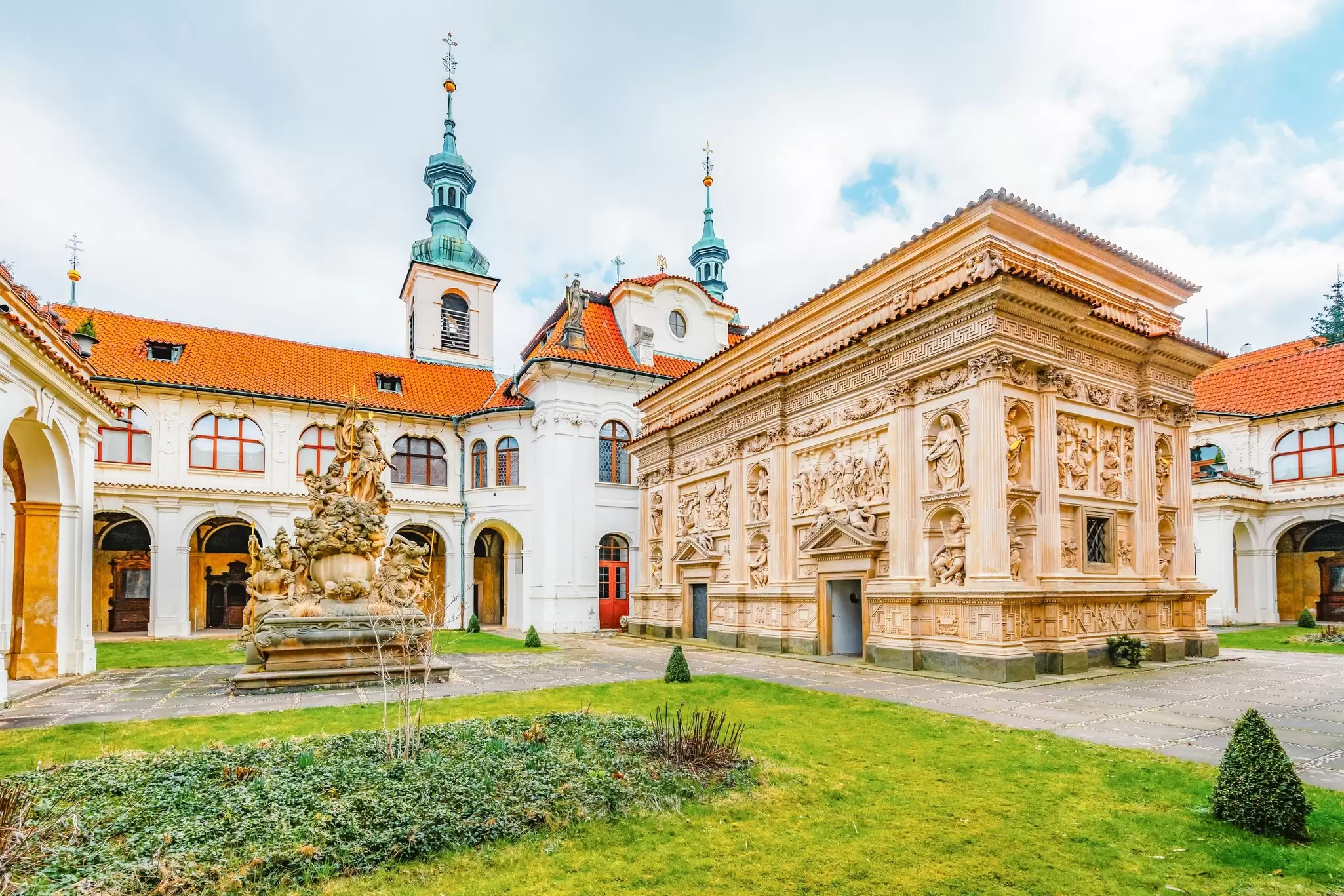
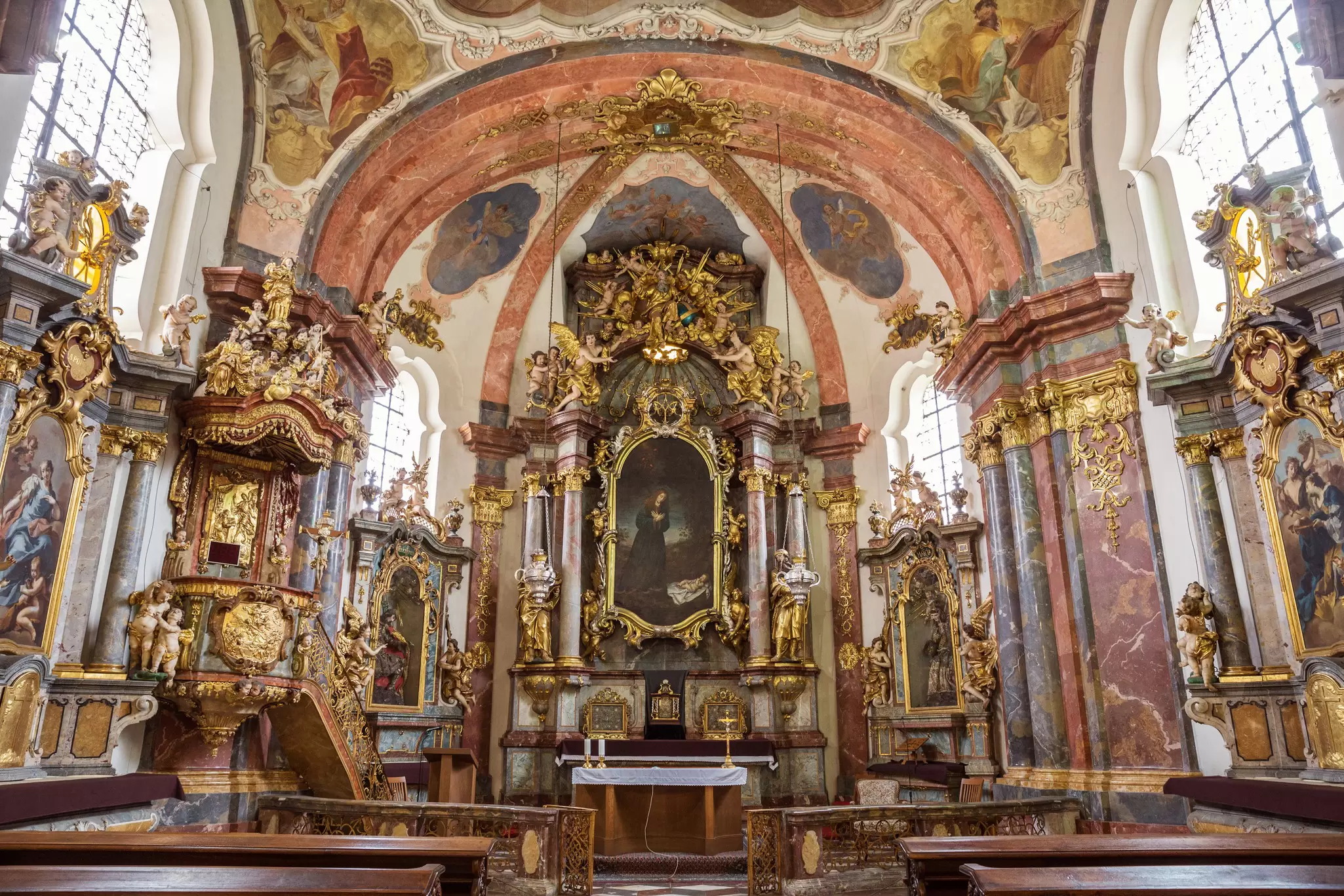
Behind the Santa Casa, find the Church of the Nativity of Our Lord, built in 1737 to a design by Christoph Dientzenhofer. The claustrophobic interior includes two skeletons of the Spanish saints Felicissima and Marcia, dressed in aristocratic clothing with wax masks concealing their skulls.
The unusual Chapel of Our Lady of Sorrows, at the corner of the courtyard, features a crucified bearded lady: St Starosta. She was the pious daughter of a Portuguese king who promised her to the king of Sicily against her wishes. After a night of tearful prayers she awoke with a beard, the wedding was called off and her father had her crucified. She was later made patron saint of the needy and the godforsaken.
The church's treasury (1st floor) is a bastion of religious bling centered on a 90cm-tall "Prague Sun," made of silver and gold and studded with thousands of diamonds.