Jul 23, 20268 min read
How to Spend the Ultimate Long Weekend in Verona, ItalyDec 4, 2025
6 MIN READ

Writer
The Bernina Express runs through the Landwasser Viaduct in Switzerland. Shutterstock

Writer
Lonely Planet may earn a commission from affiliate links on our site. All recommendations and reviews reflect our own independent opinions.
A great many railways cross the Alps. Express trains burrow through the long, gloomy tunnels of the Simplon and the Gotthard. Freight trains whoosh across the fabled Brenner Pass, where forested slopes brood above. And yet, none traverse these ranges as stylishly as the Bernina Express, which runs for a modest 54 miles (87km) but still manages to number among the world’s most hallowed railways.
This meter-gauge line connects two countries, Switzerland and Italy, and in doing so traverses a watershed between Northern and Southern Europe. It also unites two different worlds: the barren, snowbound uplands of the Alps and the lush green meadows of the valleys.
For railway aficionados across the world, this Swiss highland railway sits at the highest spot on their wishlist. I was no exception. I took the Bernina Railway as part of a transcontinental odyssey, riding the rails all the way from London to Venice. The journey involved intricate connections – changing from Eurostar services to lightning-fast TGV Lyrias bound for the Swiss frontier. I navigated rush hour on Paris’ metro. On Zürich’s underground, I grimaced at the armpits of commuters thrust in my face. But the capstone in the whole journey – its crowning central link – was the Bernina. Its iron rails are UNESCO-listed – like St Mark’s Basilica and the Rialto Bridge – but in truth, those bright red trains were a greater part of the appeal than the water-bound city at my journey’s end.
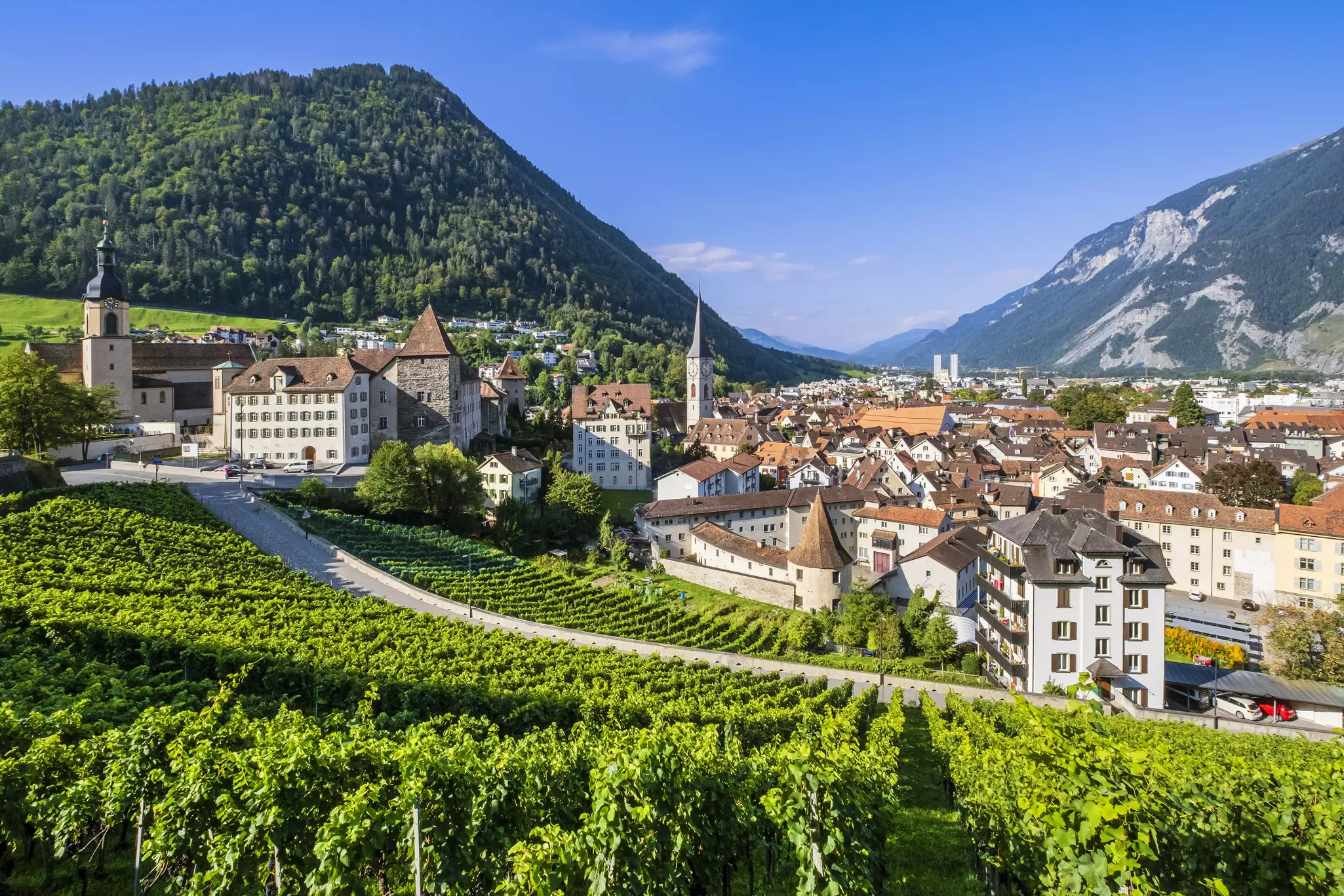
Start: Chur, Switzerland
Finish: Tirano, Italy
Distance: 54 miles (87km)
Duration: 4hr
Ticket types: First and Second class (more below)
How to book: Book online at rhb.ch.
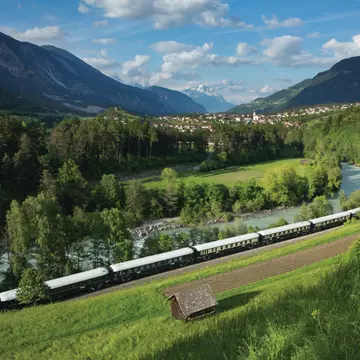
I boarded a branded Bernina Express train at Chur. The panoramic carriages were decked out with glass ceilings perfect for enhanced views. We hauled out of Chur Station and onto the Albula Railway, which, while served by the Bernina Express, is technically distinct from the more famous latter, which begins further to the south. It was a worthy warm-up act in any case.
We passed a succession of interlocking valleys beneath the snowcapped summit of the Lenzerhorn. There were spiral tunnels where the train helixed through the innards of the mountain, and limestone viaducts where we soared, eagle-like, among the treetops. I peered over the Landwasser Viaduct, where the train clatters over a 446ft-high (136m) span before diving straight into a tunnel, marooned halfway up a cliff face. The only thing more sublime than the landscapes around us was the engineering that had conquered them.
Eventually, we arrived in the ear-popping heights of St Moritz, the luxurious ski resort beloved of the great and the good, but mostly of the wealthy. I walked a lap of its little lake, and paid a visit to the legendary Cresta Run skeleton course, devoid of winter ice. But it was the Bernina Line proper I was here for – its own route diving and swerving with the capriciousness of a toboggan.
The next day, I arrived at the station early, watching the distinctive gliding hands of the Swiss railway clock run down the minutes to departure. The Swiss railway clock has been a design icon since its creation in the 1940s. What marks it out is its unusual movement – the red second hand doesn’t tick, but rather glides continuously around the face, hovering for a second and a half at the 12 o’clock mark, and then resuming its journey. Seen on platforms across Switzerland, the clocks are a symbol of punctuality and efficiency.
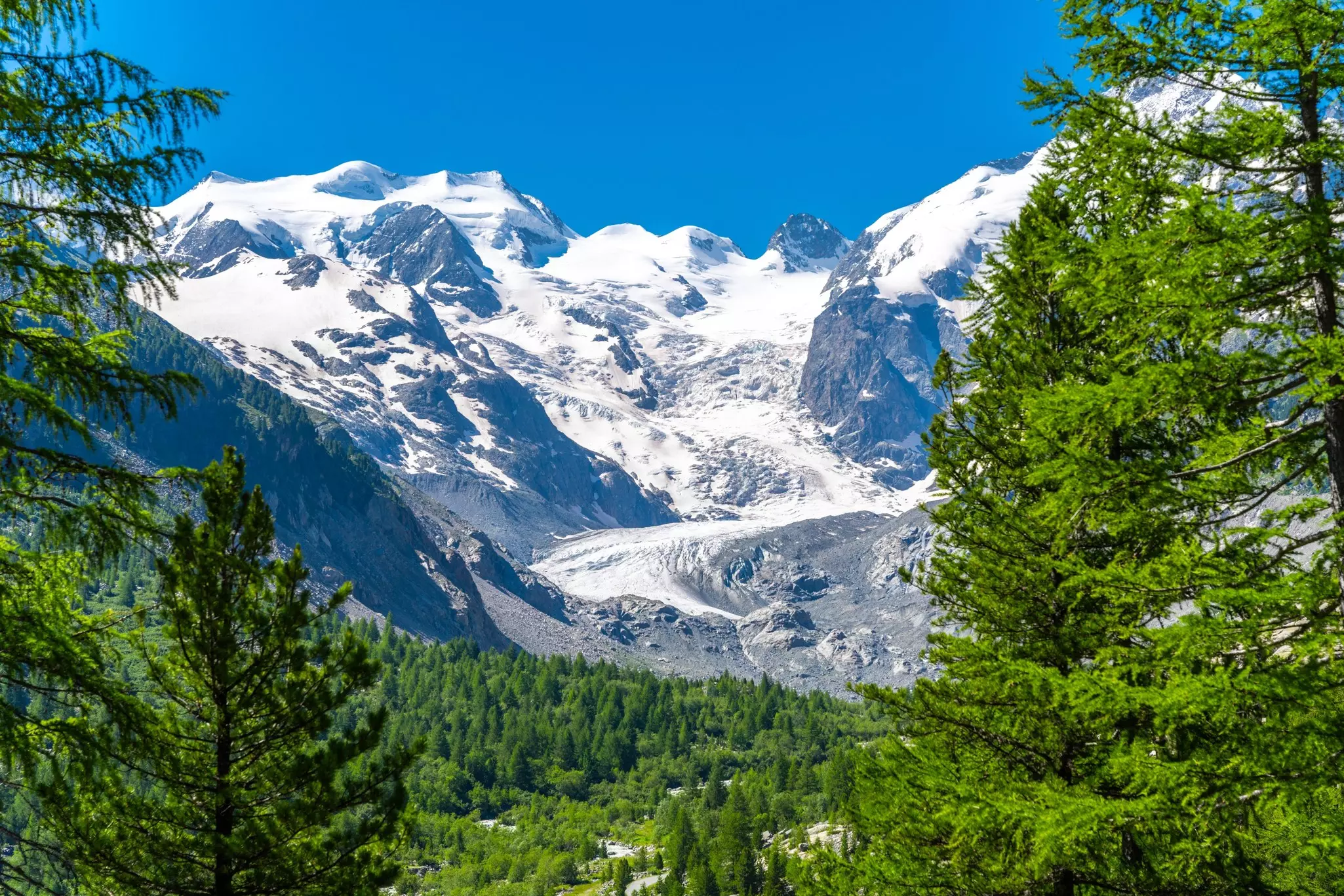
Soon, we were trundling over mountain streams gorged with glacial meltwater, and the Bernina Express began its skyward ascent. There came the Montebello curve – the train navigating a horseshoe as the mass of the Morteratsch Glacier swung regally into view. In unison, passengers raised their phones (in camera mode). Others pressed their noses on the windows, leaving smudges.
The azure waters of Lago Bianco reservoir marked the highest point of the railway at a thin-aired elevation of 7392ft (2253m). They also mark the watershed between the Danube and the Po rivers: rain that falls to the north of the lonely Ospizio Bernina Station will pass through Vienna and Budapest before emptying into the Black Sea; showers to the south will ebb across the great Italian plain and spill into the balmier Adriatic. The lake also marks a linguistic watershed.
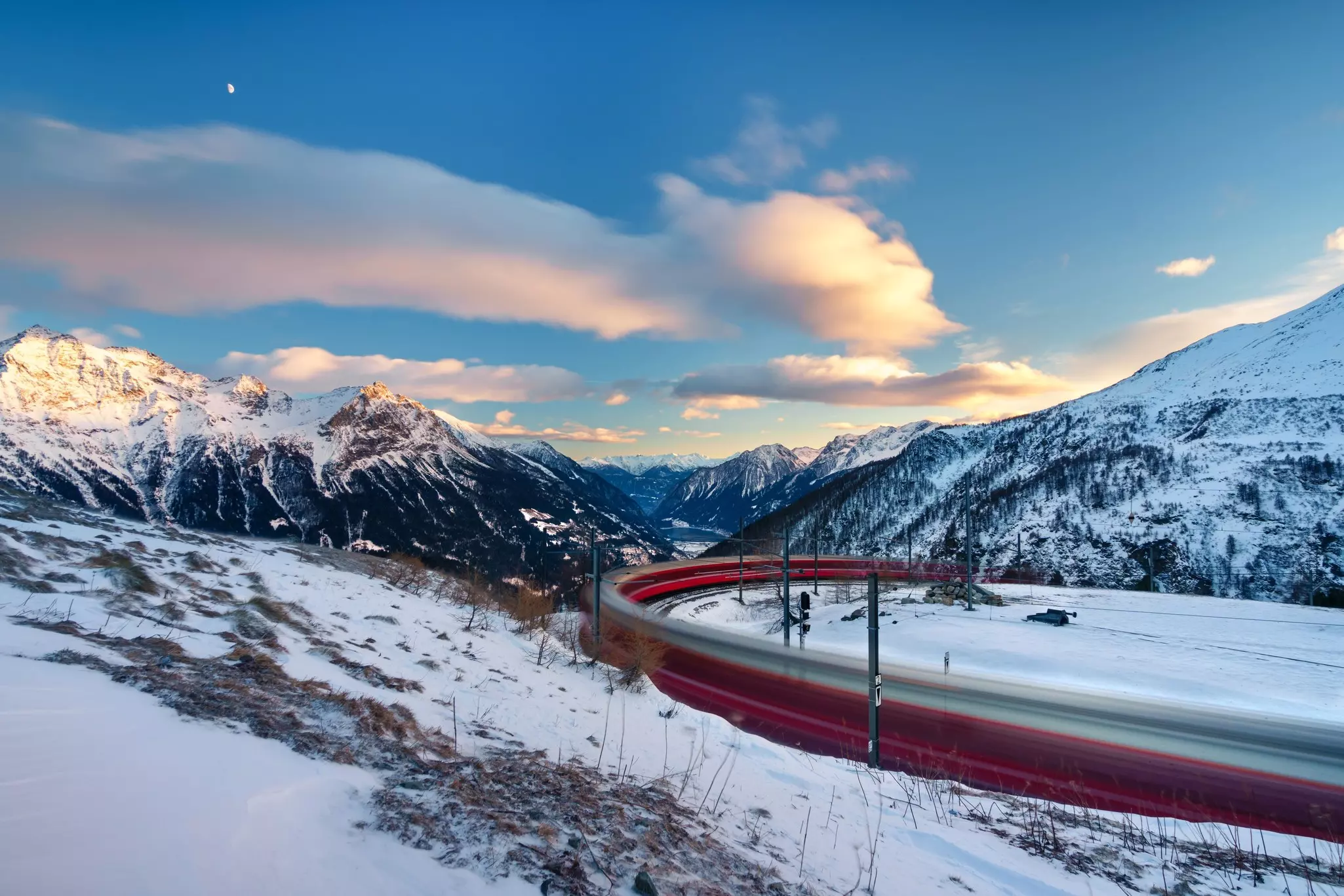
We entered the Italian-speaking Poschiavo Valley, where the line reaches its operatic finale, passing Alp Grüm – a place accessible only by railway in the depths of winter, with the residents having groceries and furniture imported by train. Then we rummaged about a series of switchbacks, pulling turns worthy of a driver at Monza.
The line is truly a miracle of engineering. A passenger departing from Chur will pass through some 55 tunnels and almost 200 bridges by the time they arrive in Italy. They were built at the dawn of the 20th century, partly to access the hydroelectric stations high on the pass, but mainly to bring visitors to the burgeoning resorts of the Alps. There were bumps along the way – rockfalls routinely blocked the line; trains have been buried under avalanches – and the original operation once went bankrupt. But today, as at its inception, tourists are at the heart of the Bernina Line.
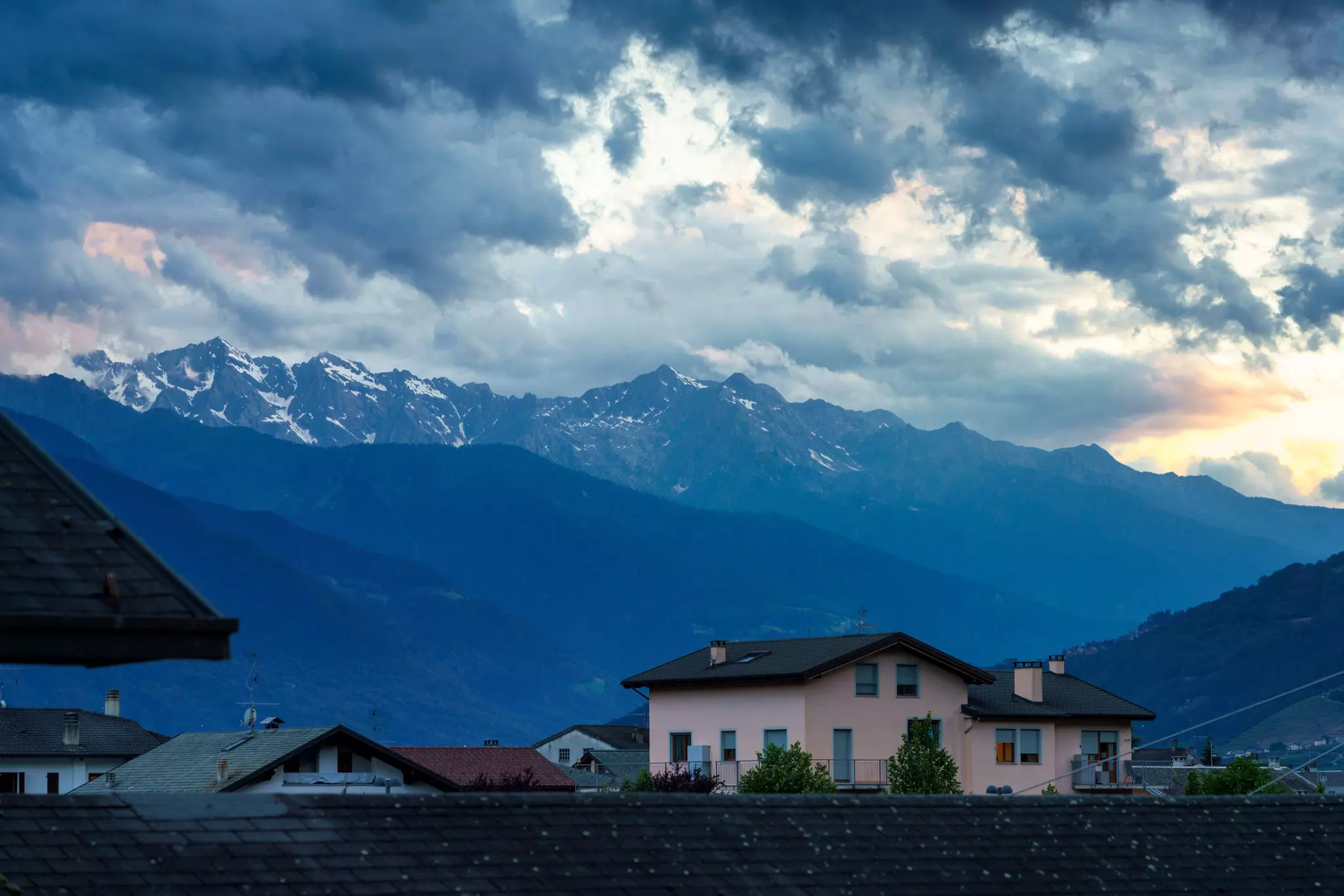
Slowly, pine and fir lapsed into palms and cypresses: olive groves, too, lay not far from the tracks. Passing through little towns, I noticed the realm of the Alpine stube (traditional inn) had changed into the domain of the pizzeria and trattoria. You could sense the border drawing nearer, but there was one last encore – the Brusio spiral, where the train loops the loop to lose elevation, and travel its last mile on Italian soil.
When I disembarked in Tirano, my journey wasn’t over. I took a local service along the shores of Lake Como to Milan’s temple-like station. I boarded a Frecciabianca train to Venice, gliding across the silver waters of the lagoon. It took a whole family of trains to shuttle me across the continent from London to Venice. But one in particular marked a geographical and personal high.
Bernina Express services are divided into First and Second Class, with First being more spacious. There’s no dining car, though there is a trolley service. Ordinary Rhaetian Railway services also travel the Bernina and Albula lines – they don’t have the panoramic windows, but some travelers consider them more authentic.
The Bernina Express runs year-round – a snowplough often clears the route during winter, when the frosty scenery is even more spectacular than in summer.
You’ll need your passport to travel the entire Bernina Line – border officers await you on the Italian frontier at Tirano.
Book your Italy trip with Lonely Planet Journeys
See Italy how it's meant to be seen
Planned by local experts and tailored to you, Lonely Planet Journeys handles the logistics so you can just enjoy the trip. Tell us what you want and we'll build your Italy itinerary from scratch, or browse our bookable trips to get inspired.


Explore related stories