Apr 14, 20267 min read
A Guide to PalauFeb 5, 2026
10 MIN READ

Writer
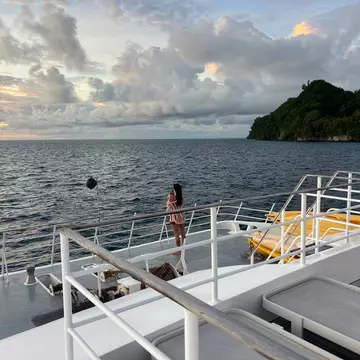
Watching the sunset from the Four Seasons Explorer in Palau. Jessica Lockhart/Lonely Planet

Writer
Highlights
Lonely Planet editor Jessica Lockhart rounds up eight things to do in Palau.
Dive or snorkel with manta rays and sharks, or float among Jellyfish Lake's golden jellyfish.
Try the Milky Way's limestone mud spa, Airai's sacred bai or Badrulchau's ancient stone monoliths.
Head to Ngermeskang for birds, Belau National Museum for Palauan history and Peleliu's WWII caves.
Lonely Planet may earn a commission from affiliate links on our site. All recommendations and reviews reflect our own independent opinions.
It was the depths of winter when the invite landed in my inbox. How would I like to spend a week on a luxury yacht floating in the tropical waters of Palau?
Now, I probably should have just screamed, “Yes, please!” But hear me out: I had concerns. Palau is a well-known diving destination; in fact, it’s said to be one of the best diving destinations in the world. The problem? I don’t dive.
“Sure, I could snorkel," I mused. But wouldn’t that get boring after a couple of days? And what else is there to do? As it turns out, I couldn’t have been more wrong on both counts.
First off, whether it's your first trip or your fifteenth, it’s impossible to get bored with Palau’s underwater world. The visibility is amazing, the biodiversity unparalleled, and the coral gardens are amongst the healthiest you’ll see on this side of the Pacific.
Even when your fingers are so wrinkled they could get lost in a raisin box and gills are starting to appear at your neckline, you’ll still jump at the opportunity for another session in the blue, swimming alongside green turtles and through huge schools of fish, with reef sharks and napoleon wrasse joining the fray.
When it’s time to dry off, days on land are just as memorable. Palau is one of the world’s smallest nations – while it stretches for 700km, this string of 340 or so islands has a land area similar to Andorra – but the archipelago is rich in culture and boasts plenty of worthwhile distractions.
Planning your own trip to these idyllic islands? Here are the best things to do in Palau – both above and below the water.
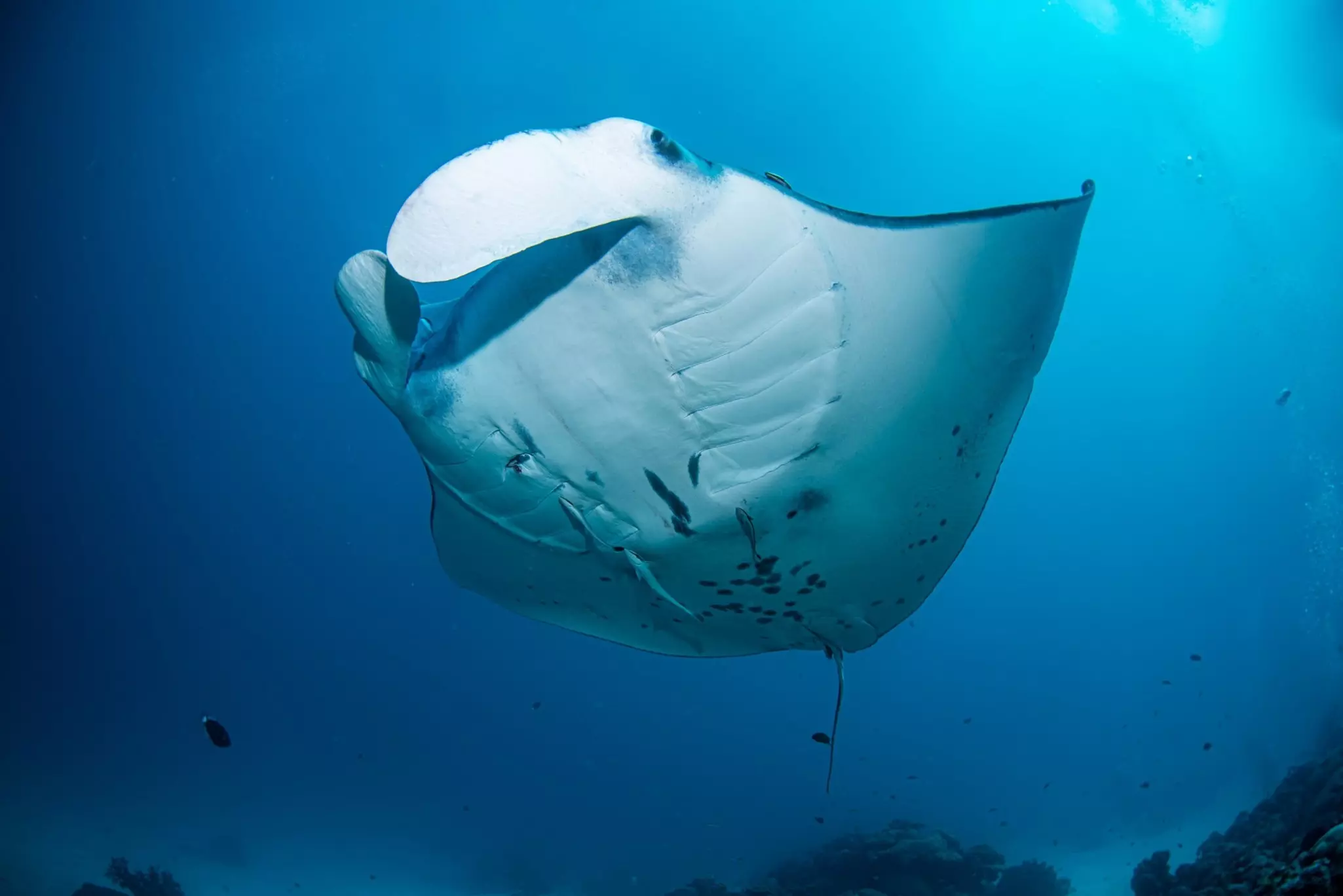
This corner of Micronesia is widely considered one of the best places in the world to dive with manta rays, sharks – including hammerheads, bull and tiger sharks – and massive schools of fish.
It’s possible to base yourself in Koror and do day trips to the most popular sites – including the Ulong Channel, Blue Corner and the German Channel – with operators such as Sam’s Tours. But I’d argue that Palau is a destination best seen from the deck of a boat from sunrise to sundown.
Liveaboard dive safaris start from around US$500 per day, including accommodation, food, dive guides and gear for several dives each day, with most catering to advanced certified divers, or at least those with a few dives under their weighted belts.
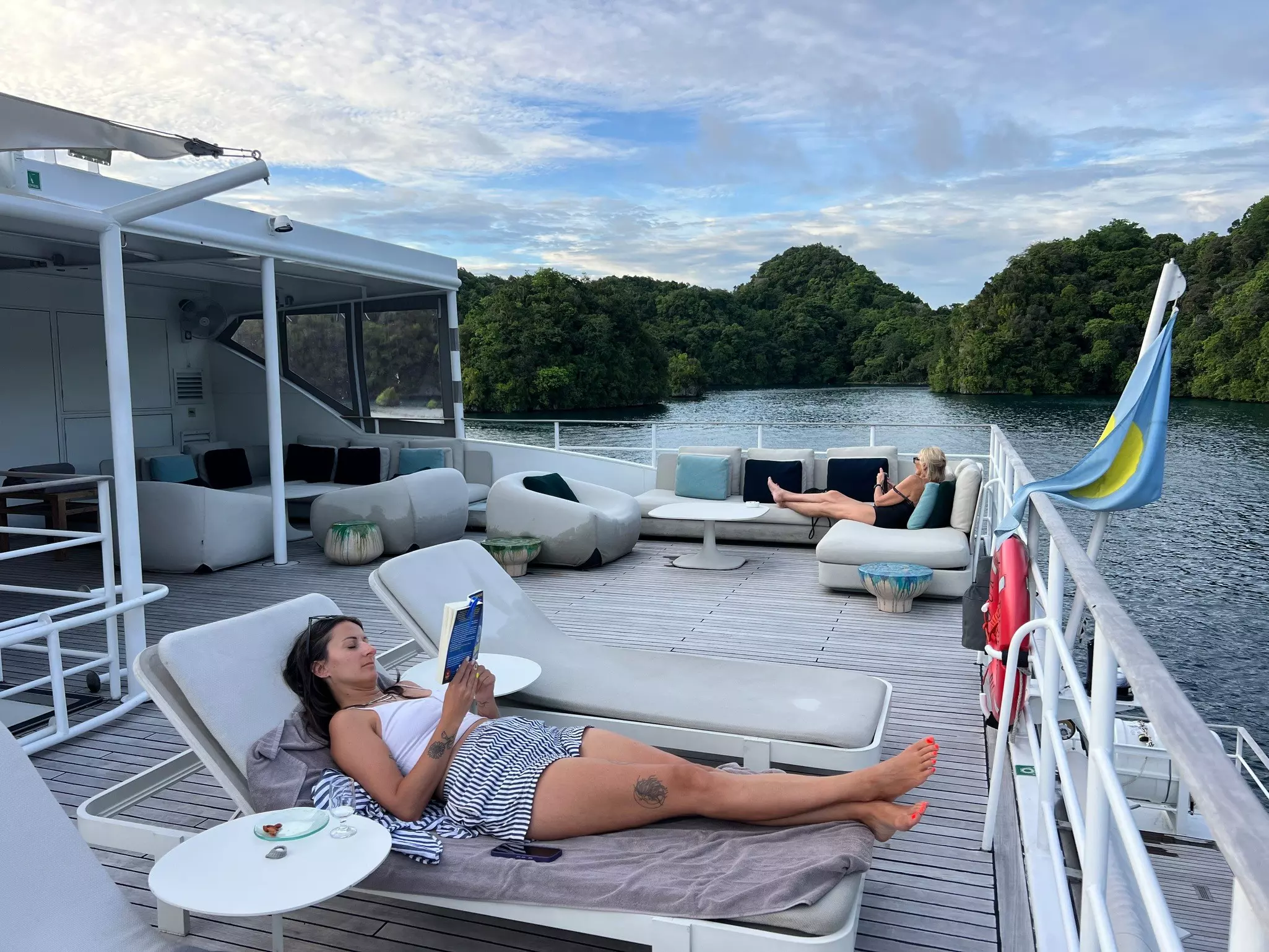
The ultra-luxurious Four Seasons Explorer – less of a cruise and more of a floating hotel, with guests arriving and departing daily – takes it to the next level, though. Daily itineraries are designed for divers, snorkelers and those who prefer not to get even their little toe wet. Activities for guests include morning yoga, kayaking, land excursions (including all those listed below) and spa treatments on the sundeck.
My favorite feature? Every day, an on-board videographer turns the day’s events into a mini film, which is screened at the nightly “Afterglow” event. It’s the perfect souvenir for those with main character energy, and it ensures that instead of fiddling with your GoPro, you can stay in the moment as you explore.
Planning tip: Manta rays can be seen in Palau's waters year-round, but if you time your visit for mating season, between December and March, you may be lucky enough to see upwards of 20 per day.
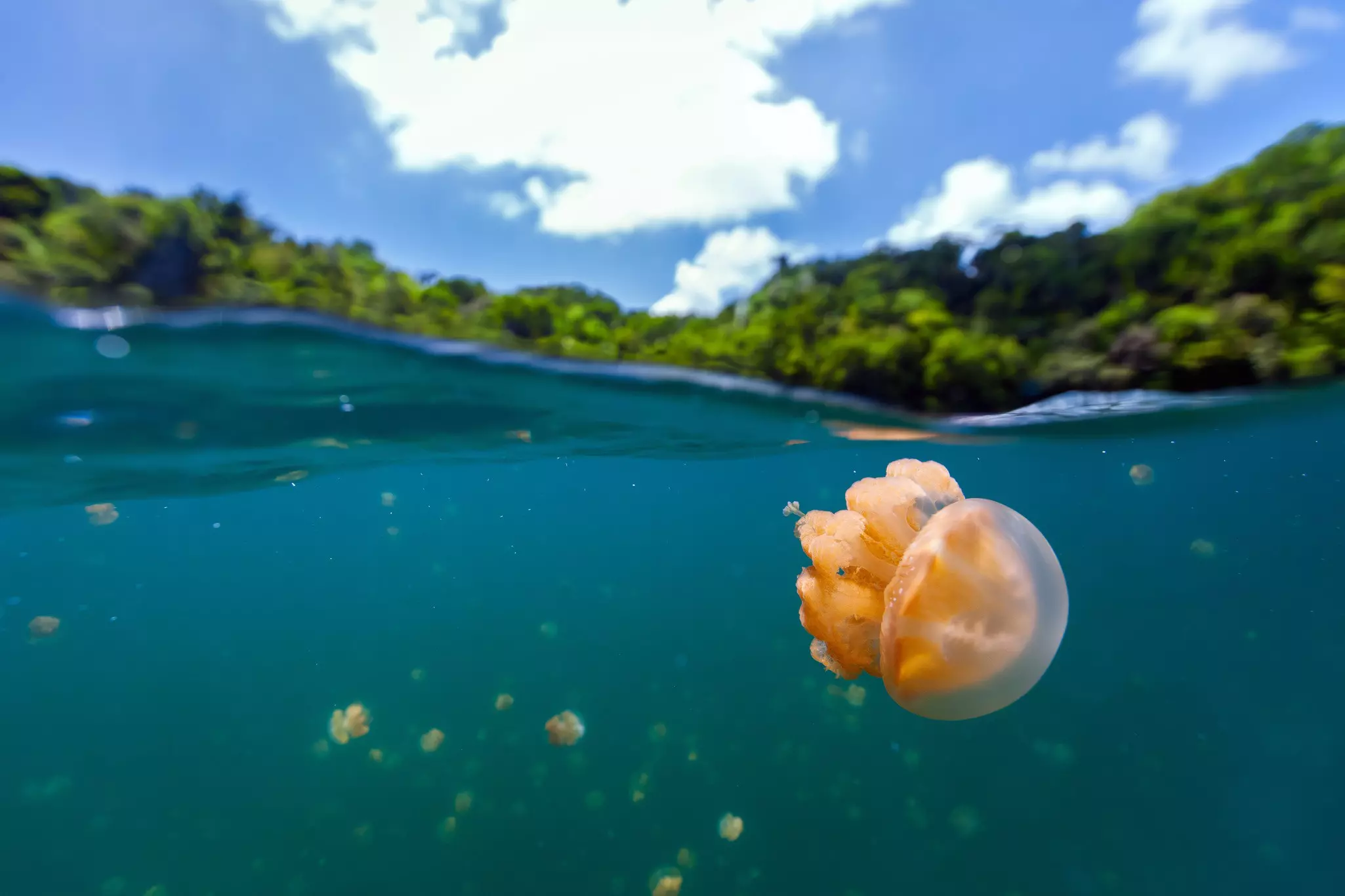
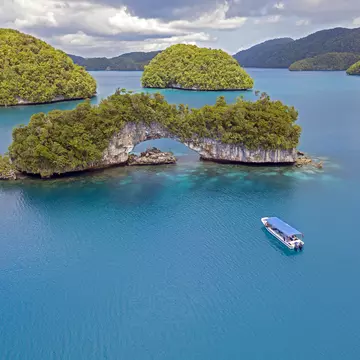
Palau’s marine lakes represent one of the region's most unique ecosystems. Found most prevalently on the island of Mecherchar in the Rock Islands, these inland saltwater pools are only connected to the ocean through tunnels in the rock. What makes them world famous, though, is their inhabitants – masses of endemic golden jellyfish. Thanks to an absence of natural predators, these jellies have evolved to have only a very mild sting, meaning it’s possible to swim amongst them.
But don’t expect Jellyfish Lake to look like pictures you may have seen on the Internet. While the lake's jellyfish population once fluctuated between 5 and 7 million, with as many as 30 million individuals recorded at one time, their numbers have been reduced to the thousands.
Like coral, golden jellyfish get their color from zooxanthellae, a type of symbiotic algae that allows them to obtain energy from photosynthesis. Unfortunately, this means they’re also vulnerable to the same threats facing coral reefs – primarily, warming water temperatures. Major warming events in 2016 and 2017 caused a population collapse, but since 2019, the lake has been slowly recovering.
Is Palau’s Jellyfish Lake still worth visiting? Absolutely. Floating in the chartreuse-colored lake feels a bit like swimming in space, with jellyfish appearing like alien creatures out of the lake’s darker lower layers. It’s ethereal – and the only place in the world that you’ll see these incredible golden creatures.
Planning tip: Bring comfortable sandals or shoes for the hike to the lake. It’s only about 10 minutes from the wharf on an easy-to-follow trail, but it’s mainly uphill.
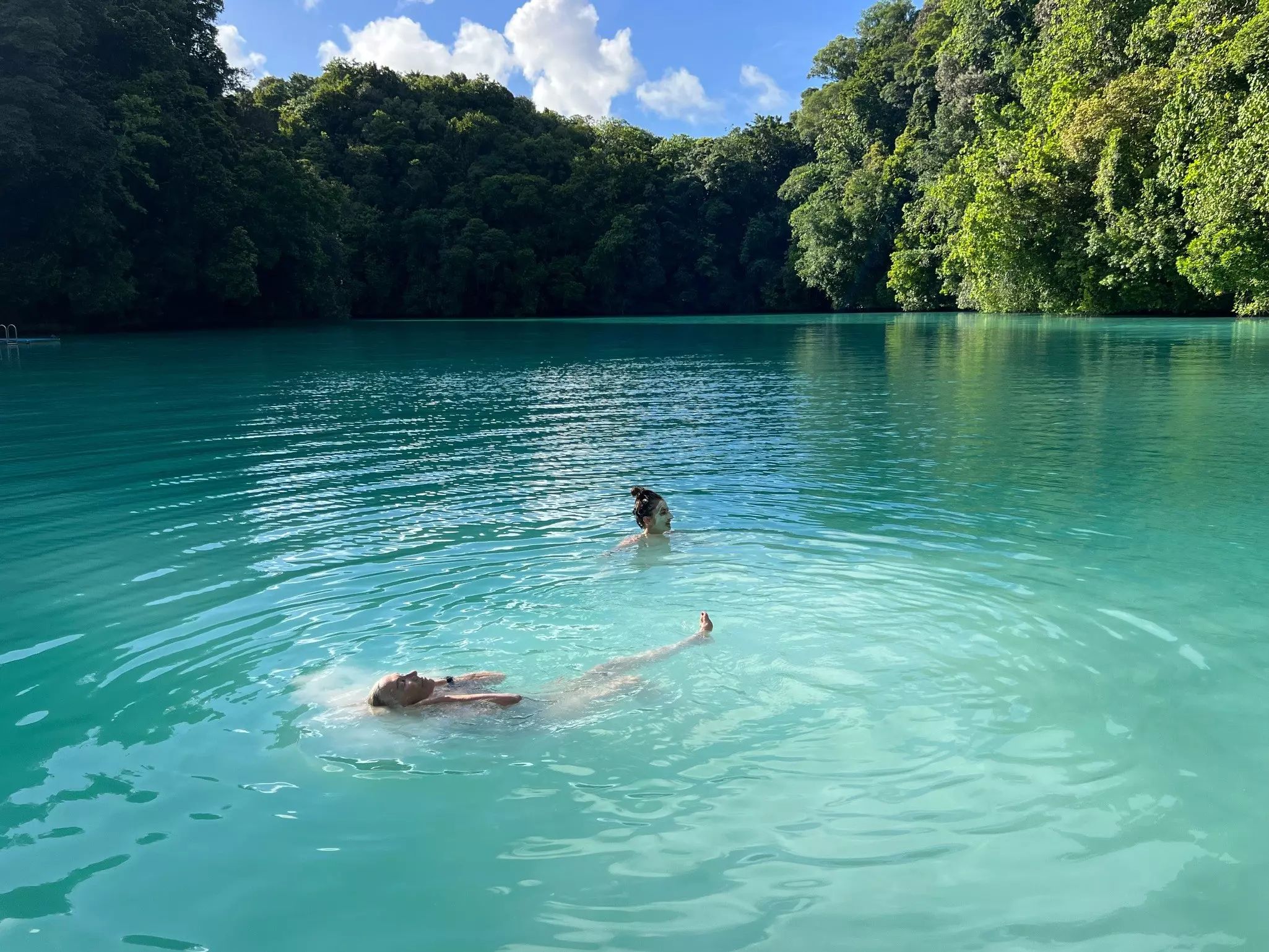
Want to feel pampered, but don’t want to pay for an expensive spa treatment? For the ultimate spa day, book a trip to the Milky Way, a transcendent, milky blue lagoon sheltered by the embrace of tropical Ngeruktabel Island.
At one of the lagoon’s floating docks, you’ll slather yourself in creamy white limestone mud, dredged from the lagoon’s depths. Don’t mind the unusual smell – it’s the small cost you pay for beauty. Once you let the mud dry, dive off into the warm lagoon to reveal your new, younger-looking skin.
Planning tip: You’ll need a permit to visit the Rock Islands (USD$50; valid for five days). This can be arranged through an authorized tour company or the office of the Koror State Ranger. If you plan on visiting both Jellyfish Lake and the Milky Way, choose the Jellyfish Lake permit (USD$110), which allows access to both sites and to the wider Rock Islands.
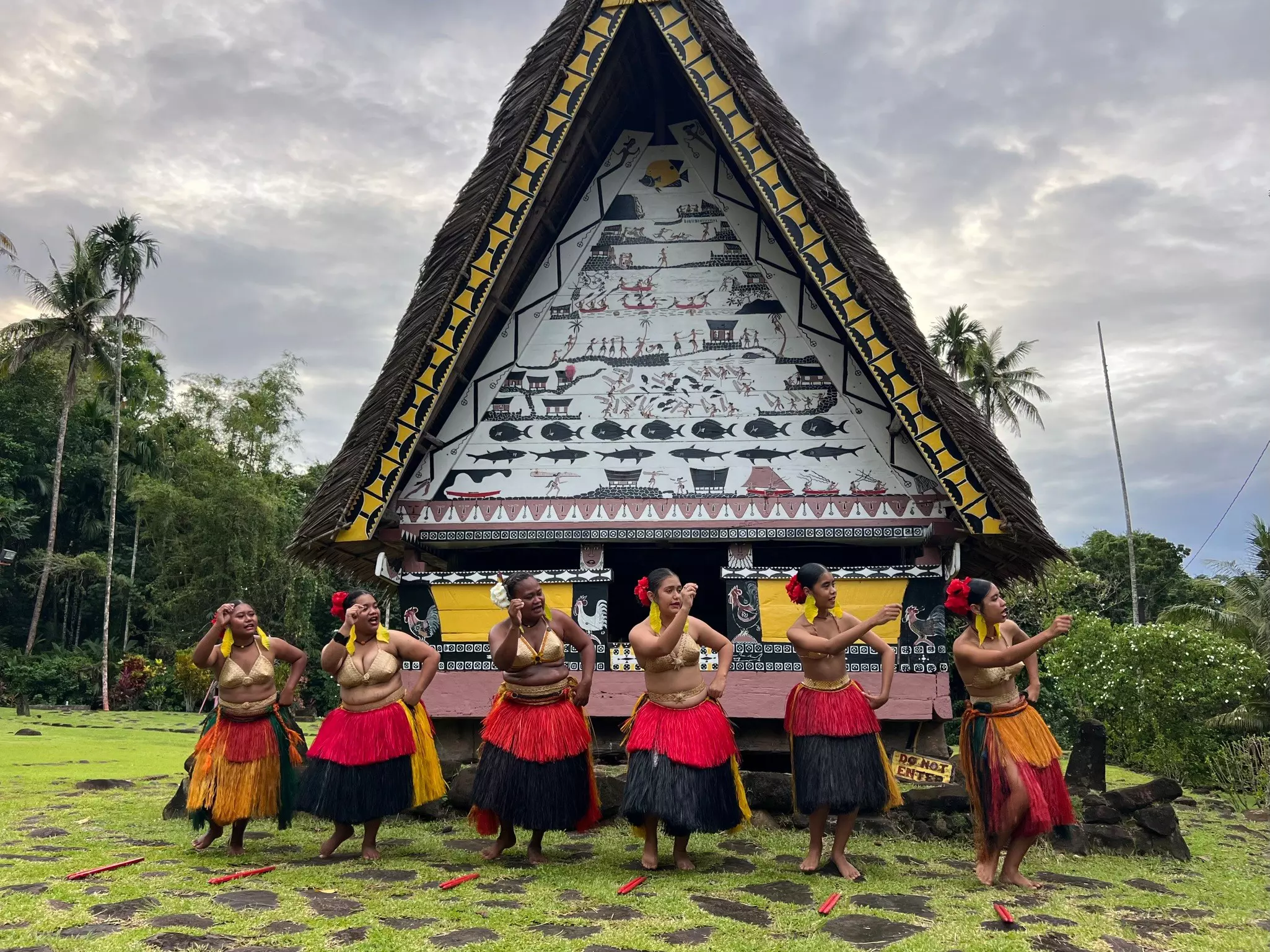
For centuries, a complex chiefdom has thrived in Palau. Today, 16 main chiefs inform government policy by advising the president on matters related to traditional laws and the customs of their individual states.
Traditionally, island chiefs gathered in a bai (men’s meeting house), but less than half a dozen of these once-abundant structures are still standing in Palau. One of the biggest, oldest and best-preserved stands in the village of Airai, a 20-minute drive northeast of Koror.
Small groups can book a tour of this sacred site with a local community group, committed to regenerative tourism. Visits include a cultural performance, where local girls and women demonstrate Nglikir a sechal ma Redil (dancing) and chelitakl (singing). It’s here that you’ll also learn that women rule the show in Palau – high-ranking matriarchs are the ones who choose the chiefs, therefore wielding the true power.
Planning tip: If you’re not travelling in a group, it’s still possible to visit the bai. Upon arrival in Airai, ask a local for permission and directions. You may be asked to pay a small entrance fee on arrival.
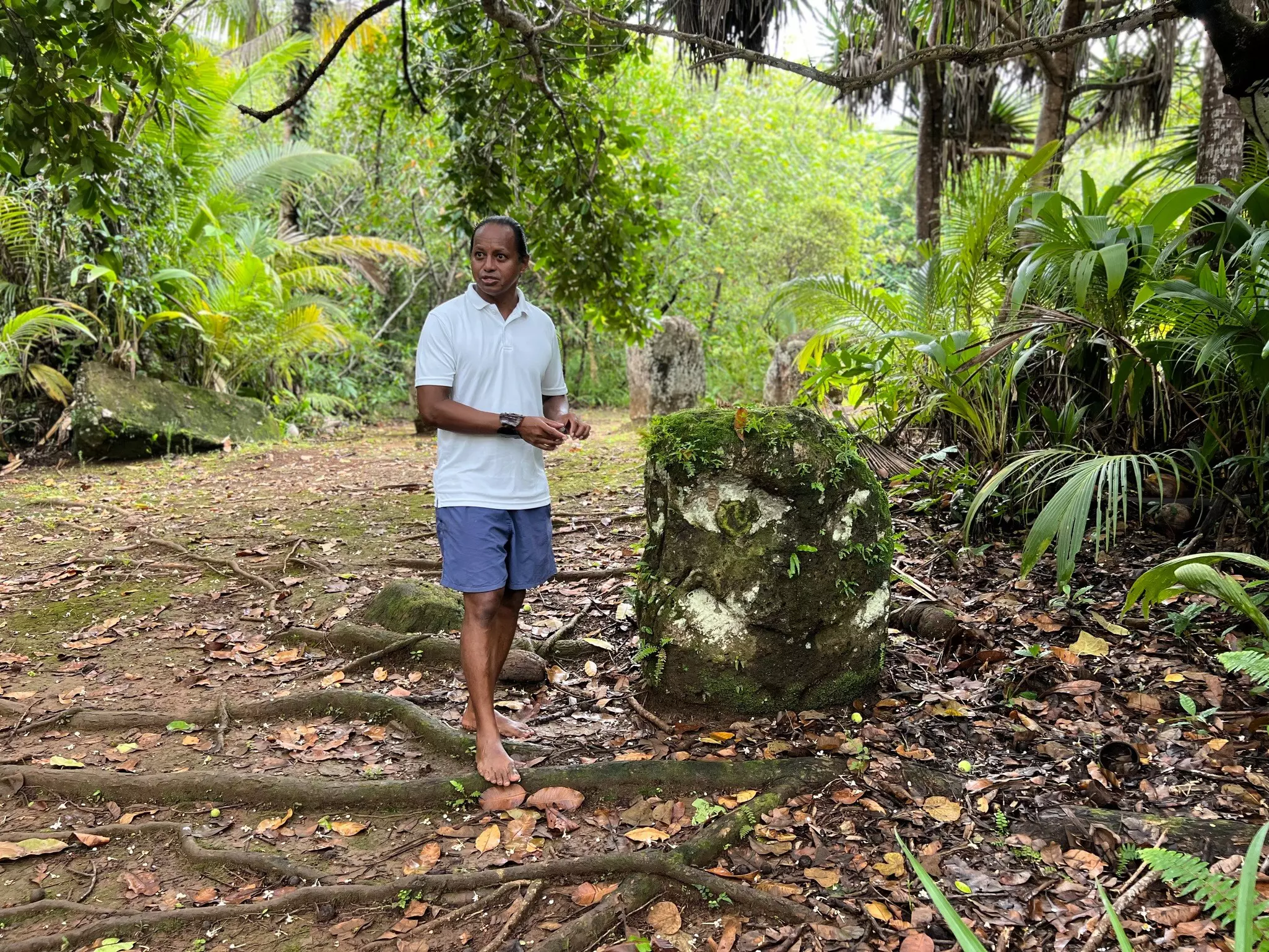
There may not be many bai remaining in Palau, but evidence of the archipelago's ancient history still stands if you know where to look. The most impressive archeological site is in northern Ngarchelong state on the island of Badeldaob, where more than 30 stone monoliths stand sentinel, watching the passage of time.
Carbon-dated to around 150 CE, they stand as high as 2m, with some said to extend a further 3m below the surface. Some islanders believe that supernatural spirits placed the stone monoliths of Badrulchau as a support for a bai-style building for the gods.
It doesn’t take long to walk around the site, but take your time – you’ll see that some of the stones feature faces with huge bulging eyes.
Planning tip: The hill where the monoliths stand is exposed to the midday sun, so plan your visit for a cooler part of the day. An entry fee of US$5 is payable near the entrance.
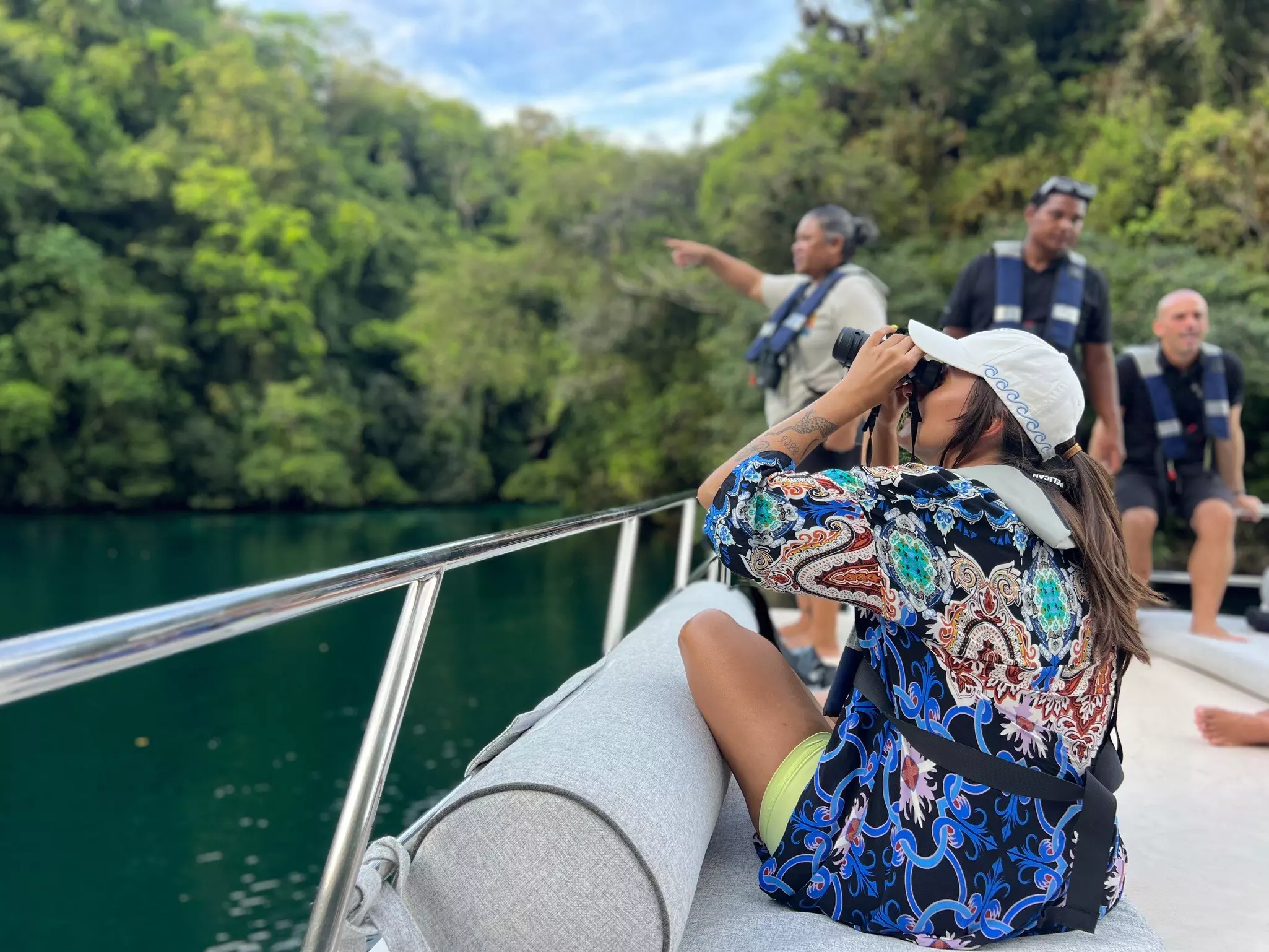
Palau is one of the most biodiverse places in Micronesia, with approximately 46 native and 13 endemic bird species. And no bird is more beloved than the colorful biib (Palau fruit dove), the islands' national bird. Birdwatchers also have a chance of spotting giant white-eyes, Palau nightjars, blue-faced parrot finches, white-tailed tropic birds, and sulfur-crested cockatoos.
The Ngermeskang Bird Sanctuary and Ngardok Nature Reserve – both about 30 minutes north of Koror – are good spots to head with your binoculars. The latter reserve also protects Palau’s largest and most biologically diverse freshwater lake, home to the rare-in-Palau common moorhen.
Planning tip: The early birder gets the best bird sightings, so visit the reserves first thing in the morning; the Ngermeskang Bird Sanctuary opens to visitors at 6am.
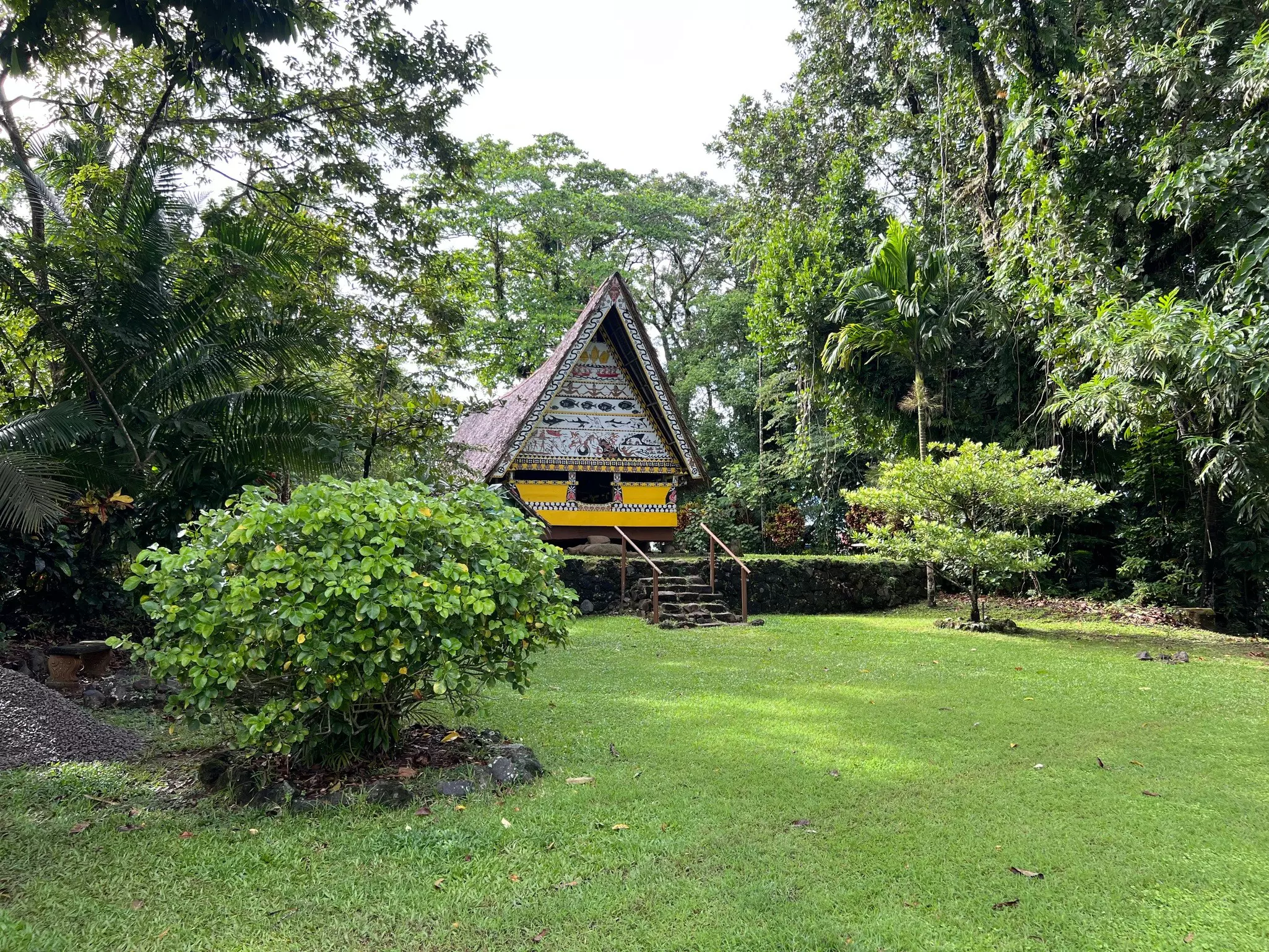
Koror’s Belau National Museum isn’t flashy or modern, relying primarily on historic photographs, a small scattering of artifacts, and massive panels of dense text to tell the country’s story. But if you take the time to read, you’ll walk away struck by Palau’s incredible resilience.
Over the course of 110 years, the islands fell under the rule of Spain (1885–1898), were sold to Germany (1898–1914), seized by Japan (1914–1942), and then administered by the USA (1942–1994), before finally gaining independence. During the Japanese occupation, kogakko (public schools) were established, but it was expressly forbidden to speak Palauan. Yet, despite this upheaval, Palauans have managed to maintain both their language and culture.
Planning tip: Book a private tour with Fonzarelli “Fonzie” Shickich to gain greater context and understanding of the museum’s exhibits.
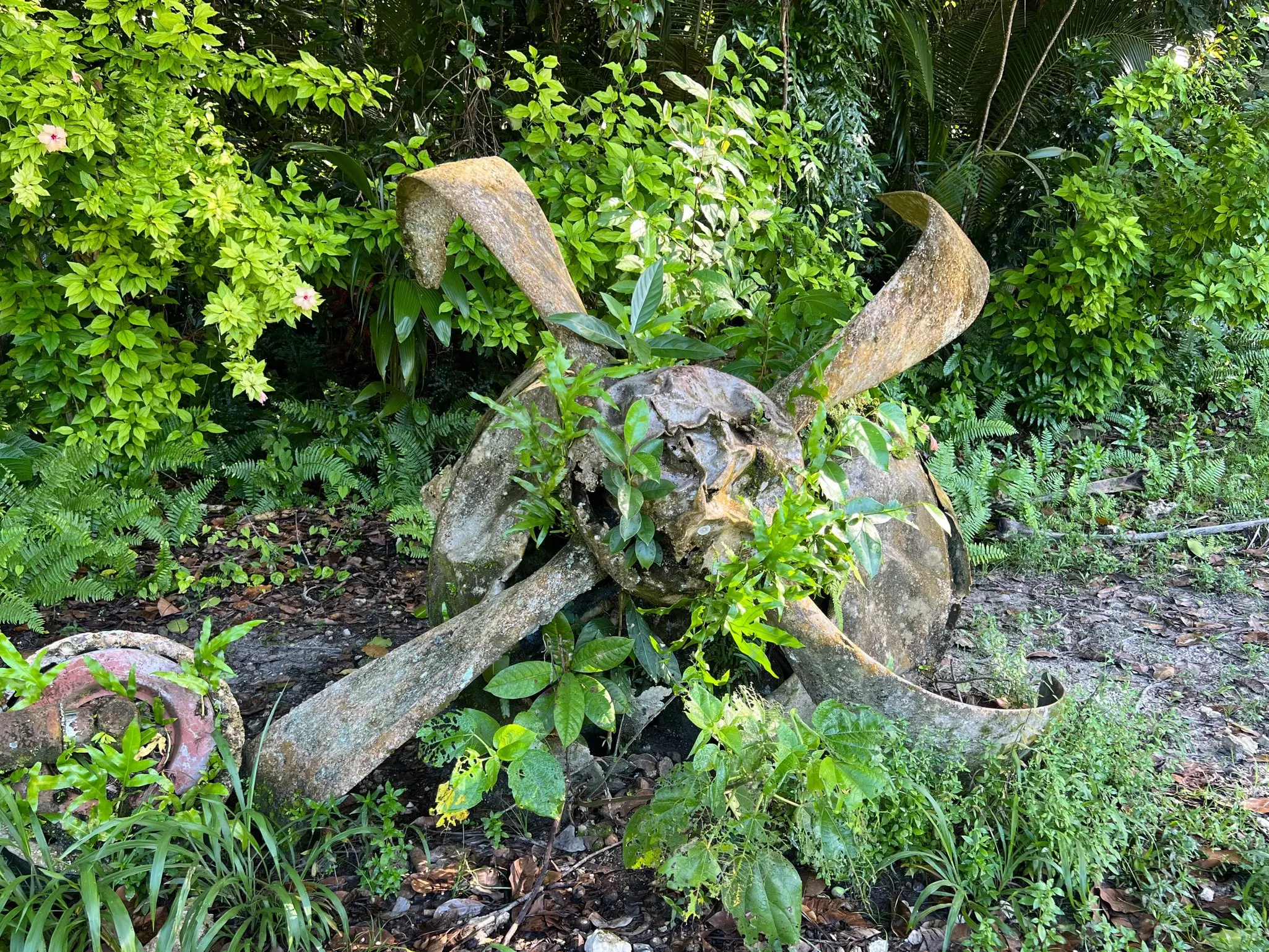
The islands of the Pacific were the setting for some of the most brutal battles of WWII, and the island of Peleliu was no exception. During the Battle of Peleliu, the island’s extensive cave systems – both natural and manmade – provided a strategic defense for the Japanese against the Americans. The battle for control of the island lasted for two months, with over 10,000 losing their lives.
Visitors can still explore some of the cave systems, including the maze-like 1000 Man Cave, see Japanese tanks and huge cannons half hidden in the bush, wander through buildings and bunkers reclaimed by nature, and climb to the top of ridgelines for views of where the Americans invaded.
Planning tip: Pay careful attention to signage and be careful where you walk – unexploded ordinance can still be found on Peleliu.
Jessica Lockhart visited Palau at the invitation of the Four Seasons Explorer. Lonely Planet does not accept freebies for positive coverage.
Explore related stories