Aug 23, 20267 min read
12 Things to Know Before Visiting Seville, SpainMay 28, 2026
7 MIN READ
Writer
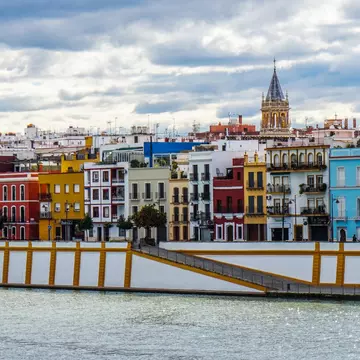
The Triana neighborhood in Seville, Spain. Brendan Sainsbury/Lonely Planet

Writer
Highlights
Writer Esme Fox picks eight Seville neighborhoods from the old town to the river.
Base yourself in Santa Cruz, Alfalfa or El Centro for tapas bars and historic monuments.
Sur suits families with Plaza de España; Arenal has independent hotels near the cathedral.
Triana draws flamenco fans; bohemian La Alameda suits night owls; Los Remedios is for shopping.
Lonely Planet may earn a commission from affiliate links on our site. All recommendations and reviews reflect our own independent opinions.
Seville, the steamy capital of Andalucía, is one of Spain’s most exciting cities, known for its vibrant flamenco scene, ornate Moorish architecture, picturesque plazas and some of the country’s best and most innovative tapas.
The city is built around the Casco Antiguo (Old Town) and spreads out on either side of the Guadalquivir River. While the areas in the oldest part of the city have a similar feel, with their jumble of narrow streets and charming courtyards, each neighborhood has an individual character. You can easily explore most of them in one trip to the city. Here are the best neighborhoods to visit in Seville, barrio by barrio.
Most romantic
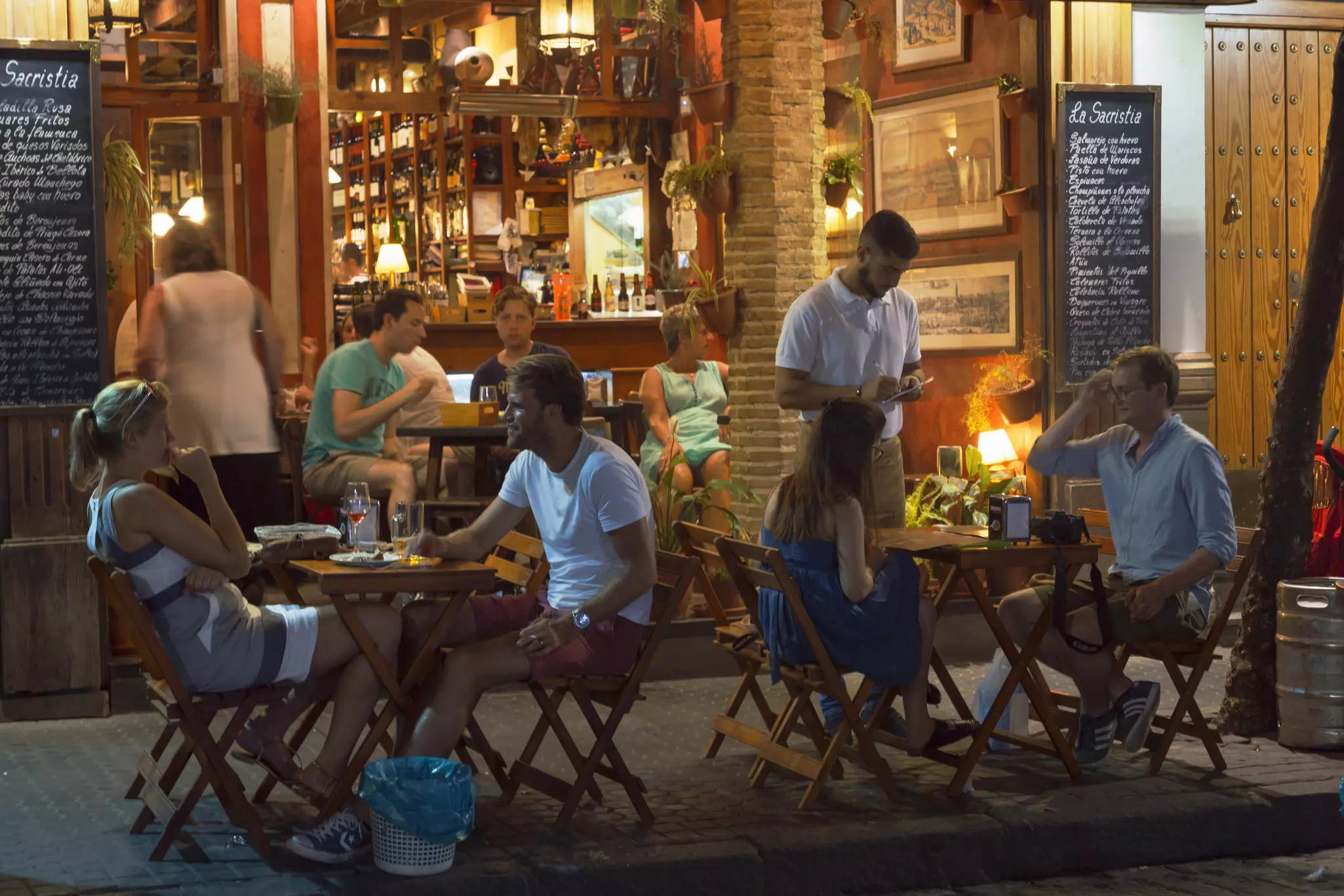
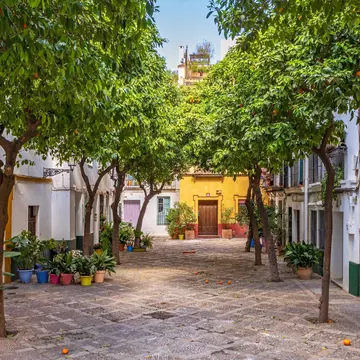
Barrio Santa Cruz, within the historic heart of the city in the Casco Antiguo, is the one Seville neighborhood that every visitor is practically certain to spend time in. Its atmospheric web of tiny streets lined with lively tapas bars encircles fountain-filled squares punctuated by orange trees and colorful tiled benches. The narrow streets are well lit, and the neighborhood is always full of life, even in the early hours of the morning.
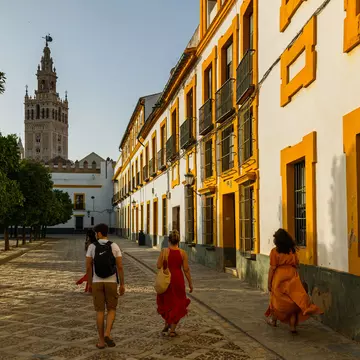
Once the city’s Jewish quarter, Barrio Santa Cruz has Seville’s most important sites, including the grand gothic Catedral (with its famous Moorish bell tower, La Giralda) and the opulent Real Alcázar, a Moorish fortress and palace. It’s also where you’ll find the Museo del Baile Flamenco, the city’s fascinating flamenco museum, which doubles as a theater for live performances.
Where to eat: Slow-cooked montadito de pringá (tender meat and sausage served on crusty bread) is a highlight at Bodega Santa Cruz.
Where to stay: Get all of Seville’s classics – a traditional building with a central courtyard, azulejos (tiles), a historic neighborhood (Casa del Flamenco is next door) – at Hotel Alcántara but at a much lower price than elsewhere. Book well in advance.
Best location
El Centro is the main commercial center of Seville, just south of the Casco Antiguo. It encompasses the streets between Puerta Real and Puerta Osario, as well as the busy shopping streets of Calle Sierpes and Calle Tetuan, which run toward Plaza Nueva and Plaza de San Francisco. At the northern end of El Centro, you’ll find a branch of Spain’s largest department store, El Corte Inglés, while Calle Sierpes and Calle Tetuan have traditional shops, selling everything from elegant lacy fans and classic hats to traditional flamenco dresses. Several worthwhile sights are located here, including the grand Ayuntamiento, one of the best examples of Plateresque architecture in Andalucía, and the pink-hued Iglesia Colegial del Divino Salvador, built on the site of an old mosque in the 17th century.
Where to eat: La Mala Brunch makes superb eggs Benedict and healthy fruit smoothies.
Where to stay: Look for Welldone Sierpes Boutique's subtle entrance in a busy commercial area of town. Rooms have elegant layouts that make them feel larger than they are.
Best for cafes
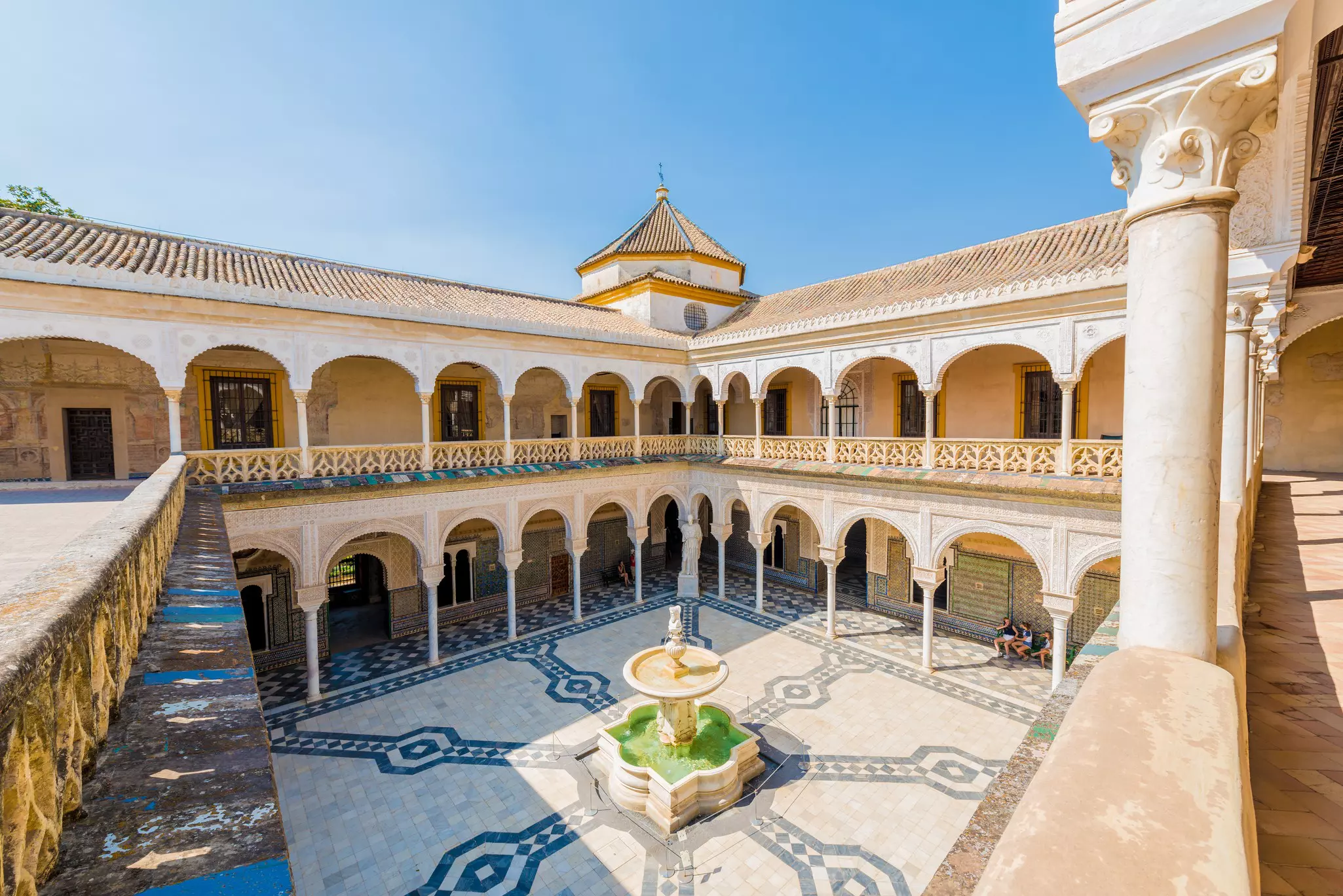
Like its Casco Antiguo neighbor Barrio Santa Cruz to the south, Barrio Alfalfa consists of a tangle of narrow alleys connected by lively squares. It’s centered around Plaza Alfalfa and its popular cafes and restaurants. Visit the elegant Plaza del Pan for independent shops, the wide Plaza de la Pescadería and the leafy green Plaza del Cristo de Burgos. The neighborhood’s main tourist site is the stunning Casa de Pilatos, an elaborate Mudéjar-style palace. Barrio Alfalfa has become one of the coolest neighborhoods in Seville, thanks to the area dubbed Soho Benita, where funky independent shops, boutiques, bars and hotels collect around six streets on the edge of the neighborhood.
Where to eat: Petra does inventive takes on popular tapas. Tortillas practically melt in the mouth.
Where to stay: Hotel Abanico's distinctive tile work and arabesque touches evoke Seville’s baroque and Mudéjar sensibilities.
Best hotel choices
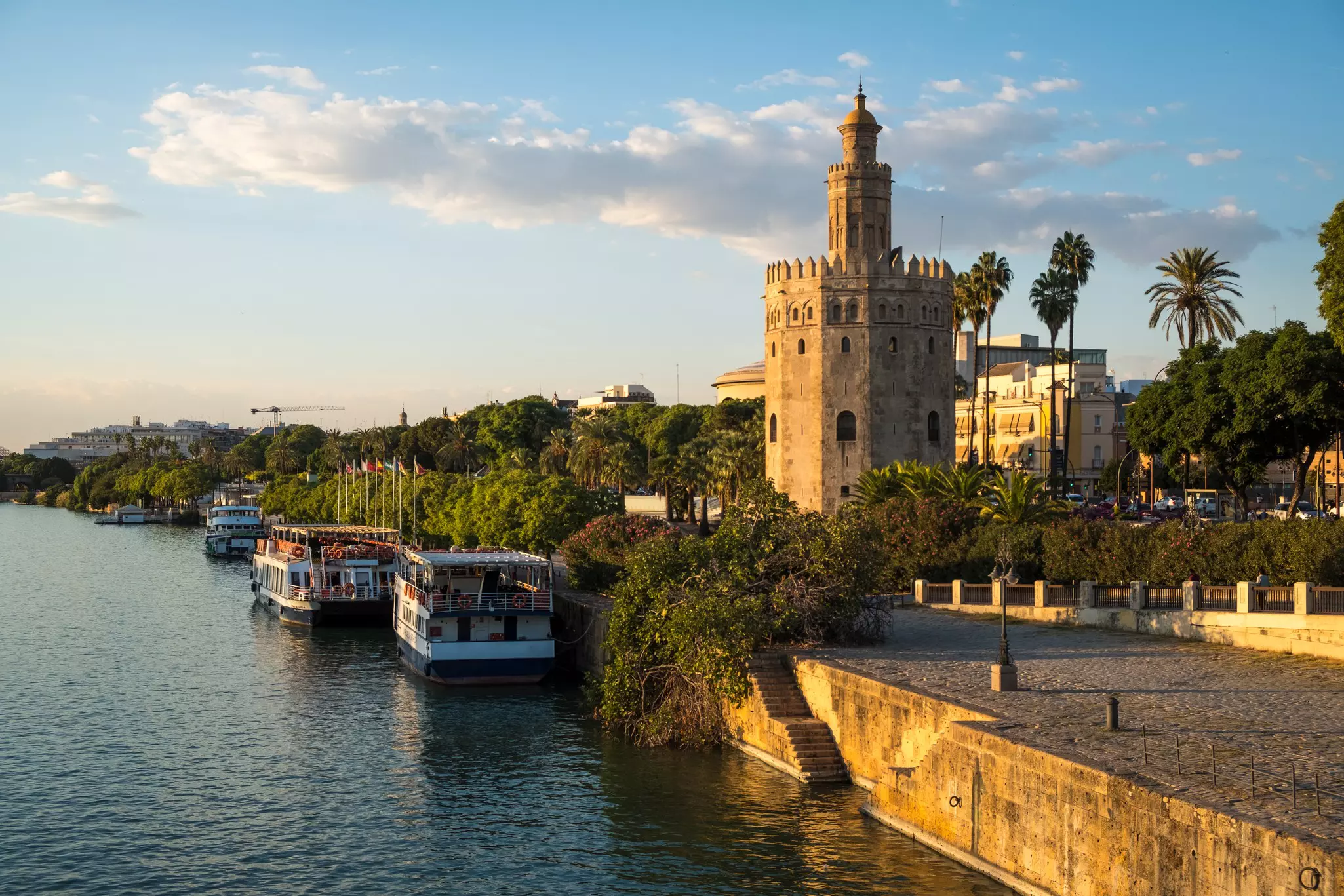
Arenal sits on the left bank of the Guadalquivir, bordering both Barrio Santa Cruz and El Centro, and extends from the cathedral down to the river. It’s one of the best areas to stay in Seville, with many independent hotels, great tapas bars and restaurants, and some of the city’s most important monuments. Sights include the riverside walkway of the Paseo de Cristóbal Colón and its 13th-century watchtower, the Torre del Oro, and the baroque-style yellow-and-white Plaza del Toros de la Real Maestranza, which is Spain’s oldest bullring.
While you understandably may not want to watch a bullfight, the neighborhood's bullring and its associated museum are well worth a visit to understand more about local culture. Don’t miss the impressive semicircular Plaza del Cabildo and the baroque Hospital de la Caridad, which houses artworks by artists such as Valdés and Murillo.
Where to eat: Family run since 1850, Casa Morales is known for its sherry and meatballs.
Where to stay: Hotel Casa de Colón greets guests with stylish neo-Mudéjar comfort – stained glass windows, bare brick walls and clawfoot bathtubs moments from the cathedral.
Best for families
The district of Sur is south and east of the Casco Antiguo. In preparation for the 1929 Ibero-American Exposition, much of this area of the city was given a makeover, and the landmark Plaza de España, along with the sprawling Parque de María Luisa, was built here. Ever since, tourists have flocked to admire this colossal square's impressive neo-Moorish pavilions, huge fountains, canal filled with boats and ornate ceramic-tiled benches. Next to Plaza de España, the shady Parque de María Luisa has attractions of its own, including the Museo de Artes y Costumbres Populares and an aquarium. Outside the park, you can visit the grand 18th-century stone tobacco factory, which was the inspiration for Georges Bizet’s opera Carmen.
Both Sur and El Centro are the best neighborhoods for families because of their central locations and wealth of attractions; they are also quieter than areas in the Casco Antiguo.
Where to stay: A local landmark, Hotel Alfonso XIII is complete with a classic neo-Mudéjar facade of glazed tiles and terra-cotta bricks.
Best for local life
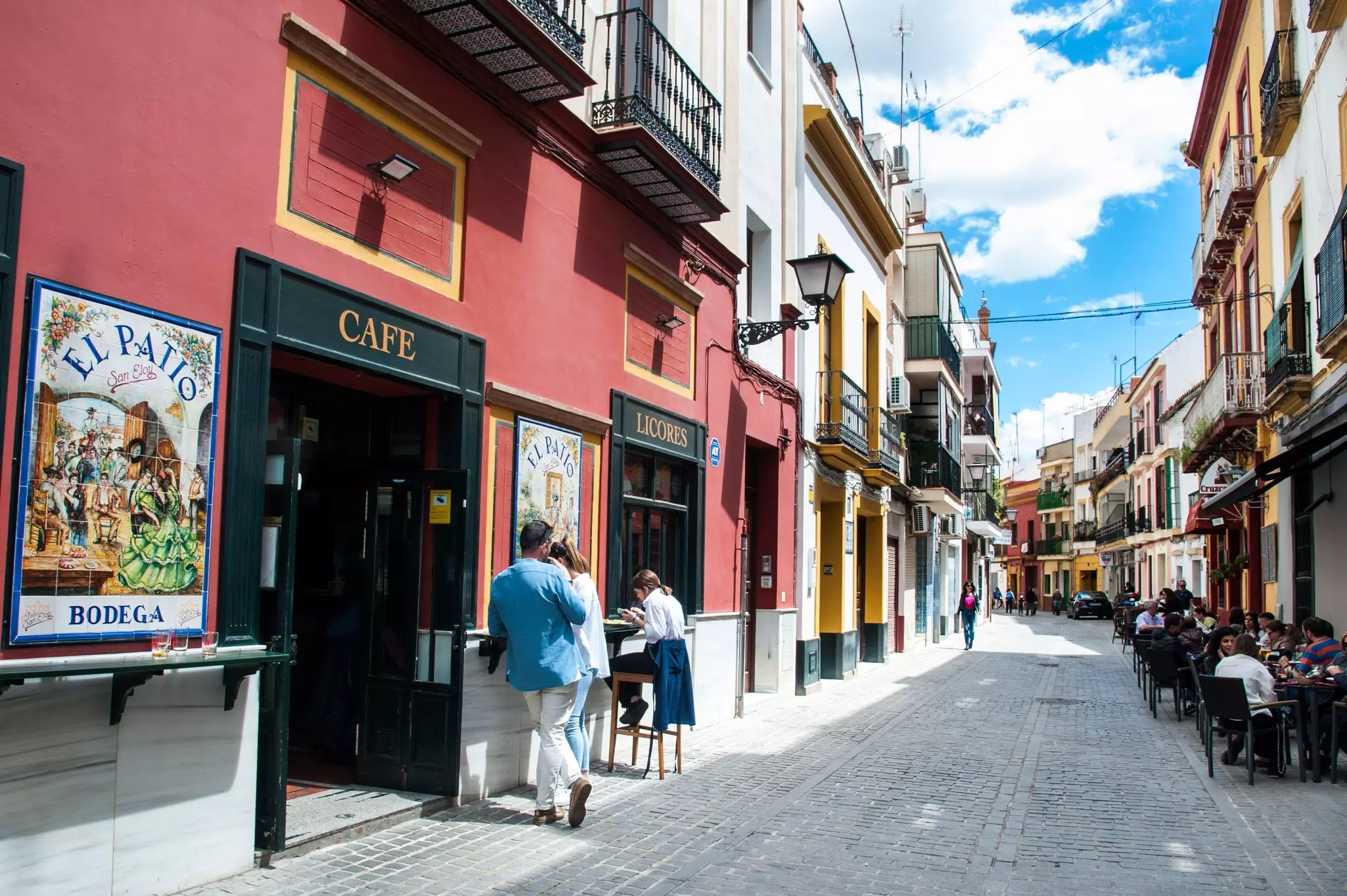
The working-class neighborhood of Triana, across the river from the main city, is connected to the center of Seville by the Triana Bridge. It’s one of the most traditional neighborhoods in Seville and home to the city’s historic tile workshops and potteries, several of which you can still visit, including the Centro Cerámica Triana. Triana has its own style – it’s a neighborhood of artists, dancers and musicians, and has more of a local feel than the central districts. It’s also a great neighborhood to catch a flamenco show, with many flamenco tablaos, bars and theaters. One of the liveliest parts of Triana is Calle Betis, where multicolored buildings overlook the river. Triana is particularly known for its nightlife, but head further into the neighborhood for something more authentic.
Where to eat: El Sella serves Asturian specialities such as cachopo (breaded veal cutlets) with lashings of apple cider.
Where to stay: At Hotel Monte Triana, get black-and-white marble and contemporary design in the lobby, space and comfort in the rooms.
Best for shopping
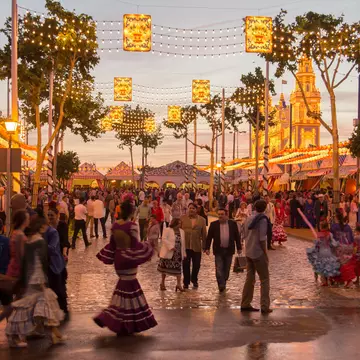
The modern area of Los Remedios just south of Triana is one of the city’s most important commercial zones and buzzes with people shopping and visiting businesses and public institutions. For some downtime in Los Remedios, visit the verdant Parque de Los Príncipes and its large lake. This is also where Seville’s most famous festival takes place – the Feria de Abril, a celebration of flamenco, horses and Andalucian culture.
Where to stay: Although Eurostars Guadalquivir is in a more modern neighborhood, the Torre de Oro is only a 12-minute walk away and you get better value for your money.
Best for nightlife
The neighborhood of La Alameda marches to the beat of its own drum. Alternative and bohemian, this once no-go area is now one of the city’s hippest hangouts. Centered around the large plaza of the same name, it borders the district of La Macarena and the river. The long thin square is one of the oldest public gardens in Europe, decorated with two Roman columns topped with a statue of Hercules. La Alameda is known for its vibrant nightlife – it is particularly popular with Seville’s student and LGBTQ+ communities. It’s even said to be where Andalucian rock music was invented.
Where to eat: Veganí is a rare combination of amazing vegan food and top-quality service. Its local organic wines are great too.
Where to stay: Hotel Sacristía de SantaAna has gorgeous rooms in an 18th-century townhouse with an arcade courtyard; it is perfect for history and architecture fans.
Explore related stories