Jul 20, 202615 min read
A Guide to California's Channel IslandsJul 20, 2026
15 MIN READ
Contributors
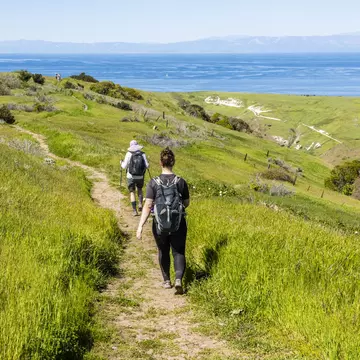
Hiking by the sea in California's Channel Islands. NatalieJean/Shutterstock

Contributors

Corinne Heyning Laverty, Ryan Ver Berkmoes
Highlights
Writers Corinne Heyning Laverty and Ryan Ver Berkmoes cover California's Channel Islands.
Spring brings wildflowers and peak hiking; fall warms the water for whale-watching.
Santa Cruz suits active hikers and kayakers; San Miguel rewards the hardy with 30,000 pinnipeds.
Head to Santa Catalina for resort-style Avalon, golf carts and free-roaming bison.
Lonely Planet may earn a commission from affiliate links on our site. All recommendations and reviews reflect our own independent opinions.
Floating just off the coast of Southern California, conveniently close to Los Angeles, the under-explored Channel Islands offer a peaceful escape from the noise and hubbub of the mainland. If you fancy camping in serene scenery in front of epic sunsets, this guide to California's Channel Islands will tell you everything you need to know.
The eight Channel Islands earn every bit of their "North America’s Galápagos" nickname – more than 150 endemic species of plants and animals make a home on these specks of land scattered across the bay between Santa Barbara and San Diego.
For nearly 13,000 years, these islands have remained largely free from development, and even from tourism, with one notable exception – Santa Catalina, which was set up as a resort island in the early 20th century. This is all the more surprising given that the Channel Islands lie within sight of one of the most densely populated parts of the USA.
While the island of Santa Catalina is fairly well-known and developed, the other Channel Islands are still wonderfully unspoiled. And although a visit is not as easy as, say, a trip to Disneyland in Anaheim, you can have a meaningful experience even on a day trip from Los Angeles via one of the harbors in Southern California.
This guide to California's Channel Islands will show you how to experience each of the eight islands, starting with the five islands protected as the Channel Islands National Park.
The best time to visit California's Channel Islands broadly aligns with the best time to visit the rest of California. The ideal time for hiking is the spring, marked by colorful wildflowers from February to April. The warm, dry summer is also a popular time to visit, though there's more competition for space on ferries and at campsites.
However, be aware that fog banks can obscure the views on some islands in spring and summer. The fall, from September to November, is a great time for aquatic activities, as the normally cool Californian waters are warmer than at other times of year. Seals and sea lions can be spotted around the islands year-round.
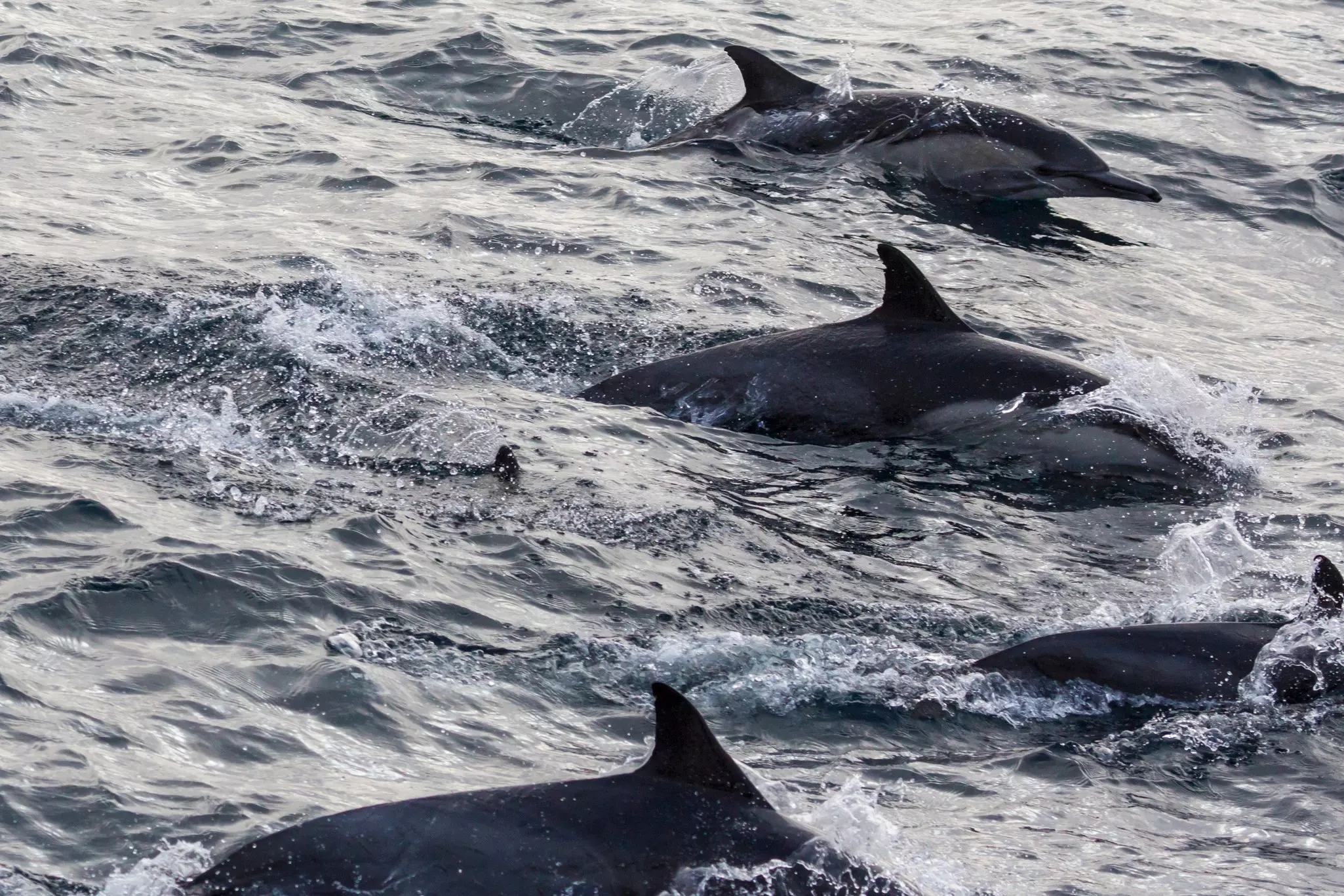
From June to November, the Santa Barbara Channel is home to the largest population of blue whales in the world, outside of Antarctica. Trips to the islands during these months often include time for whale-spotting during the crossing. Other whale species spotted here include humpbacks, grey, fin and minke whales, dolphins and orcas.
It is possible to take a day trip to many of the islands from Los Angeles or other cities along the Southern California Coast, and during the main tourist seasons, boat operators run dedicated trips for day-trippers. However, it's more rewarding to take your time and stay for several days, camping at the NPS campgrounds on the national park islands, or staying in accommodations on more developed Santa Catalina.
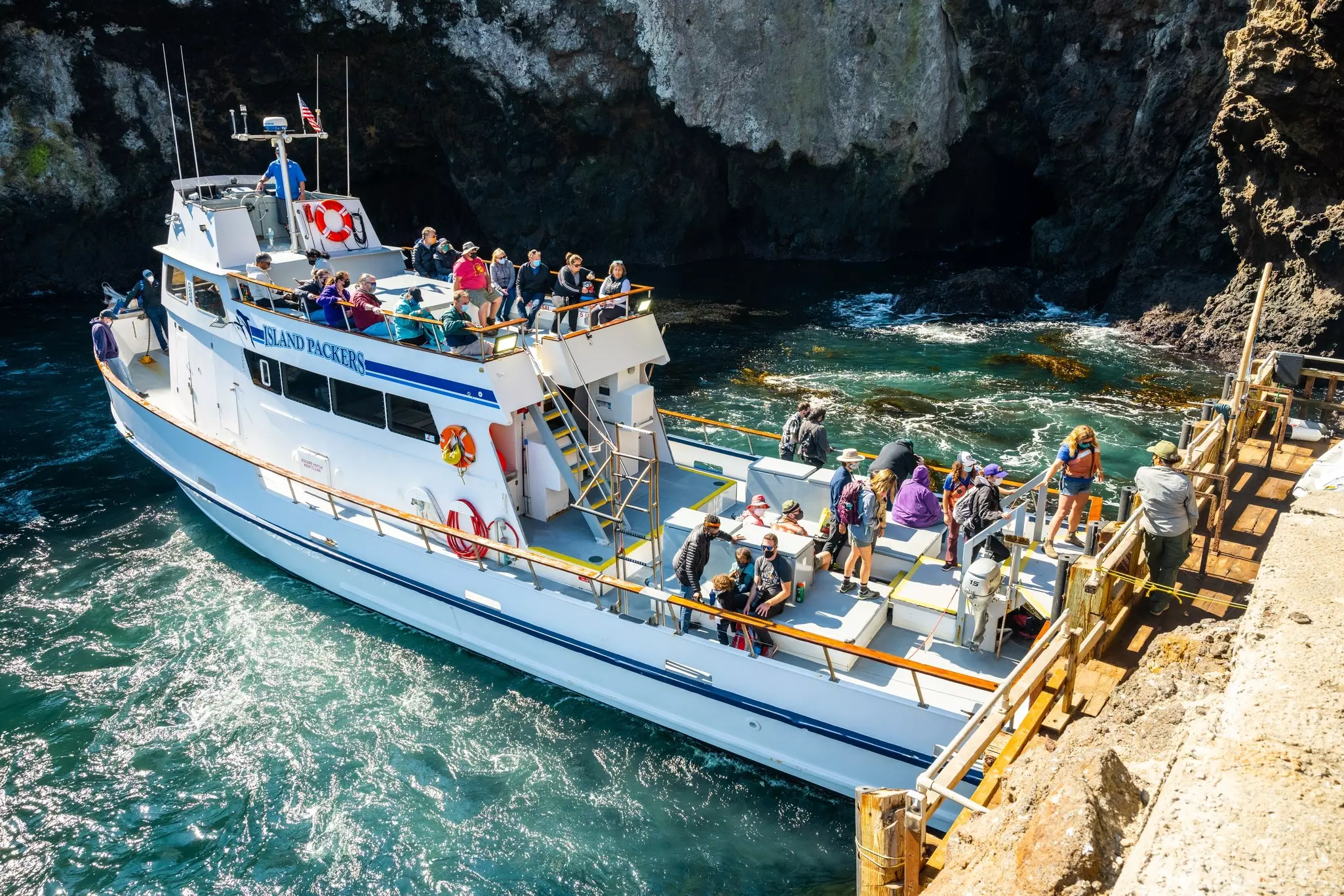
Ferries to different islands leave from different harbors on the California coast. Ventura and Oxnard, north of Los Angeles, are the main departure points for ferries to the five islands that make up Channel Islands National Park. Crossings take from 1.5 hours to 4 hours, depending on the island and arrival point.
To reach the resort island of Santa Catalina, fast boats depart from San Pedro, Long Beach and Dana Point, taking just over an hour. We've provided information on getting to all of the Channel Islands in the following sections.
While the archipelago stretches from Santa Barbara County all the way south to the fringes of San Diego, the five islands protected as Channel Islands National Park – Anacapa, Santa Barbara, Santa Cruz, San Miguel and Santa Rosa – are more tightly grouped off the shore near Ventura, 70 miles northwest of Los Angeles.
The National Park Service (NPS) takes steps to keep human impact to a bare minimum on these hilly islands to preserve their raw and natural character. The islands are car-free and mostly treeless, with little cover from the near-constant winds, but the wildflowers in spring are superb, as is the hiking year-round. Rangers and volunteers run guided hikes timed to meet some, but not all, boat trips – the NPS operates visitor centers in Santa Barbara and Ventura where you can make inquiries.
Each of the five islands has a small, primitive campground with pit toilets, picnic tables and not much else. Everything has to be packed in and out, including water (unless you are staying at the sites on Santa Cruz or Santa Rosa), and only portable gas stoves are permitted for cooking. Make camping reservations with the NPS in advance via the Recreation.gov website to secure a spot.
Island Packers runs passenger boat services to the park from Ventura Harbor and nearby Oxnard, and you can take day trips most days to Anacapa and Santa Cruz islands, with less-frequent services to other islands. Note that since September 2025, passengers are not permitted to bring wagons for hauling gear to the campsites – only gear that fits inside your bag is permitted, such as two-wheeled MagnaCart-style trolleys.
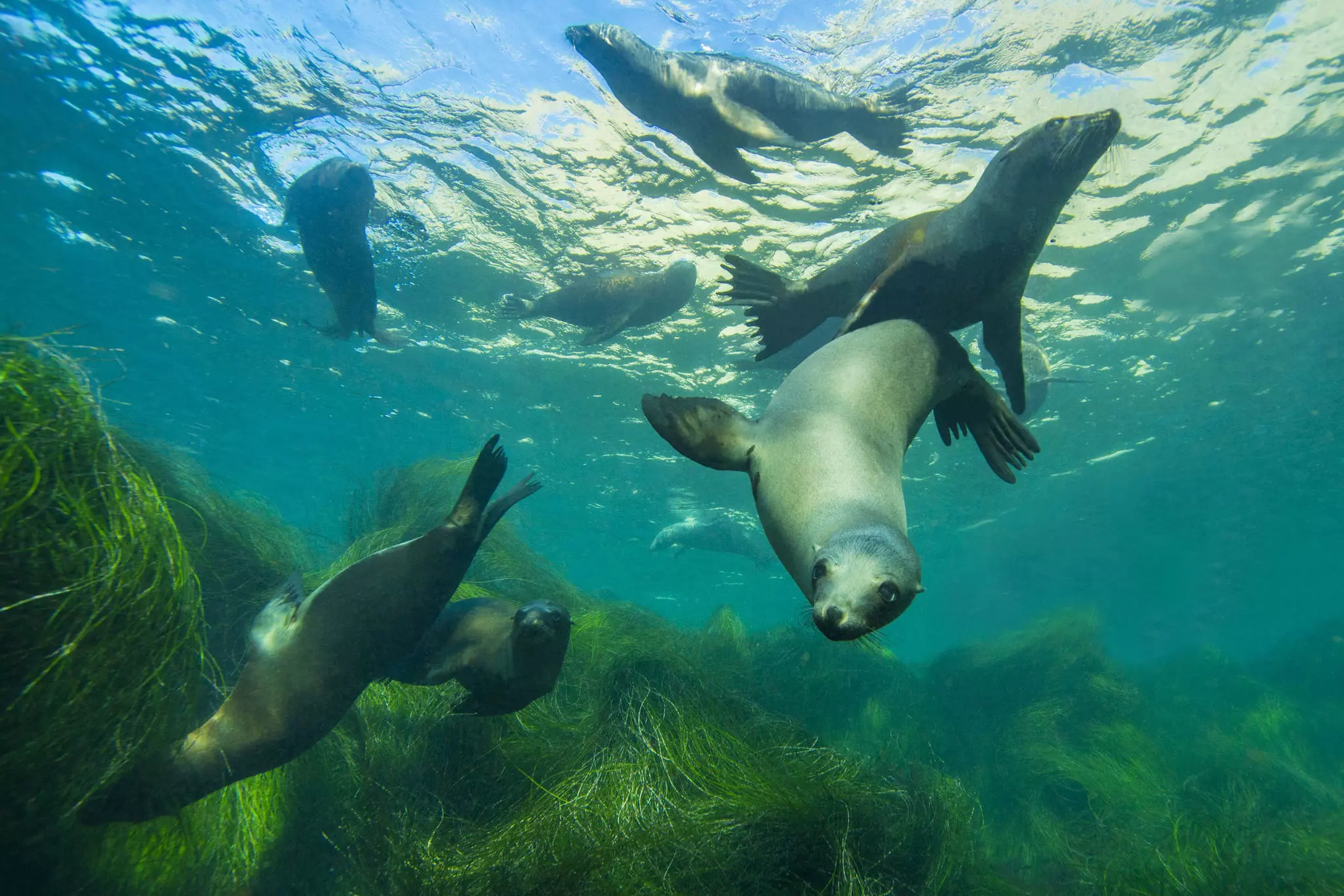
Boats run less often to Santa Rosa and San Miguel, and there are currently no boats to Santa Barbara (though services may resume if the jetty is repaired). Other ways to reach the islands include private boat charters and multi-day cruises, some focusing on diving in the rich and pristine waters of the national park (good for encounters with sea lions and orange Garibaldi fish in the dense kelp forests).
If you're camping, consider bringing along TC Boyle’s 2011 book When the Killing's Done – part murder mystery, part environmental parable about an eccentric man’s efforts to prevent the NPS from clearing invasive pigs and rats from the Channel Islands. It was inspired by the ongoing and controversial efforts to remove non-native species introduced by past settlers, which now threaten the islands' fragile environment and endemic species.
Best for active day trips for hiking and kayaking
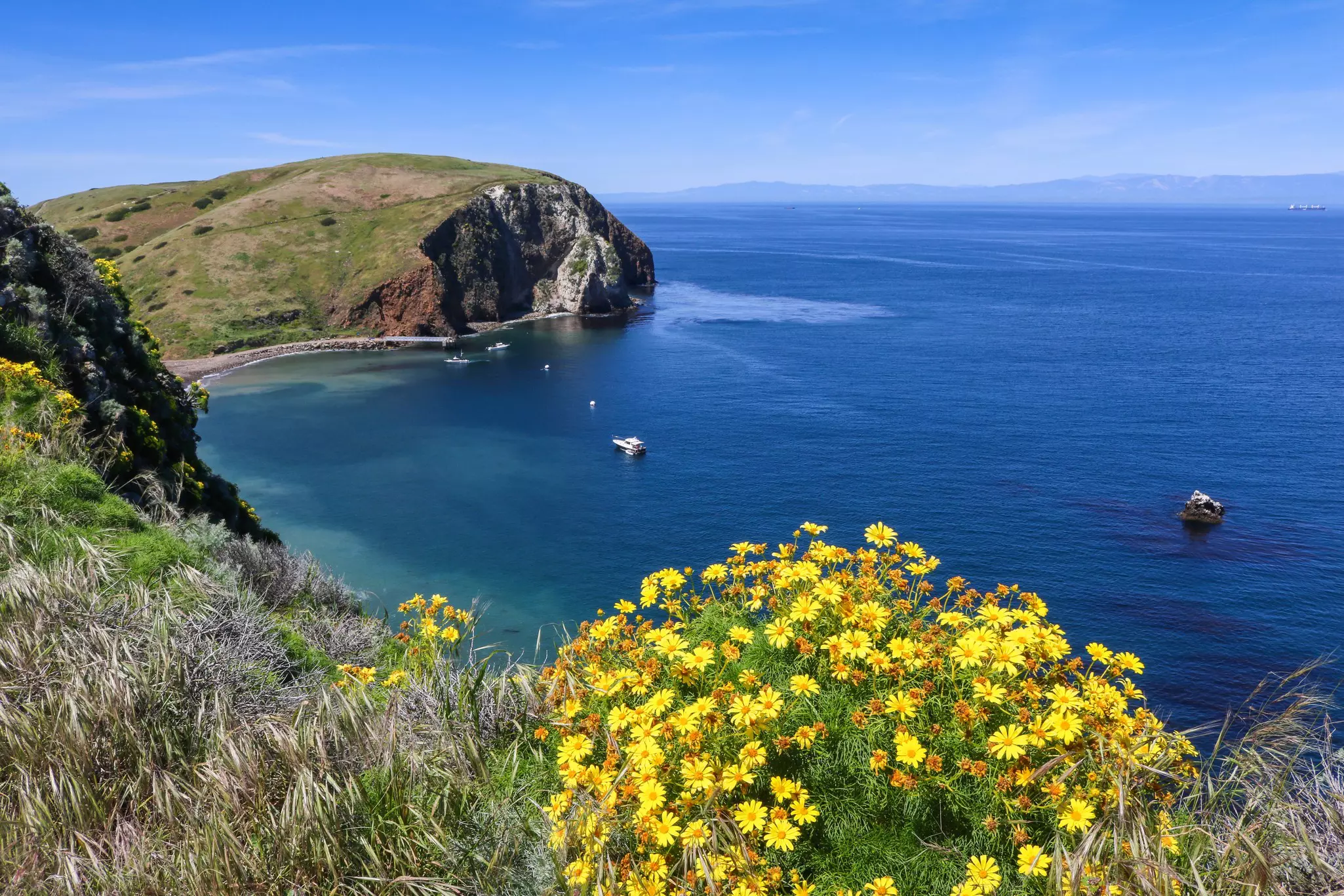
At 96 sq miles, Santa Cruz is the largest and most varied of the Channel Islands, with two rugged mountain ranges – including 2450-ft Mt Diablo, the park's tallest peak – and a picturesque central valley, plus 77 miles of coastal cliffs and abundant native plant and animal life. Unsurprisingly, the island is a beacon for hikers and campers.
Wildlife spotters may encounter its two best-known inhabitants, the scrub jay and the island fox. While distinct subspecies of this charmingly fearless diminutive fox species are found on six of the Channel Islands, the monogamous scrub jay lives only on Santa Cruz.
The NPS website details the island’s 10,000-year history of human settlement, and there are upwards of 3000 archaeological sites, most associated with the island's Indigenous Chumash people. Look for collections of broken shells lying on the ground away from the ocean for evidence of ancient human activity.
Planning tip: Consider taking a boat or kayak excursion to view the Painted Cave – a sea cave with striking colors created by algae, lichen and different rock types. Kayak trips and boat tours can be arranged through operators at Ventura.
Getting there: There are two landing spots on Santa Cruz – one at Scorpion Anchorage and one at Prisoners Harbor. Scorpion Anchorage is the main landing site, and it takes a little over an hour to get here from Ventura. There are normally several boats daily.
Camping: Reserve the camping site at Scorpion Canyon well in advance via the NPS; this is a popular island and spaces fill up quickly in season. Potable water is available.
Best for easy day trips with stunning views
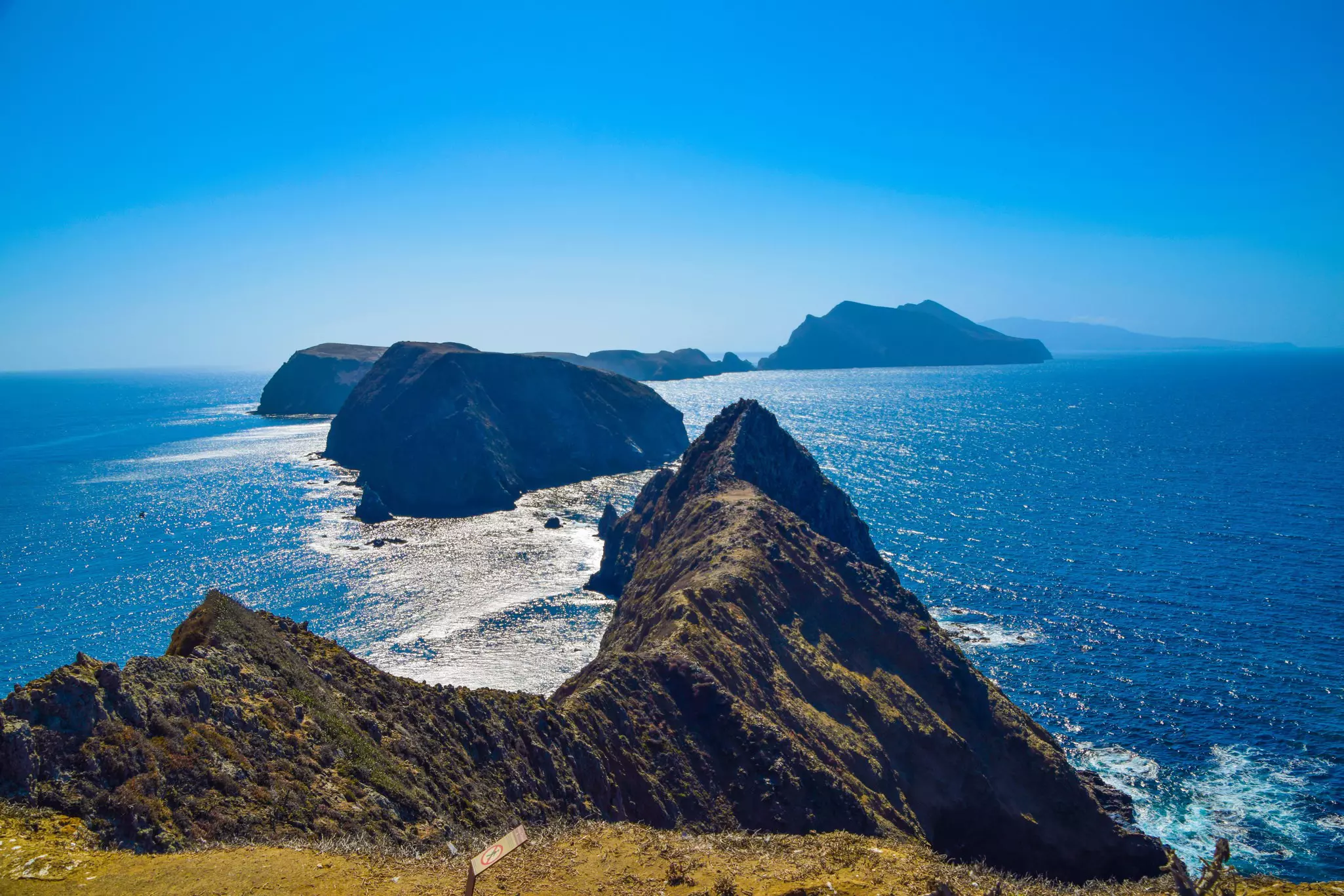
Originally named Anayapax, meaning "illusion" or "mirage" in the language of the Chumash, the island's original inhabitants, Anacapa is actually a three-islet sliver of land lying 11 miles from the mainland. Wildflowers abound, and ground-nesting western gulls greet spring and summer visitors. Their eggs and chicks are safe because Anacapa is naturally predator-free.
Easy year-round hikes lead to a solidly built lighthouse from 1932 and mind-boggling westward and mainland views. Keep an eye out for sightings of the endemic Anacapa deer mouse and Channel Island slender salamander.
Planning tip: As you explore the island, look out for abalone shells left behind by the Chumash people up to 5000 years ago.
Getting there: Boat trips leave from Oxnard on the mainland, and the crossing takes about 1 hour, with departures most days.
Camping: The campsites are a half-mile climb up 157 stairs from the boat landing site, and you'll need to bring water.
Best for observing marine life
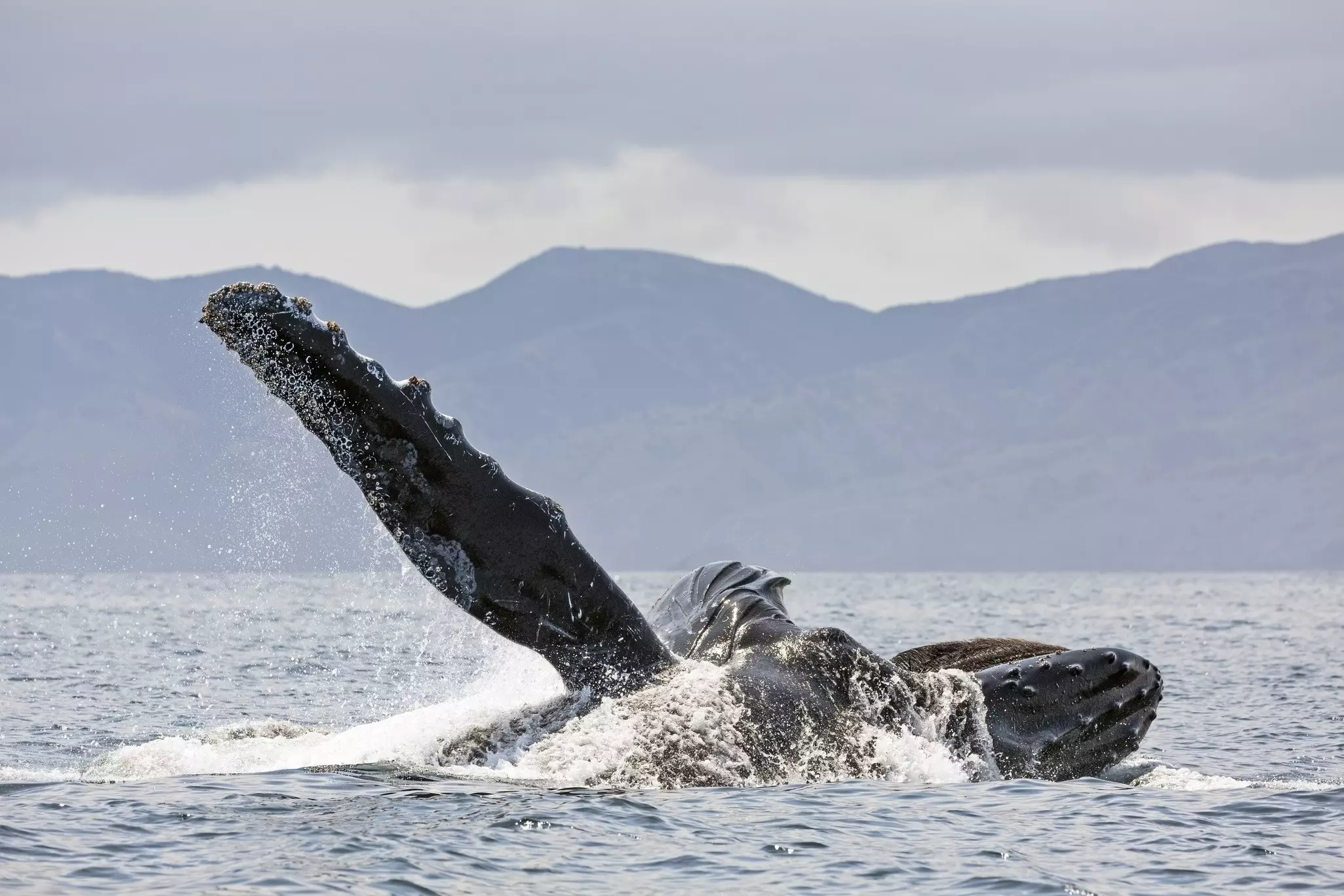
Known for being wind-swept, foggy and cold, San Miguel is at its best on sunny summer days, when the island’s 30,000 pinnipeds – including northern elephant seals, California sea lions, northern fur seals and harbor seals – haul up on the shores. You can see tons (literally!) of them lounging around at Point Bennett, reached via a 16-mile ranger-led hike. Whales are also easily spotted during the migration season.
Along the way, you'll pass the ghostly Caliche Forest, composed of calcium carbonate casts of roots formed around 14,000 years ago. Keep an eye out for endemic flora such as giant coreopsis, poppies, dudleya, locoweed and buckwheat. Native plants are making a comeback here since the removal of non-native grazing animals such as voracious goats and other feral livestock.
Planning tip: San Miguel has the toughest weather of all the Channel Islands – 30-mph winds are typical, so bring appropriate clothing.
Getting there: It takes around 3.5 hours to reach San Miguel from Ventura, with only two dedicated day-trip services each year. Boats for campers run two to three times per week but only during certain months (see the Island Packers website for details). There is no pier, so expect to get damp getting to shore.
Camping: San Miguel's campsites are a steep 1.25-mile hike from the beach landing site, and you must bring your own water.
Best for beach fun and hiking to see spring wildflowers
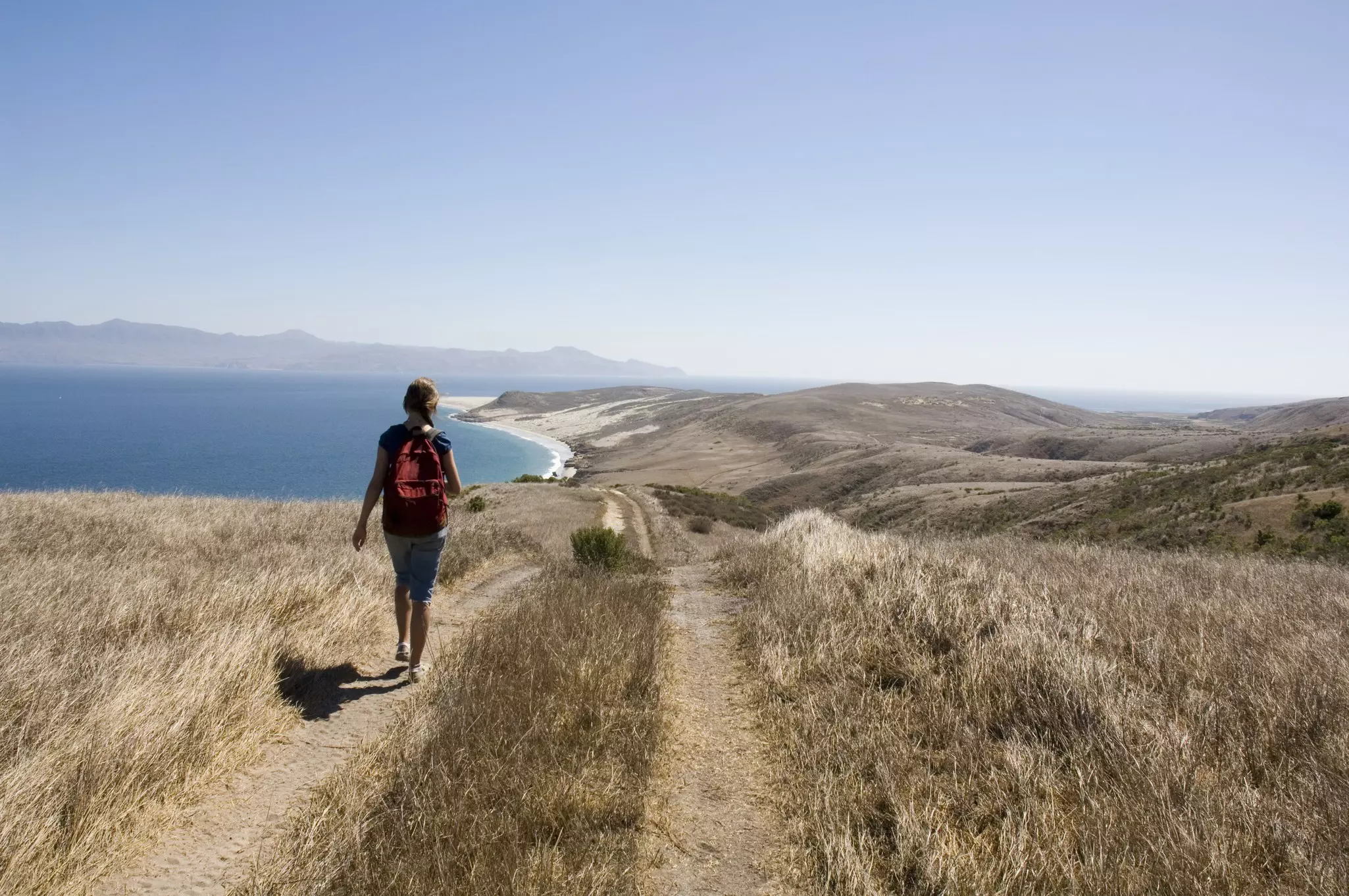
Set out on one of the hiking trails crossing 84-square-mile Santa Rosa Island and imagine how it must have felt to be the archaeologist who discovered 13,000-year-old human bones here — the oldest human remains ever found in North America. This part of America looked very different at the time; if you scour the eroding cliffs, you may find evidence of extinct pygmy mammoths.
For more recent history, you can visit bunkhouses, corrals and ranch houses located near the pier – a reminder of the days when the island was used as a cattle ranch and big game hunting park. Nature has bounced back impressively, and you can search for Channel Island natives such as the cute (and potentially stinky) island spotted skunk, the non-venomous dwarf island gopher snake and the island fence lizard.
Take time to explore the grove of Santa Rosa Island Torrey Pines — the world’s rarest pine tree, and a relic from an ancient Pleistocene-era forest. These gnarled survivors grow to about 50 feet tall. Be aware that some areas of the island are periodically closed to visitors – the beaches and dunes of China Camp and Cluster Point (and areas in between) were placed off-limits in 2025 to protect bird nesting sites.
Planning tip: Don’t miss the hike along Water Canyon Beach, a spectacular and nearly deserted 2-mile strip of white sand directly south of the landing pier.
Getting there: It's a 2- to 3-hour boat ride to the island from Ventura. The service for campers runs a couple of times per week, and there are less frequent day trips.
Camping: The campsite is a flat 1.5-mile walk from the pier, and potable water is available.
Best for sea birds and solitude
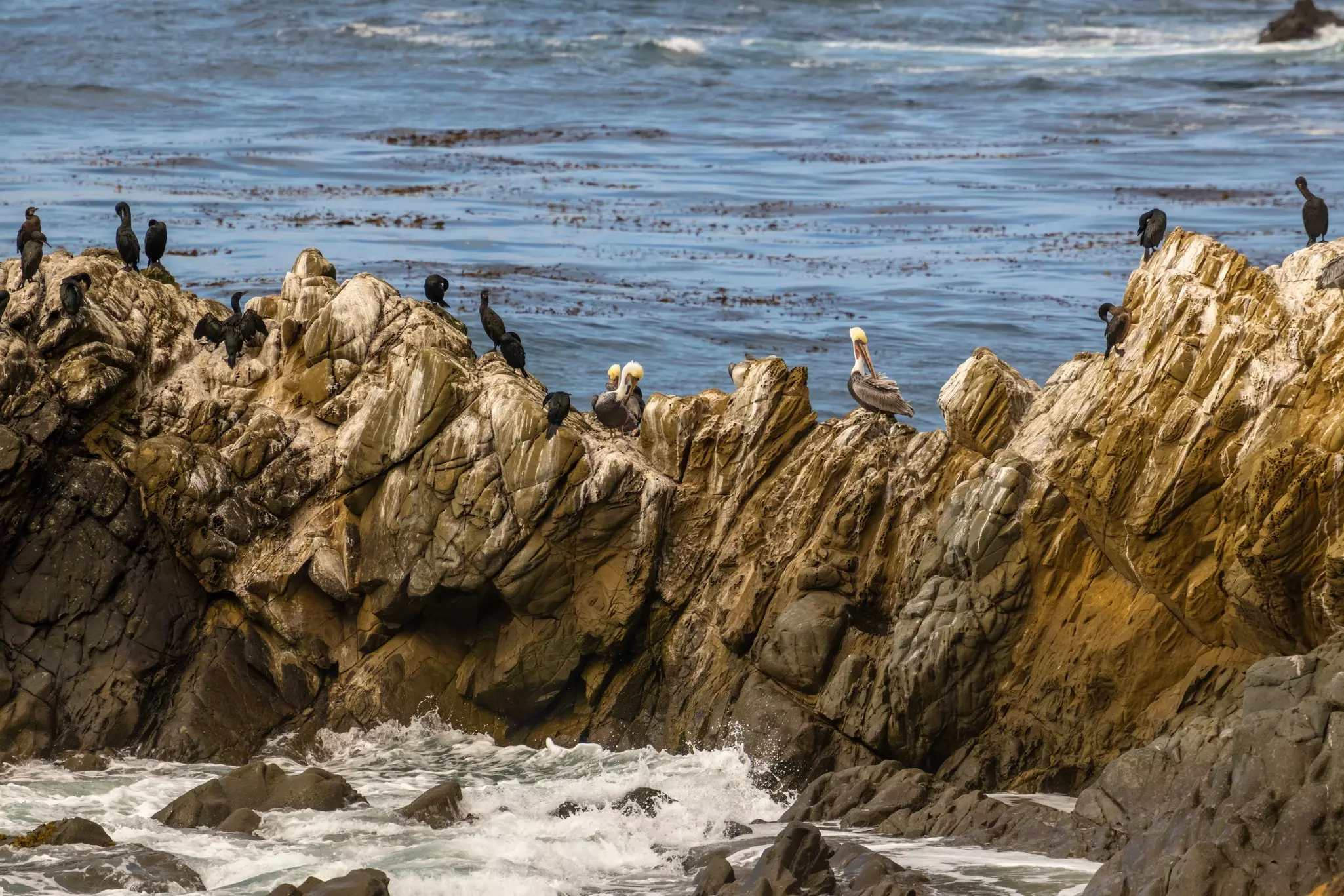
At just 1 sq mile, Santa Barbara Island is the smallest Channel Island and the least visited island in the national park, seen by fewer than 750 people annually. This means visitors can enjoy its 5 miles of rolling trails in near solitude.
Circumnavigate this steep-sided isle for sightings of pinnipeds and the islands’ three endemic subspecies of land birds – the island horned lark, dusky orange-crowned warbler and island house finch. Or head up 634ft Signal Peak for stunning views of the rocky islet known as Sutil Island, and a chance of spotting a resting peregrine falcon.
The island is a critically important nesting ground for at least 11 species of seabirds, with one of the world’s largest congregations of Scripps’s murrelets. Sharp-eyed springtime visitors can spy young California brown pelicans, western gulls and multiple species of cormorants and storm petrels. Tropical brown boobies have started making regular appearances too, and have hatched at least one chick on Sutil.
Planning tip: This is an island for those who really want solitude – contemplate the splendid isolation at the north end of the island, where a lonely rock arch juts into the bay.
Getting there: Severe storm damage to the island’s wooden dock means that there is currently no scheduled service to the island, although you may be able to charter a boat and land on a rocky ledge. Check in with Island Packers to see when scheduled boat services are set to resume.
Camping: The campground is reached via a 200ft walking path from the landing point, and you may have to shoo away lounging sea lions to get there. You’ve been warned!
More islands beckon beyond the national park boundaries. Santa Catalina is a busy vacation spot, and nearby are San Nicolas and San Clemente, which you can only view from the water on boat trips.
Best for creature comforts and resort vibes
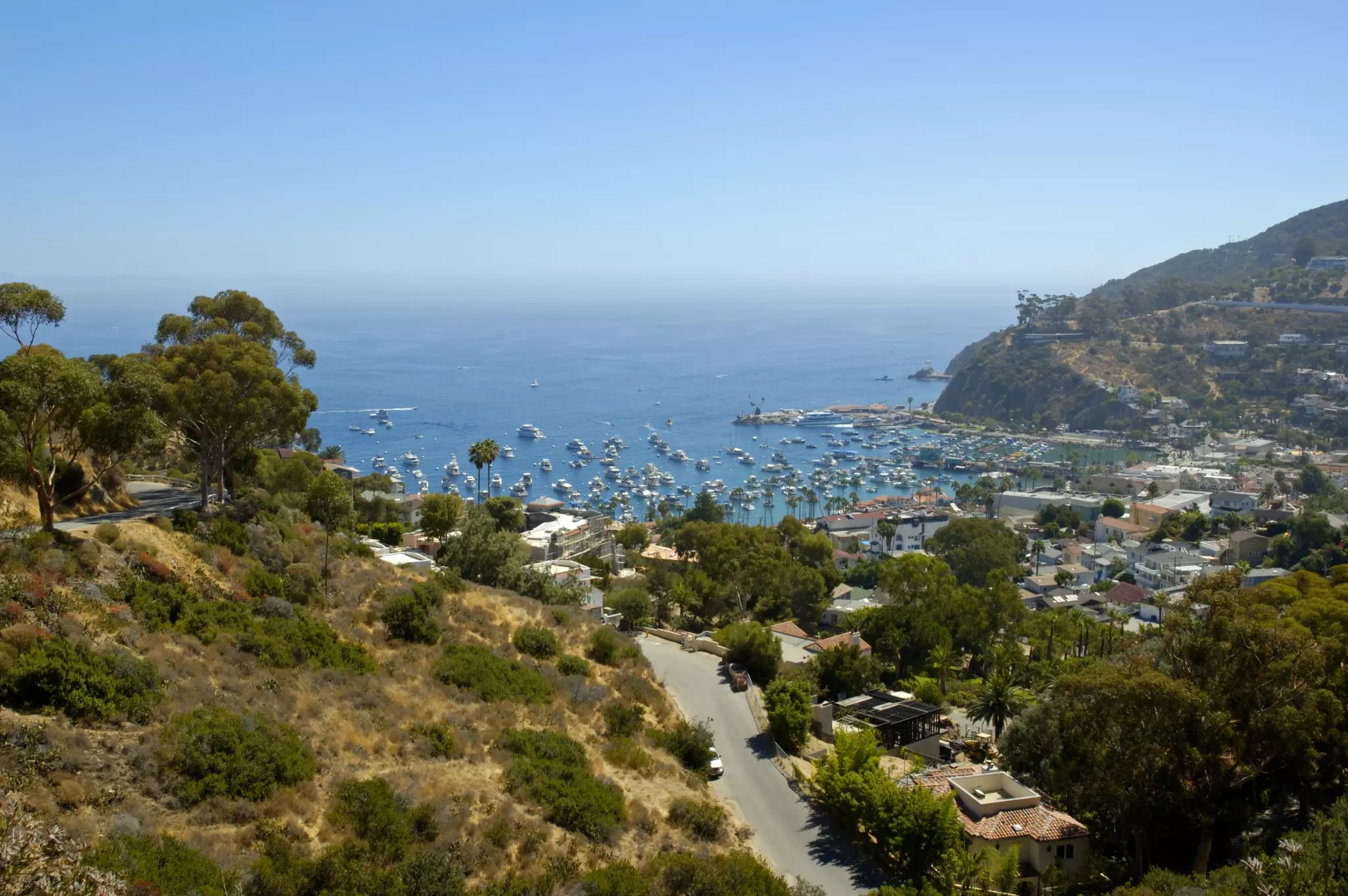
From 1911 onwards, Hollywood stars started flocking to Catalina Island for sportfishing and expensive nights out at the red-roofed art deco casino at Avalon, occasionally leaving behind movie extras, including a herd of bison. Now stars in their own right, the bison still wander the hillsides, delighting visitors who chance across them.
Sporty types love Avalon for its outdoor activities, city-center beach, dining and lodging options, and sporting history. Baseball fans can visit the site of the original Wrigley Field, where the Chicago Cubs trained for 30 years from 1921 to 1951 (with a gap during WWII). It's now a public golf course.
On the narrow isthmus that almost divides the island in two, the village of Two Harbors offers the opportunity to get away from the Avalon bustle and camp in relative peace, though it's still busier here than in the national park.
Planning tip: Rent a golf cart to get around; no car ferries run to the island. Pottering around in a golf cart feels like a nostalgic nod to the island's Hollywood heyday.
Getting there: Fast and slow ferries carrying passengers only run daily from Long Beach, Dana Point and San Pedro. Boats dock at either Avalon or Two Harbors (from San Pedro only). The glitterati opt for pricey helicopter transfers.
Where to stay: Many options are available on Catalina, from upscale hotels to less expensive B&Bs, though prices tend to be higher than on the mainland. Camping is possible in Avalon and Two Harbors.
Best for scuba diving
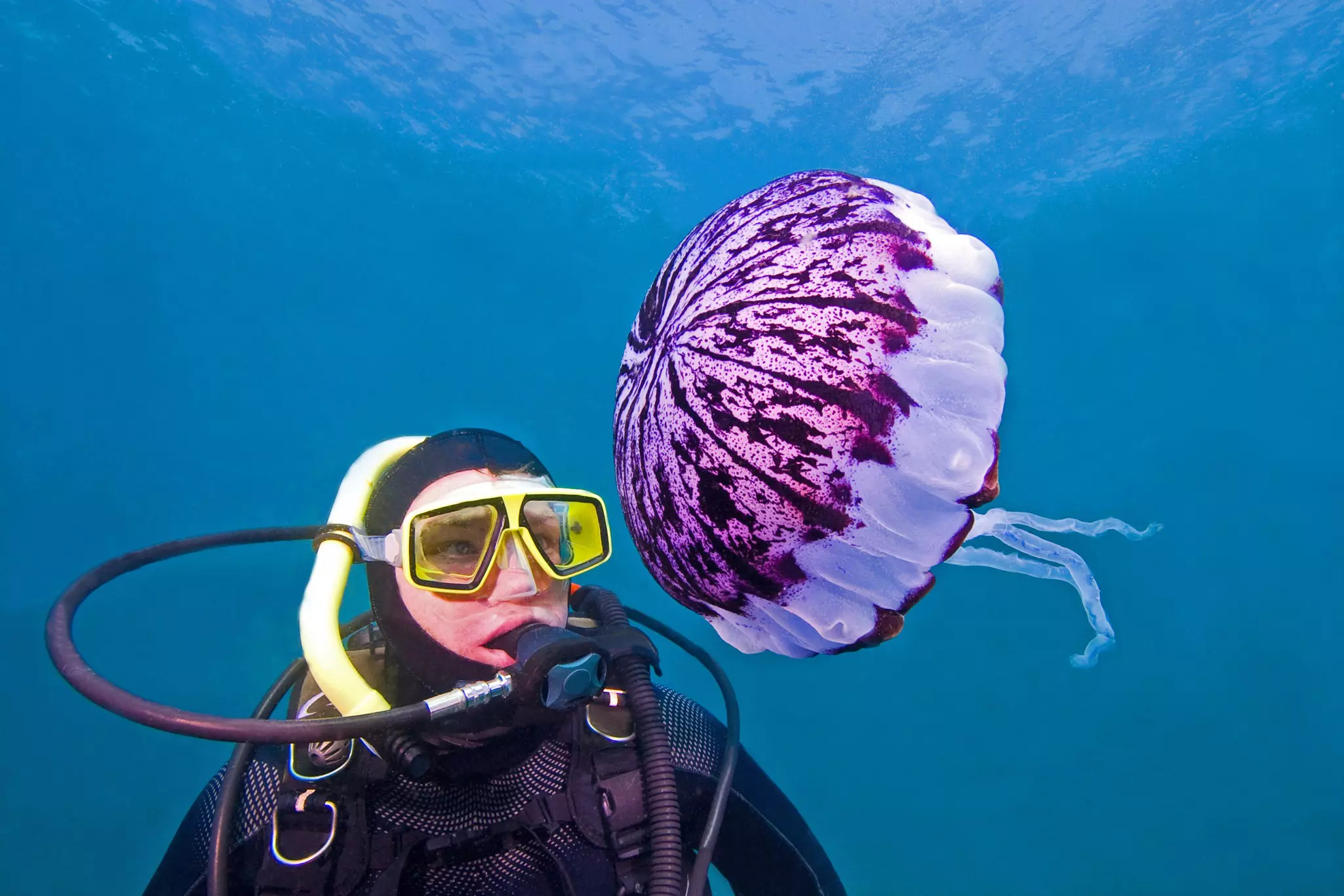
The public is barred from landing on the two US naval base islands of San Nicolas and San Clemente, but scuba diving, boating and swimming are permitted in approved areas, and many boat trips run out here from the mainland.
Before becoming a launch platform for missile testing, San Nic was home to the "Lone Woman of San Nicolas Island," the last Native American to live on the islands and the inspiration for Karana, the heroine of Scott O’Dell’s Newbury-Award-winning novel, Island of the Blue Dolphins.
San Clemente is the southernmost Channel Island, and it's an important elephant seal rookery, as well as being a ship-to-shore firing range. This is also the spot where human US Navy SEALs train for missions (a replica of Osama Bin Laden’s compound in Pakistan was even built on the island). Boat tour operators stick to approved waters away from naval operations.
Planning tip: If you go diving in the kelp forests around San Clemente and San Nicolas, look out for gorgonians, giant lobsters, Garibaldis, and rare soupfin sharks.
Getting there: The only way for civilians to visit is on scuba diving, fishing and boating trips arranged through commercial operators on the mainland.
Accommodation: No overnight stays or landings are permitted on the islands.
Costs vary depending on the island. For Santa Catalina, costs are similar to other upmarket California holiday destinations. Because most goods need to be imported to the island, prices generally are higher than on the mainland. For other islands, your biggest cost is likely going to be the ferry crossing or boat tour to the island; there is no entry fee for Channel Islands National Park, and camping costs a pocket-friendly $15 per tent site.
Portions of this article appear in Corinne Heyning Laverty's book, North America's Galapagos: The Historic Channel Islands Biological Survey. University of Utah Press, December 2019
Explore related stories