Set on its own tranquil peninsula reaching into the estuary, this fantastical collection of colorful buildings with a heavy Italian influence was masterminded by Welsh architect Sir Clough Williams-Ellis. Starting in 1925, Sir Clough collected bits and pieces from disintegrating stately mansions and set them alongside his own creations and, with a "light-opera sort of approach," concocted this seaside utopia. At age 90, Sir Clough deemed Portmeirion to be complete – 50 years after he began.
It's really more like a stage set than an actual village and, indeed, it formed the ideally surreal set for cult TV series The Prisoner, which was filmed here from 1966 to 1967. It still draws fans of the show in droves, with rival Prisoner conventions held annually in March and April. The giant plaster-of-Paris Buddha, just off the piazza, featured in the 1958 film The Inn of the Sixth Happiness, starring Ingrid Bergman. Architecturally, it's a mishmash: there are Ionic columns topped with Thai figures, and a Jacobean town hall nestles alongside a Mediterranean piazza.
A documentary on Sir Clough and Portmeirion screens on the hour in a building just above the central piazza. Sir Clough's lifelong concern was with the whimsical and intriguing nature of architecture, his raison d'être to demonstrate how a naturally beautiful site could be developed without defiling it. His life's work now stands as a testament to beauty, something he described as "that strange necessity." He died in 1978, having campaigned for the environment throughout his life.
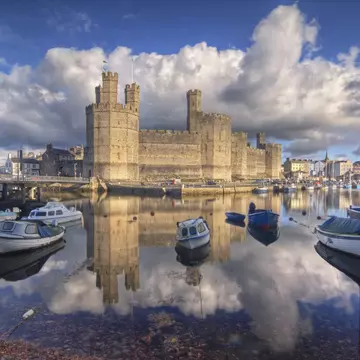
Most of the kooky cottages and scaled-down mansions scattered about the site are available for holiday lets (the Unicorn building, with its faux-Georgian facade, offers great views over the central village) and it's well worth experiencing Portmeirion after the day trippers have left. The other buildings contain cafes, restaurants and gift shops. Portmeirion pottery (the famously florid tableware designed by Susan, Sir Clough's daughter) is available, even though these days it's made in Stoke-on-Trent (England). A network of walking paths thread along the coast and through the forested private peninsula, which includes authentic castle ruins and a profusion of exotic plants, nourished by the warm microclimate of the peninsula.
Portmeirion is 2 miles east of Porthmadog. Public transport there isn't great, so if you don't fancy the walk, you're best to catch a taxi.
It's well worth staying on-site at Hotel Portmeirion & Castell Deudraeth. Choose between over-the-top Hotel Portmeirion in a prime spot by the water, with individually styled rooms, pool and a terraced bar, or fancifully Gothic Castell Deudraeth, just outside the village.