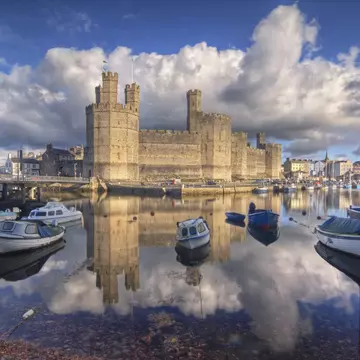
Built on a promontory, Harlech Castle was once impregnable, made so by the sea and the moat. Edward I finished this mighty castle in 1289, the southernmost of his "iron ring" of fortresses designed to keep the Welsh firmly beneath his boot. The gray-sandstone castle's massive twin-towered gatehouse and outer walls are still intact, giving the illusion of impregnability even now. The finest exterior view of the castle (with Snowdon as backdrop) is from a craggy outcrop on Ffordd Isaf.
Entry is through the interactive visitor center, and a drawbridge leads through three sets of gates and portcullises to the compact inner ward, where four round towers guard the corners. Some of the ramparts are partly ruined and closed off, but you can climb other sections. The fortress' great natural defense is the seaward cliff face. When it was built, ships could sail supplies right to the base, but the sea has receded since.
Despite its might, this fortress has been called the "Castle of Lost Causes" because it has been lucklessly defended so many times. Owain Glyndŵr captured it after a long siege in 1404. He is said to have been crowned prince of Wales in the presence of envoys from Scotland, France and Spain during one of his parliaments in the town. He was, in turn, besieged here by the future Henry V.
During the Wars of the Roses, the castle is said to have held out against a siege for seven years and was the last Lancastrian stronghold to fall. The siege inspired the popular Welsh hymn "Men of Harlech," which is still played today in regimental marches and sung with patriotic gusto at rugby matches. The castle was also the last to fall in the English Civil War, finally giving in to Cromwell's forces in 1647, because sturdy architecture is no match for human treachery.