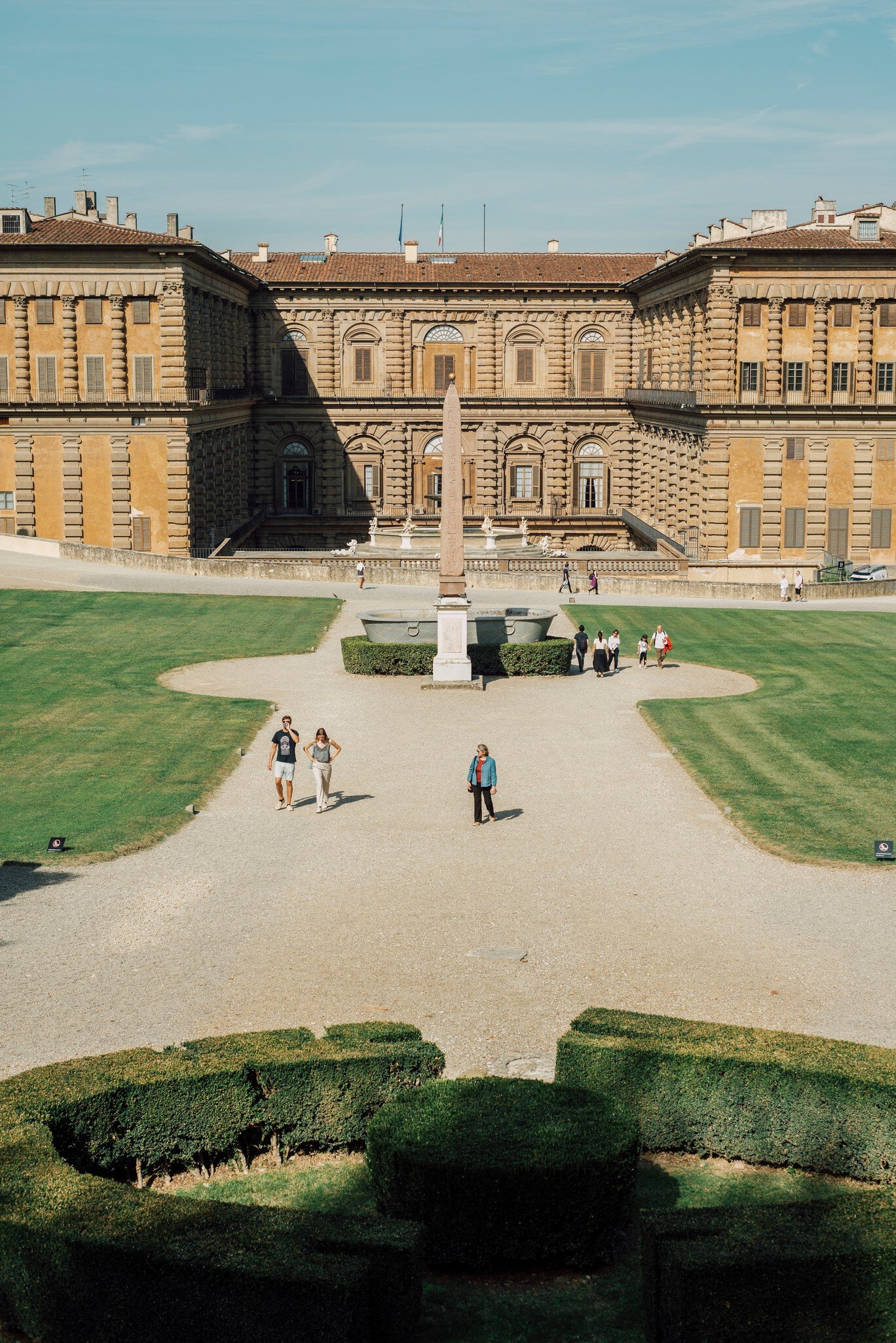
The Palazzo Pitti was the residence of the Medici from 1549, when Duchess Eleonora di Toledo acquired the building previously owned by banker Luca Pitti.
The initial design of the palazzo, sketched in 1440 by Brunelleschi, was taken over in the mid-16th century by court architect Bartolomeo Ammannati, who transformed the structure into the stately palace dominating the sloping Piazza Pitti we know today.
Galleria Palatina & Imperial & Royal Apartments
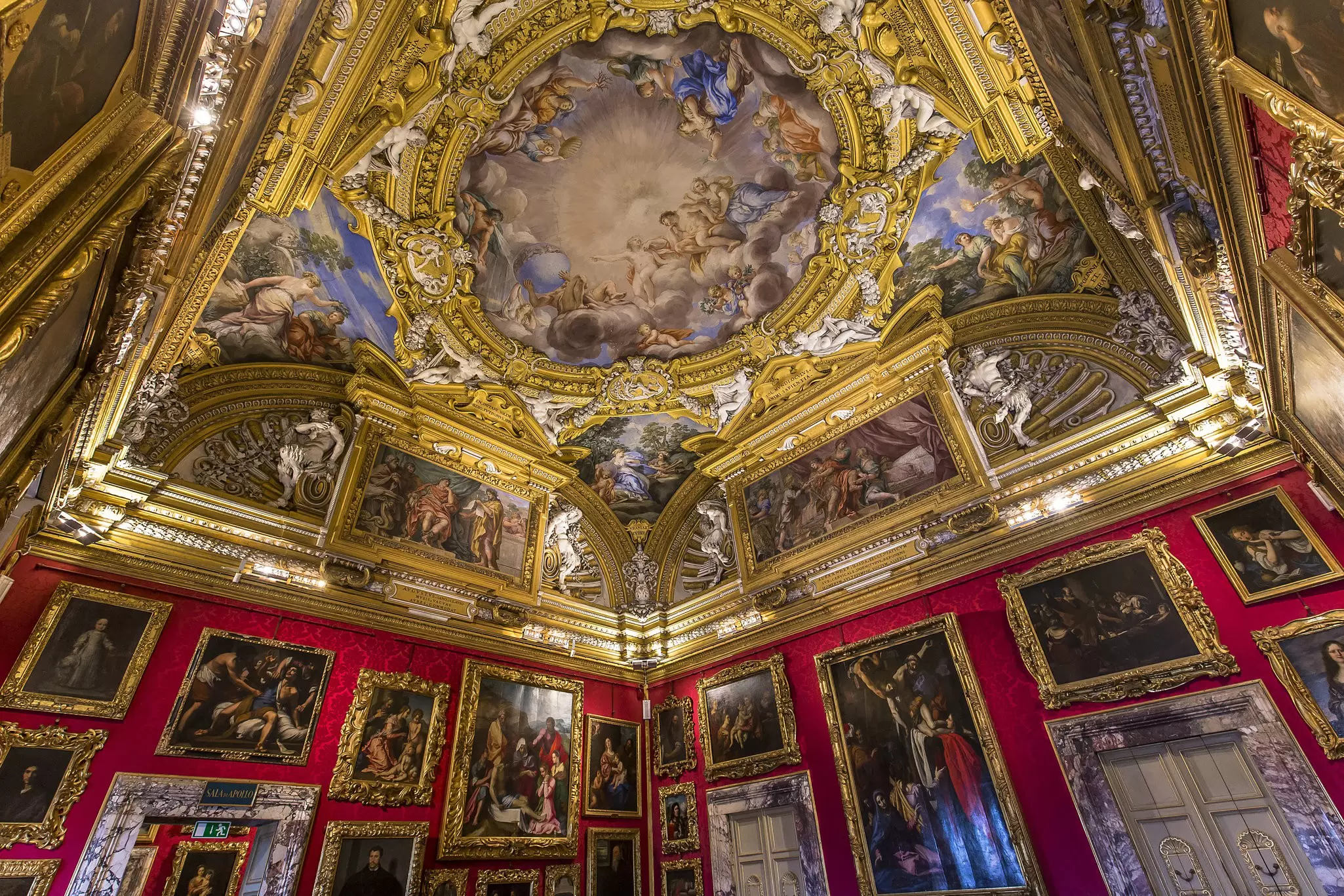
After passing the security checks at the entrance, climb to Palazzo Pitti’s 1st floor to enter the Galleria Palatina. Following the sculpture gallery established by the Lorraine government, you’ll enter the halls once belonging to the Duchess’ apartment, Sala dei Castagnoli and Sala della Musica. Connecting to the Duke’s apartment is the red Sala dei Poccetti, which leads to the Sala di Prometeo, where the Grand Duchy’s Council used to meet. This houses Filippo Lippi’s round Madonna col Bambino (1452–53).
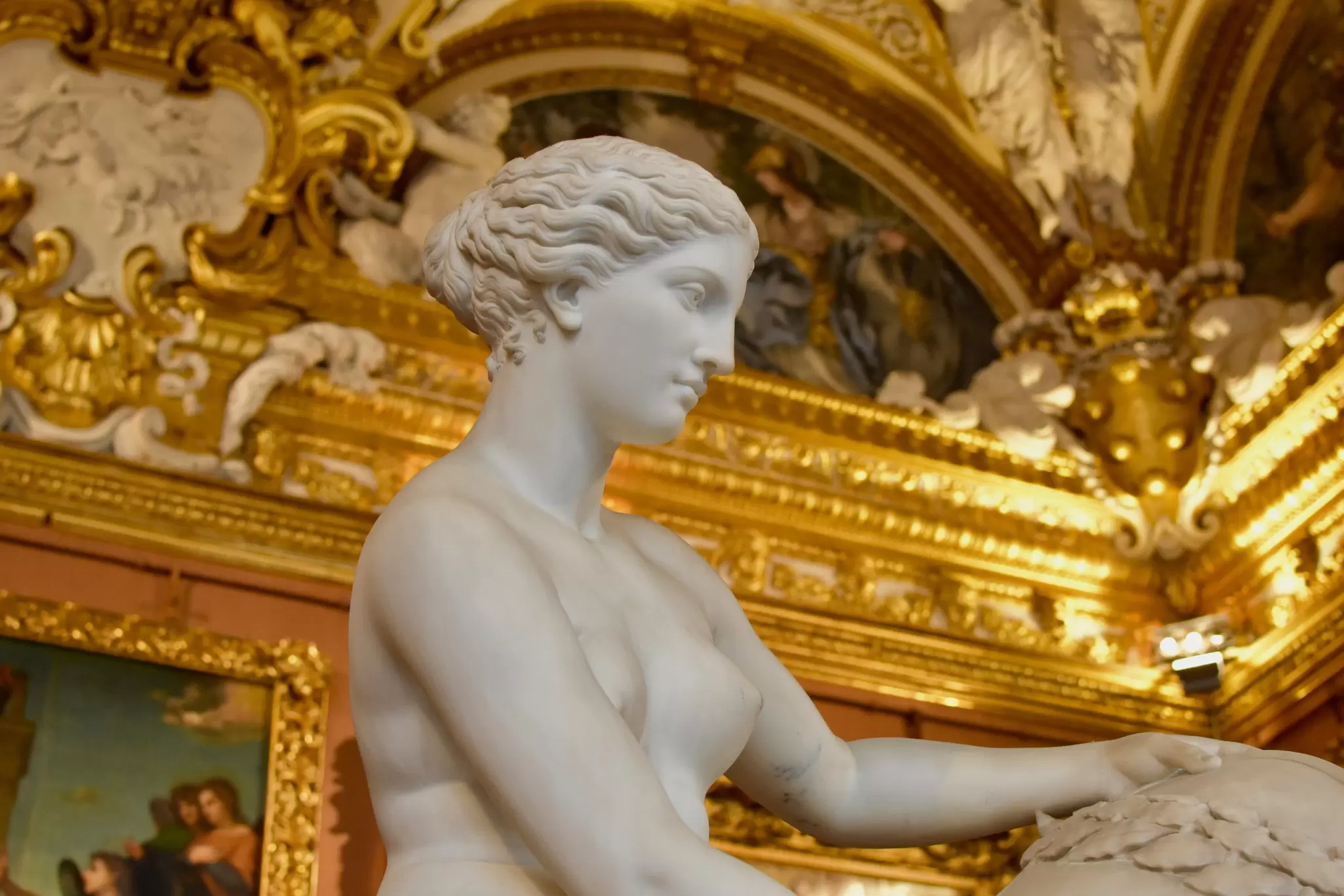
Look up to see the four seasons represented in the ceiling’s corners, then enter Sala di Ulisse to find paintings by Raphael, Vasari and Cigoli. Past the marble bathroom built for Napoleon, the Greek myth theme continues. Caravaggio’s Amore Dormiente (1608–09) awaits in the Sala dell'Educazione di Giove. Step into the beautiful Sala dell’Iliade – surrounding Lorenzo Bartolini’s statue La Carità (1824) are large-scale paintings by Andrea del Sarto and Fra Bartolomeo. These are observed from above by Zeus, who's depicted on the ceiling as part of the cycle inspired by Homer’s Iliad. Continue to the Sala di Apollo to meet Bronzino’s Morgante, Cosimo I’s favorite dwarf, painted naked from two perspectives. Conclude in the Sala delle Nicchie, one of the oldest sections of the palace, before exiting via the Sala Verde, where the Duke’s guards used to reside, housing Luca Giordano’s Allegoria della Pace tra Firenze e Fiesole (1682).
Galleria d’Arte Moderna
On the 2nd floor of Palazzo Pitti, find the galleries dedicated to art produced in the post-Medici era, between the 18th and 20th centuries. The halls where the Grand Dukes of the Lorraine dynasty resided now showcase paintings and sculptures belonging to the Neoclassicist current. These include the works of Antonio Canova and Pietro Tenerani, followed by Romantic pieces and many important examples of the Macchiaioli movement, established in Tuscany in the late 19th century. Especially fascinating are the large-scale war scenes by Giuseppe Bezzoli and the melancholic depictions of Florence by Antonio Fontanesi.
Museo della Moda E del Costume
Entirely refurbished in 2023, Palazzo Pitti’s Museo della Moda e del Costume started as a showcase of the dresses worn by the city’s elite during the Renaissance and has expanded to pay tribute to Italian fashion heritage, starting from Eleonora di Toledo’s 16th-century ceremonial dresses to the 20th-century designs by Elsa Schiaparelli, Gianni Versace and Miuccia Prada.
Tesoro dei Granduchi
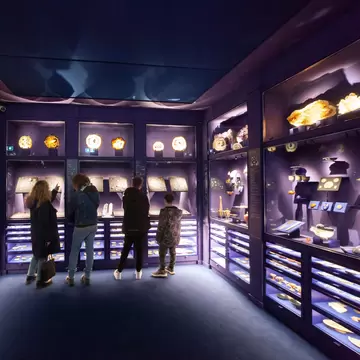
Before leaving, return to the ground floor to visit the spectacular halls formerly functioning as the Medici’s summer apartments. The precious porcelains, ambers and vases that belonged to the dukes are exhibited here, but the true highlight is the frescoes adorning the halls. The largest of these rooms takes the name of the artist who envisioned the paintings covering the entirety of the walls and ceiling, Giovanni da San Giovanni. He decorated it in 1635 to celebrate the wedding of Ferdinando II and Vittoria della Rovere, allegorically depicting the couple on the ceiling in a dazzling trompe l’oeil. Don’t miss Bartolomeo Piggi’s hand-drawn genealogical tree of the Medici family and Lorenzo the Magnificent’s death mask in the Grotticino room.