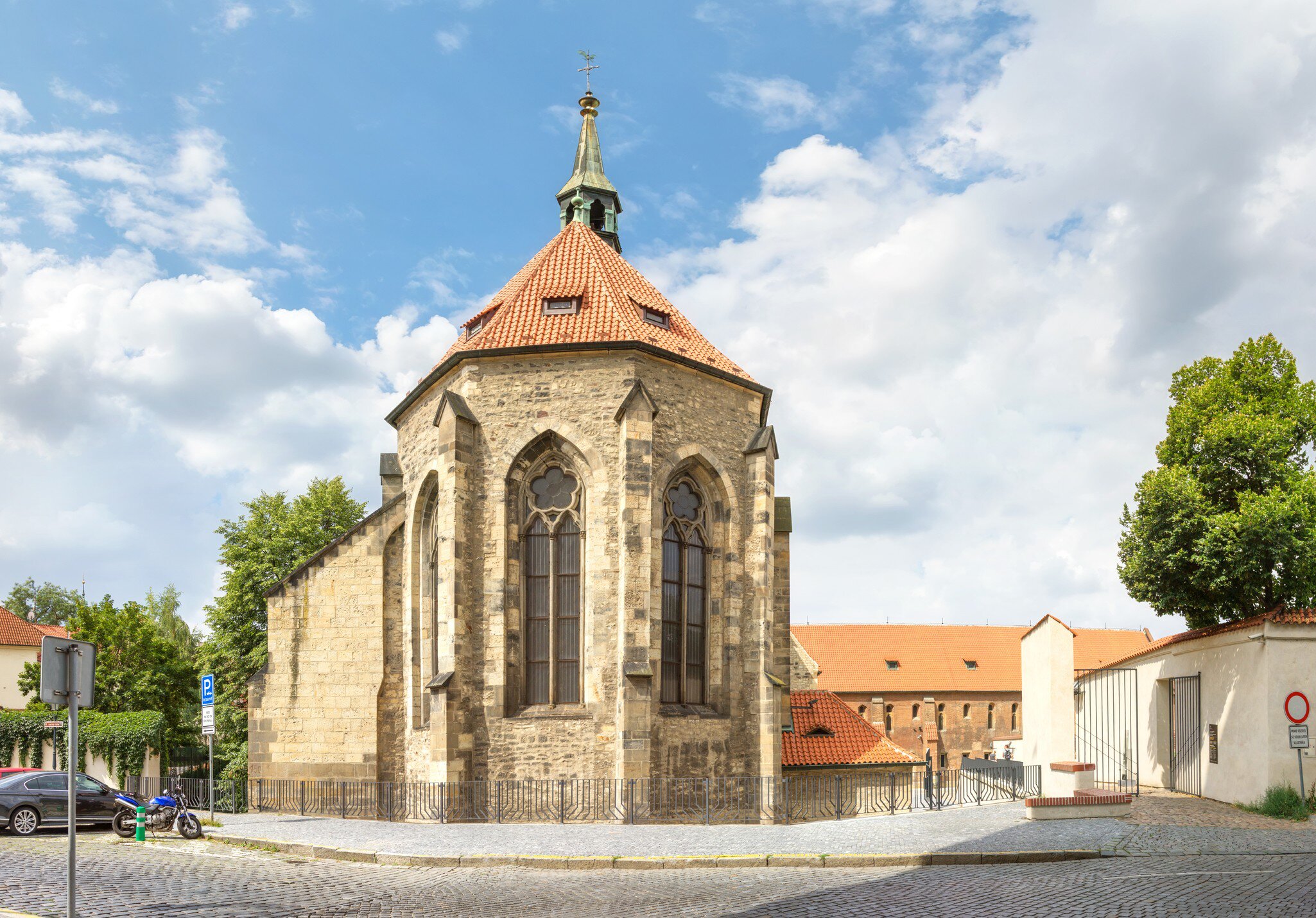
In the northeastern corner of Staré Město, the former Convent of St Agnes (ngprague.cz) holds the National Gallery’s priceless collection of medieval and early Renaissance art (1200–1550): glowing Gothic altar paintings and polychrome religious sculptures. The building itself is considered Prague’s oldest surviving example of Gothic architecture and has a fascinating history.
Monastery's Origins
In 1234 the Franciscan Order of the Poor Clares was founded by Přemysl King Wenceslas I, who made his sister Agnes (Anežka) the first abbess. In the 16th century, the convent was handed over to the Dominicans, and after Habsburg Emperor Joseph II dissolved the monasteries in the 18th century, it became a squatters’ paradise. The complex was restored and renovated in the 1980s. Agnes went on to become beatified in the 19th century and was canonized as "St Agnes of Bohemia" in 1989.
Medieval Treasures
The highlights of the permanent collection include dozens of paintings, images and altarpieces from the late-Gothic and early-Renaissance, and are drawn in part from the collections of John of Bohemia (1296–1346) and his son, Emperor Charles IV (1316–78). Look for notable painters and sculptors: Master Theodoric, the Master of the Třeboň Altarpiece (and the magnificent triptych itself) and the Master of the Krumlov Madonna (from around 1400).
In addition to the art gallery, visit the French Gothic Church of the Holy Saviour, which contains the tombs of St Agnes herself and Wenceslas I’s Queen Kunigunde of Hohenstaufen.