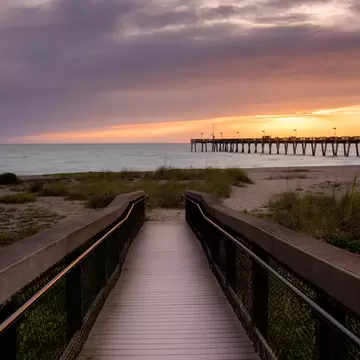
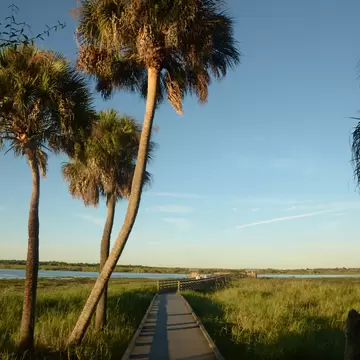
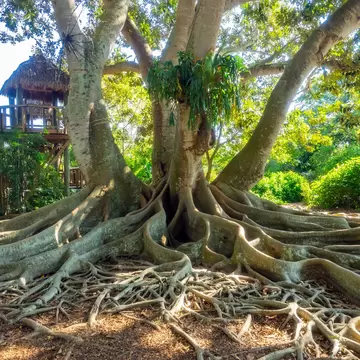
Explore layers of history at this environmental and archaeological site, which covers a 30-acre peninsula jutting out into Little Sarasota Bay. Covered in shell middens, small pioneer cottages, a chapel and a citrus packing house, the peninsula was bought in 1910 by wealthy widow Bertha Potter Palmer, one of Sarasota's most dynamic entrepreneurs. A museum on the property tells her story beside a unique excavated shell midden and several pioneer homesteads and outbuildings.
Oddly, there were never any Spaniards at Historic Spanish Point. Instead the name derives from a friendly Spanish trader who tipped off early settlers John and Eliza Webb about the idyllic location when they were searching for land to farm in 1867. Eventually the Webbs accumulated the entire peninsula, which they planted with citrus they shipped to market in Cedar Key and Key West. Wander the 1-mile trail (tours via electric cart are also available) around the site and you can see the wooden packing house, Mary’s Chapel, the Webb-family cemetery and Frank Guptill’s beautiful wooden homestead, which he built for their daughter Lizzie.
Between 1959 and 1962 the Smithsonian Institution partially excavated one of the shell middens. You can enter the mound and see what the layers of shell deposits and prehistoric paraphernalia look like from the inside. It’s the only such site in Florida and is quite fascinating.