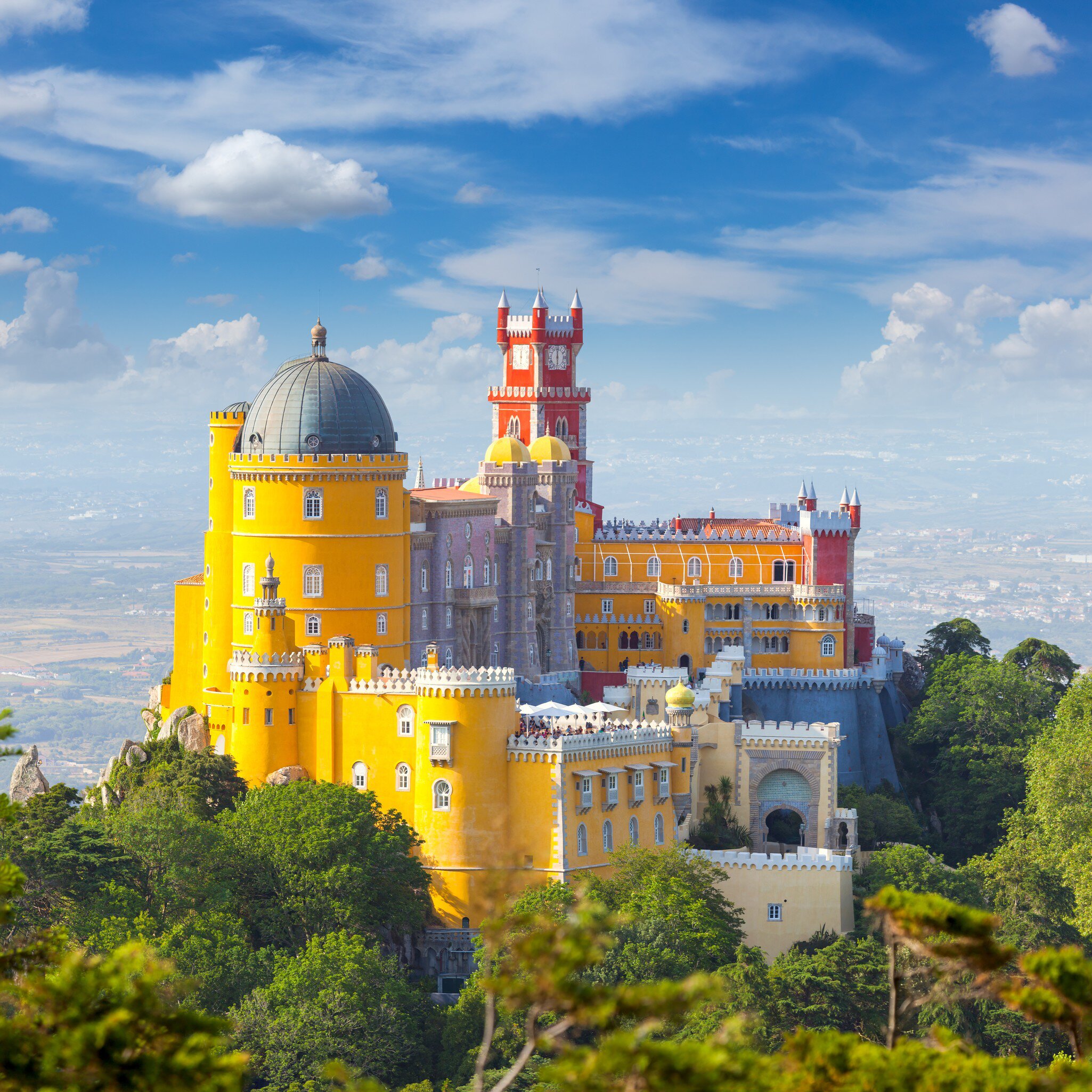
Rising from a thickly wooded peak and often enshrouded in swirling mist, Palácio Nacional da Pena is a wacky confection of onion domes, Moorish keyhole gates, writhing stone snakes and crenellated towers in pinks and lemons. It is considered the greatest expression of 19th-century romanticism in Portugal.
Ferdinand of Saxe Coburg-Gotha, the artist-husband of Queen Maria II, and later Dom Ferdinand II, commissioned Prussian architect Ludwig von Eschwege in 1840 to build the Mouresque-Manueline epic (and as a final flourish added an armored statue representing a medieval knight overlooking the palace from a nearby peak). Inspired by Stolzenfels and Rheinstein castles and Potsdam's Babelsberg Palace, a flourish of imagination and color commenced.
The eclectic, extravagant interior is equally unusual, brimming with precious Meissen porcelain, Portuguese-style furniture, trompe l’œil murals and Dom Carlos’ unfinished nudes of buxom nymphs.
Buses depart from the entrance to the palace every 15 minutes (€3); otherwise it's a 10- to 15-minute walk uphill.