Aug 12, 20269 min read
Lonely Planet’s Guide to Overtourism in NaplesJul 3, 2026
7 MIN READ

Writer
Naples, Italy. tommaso lizzul/Shutterstock

Writer
Highlights
Writer Federica Bocco breaks down the smartest ways to get around Naples.
Walk the pedamentine downhill for panoramic views, then ride a funicular back to the center.
Ride the metro at least once – Naples' Stations of Art include the blue Toledo station.
Take the Circumvesuviana to Pompeii, or catch a ferry from Molo Beverello to Capri.
Lonely Planet may earn a commission from affiliate links on our site. All recommendations and reviews reflect our own independent opinions.
There is no better way to get to know Naples than to walk its cobbled streets and take in the breathtaking views one step after another. Promenading is a favorite pastime for us Neapolitans and one we encourage tourists to emulate as you visit the city. Thankfully, the majority of the must-see sites are within walking distance.
Naples is more than 2500 years old, and its millennia-long history has led to a unique navigability. This is not a city made for driving: streets are narrow, traffic jams are frequent, and drivers are unpredictable; As a Neapolitan, I don't recommend that tourists drive or cycle in Naples. Walking should be your first option, followed by public transportation, which is an effective and convenient way to cover longer distances, as the infrastructure has improved significantly in recent years. Here are the smartest ways to navigate Naples like a local.
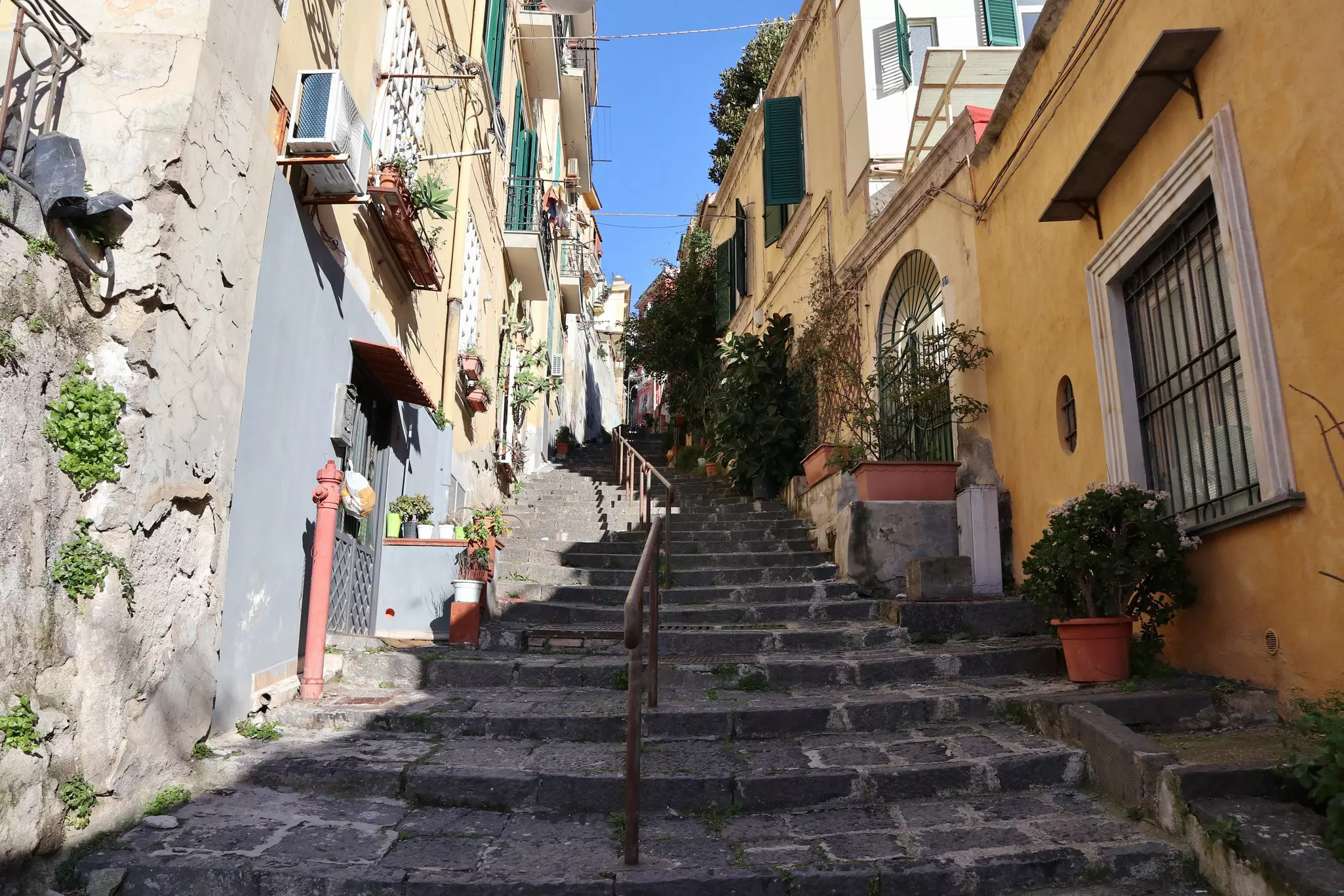
The city of Naples extends from the hills to the sea, and distances can feel enormous on foot. Thankfully, the Neapolitans of centuries gone by built effective ways to vertically cross the city with minimum effort: long stairways leading downhill, which are called pedamentine. The best part about using the pedamentine is the unique panoramic views. Take the 700-year-old Pedamentina San Martino that connects the scenic area of San Martino (home to Castel Sant’Elmo and the Certosa e Museo di San Martino) to the historic center in 414 gentle steps. Two other scenic pedamentine connecting the Vomero hill to the Chiaia quarter by the sea are Petraio and Calata San Francesco.
Local tip: Opt for the pedamentine going downhill to take in the sights and catch a funicular or subway on the way up.

Another typical, sustainable and much more accessible alternative to climb the hills in Naples are the its funiculars, which cross the city vertically connecting the historic center with the hilltop quarters. Naples’s funiculars are more than 100 years old, as witnessed by their Liberty-style stations. Funiculars are convenient because they take you to your destination in a few minutes with very little wait time.
Local tip: For a multimedia experience, ride a funicular as you listen to the iconic song that cemented them in Neapolitan culture, all the way back in 1880, "Funiculì Funiculà."

Hop on the metro in Naples at least once to admire the so-called Stations of Art, which connect all corners of town. Naples is the proud home of some of the most beautiful metro stations in the world – all stations display artwork at every level, but some are true architectural works of art themselves. The Toledo station, a triumph in blue, is an ode to the sea, and the Chiaia station is a temple to the Greek gods to which Naples was once devoted. There are two urban subway lines, L1 and L6, and a handful of lines connecting Naples with nearby towns, including the Circumflegrea to Pozzuoli and the Circumvesuviana to Sorrento, among others. For a more pleasant experience, avoid rush hour.
Local tip: Bring your camera to capture the beauty of the stations and try to go to the Toledo station during the day for the best light.
After savoring Naples, visit the many wonderful towns nearby. The Circumvesuviana train, departing from the Napoli Centrale station, stops at all of the towns around Mt Vesuvius, including the archaeological park of Pompeii, the ancient Herculaneum and Oplontis, all the way to the charming Sorrento, from where you can hop on a SITA Sud bus to the Amalfi Coast. Circumvesuviana trains are very frequent, but riding times and ticket fares vary depending on the destination; some rides take much longer as they stop at every town, while some others only stop in Pompeii, Herculaneum and Sorrento. Check out the timetable and fare on the official EAV website; tickets can be bought directly at the station.
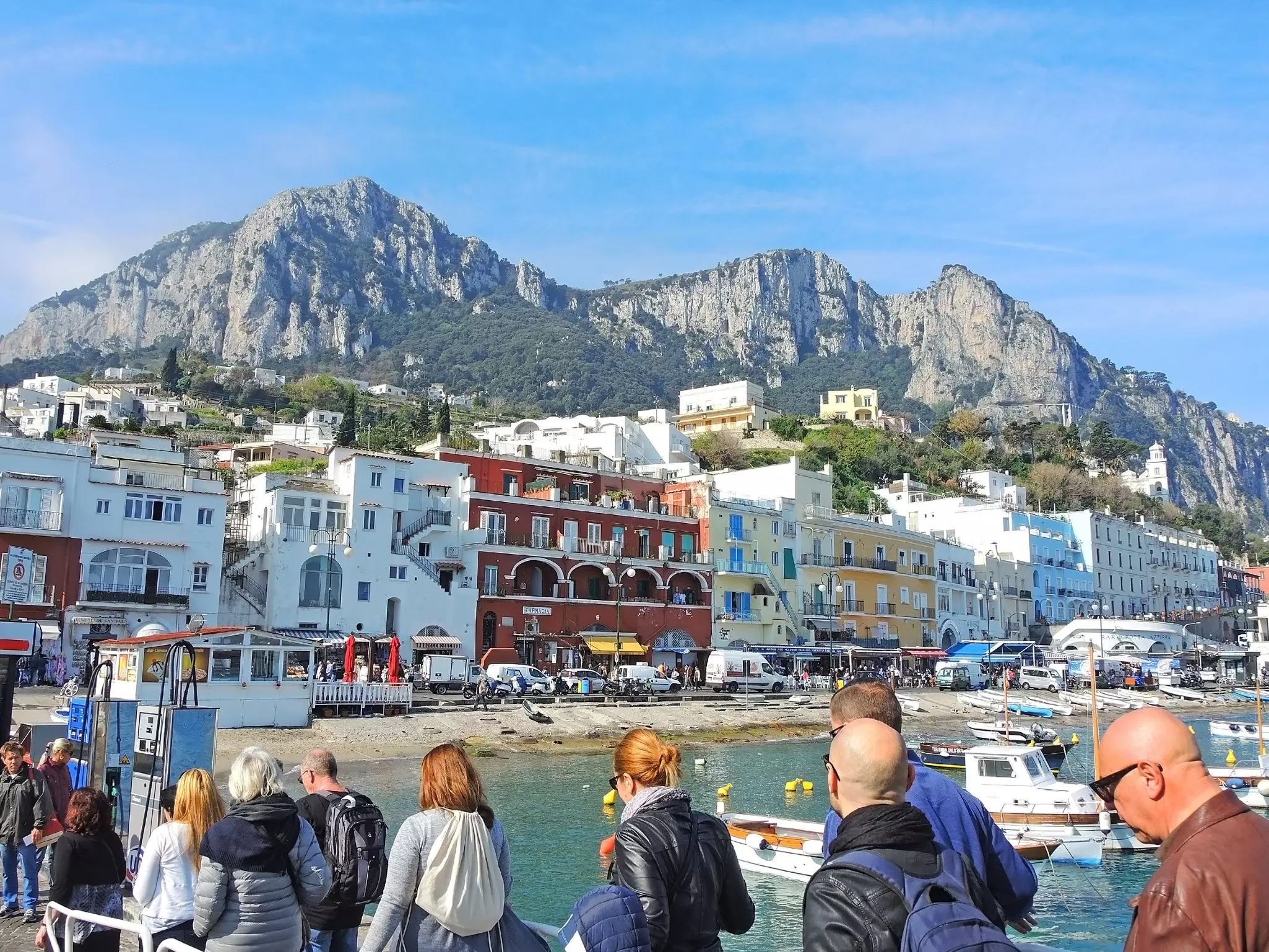
Ferries also run to the islands of Capri, Procida, Ischia and the town of Sorrento and the Amalfi Coast, through the ferry companies Alilauro and Caremar. Purchase tickets online or directly at the Molo Beverello port in Naples.

Once you land in Naples Capodichino Airport, a convenient and fast way to reach the city center is to hop on the Alibus. This public bus stops at Stazione Centrale (the main train station) and the port. Get a ticket directly on board or on the ANM Go app. A metro station connecting the Capodichino airport to the city center is under construction and an opening date hasn't yet been confirmed.
Uber is legal in Italy and is not yet very common in Naples. A better alternative is the officially licensed white taxi cars. Be aware that locals don't often use cabs, so getting into one will automatically brand you as a tourist. Before climbing into a taxi, ask the driver for an estimate of the fare; bonus points if you do it in Italian. Start with a polite "Buongiorno, " (Good day) and ask “Quanto costerebbe arrivare a…?" (How much would it be to get to…).
Cabs must accept credit cards, although some drivers might try to talk you out of it or say that their reader is broken to avoid paying taxes on every ride. It is your right to pay with card if you so wish. If you want to avoid the hassle, just bring some euros with you.
The concept of rental bikes or push scooters is not as widespread in Naples as it is in other European cities. Driving in Naples is not easy given the uphill roads, uneven paving and too narrow streets, combined with unpredictable drivers. If you feel comfortable and safe, however, download the BIT Mobility app to look for and reserve the nearest Segway.
Despite its bas reputation for being somewhat unsafe and dirty, public transportation in Naples is reliable and its vehicles are clean and safe. There is security and cameras are present in all stations, but pick-pocketers still exist – as in most metropolitan areas in the world – so keep your eyes open and be mindful of your belongings at all times. Wear your backpacks on your chest and don’t keep valuables in your back pockets.

With recent efforts to offer more modern and inclusive services, the public transportation in Naples has come a long way in terms of accessibility. All metro stations and funiculars (with the exception of Funicolare di Mergellina) have elevators and tactile signs, and 80% of street-level transport (buses, trams) also have lifting facilities for wheelchair users. The city itself has traits that may be less than ideal for wheelchair users, due to many stairways, uneven cobblestones and narrow sidewalks, but there are always alternative routes, and Neapolitans generally love providing help and directions to visitors. Don’t hesitate to ask.
If you plan to visit at least one museum in Naples, consider investing in a Campania or Napoli Arte Card. It covers transportation via metro, funicular, bus and tram, in addition to some museum fees.
Purchase single tickets for bus, funicular metro and tram, or grab a metro ticket for a 90-minute period or a full day (valid until 11:59pm that day). If you're in town longer, consider a seven-day pass that's good for all urban transport. Just remember to validate your tickets, whether physical or digital, to avoid incurring fines. You can purchase physical tickets at most tabacchi (tobacconist) stores or at any station, or use the Tap&Go method, which is available almost everywhere. Your safest bet is the ANM Go app for your phone; it’s easy to navigate and will provide accurate info and pricing on your route.
Explore related stories