Oct 8, 20268 min read
12 Best Christmas Markets in LondonFeb 27, 2026
14 MIN READ
Contributors
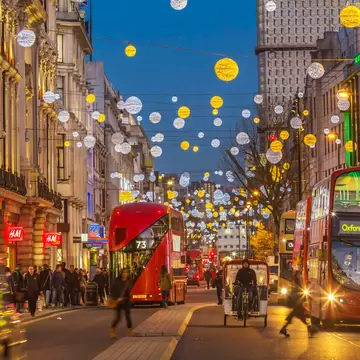
An intersection in central London. Kristi Blokhin/Shutterstock
Contributors


Tharik Hussain, Lonely Planet Editors
Lonely Planet may earn a commission from affiliate links on our site. All recommendations and reviews reflect our own independent opinions.
With some 9 million people within its huge city limits, London sprawls in a major way. Indeed, the city has been evolving and growing for two millennia and counting, and is today an accumulation of Roman walls, Victorian neighborhoods, post–WWII developments and ongoing major projects. Through it all threads a spaghetti of roads, Tube and train lines, bike paths and (of course) the mighty River Thames.
In short, London is not not the most intuitive city to navigate.
But that doesn’t mean it’s difficult to get around via public transport – indeed, most visitors will rely on a mix of walking, buses and especially the Tube. Just make sure you have the right apps and good maps, pay attention to signage and budget a bit of patience.
Mode by mode, our guide offers an overview and tips for each transport option, as well as the all-important ticketing system. Here are all the best ways to get around London.
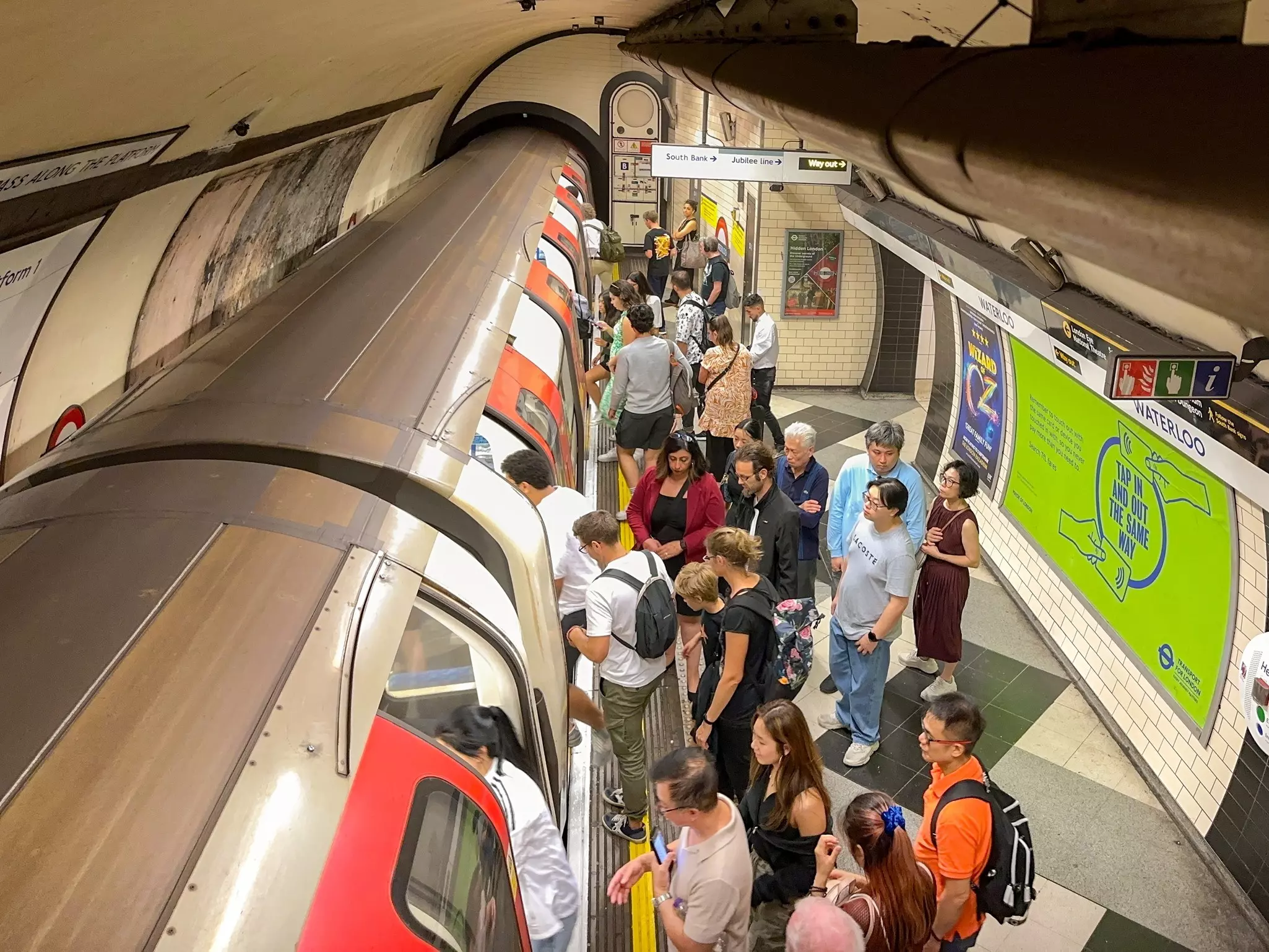
Universally known as “the Tube,” the London Underground is London’s subway system and consists of 11 different color-coded lines. (Despite its name, the Underground in fact operates above ground for more than half its extent.) Despite constant maintenance and engineering works requiring weekend closures and out-of-action escalators, the Tube is overall the quickest and easiest way of getting around the city, especially if you’re covering long distances. It’s also usually the warmest place to seek out your transport in winter (those numerous above-ground stations notwithstanding).
While Tube stations typically lie a good distance between one another, certain stations in central London are closer than they appear. Most famously, the Leicester Square station is only a 5-minute walk from Covent Garden – and going underground to travel between the two will take probably four times as long as the walk.
The Tube runs from 5am to 1am – although when your last train departs does vary by line and the day of the week.
Several lines (the Central, Jubilee, Northern, Piccadilly and Victoria lines) run all night on Friday and Saturday to get revelers home on what is called the “Night Tube,” with trains every 10 minutes or so (and off-peak fares).
The Piccadilly Line connects at some of London’s key sights and neighborhoods – Piccadilly Circus, Covent Garden, Hyde Park Corner and Knightsbridge – and it continues on to Heathrow’s airport terminals. Consider booking an accommodation near the line to maximize your time in town.
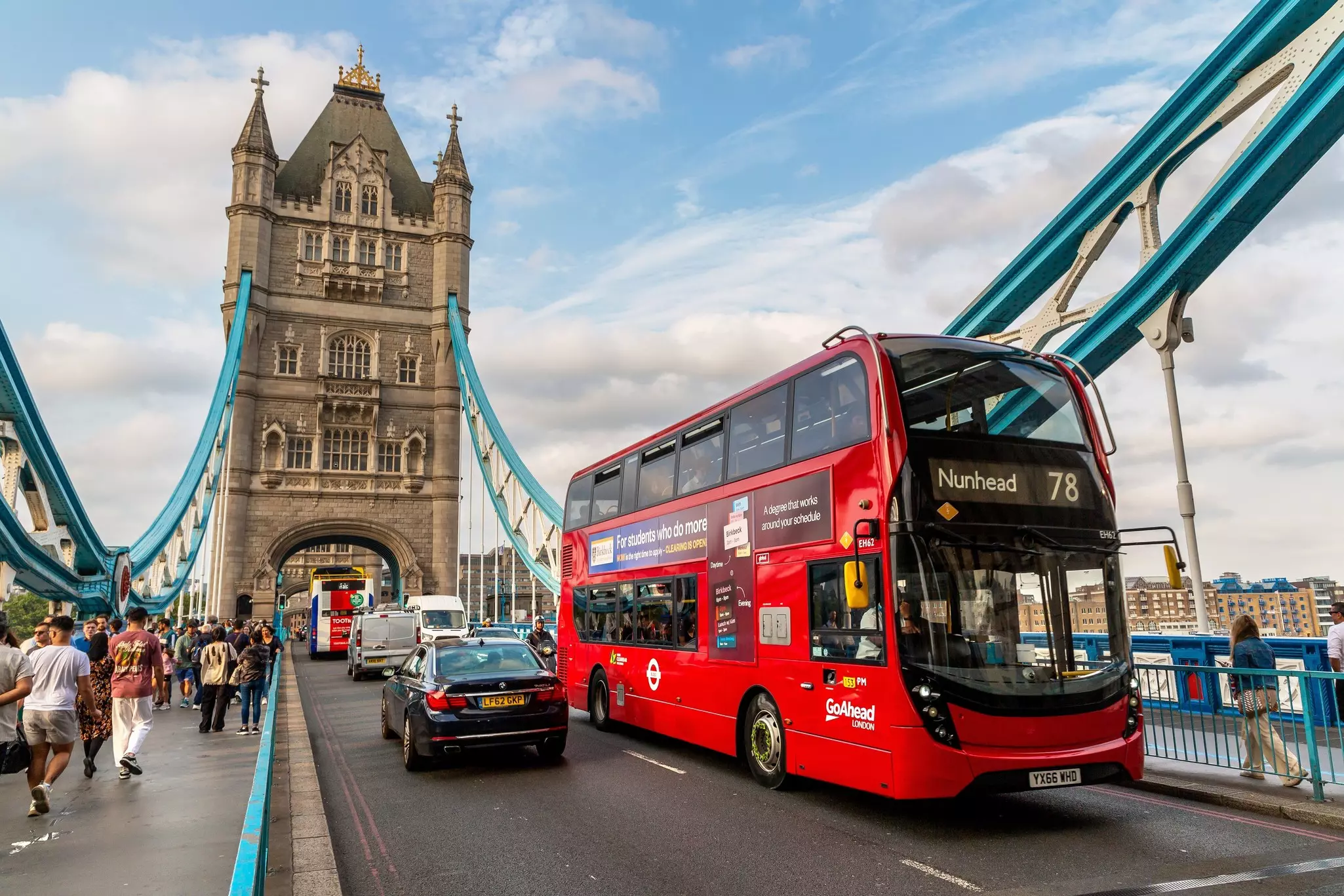
London’s ubiquitous red double-decker buses afford great views of the city, but the going can be slow thanks to traffic jams and the dozens of commuters who get on and off at every stop.
Excellent bus maps at every stop detail all routes and destinations served from that particular area (generally a few bus stops within a 2- to 3-minute walk, as shown on a local map).
Bus services normally operate from 5am to 11:30pm. Many bus stops have LED displays listing bus arrival times, although downloading an app such as Citymapper to your smartphone is the most effective way to keep track of when your next bus is due.
While it’s no longer served by heritage buses, Route 15 remains an extremely useful route for tourists, connecting the Tower of London, St Paul’s, the Strand and Trafalgar Square.
A project decades in the making, London’s “purple” line serves as the major east-west transit axis across Greater London (and beyond it). integrated with the Tube but not an official line of the system, the Elizabeth Line connects towns as far west as Reading and as far east as Shenfield to central London via hubs like Paddington, Liverpool Street Station and Tottenham Court Road. It also offers a quicker (although more expensive) journey between Heathrow and the city center.
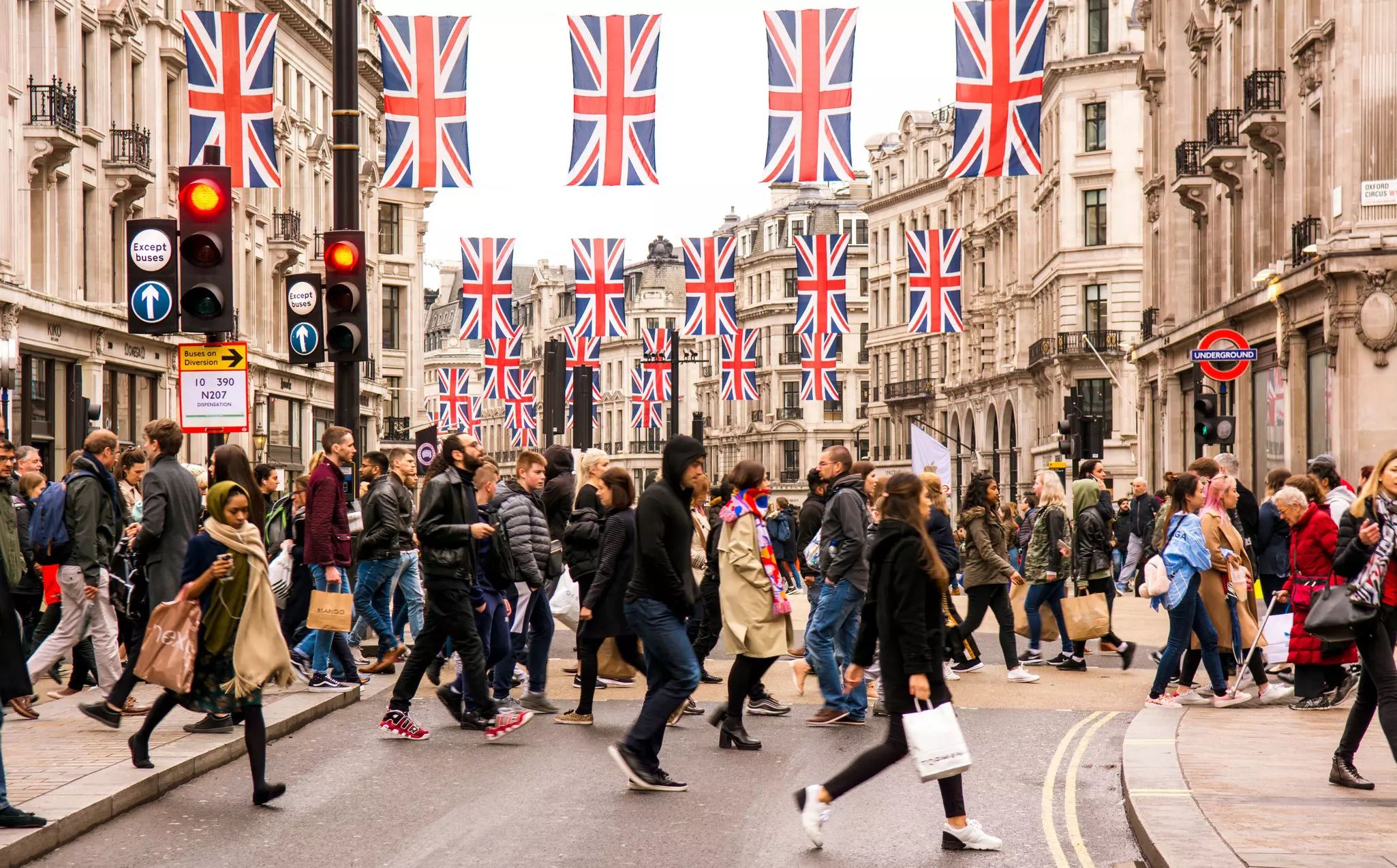
London is simply too large to cover exclusively on foot. Yet once you’re emerged from the Tube or bus in an area of interest, you can’t beat walking around for proper neighborhood exploration. We highly recommend a good map with GPS, as London’s thicket of irregularly laid-out streets can quickly disorient. (This applies equally for locals.) Bridges cross the Thames at regular intervals, and there are two pedestrian tunnels beneath the river, one at Greenwich and another further east, at Woolwich.
If you’re exploring London in winter, wrap up with a warm hat, gloves and scarf. And you can never rule out rain at any time of the year. In central London, an umbrella is a liability on narrow footpaths; you’re better off wearing a waterproof coat with a hood. Ice and snow are not uncommon in the depths of winter, so watch for slippery streets in the mornings.
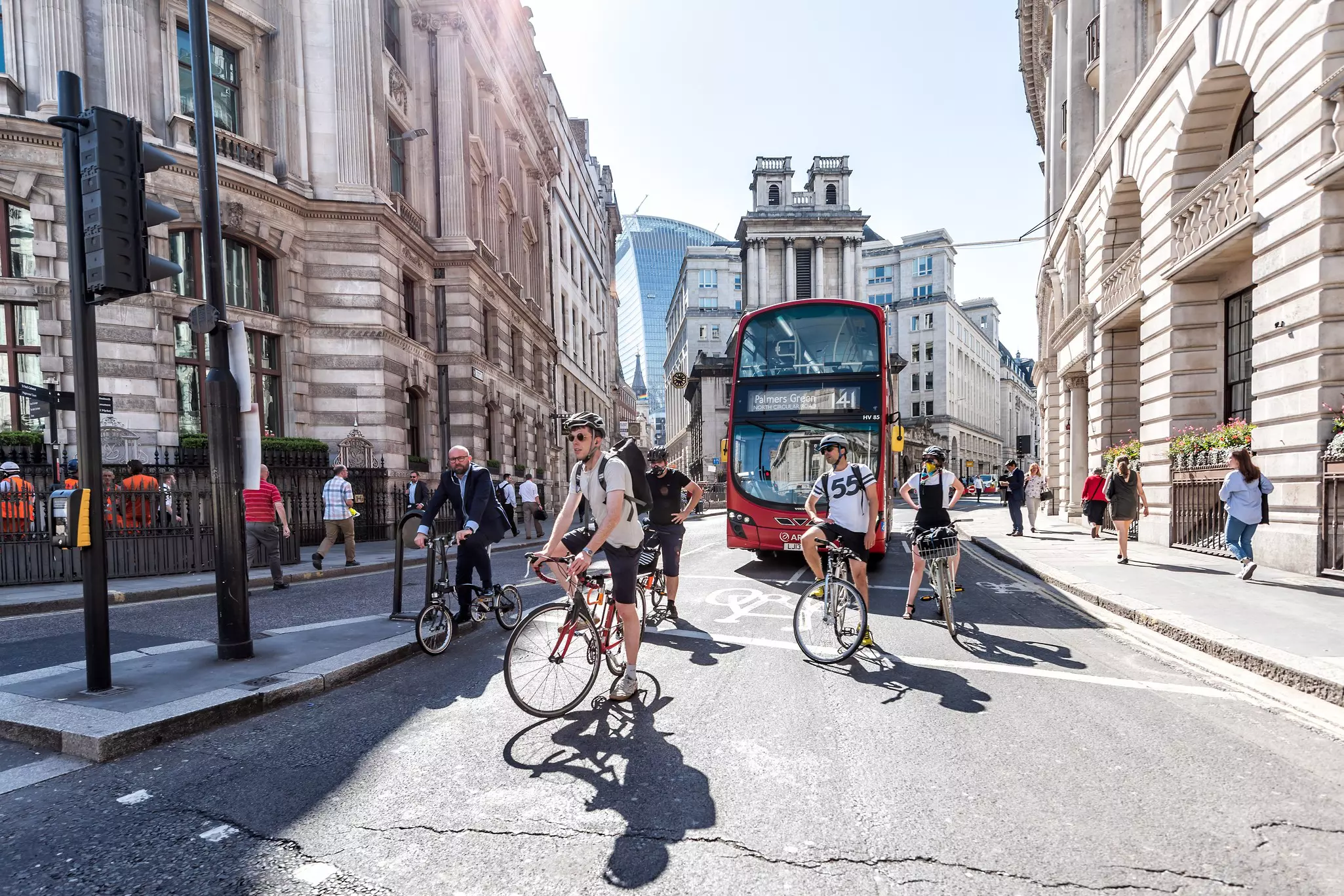
Pedestrians should also keep an eye out for cyclists (just as cyclists should always pay attention to pedestrians). Looking out for cars when you cross the road goes without saying – yet in London, many streets allow cyclists to ride against a one-way driving system on “contraflow” lanes. This means you need to look both ways before crossing roads – especially as you won't hear a bike coming.
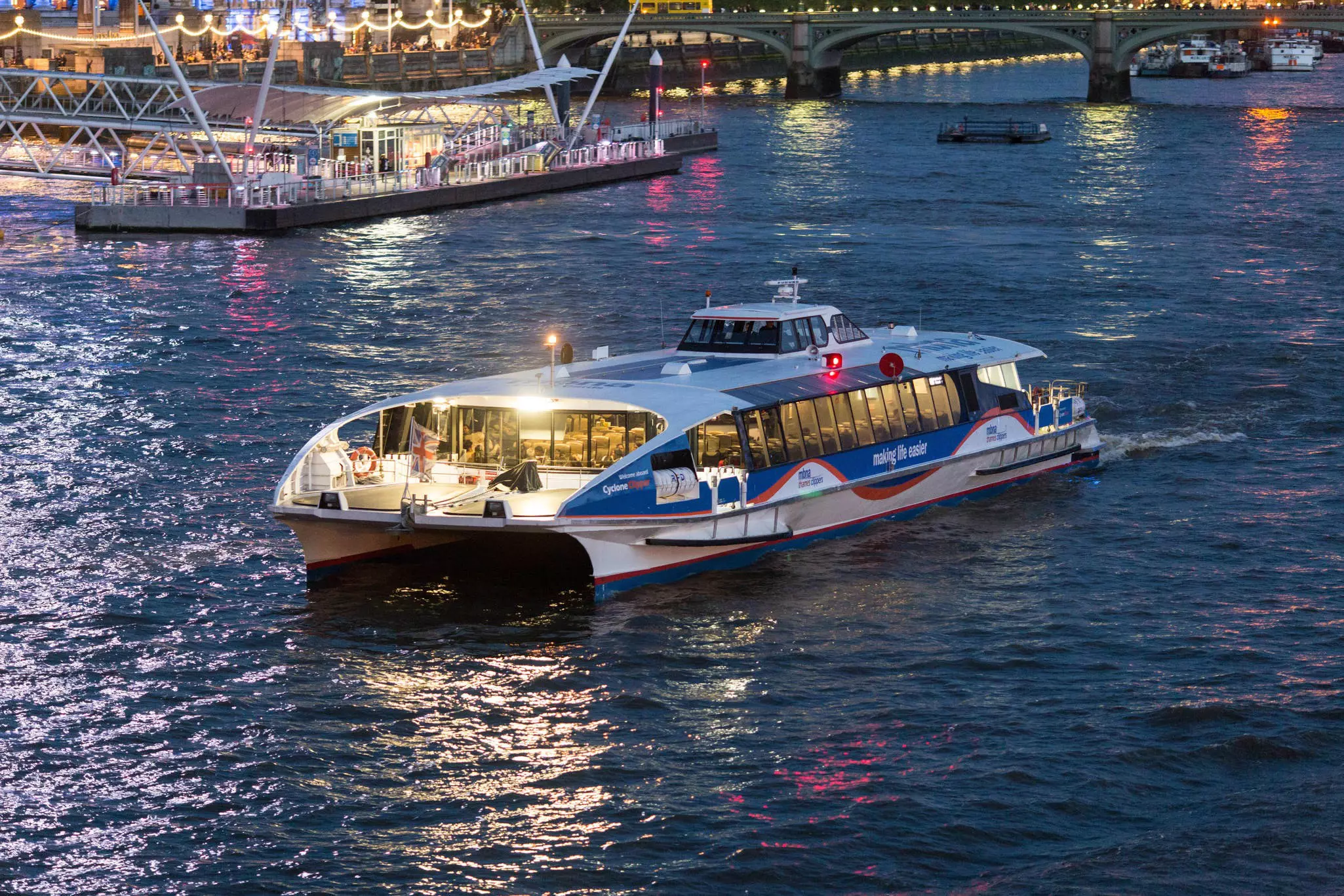
Several boat companies operate along the River Thames, though only Uber Boat by Thames Clippers offers true commuter services. Expect a fast and pleasant ride – you’re almost always guaranteed a seat and a view. Thames Clippers boats run regular services between Embankment, Waterloo (London Eye), Blackfriars, Bankside (Shakespeare’s Globe), London Bridge, Tower Bridge, Canary Wharf, Greenwich, North Greenwich and Woolwich piers. You can buy a one-off ticket at the piers, or tap to pay with your Oyster card or contactless payment method (more info below).
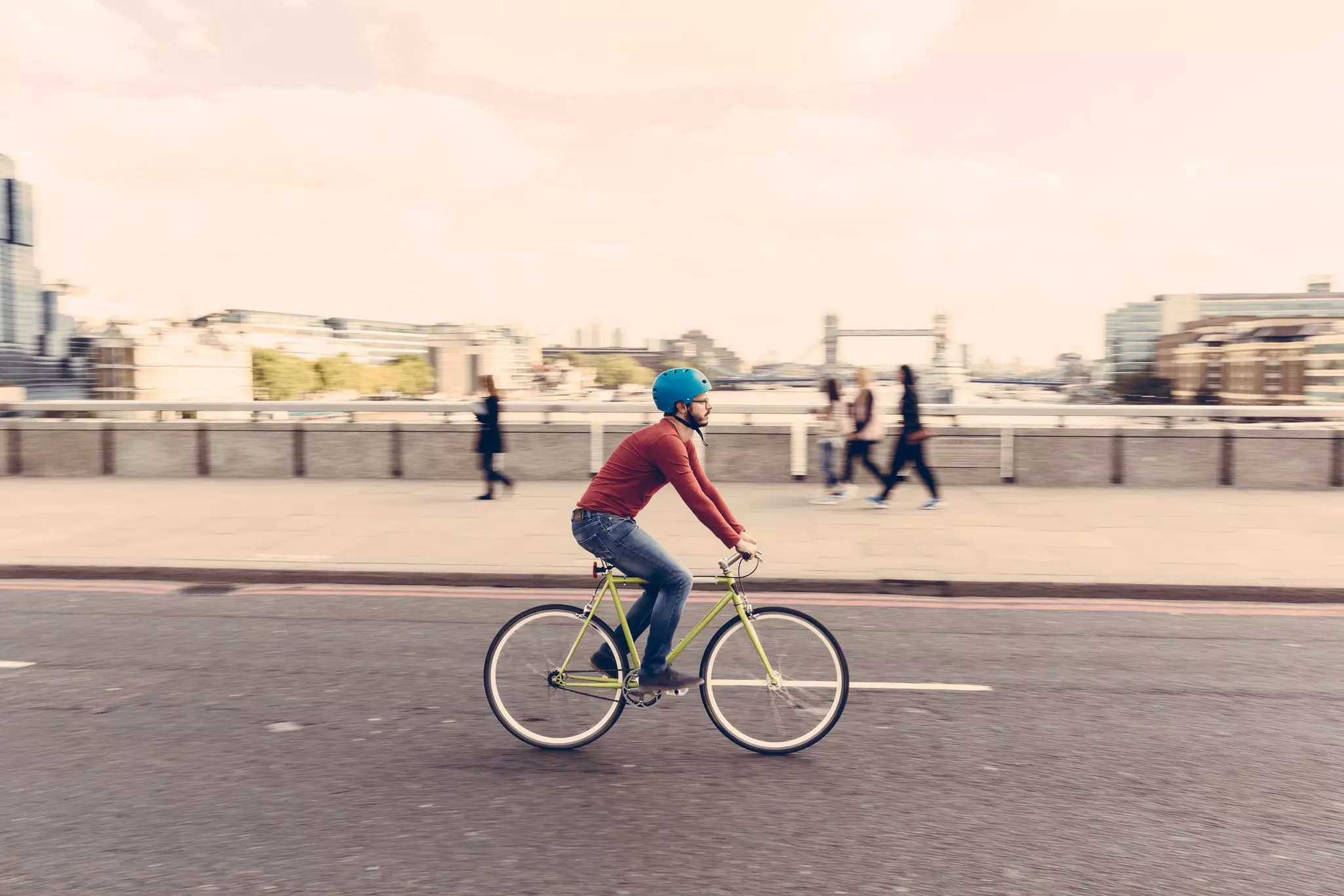
Hopping on a bike is generally a great way to get around the city. And though city traffic can be intimidating for less-confident cyclists, even the most experienced and confident pedalers should proceed with caution. In recent years, the city has built out an extensive cycling infrastructure, designing “cycleways“ that include both dedicated lanes on major thoroughfares and quieter backstreets ideal for leisure cyclists.
The public bike-share scheme Santander Cycles is particularly useful for visitors, with its bike-rental docks throughout the city. A day pass for just 3 pounds will get you unlimited 30-minute journeys within any 24-period; extending a journey by 30 minutes costs £1.65 extra per ride. Download the app to find both the closest bikes and empty docking spots for drop-off. Cycling is also an excellent option for exploring parks and the Thames embankments.
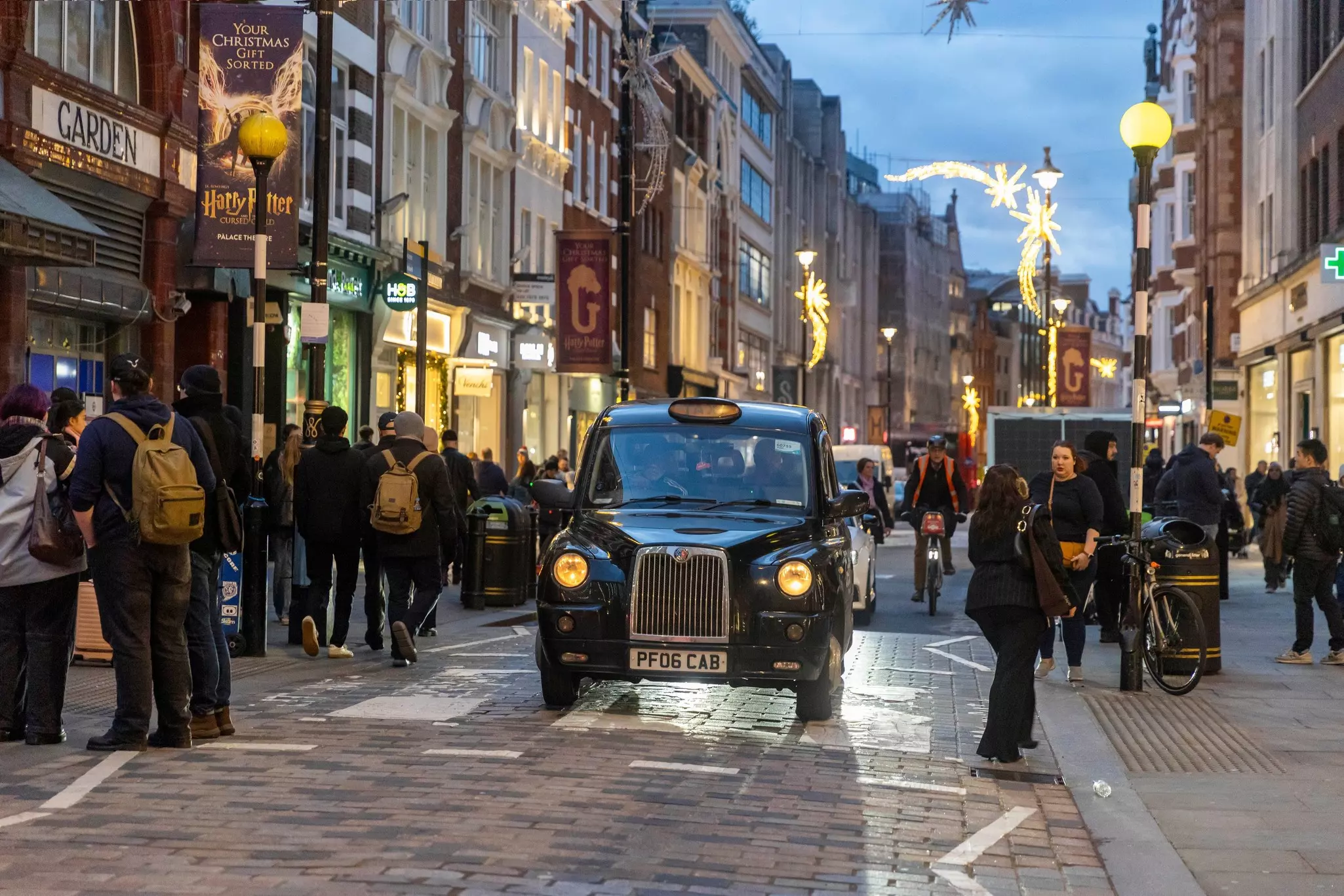
Licensed black-cab drivers famously have “the Knowledge”: of a full 25,000 streets within a 6-mile radius of Trafalgar Square, and the 100 most-visited spots of the moment, including clubs and restaurants. With up to 5 years of rigorous training, London’s taxi drivers are surely the most credentialed in the world. Note that not every London cab is black – though they all bear the yellow “taxi“ sign above their windshields.
Cabs are available for hire when the yellow sign above the windshield is illuminated; just stick your arm out to signal one. Fares are metered, with the initial charge of £3.80 rising by increments of 20p over distance traveled or time taken, which varies depending on the time of day (or “tariff”). You can pay for your journey with a credit or debit card, or with cash.
Minicabs (private hire cars) are cheaper alternatives to getting a black cab, but they must be booked in advance through a cab office or an app and cannot be hailed on the street. Fares are set in advance rather than metered.
Rideshare apps such as Uber are also in operation in London, although their impact on the city, from undercutting traditional black cabs to accusations of increased car congestion, remains hotly debated by locals.
As a visitor, it’s very unlikely you’ll need to drive in London. Much has been done to encourage Londoners to get out of their cars and onto public transport (or their bikes), and the same disincentives should keep you firmly off the road.
Drivers are subject to a Congestion Charge (CC) and Ultra Low Emission Zone (ULEZ) fees – and that‘s before extortionate parking costs, the high price of fuel and fiendishly efficient traffic wardens. In case that’s not enough to get you on the Tube, ubiquitous CCTV cameras record cars parked (even momentarily) on double yellow lines or not giving way when they should. Bottom line: driving in London is almost certainly not worth it.
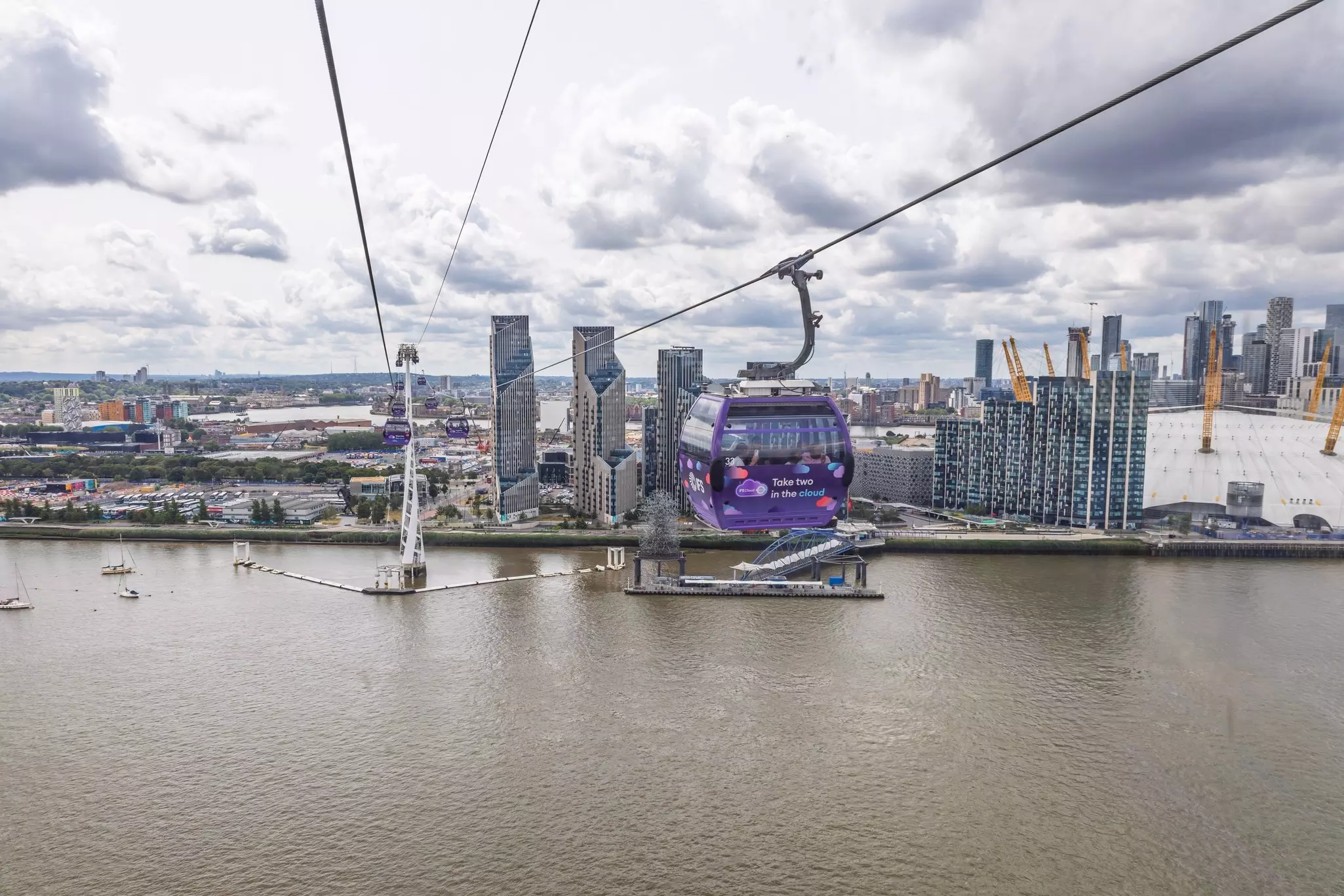
A sleek cable car links the Royal Docks in East London with North Greenwich, reaching a a height of some 90m above the Thames. The journey is brief and rather pricey, but the views are stunning. The gondolas are step-free, and can accommodate most motorized wheelchairs.
The DLR, or Docklands Light Railway, is a driverless train network operating in the eastern part of the city. It’s likely you’ll take a ride on it if you’re heading to the cable car, or connecting via London City Airport. The trains are always a winner for travelers with children, who like to pretend they’re driving the train from the front car.
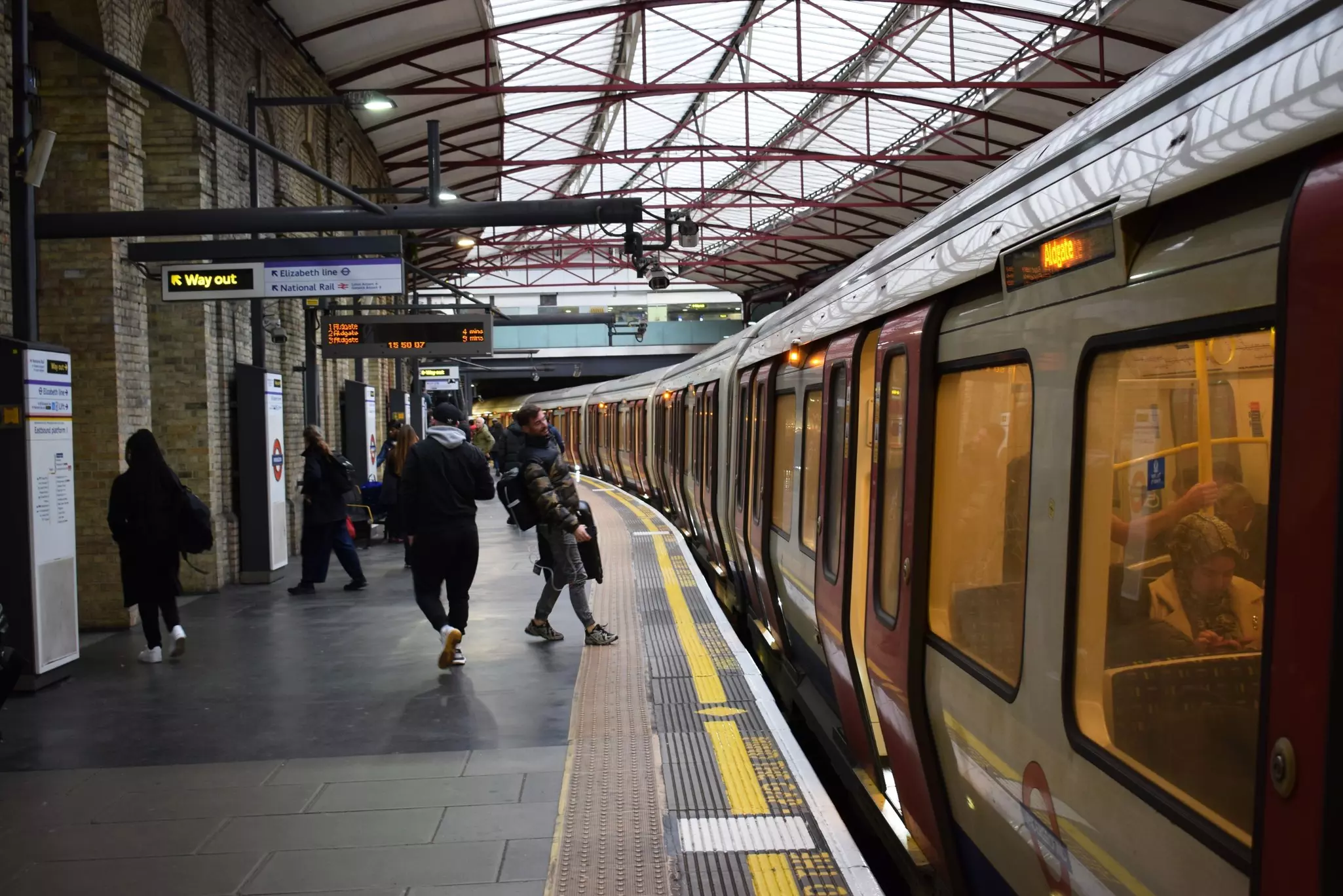
Part of Transport for London, the Overground operates mainly beyond the center of London. (Some lines do pass through Zone 1, however, so pay attention if you’re trying to avoid Zone 1 fares). In February 2024, the Overground network was reorganized and rebranded into six separate lines, named to celebrate the capital’s modern history and diversity. (Previously, Overground lines were all marked in solid orange on transit maps.)
If you wish to explore even further beyond the city, various private companies operate trains that run out to the suburbs. The train network is particularly good for any day trips out of London. Be syre to pay attention to which operator you’ve booked tickets with, as more than one company can depart from the same station.
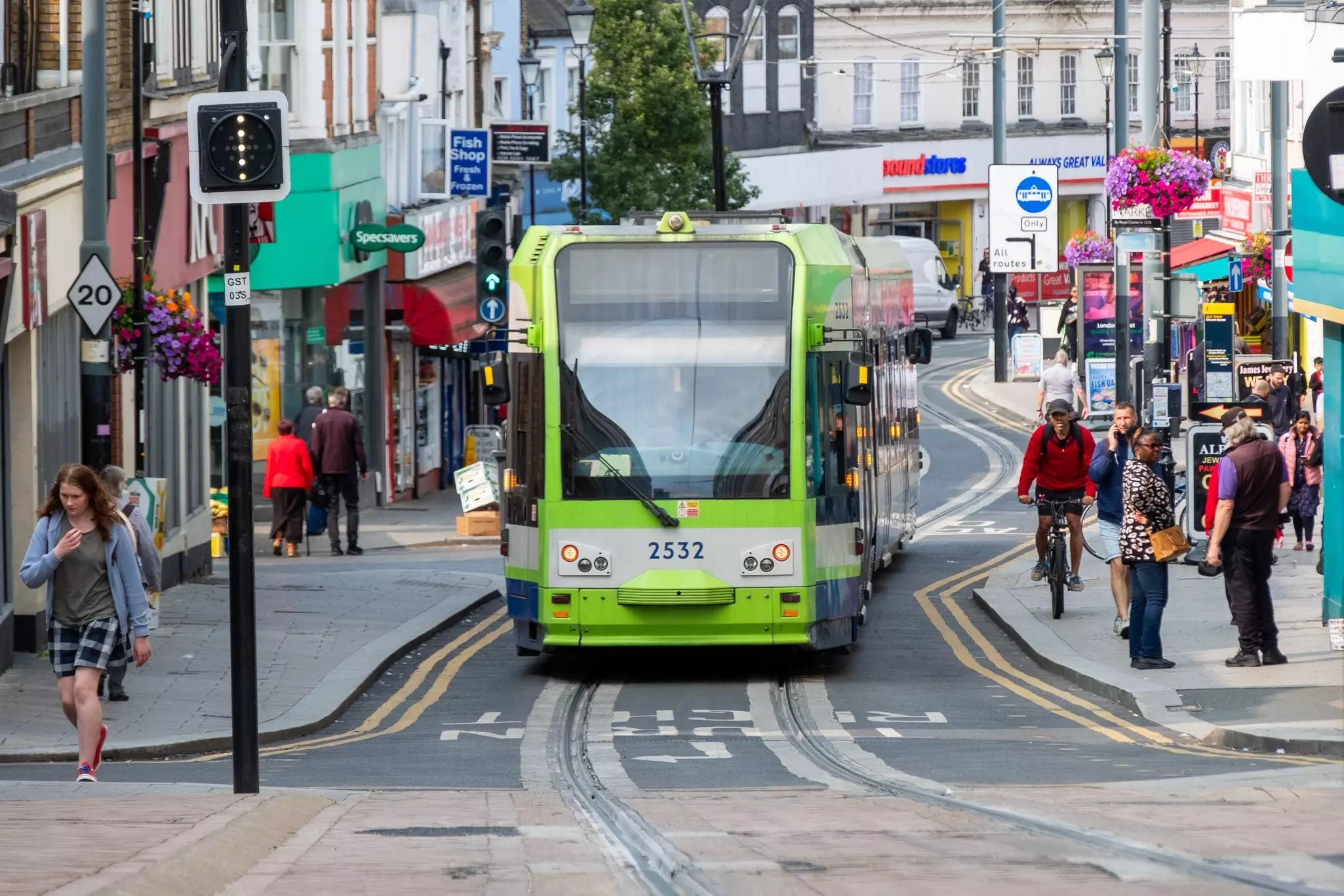
Few realize that London has a small tram network – perhaps because it’s centered around the large town of Croydon, at the southern edge of Greater London. From West Croydon station (also served by the Overground), two lines travel west (to Wimbledon) and east (to New Addington, Elmers End or Beckenham). While not many London visitors use the tram, it can come in handy for those seeking cheaper accommodations away from the center city.
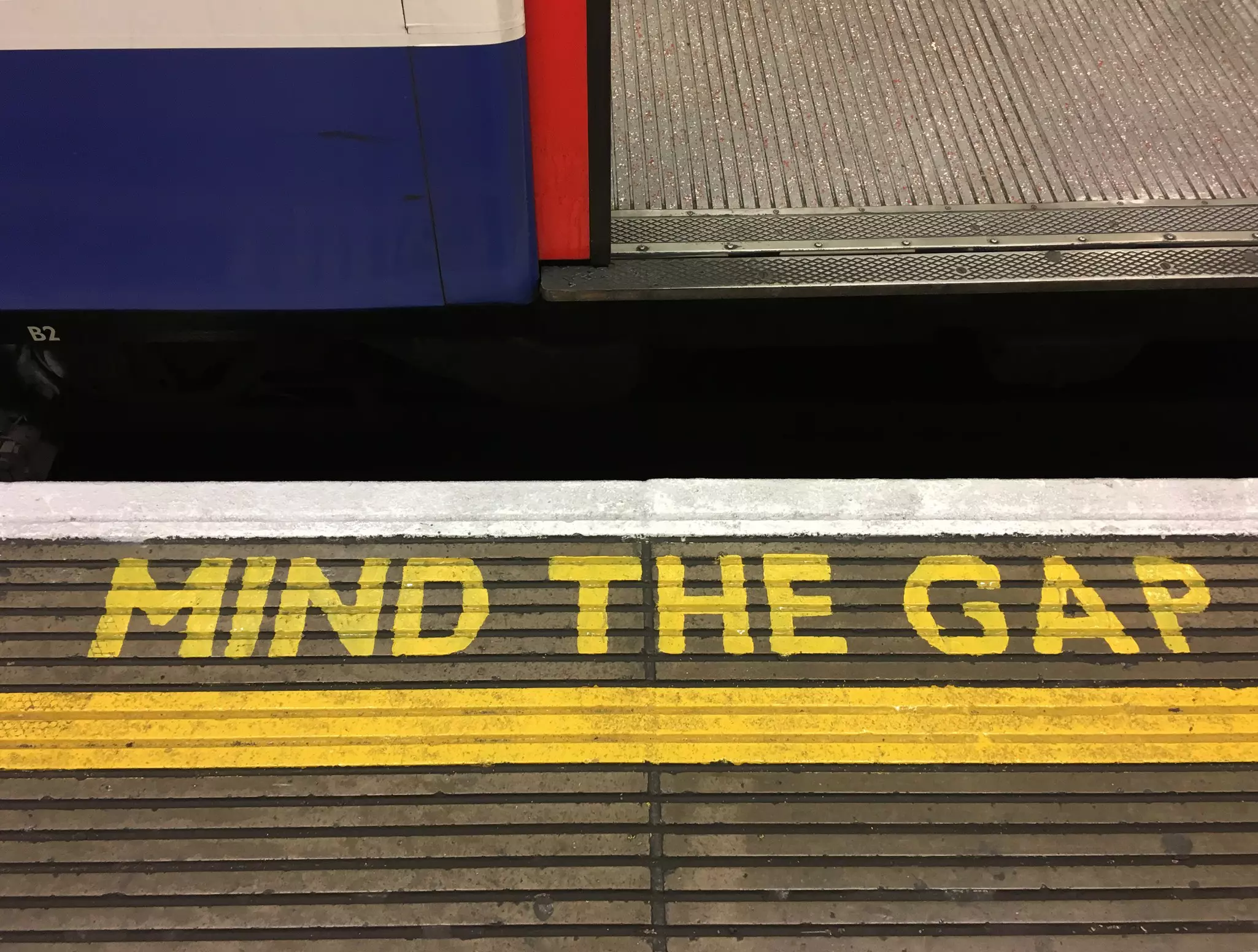
London can be frustrating for travelers with access needs. All tram stops, the cable car and DLR stations have step-free access, as do all Thames Clippers and most piers (the exceptions are at Cadogan Pier, Wandsworth Riverside Quarter Pier and London Bridge City Pier). However, only around a quarter of Tube stations and half of Overground stations can be accessed without need to climb steps. This means that if you need to go through an interchange on the Tube network, you may find yourself facing an unexpected flight of stairs. What’s more, the famous “mind the gap” admonition is very much in effect: the space between the platform and the train door is indeed often wide – a real impediment to anyone with a wheelchair, walker or stroller. Plan carefully, and potentially seek out an in-station employee, if you have mobility issues and need to board a Tube train.
Buses are a much better bet: all can be lowered to street level when they stop – wheelchair users even travel free. Wheelchair users enter through the middle doors and have first dibs on the use of priority space (over stroller users). All black cabs should be wheelchair-accessible, though electric wheelchair users should note that the space can be tight, and headroom insufficient.
Guide dogs are universally welcome on public transport. Pavements are generally in good repair, pedestrian crossings relatively frequent and well-placed, and curb cuts sufficient not to leave you stranded. The further you get from the center of London, the more likely it is that you’ll have the occasional issue with a missing curb cut.
Transport for London (TfL) operates the city’s integrated transport network – Underground, buses, Overground, Elizabeth Line, DLR, trams and cable car – and is the best source for up-to-date travel information, including timetables and fares. Children under 5 travel free with a fare-paying adult. Use the larger automatic gates to pass through with children, strollers, wheelchairs or luggage.
Greater London is divided into travel zones that radiate outward in bands, from central Zone 1 to as far as Zone 9 in the north. Fares between (and within) the zones are fixed for all rail transport – TfL-operated services, as well as trains operated by National Rail and other companies. Provided you use the same card or device throughout your day and stay within the (expansive) zoned system, you’ll pay a single capped or Travelcard fare for the day. (Note that the one-day fare cap applies from first thing in the morning until midnight, not for a 24-hour period.)
If you’re taking a train beyond London’s zones – perhaps for a day trip to the coast or further afield – you will need to buy a separate train ticket.
The zone system does not apply to London buses. The flat fare for a single journey between any two points in the system is £1.75.
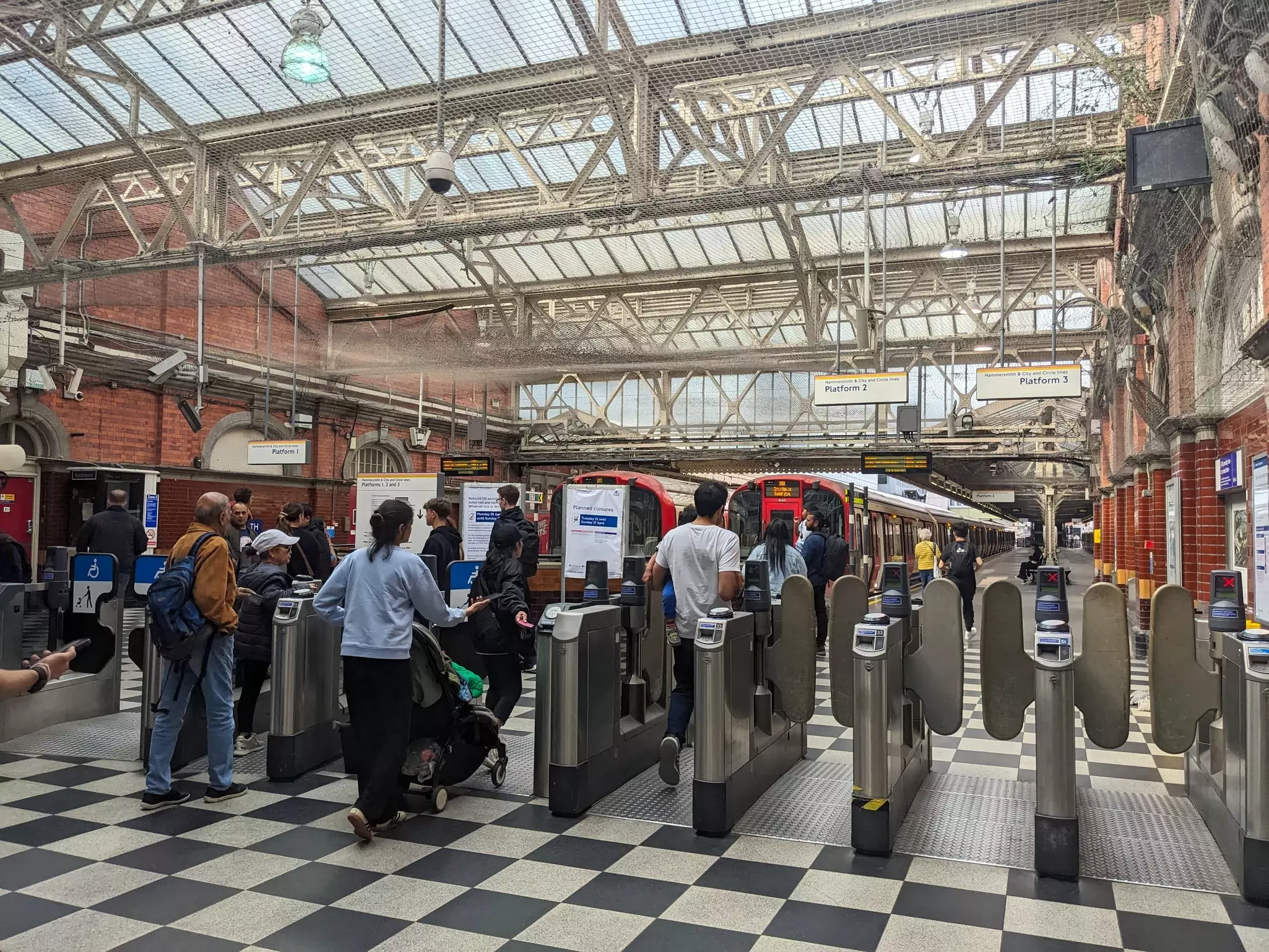
It’s still possible to buy tickets for single journeys at ticket offices and self-service machines at most stations. But it’s cheaper, more convenient and far more popular to use either an Oyster card or contactless payment method (credit card, or mobile phone using Apple Pay or Google Pay). (International transaction fees apply, so beware.) What’s more, using the same method of payment for multiple journeys within a single calendar day will automatically trigger the capped fare: the system will reconcile and group your trips for you.
When you enter a station, wave your contactless card, smartphone or Oyster card at the ticket barrier or yellow reader to “touch in.“ When you’ve reached your destination, you’ll “touch out” – and the fare will be automatically charged to your form of payment. At stations in central London, you’ll touch in and out to open a ticket gate; at many outlying stations within Greater London, the platforms have no such barriers, and you’ll have to seek out the yellow reader by the station entrance. If you forget to touch in and touch out at a gate-free station, you’ll be charged the maximum possible fare (sometimes £10 or more).
Oyster cards are prepaid, reusable cards that can be topped up with funds either at a ticket machine or online. They are sold at most Tube and train stations as well as many newsagents (£5 charge) and follow the same “touch in, touch out“ system.
Buses are all cash-free, meaning you must either have a ticket in advance or pay via contactless or an Oyster card when you board. You only need to “touch in” at the start of your journey, and will pay a flat fee no matter how long you are on board. Transfers to other lines are free within one hour of touching in. You only need touch in on all trams.
Book your England trip with Lonely Planet Journeys
See England how it's meant to be seen
Accommodations, activities and ground transportation all taken care of, so you can focus on the fun part. Tell us what your dream trip to England looks like, and our local experts will build it from scratch. Or start with one of our itineraries and make it your own.

Explore related stories