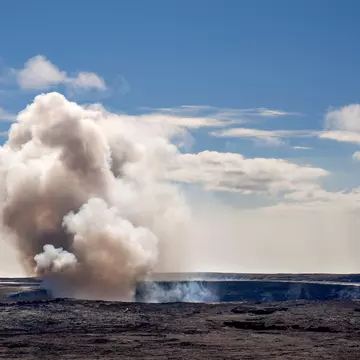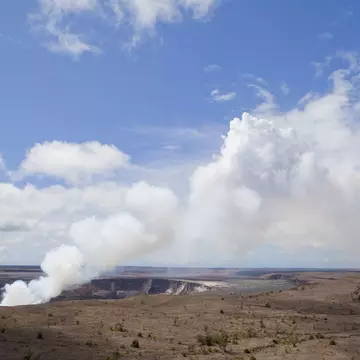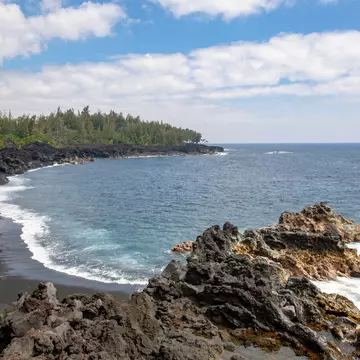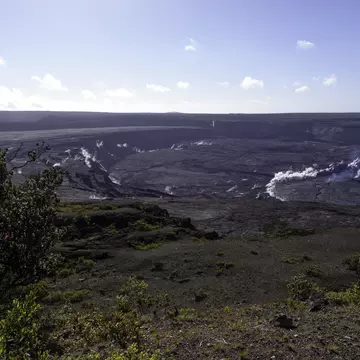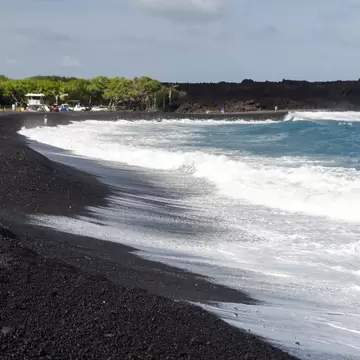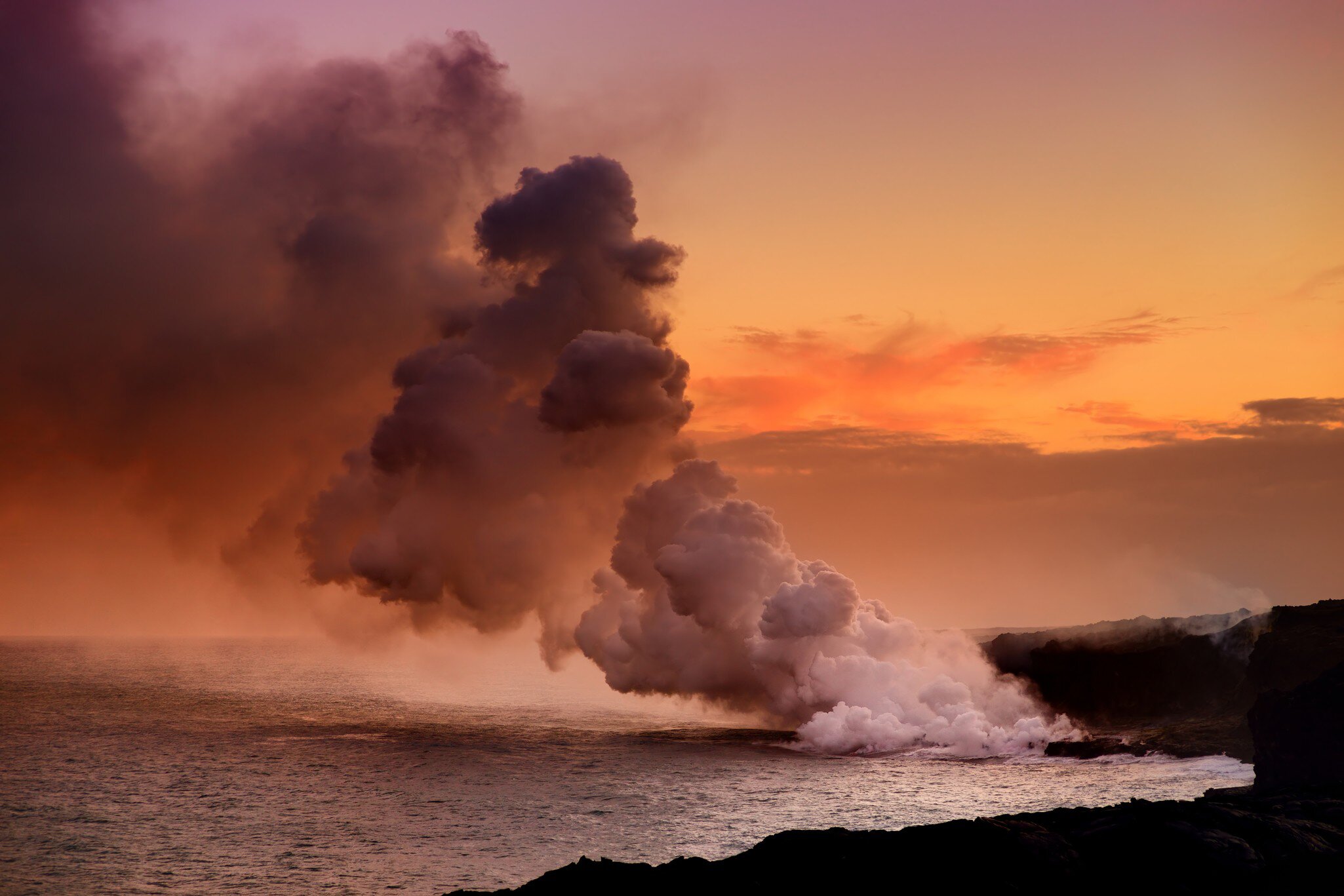
The pride of Hawaiʻi Island, Hawaiʻi Volcanoes National Park protects an incredible volcanic landscape, and it's one of the state’s most popular attractions. The park is home to two massive volcanoes, highly active Kīlauea and Mauna Loa, the world’s largest active volcano, whose lava flows define the park's diverse terrain. Sprawling across 354,461 acres on the island's southeastern side, this is one of the most memorable protected areas in the US.
The park's ever-changing landscapes range from lush rainforests and barren lava fields to a volcano whose summit is dusted with snow every winter. Grab your hiking boots and binoculars to get the most out of a trip to Hawaiʻi Volcanoes National Park.
When is the Best Time to Visit Hawai‘i Volcanoes National Park?
There isn’t really a bad time to visit the park, which sees nearly 2 million visitors annually. The weather on the islands doesn’t vary much, with temperatures ranging from 66°F to 85°F across the year. Winter and early spring tend to be rainier and cooler than other times of the year, while the hurricane season runs from June to November, which can mean tropical storms, strong winds and torrential rain.
The busiest travel seasons in Hawaiʻi are summer and winter – summer is peak vacation time for families, and winter lures travelers eager to escape colder climes. Expect more people on trails and longer waits for parking during these periods, particularly following staffing cuts to the National Park Service, which may also lead to the closure of certain areas.
Spring and fall are slower travel months and ideal times to visit the park. Trekking conditions are much more comfortable without the intense summer heat, and you’ll likely find better airfare prices and hotel rates at nearby hotels. The park does get a surge of visitors during spring break, as well as around the weekend of the annual Merrie Monarch Festival, a week-long hula competition in Hilo in late March or early April.
Tuesday is the busiest day at the park – avoid it if possible. This is when the Pride of America, a cruise ship that sails around the Hawaiian islands, docks in Hilo. Many of its 2000 passengers head to the national park and hit popular stops like the Kīlauea Visitor Center, the Kīlauea Iki Trail and Nāhuku (otherwise known as the Thurston Lava Tube). Winter brings yet more cruise ships to Hawaiʻi Island as thousands of North Pacific humpback whales migrate annually from Alaska to the warmer waters surrounding the islands.
Since the destructive eruption of 2018, Kīlauea has experienced a string of smaller eruptions, with fountaining lava appearing in several bursts in 2026. Expect further pyrotechnics – the Puʻuʻōʻō eruption, which began in 1983 and lasted 35 years, saw the longest and most voluminous known outpouring of lava in more than 500 years. “If there is an eruption,” says Jessica Ferracane, the park’s spokesperson, “it is busy all day, every day, especially if it’s at the summit of Kīlauea.”
Planning tip: A reconstruction project targeting areas damaged by the 2018 Kīlauea eruption is due to be completed in 2026; check the park website for news of any closures and delays.
How Much Time Should I Plan to Spend at the Park?
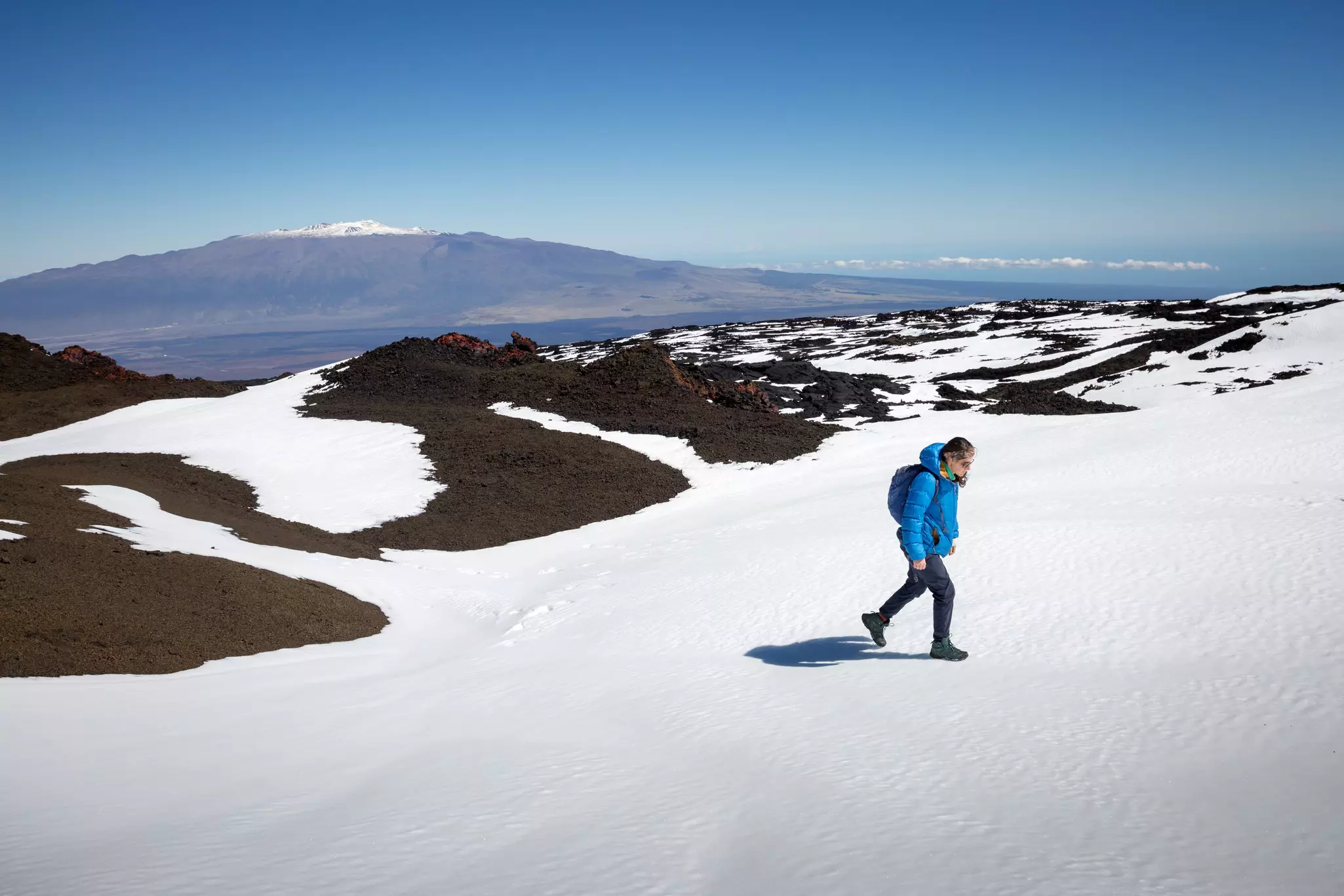
Hawaiʻi Volcanoes National Park may not be as huge as Alaska’s 13.2-million-acre Wrangell-St Elias National Park & Preserve but it does stretch from sea level to the summit of 13,681ft Mauna Loa, crossing seven different ecological zones. You’ll need at least a full day to explore all the best parts of the park, but 2 days is even better.
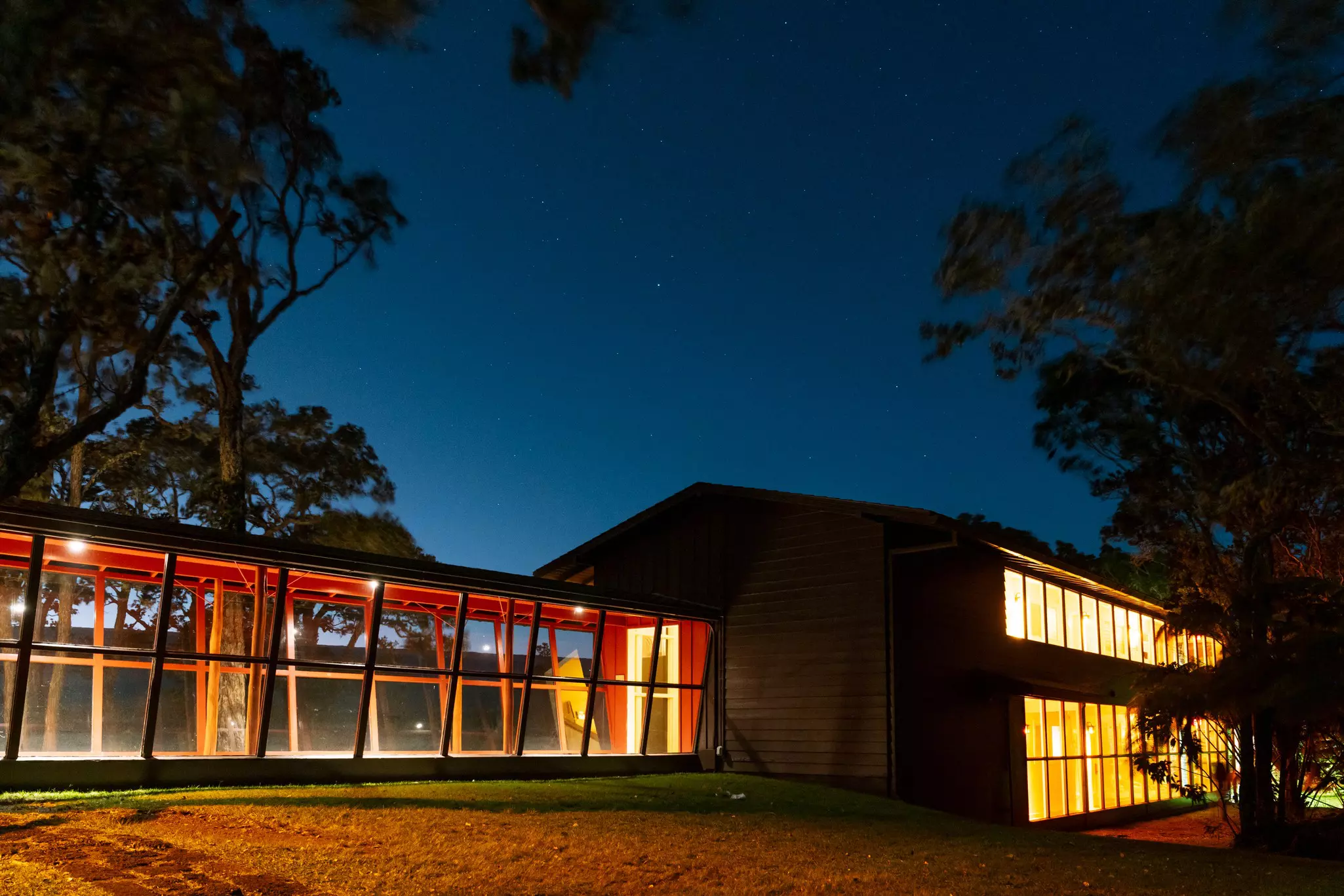
Park rangers recommend that visitors arrive by sunrise to hit the park’s most popular trails – the park is open 24 hours to allow everyone to maximize their time. Dusk is also a wonderful time to go exploring – the lack of light pollution provides dark skies that are perfect for stargazing.
There are several rewarding hiking trails, from the easy 1.2-mile Kīpukapuaulu Trail to challenging backcountry treks up Mauna Loa that can take 2 days. Having an extra day means you can visit the park’s quieter and less crowded Kahuku Unit on the southerly slopes of Mauna Loa.
This 116,000-acre former ranchland is about an hour's drive from the Kīlauea Visitor Center and is open to the public 5 days a week. Here, you can hike to the top of an old cinder cone, trek through a pristine Hawaiian rainforest or bike through scenic pastures with panoramic views over the landscape.
The tiny town of Volcano Village just outside the park is also well worth a visit, with its laid-back eateries and food trucks, art galleries, and vineyard and winery.
Is it Easy to Get Into and Around the Park?
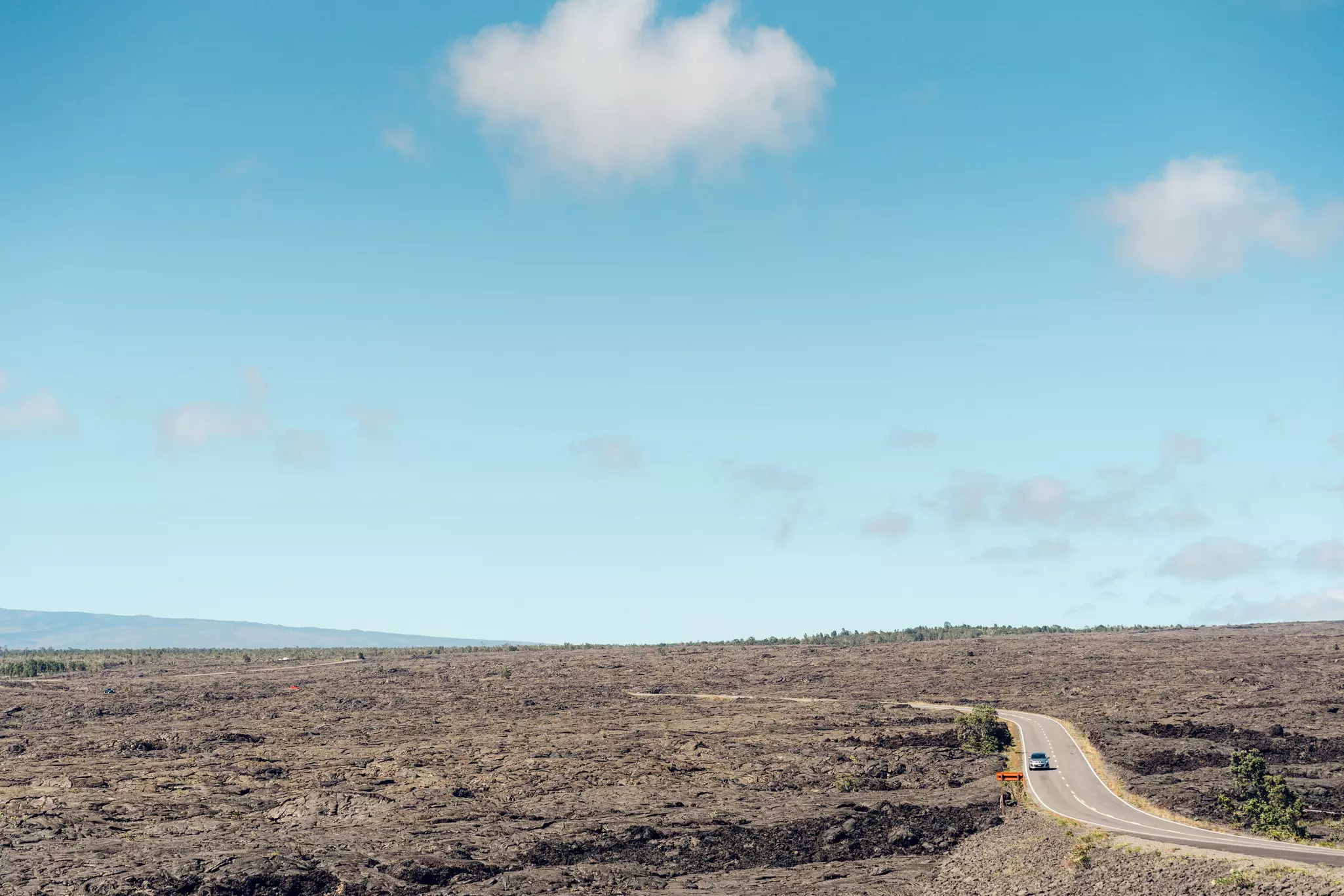
The nearest airport is Hilo International Airport, about 30 miles northeast of the park. You can also fly into Ellison Onizuka Kona International Airport at Keāhole, but the drive from Kailua-Kona will take about 2 hours. Getting to the park from Hilo is easy – take Rte 11 (Hawaiʻi Belt Rd) west until you reach the main entrance; the drive takes about 45 minutes.
Hele-On Bus is the island’s only public bus service, operated by Hawaiʻi County. The 11 Red Line bus runs between Hilo and Hawaiʻi Volcanoes National Park, stopping daily at the Kīlauea Visitor Center. There is no public transportation within the park, so you’ll need a car to explore beyond the visitor center.
Top Things to Do in Hawaiʻi Volcanoes National Park
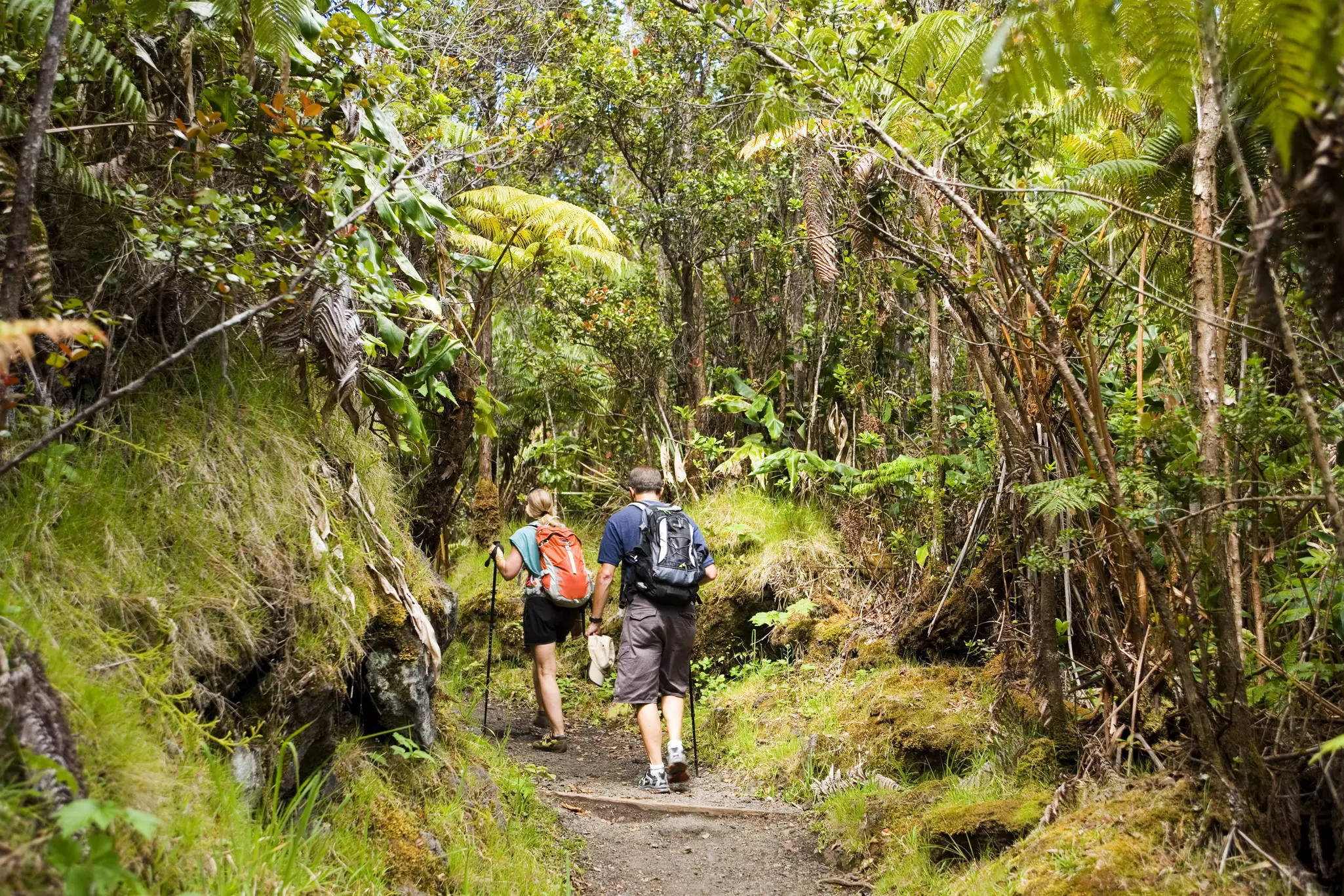
While you need a car to properly explore the national park, the most rewarding experience is roaming on foot, following the park's hiking trails.
Hike the Kīlauea Iki Trail
One of the most popular hikes in Hawaiʻi Volcanoes National Park is the looping 4-mile-long Kīlauea Iki Trail. The terrain is varied – you'll start in a forest of native ʻōhiʻa trees and hapuʻu (Hawaiian tree ferns) and end with a walk across an otherworldly crater floor. The hike is short enough to complete in a few hours, giving you plenty of time to visit other parts of the park.
The trailhead is at an overlook formed during an eruption in 1959 that was marked by fountaining lava reaching a world-record 1900ft high. The first part of the trail descends through lush rainforest studded with native ʻōhiʻa and koa trees. Look for the white-rumped ʻapapanae, a nectarivorous Hawaiian honeycreeper, often found flitting from tree to tree. The switchbacks end at the crater floor, a vast moonscape that sharply contrasts with the surrounding native forests.
Admire the Hōlei Sea Arch
At the end of the Chain of Craters Rd – about 18 miles from the Kīlauea Visitor Center – the Hōlei Sea Arch is a 90ft-tall rock formation cut into the cliff of an ancient lava flow about 550 years ago. In 2020, the park opened a new viewing area located roughly 1000ft past the gate at the end of the road, set back away from the cliff edge.
Explore Nāhuku (Thurston Lava Tube)
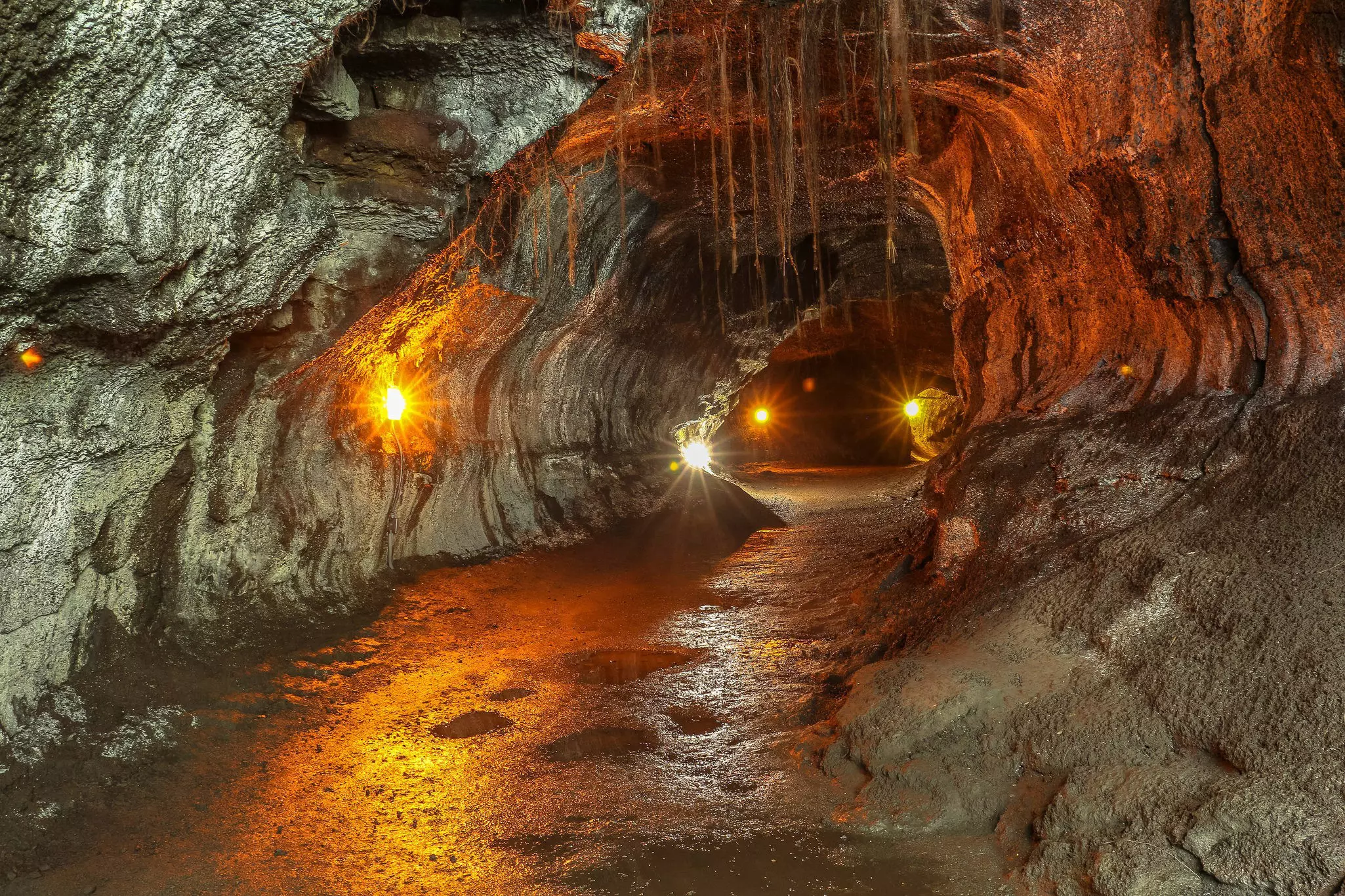
This lava tube – also known as Thurston Lava Tube – was created by a river of 2000°F molten lava about 500 years ago. Discovered in 1913, the massive lava cave is easily accessible, with a flat rock floor and a ceiling height of more than 20ft in places. Electric lights illuminate most of the path, but you may want to bring a flashlight – it takes about 20 minutes to stroll through the tube. The rainforest that surrounds Nāhuku is brimming with native birds, including the scarlet ʻiʻiwi, a Hawaiian honeycreeper listed as threatened under the Endangered Species Act.
Ponder the Puʻuloa Petroglyphs
At Pānau Nui area on the southern flank of Kīlauea, Puʻuloa features numerous petroglyphs etched into the hardened lava. Puʻuloa, which translates to “long hill” in the Hawaiian language, is a sacred place to native Hawaiians. The archaeological site here boasts more than 23,000 petroglyphs – the largest collection in Hawaiʻi – with motifs of circles, canoe sails, human forms, feathered capes and other geometric shapes.
Follow the Devastation Trail
This evocatively named, half-mile-long hike is suitable for everyone as the trail is wheelchair- and stroller-accessible. The paved path meanders through a stark yet beautiful landscape buried by falling cinders from the lava fountains of the 1959 Kīlauea Iki eruption. You might find volcanic debris in the form of glass-like droplets and strands called Pele’s Tears and Pele’s Hair, named after the revered Hawaiian goddess of fire and volcanoes. Nēnē (Hawaiian geese) frequent this area; refrain from feeding or interacting with this threatened species.
My Favorite Thing to Do at Hawaiʻi Volcanoes National Park
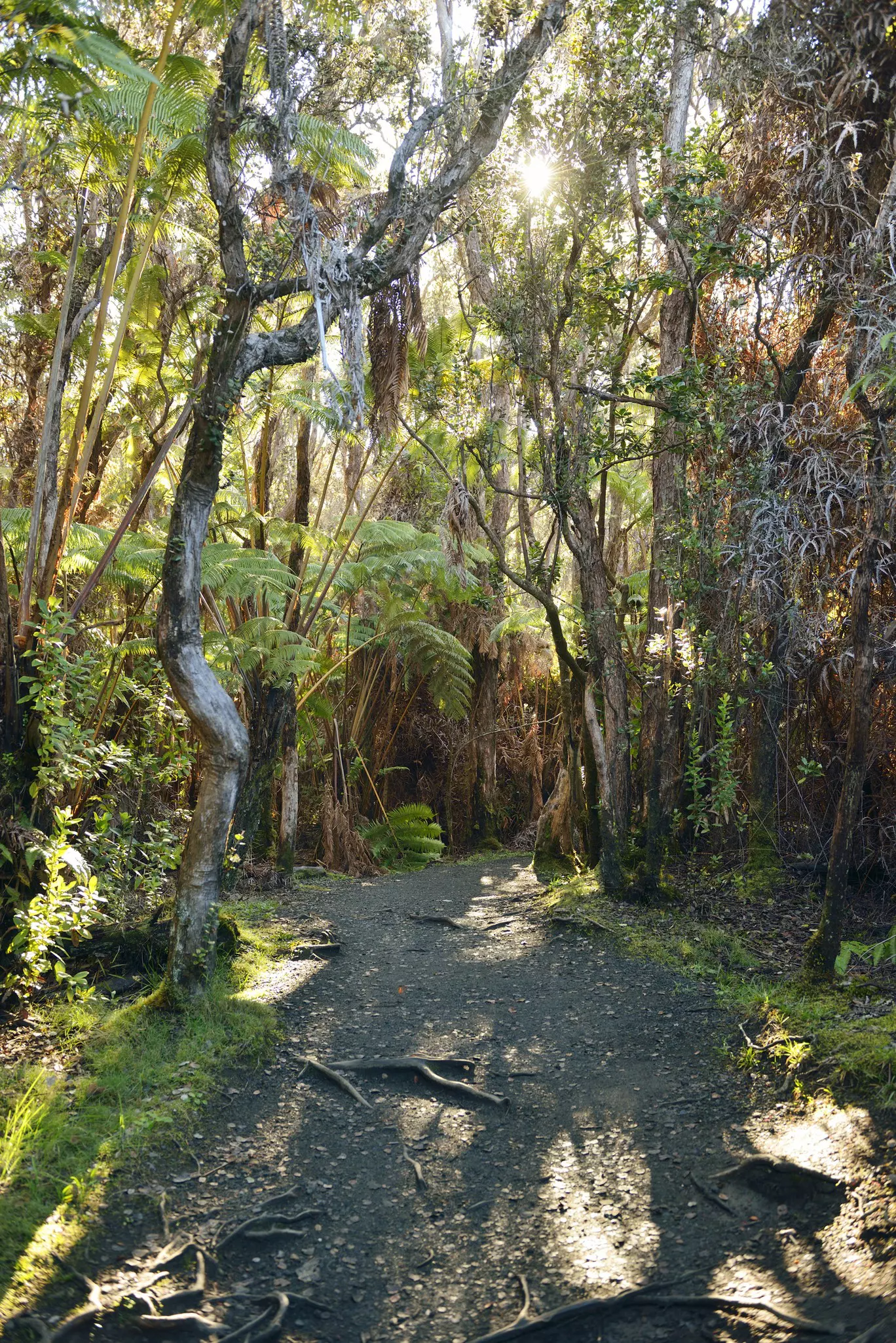
Unfortunately, there aren’t many places left in Hawaiʻi where you can find native forest birds. Their populations have plummeted due to habitat destruction, predators such as feral cats and mongooses, and non-native mosquitoes that spread avian pox and avian malaria. But at Hawaiʻi Volcanoes National Park, where native habitats are protected and able to thrive, you can see – and hear – a variety of these special birds.
Species to keep watch for include the ʻelepaio (Hawaiian flycatcher) and the elusive ʻōmaʻo (Hawaiian thrush), which can only be found in the montane rainforests on Hawaiʻi Island. The bright orange ʻākepa, an endangered Hawaiian honeycreeper with an odd-shaped beak, can be spotted in the high-elevation forests of the park’s Kahuku Unit. And if you’re lucky, you might catch a glimpse of the endemic ʻio, the only hawk species native to Hawaiʻi.
I love wandering along the 1.2-mile Kīpukapuaulu Trail, an easy loop through pristine native forestland in an area known as a “bird park.” A kīpuka is an area of land that’s surrounded by younger lava flows, like an island within a sea of lava. There are more native tree species per acre here than in any other forest in the national park, which means you’ll find native forest birds that rely on the native trees that grow here.
How Much Money Do I Need for Hawaiʻi Volcanoes National Park?
Park entry costs $30 for a private car, $25 for a motorcycle, and $15 for pedestrians and cyclists. The park entrance gates are cashless, so you'll need to pay the fees using a debit or credit card, or you can pay ahead online. If you're also planning to visit Puʻuhonua o Hōnaunau National Historical Park near Kailua-Kona or Haleakalā National Park on Maui, consider buying the Hawaiʻi Tri-Park Annual Pass for $55. This allows you to enter all three of these parks in a single, private vehicle.
The National Park Service offers free admission to everyone on a series of holiday dates during the year. Here are some sample costs at Hawaiʻi Volcanoes National Park.
How to Travel Responsibly in the Park
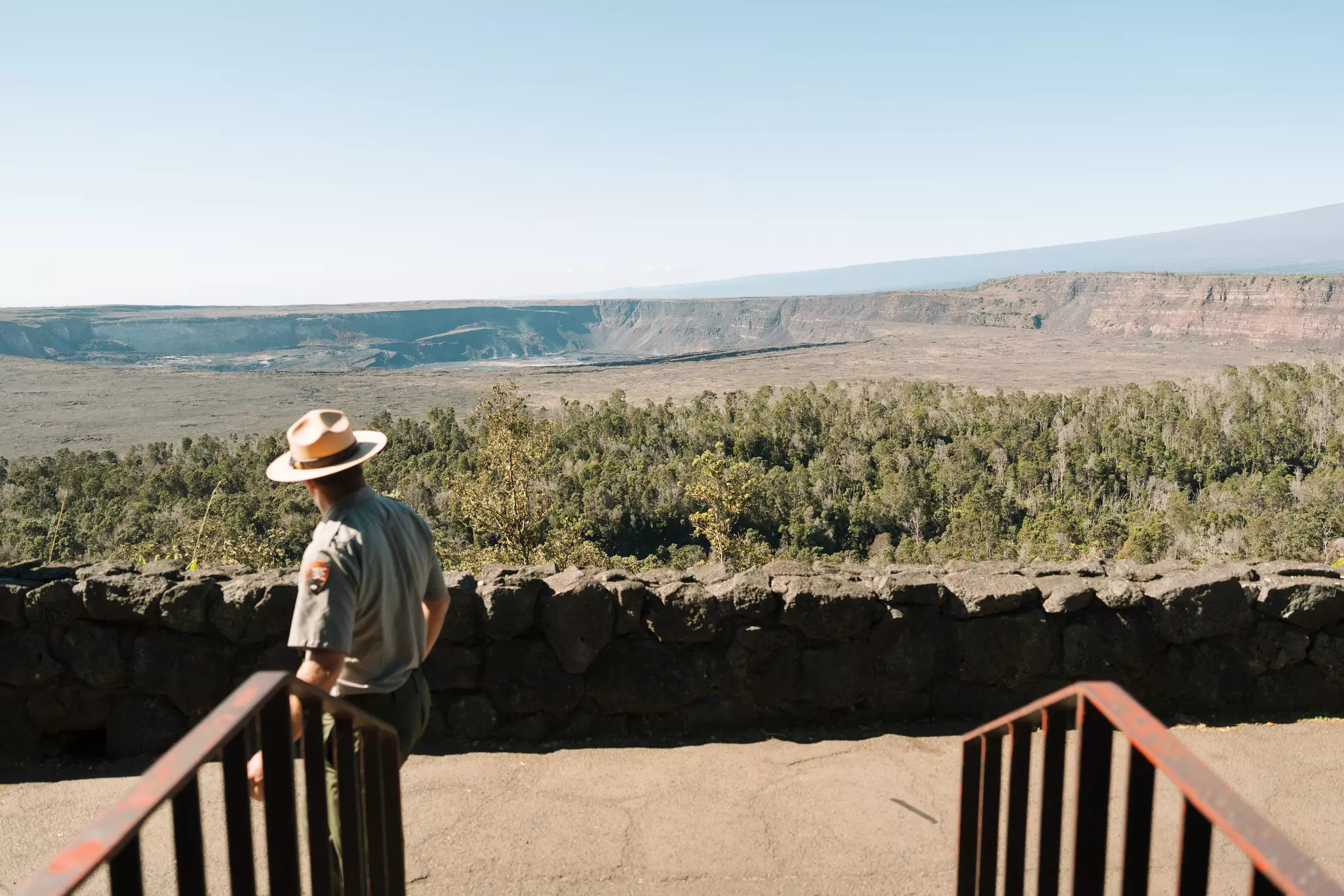
With two active volcanoes and ongoing construction to repair damage caused by the 2018 Kīlauea eruption, the park is subject to regular changes. It’s important to stay on marked trails and overlooks and keep out of closed areas – and no matter what you may have seen on social media, please leave the rocks alone and unstacked.
Park staff often use ahu (stacked rocks) to mark trails; it’s not an invitation to do the same. Not only is it culturally insensitive, but it can be disorienting to hikers who rely on the ahu to guide them along trails. It’s also long believed that taking lava rocks brings bad luck; hundreds of people return rocks they’ve taken from the park every year.
There are many culturally significant sites within this UNESCO-listed park, including petroglyphs, historic trails, fossilized footprints, shelter caves, heiau (Hawaiian temples) and stone walls of canoe sheds and corrals. Many of these sites are listed in the National Register of Historic Places, so please be respectful when you see them up close.
The land within the park is sacred to native Hawaiians, with many moʻolelo (stories) and mele (songs) tied to this area. They believe Pele, the Hawaiian goddess of fire and volcanoes, lives in Halemaʻumaʻu Crater at the summit of Kīlauea. If you come across native Hawaiians performing cultural rituals in the park, keep a respectful distance. Let them – and others – commune with nature undisturbed.