Wiang Kum Kam (facebook.com/wiangkumkam; free) is probably Chiang Mai’s most forgotten, yet most underrated, ruin. Just a few kilometers south of the old city, it's an ancient capital city of the Lanna Kingdom – the buried predecessor to Chiang Mai.
Built by King Mangrai, the city stood for just 10 years before it was abandoned due to repeated flooding. Yet in that short space of time, some magnificent buildings were created, many of which were used for centuries but eventually lost beneath layers of earth. It wasn’t until the 1980s that the ruins were rediscovered and preserved as a historic site.
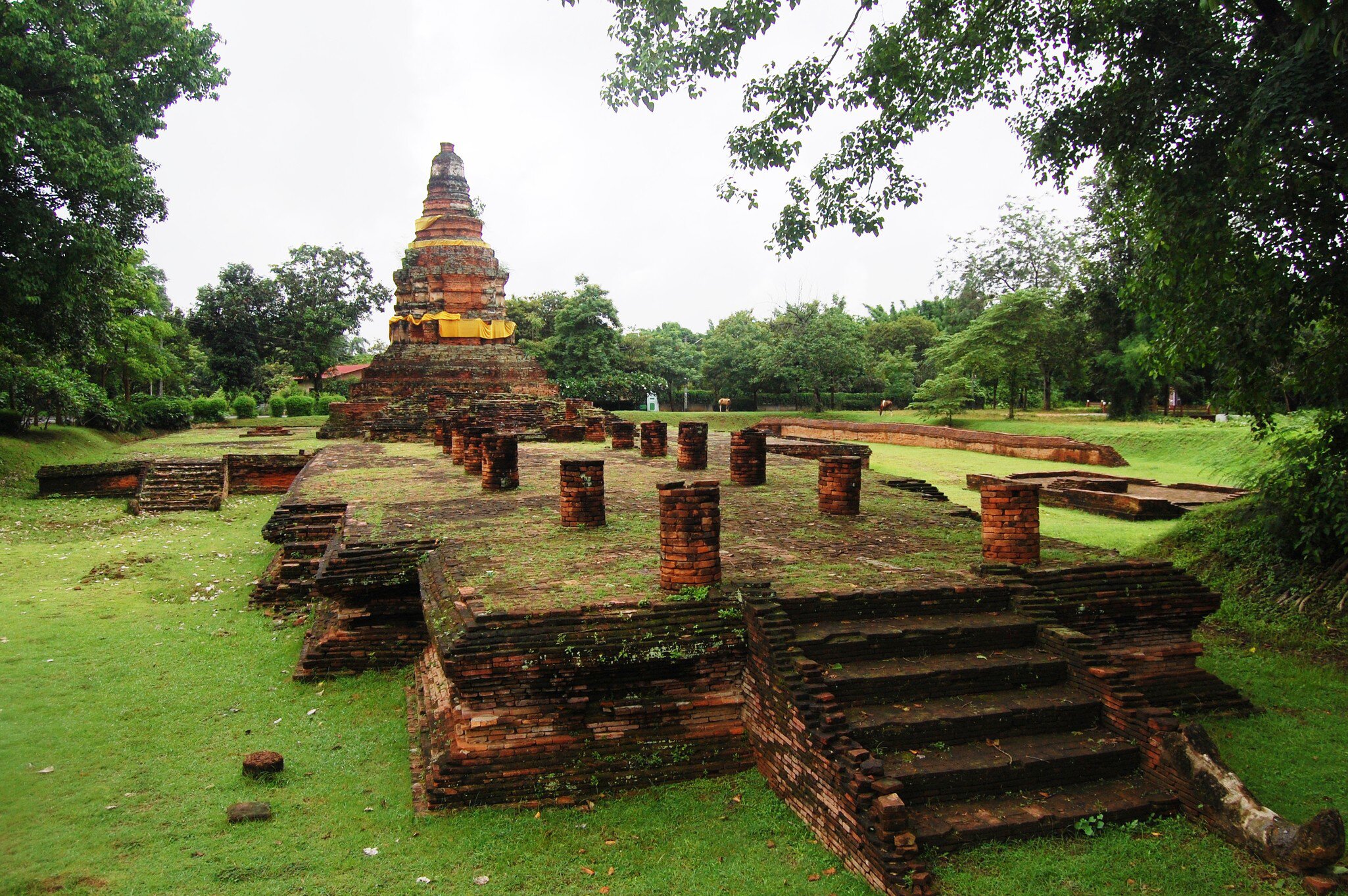
The unassuming entrance suggests an air of abandonment, but meander through the quiet village roads and shaded pathways, and you’ll stumble across some incredible temple ruins, defined by crumbling chedi (stupas) and faint inscriptions that hint at the area’s past grandeur. Blissfully uncrowded, the best time to visit is when the light sits low on the horizon (morning or evening) and casts long, dramatic shadows from the pillars and structures that remain. Although renting bicycles from the visitor center is recommended (20฿), we prefer the horse and carriage option (per tour 200฿).
The diamond in the rough must be Wat Chedi Liam , a beautifully preserved Burmese-style stupa with a stepped pyramid design that reflects the Hariphunchai style – a tiny but influential Mon kingdom in what is now modern-day Lamphun. It has a soaring stucco chedi divided into dozens of niches for Buddha statues, an architectural nod to India's famous Mahabodhi Temple. In fact, this spire was created as part of a rather fanciful restoration by a Burmese trader in 1908. Over 1300 inscribed stone slabs, bricks, bells and chedi have been excavated at the site and some pieces are displayed at the visitors center. The most important archaeological discovery was a four-piece stone slab, now housed at the Chiang Mai National Museum, inscribed with one of the earliest known examples of Thai script.
The temple is one of just few that remain active today, with the resident monks keeping the 800-year-old site very much alive. Wiang Kum Kam is located down quite a few windy lanes; most take rot daang or taxis here.