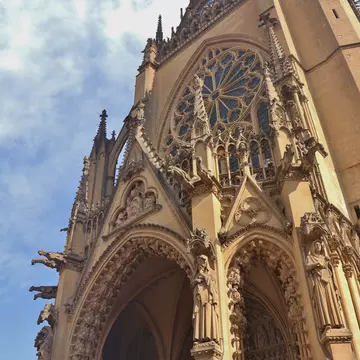
The stately boulevards and bourgeois villas of the German Imperial Quarter, including rue Gambetta and av Foch, are the brainchild of Kaiser Wilhelm II. Philippe Starck lamp posts contrast with Teutonic sculptures, whose common theme is German imperial might, at the monumental Rhenish neo-Romanesque train station, completed in 1908. Across the square, the massive former post office, built in 1911 of red Vosges sandstone, is as solid and heavy as the cathedral is light and lacy.
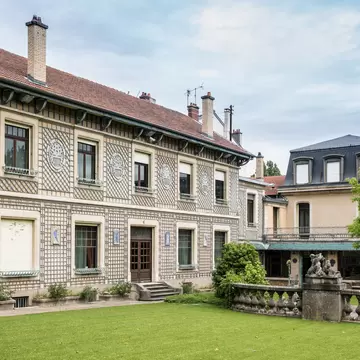
Built to trumpet the triumph of Metz’ post-1871 status as part of the Second Reich, the architecture is a whimsical mix of art deco, neo-Romanesque and neo-Renaissance influences. The area’s unique ensemble of Wilhelmian architecture is well worth a walking tour.