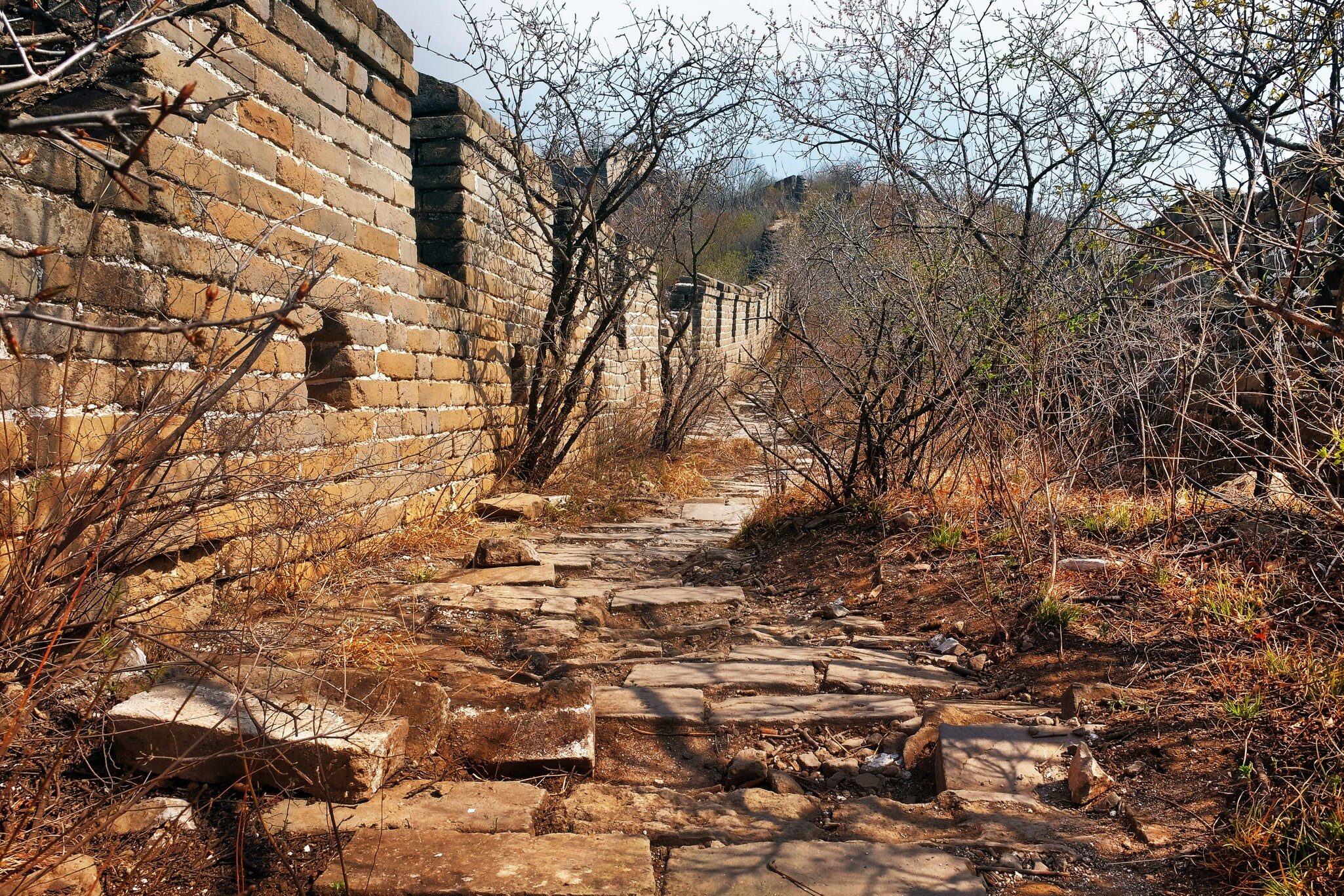
Built on precipitous cliffs and left fallow for centuries, Jiankou Great Wall (箭扣, Jiànkòu), located in Huairou district (怀柔区, Huáiróu Qū), is about as rugged as the Great Wall gets. Some parts have been carefully restored, but a visit to the 20km Jiankou section feels less like hiking than mountaineering; only seasoned outdoors people should take on these perilous ascents. The names for certain slopes translate as "Sky Stairs" and "The Eagles Fly Facing Upward," aptly describing the severe alpine scenery. The highest and best-preserved watchtower is Zhangbei, a favorite high point for hikers. Admission to the park is free.
The Jiankou section isn’t ticketed, so you can drop in and explore the park as much as you like. Yet Jiankou is particularly challenging to reach: the trailhead begins in the village of Xizhazi (西栅子, Xīzhàzǐ), about 100km north of Beijing. There is no direct bus to the village, and the trail itself winds confusingly through steep forest; it’s easy to get lost, but most hikers reach the wall in about an hour. More than any other Great Wall section in Hebei province, Jiankou more or less demands a hired guide.
Luckily, there’s another way to visit Jiankou: hike there from Mutianyu, one of the Great Wall’s most visited sites. As the crow flies, the eastern end of Jiankou stands only a few kilometers from Mutianyu, and an established trail connects the two sections. The trail is still a workout, and visitors should budget a full day for a there-and-back trek. Guided day-tours along this path can also be arranged from a base in Beijing.
Be aware of the dangers. The battlements are unstable, weather is changeable and you're a long way from help should you run into difficulties.
Xizhazi Village has several farmer-style courtyards (农家院, nóngjiāyuàn) at which to spend the night and dine. Most of these are authentically rustic with heated "kang" beds, musty blankets and framed portraits of Mao on the wall.