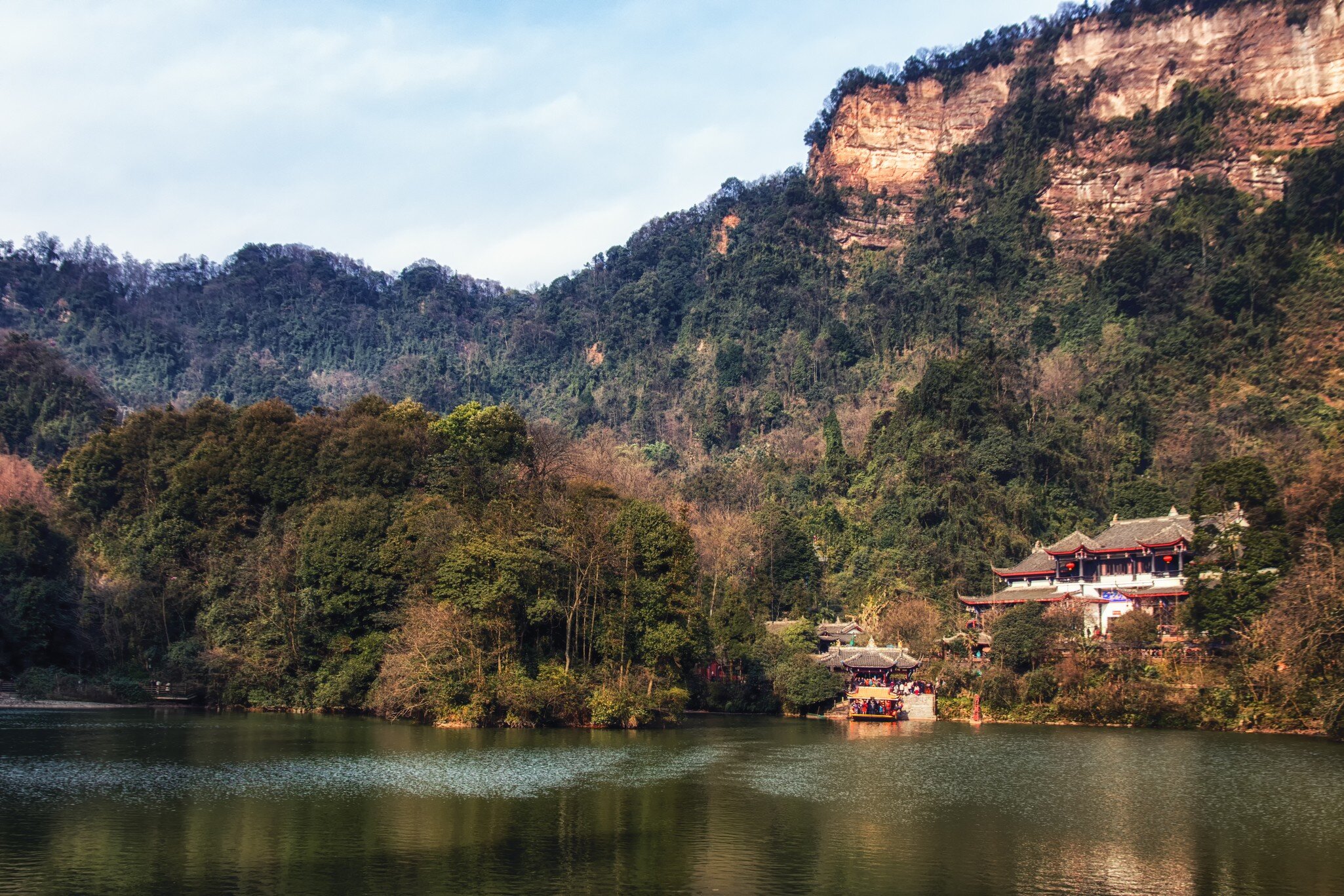
Covered in lush forests, Mt Qingcheng (青城山, Qīngchéngshān) in Dujiangyan (都江堰, Dūjiāngyàn) has been a Taoist spiritual center for over 2000 years, and it's often regarded as the religion's birthplace. Striking moss-covered pavilions made entirely from trees dot the foothills, while the mountain's trails are lined with ginkgo, plum and palm, and there are numerous caves and temples to explore.
Visitors can experience two sides of the mountain. One trail leads from the main entrance, the qián shān (前山, front mountain), on the mountain's front side, past 11 sites to a summit of 1260m. It's four hours return, or less via the cable car. Snack stands are scattered along the mountain trails, and several of the major temples have small restaurants.
The more scenic back trail, accessed 40km northwest at hòu shān (后山, back mountain), has 20km of rugged pathways. Expect a six-hour round-trip hike to the 2128m summit and Baiyun Temple (白云寺); the distance is shorter via the cable cars, which are available at Jinli (one way/return ¥30/55) and Baiyun (one way/return ¥45/80).
In either case, to actually enjoy the views, avoid major holidays when masses of tourists arrive to pay tribute to their ancestors.
If you want to spend the night, a few temples on Qian Shan welcome guests. Most atmospheric is the fantastic Shangqing Temple, a Qing-dynasty rebuild of the original Jin-dynasty temple in the middle of a forest near the top of the mountain, with guest rooms and a restaurant/teahouse attached. Alternatively, the Tianshi Cave Temple has slightly less-welcoming rooms, but is on a quieter stretch of the mountain.