
Sep 19, 202616 min read
Spain's Classic One Dish WondersJun 15, 2026
6 MIN READ

Writer
Cabin car on the Costa Verde Express. James Jackman for Lonely Planet

Writer
Highlights
Writer Natalia Diaz maps Spain's trains, buses, planes and ferries.
The AVE links Madrid to Barcelona in 2.5 hours; Iryo and OUIGO offer cheaper fares.
Choose buses for budget travel and smaller towns trains don't reach; book tickets ahead.
Fly to the Balearic or Canary Islands for speed; ferries suit travelers bringing cars.
Lonely Planet may earn a commission from affiliate links on our site. All recommendations and reviews reflect our own independent opinions.
Exploring Spain, whether by land, air or sea, is easy and convenient thanks to the country’s efficient multi-modal transport infrastructure.
In recent years, Spain has mobilized green efforts by investing in low-emission public transport, electric mobility and rail systems powered by renewable energy.
Spain also gets high marks for universally accessible travel. Visitors with reduced mobility can move around fairly easily, as many metro systems, buses, trains and terminals have been designed for accessibility. There are also designated spaces and adapted features that accommodate people with disabilities, young and old alike.

Renfe is Spain’s national railway company that runs about 5000 trains each day across the country. The best and fastest way to travel long distances in Spain is by taking the AVE (Alta Velocidad Española), which uses Madrid as its principal terminal and travels to many of the country’s main cities.
AVE trains are comfortable, efficient and incredibly fast. Traveling up to 310km (192.6 miles) per hour, AVE connects Madrid to Barcelona – over 600km [373 miles] away — in a mere 2.5 hours.
The Renfe Alvia trains, which connect the northern cities and regions to Madrid, are also high-speed trains with stops along the way. The Renfe Avant mid-distance high-speed trains or the Media Distancia (mid-distance) trains are the most time-efficient option for nearer day-trip destinations.
High-speed, low-cost Avlo trains are the best option for passengers with reduced mobility. All entrances to their carriages are at platform level and feature H seats for travelers in wheelchairs, as well as adapted toilets for people with disabilities.
Iryo is a more recent addition to Spain’s high-speed train operator lineup, offering a less crowded and cost-effective alternative. Launched in 2022, this Spain-based enterprise, majority-owned by Italian company Trenitalia, connects 11 Spanish cities with its modern, high-speed trains. It offers competitive fares across three ticket classes and onboard meal services.
OUIGO is a low-cost alternative for budget-conscious travelers. Backed by SNCF, France’s state-owned railway company, it serves major corridors, including the Madrid-Barcelona-Zaragoza-Tarragona route, offering low fares with the option to upgrade to wider OUIGO XL seats.
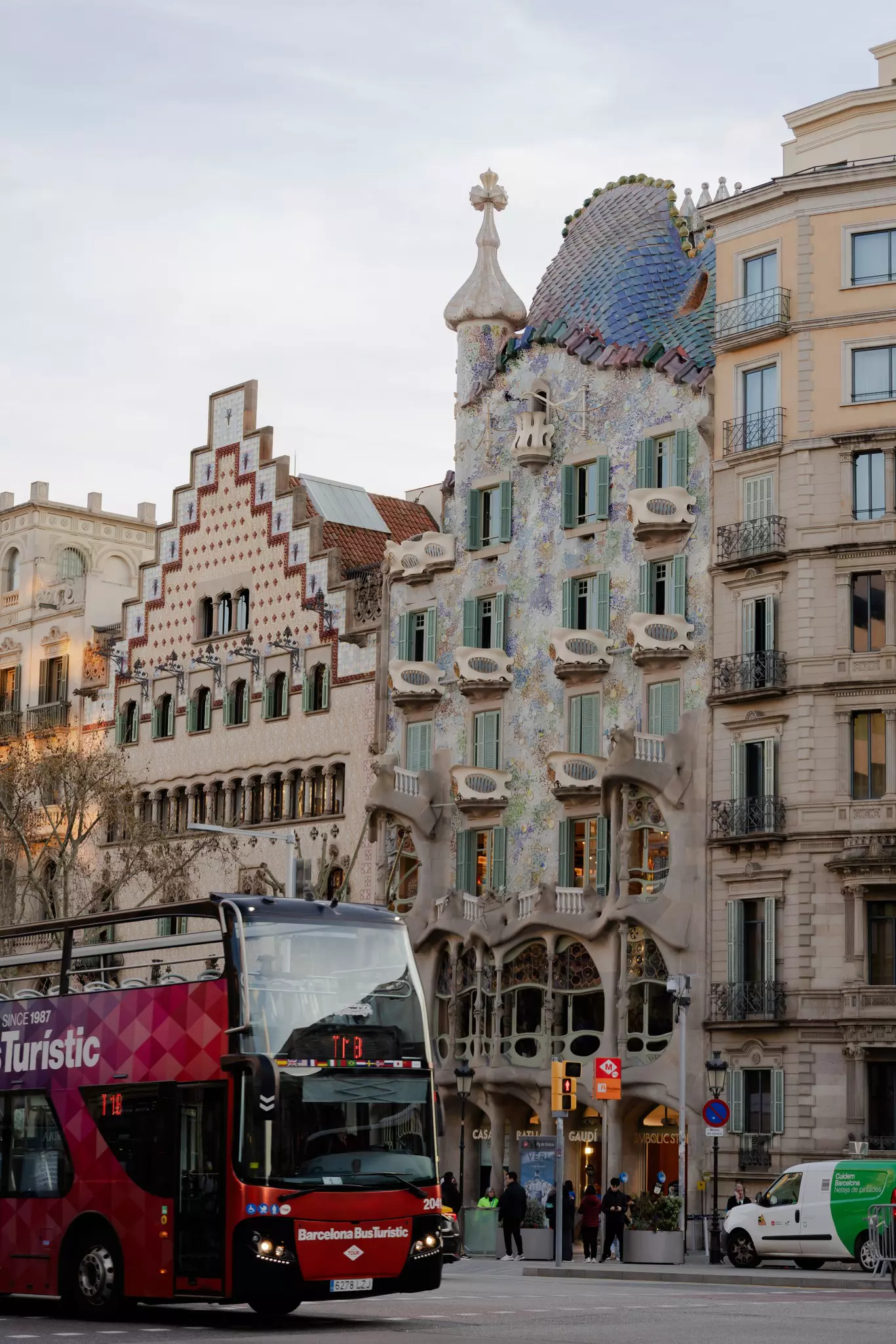
For budget-conscious travelers, the bus is the best way to move around Spain if you don’t mind the longer travel times. It’s also the preferred way for locals to get around, given its convenience, economical ticket prices and connections to smaller towns where trains do not pass.
There are several bus service providers in every Spanish city, and many of these fleets offer quite a comfortable ride with reclining seats and wi-fi on board to make traveling over long distances a smooth and pleasant experience.
While tickets can be directly purchased from the bus driver, it is best to buy them in advance. Keep in mind that the most popular routes and times tend to fill up pretty quickly.
Tip for using the bus: To find out which bus services operate at your departure point, check out Movelia. It offers the most comprehensive information on available national bus routes (and even international ones), schedules and purchasing, and has multiple language options.
Flying is the quickest way to travel around Spain and the best option to get to its outlying archipelagos – and popular tourist destinations, the Balearic Islands east of the Peninsula or the Canary Islands in the Atlantic. Spain has frequent domestic flights operating in dozens of airports across the country; the principal ones are Madrid’s Adolfo Suárez Madrid-Barajas Airport and Barcelona’s El Prat Airport.
Iberia Airlines is Spain’s national carrier that regularly offers reasonably priced tickets if you book in advance. Its low-cost sister airline, Vueling, has regular codeshares and also offers several domestic daily flight options with affordable fares.

Many of Spain’s top cities and islands are also important cruise ports, including Barcelona, Cádiz, Valencia, Ibiza, Palma de Mallorca and Las Palmas (Canary Islands). If time is not an issue, traveling by boat or ferry across from the Peninsula across the Mediterranean or Atlantic waters is a pleasant, albeit drawn-out, travel experience. This is also the best option if you wish to take your car, motorbike or bicycle on board.
Spain’s main shipping lines, Baleària and Trasmediterránea, offer regular trips from main cities in the Peninsula as well as hourly connections in the Balearic Islands (between Ibiza, Mallorca, Formentera and Menorca) and the eight main islands of the Canaries. Passengers have the option to book seats or cabins with beds.
To minimize travel planning hassle, check out Omio – a one-stop booking platform where you can compare and purchase train, bus, ferry and plane tickets across Spain and Europe. You can find aggregate schedules and pricing for all major Spanish rail operators, making it easy to find the best option to suit your travel needs.
Car-sharing services are a popular and environmentally friendly mode of transport for getting around Spain’s cities or regional towns. BlaBlaCar is the most popular service that allows you to book car-shares to several points around Spain. If you’re in the driver’s seat and seeking some company (or wish to share the gas bill), you can also publish your own rides, pickup points and prices on the BlaBlaCar website.
Not only is this a cost-effective way to travel long distances, but it’s also a great way to meet locals (and practice your Spanish!).

People with reduced mobility will find Spain a highly accessible and inclusive travel destination. All Spanish airports provide passengers with disabilities or reduced mobility free assistance services, from the moment you land to security and border controls and luggage collection. These services can be requested in the Aena (Spain’s state-owned airport operator).
If you are traveling by train, RENFE offers Adif Acerca, a free assistance service where passengers with mobility needs can request help with transiting between stations, boarding and disembarking trains.
In Spain’s main cities, such as Madrid and Barcelona, terminals and stations are largely designed to give passengers full autonomy. The Madrid Metro, which has won an award for “Development of Tourist Accessibility,” is one of the most accessible metropolitan systems in the world. It has installed universal accessibility features, such as lifts and ramps for wheelchair access, step edges and Braille-marked elevator signs and handrails. Thanks to a continued push for universal accessibility, over 70% of its 303 stations are accessible as of 2025; that number is projected to reach 82% accessibility by 2028 with ongoing accessibility upgrade plans.
As of 2025, about 97% of Barcelona’s metro network of 191 stations is accessible, with advanced features such as directional devices for blind people and luminous door devices on trains. Local city buses have also been adapted for accessible travel, with tilts, ramps and reserved spaces for wheelchair users and baby carriages, as well as Braille-embossed stop buttons.
Book your Spain trip with Lonely Planet Journeys
See Spain how it's meant to be seen
Planned by local experts and tailored to you, Lonely Planet Journeys handles the logistics so you can just enjoy the trip. Tell us what you want and we'll build your Spain itinerary from scratch, or browse our bookable trips to get inspired.


Explore related stories