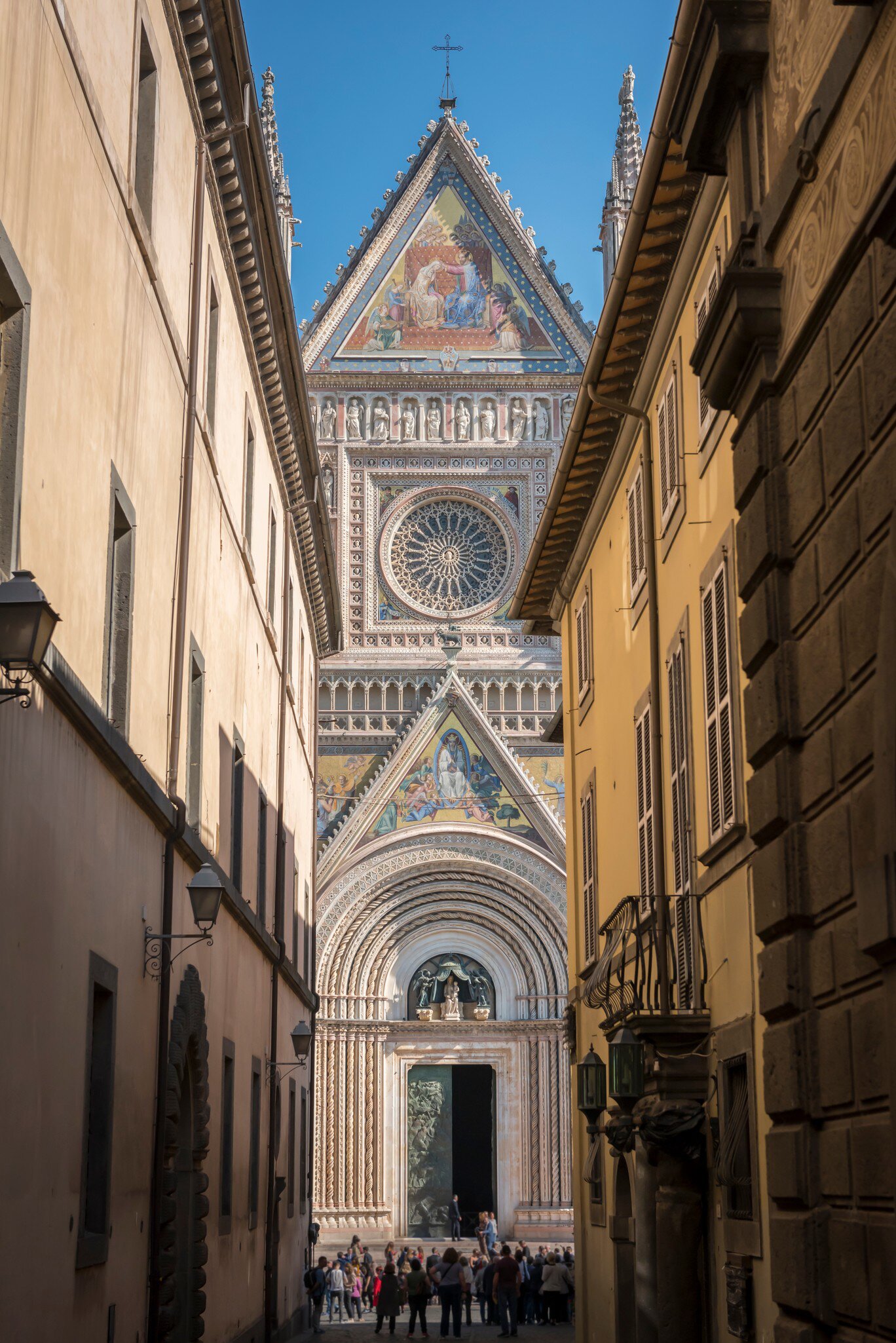
Blending Romanesque and Gothic architecture, the intricate facade of Siena’s Cattedrale di Santa Maria Assunta – the city’s Duomo – dominates the piazza that has functioned as the core of the city’s religious life since the Middle Ages.
Established in 1179, the cathedral dedicated to the Assumption of Mary has expanded over the centuries, becoming a sight that astonishes no matter how many other Tuscan churches you’ve seen.
The Facade
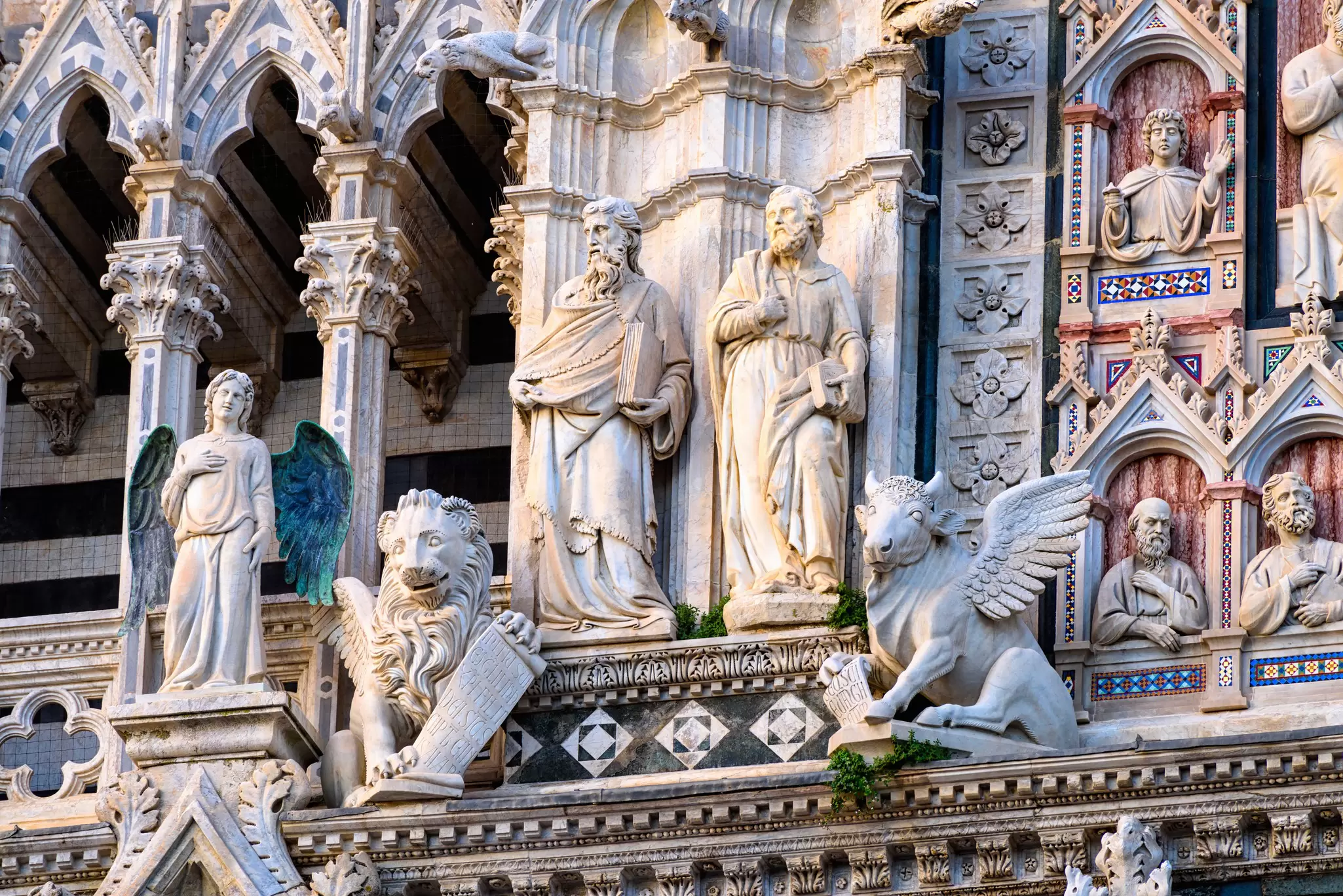
The facade took nearly 600 years to complete. Giovanni Pisano worked on the lower part, composed of three monumental doors topped by Gothic tympana, for over a decade starting in 1287, but he never completed his polychrome marble gem, leaving the city for Pisa in 1296.
The statues of prophets and apostles dating back to Pisano’s age have now been placed in the nearby Museo dell’Opera del Duomo and substituted with copies. The rose window was added in 1288, but the construction of the upper section didn’t begin until 1376, when Giovanni di Cecco took on the project inspired by the Cathedral of Orvieto. The mosaics, created by Augusto Castellani, were added only in the late 19th century.
The Floor Mosaic
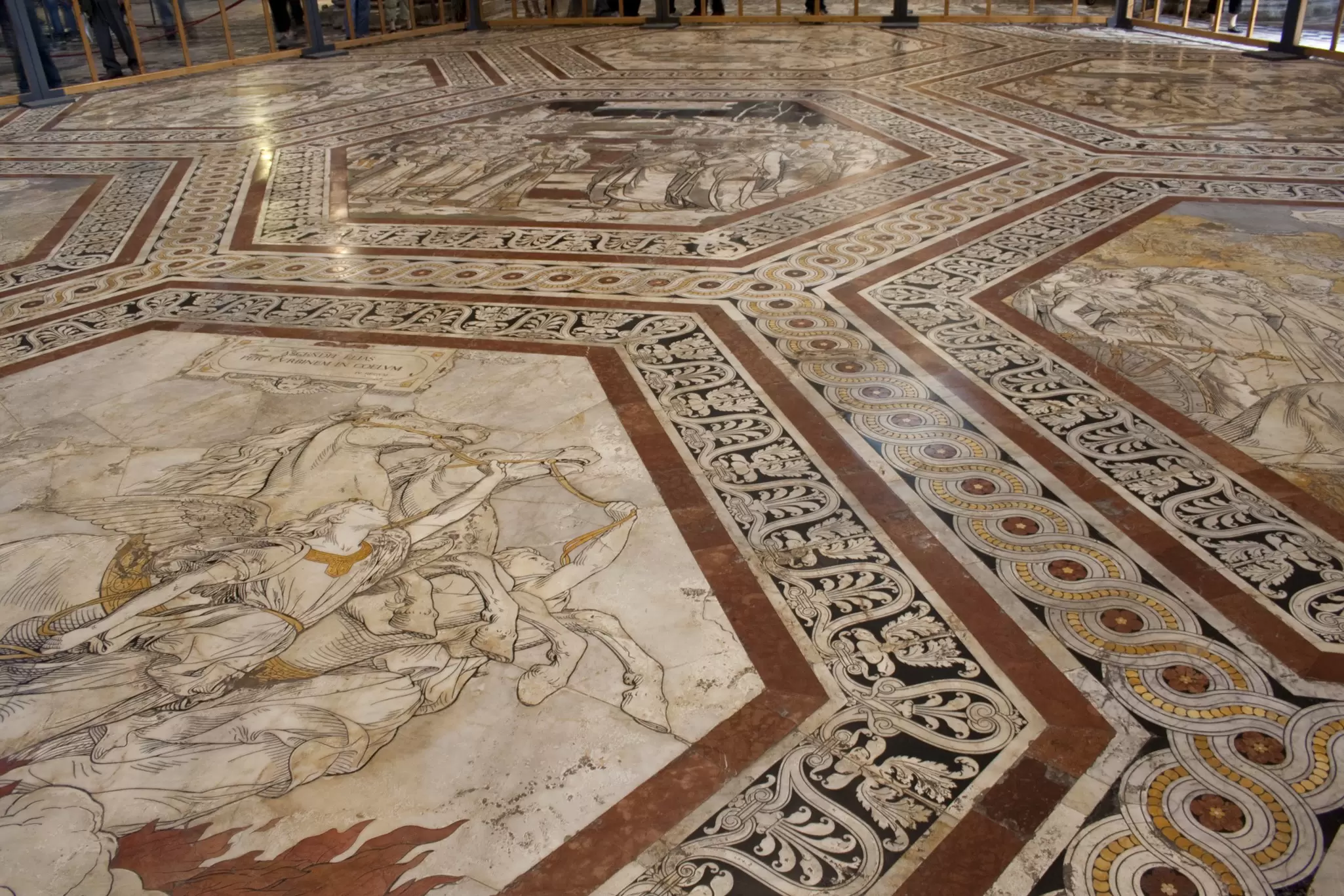
The facade is only part of the masterpiece – enter and you’ll immediately notice the striking black and white pillars leading to the starred vaults of the ceiling, but look down to admire the exceptional floor, made of 56 panels composing the elaborate, large-scale mosaic described by Giorgio Vasari as "the most beautiful, great and magnificent that was ever made."
Representing scenes from the Old Testament, the marble compositions were produced between the 14th and 19th century by up to 40 different artists – all Sienese apart from Pinturicchio. In order to preserve this monumental example of collective art, the floor is covered for part of the year. Typically the floor mosaic is uncovered for the public to see July and between mid-August and mid-October. Dates change from year to year – keep an eye on operaduomo.siena.it/pavimento for updates.
Notable Sculptures
The busts of the 171 popes sit on the cornice of the central nave, observing visitors from above. Among the artworks adorning the church are Gian Lorenzo Bernini’s sculptures Santi Girolamo and Maria Maddalena (1661–63) located in the Baroque Cappella della Madonna del Voto and the octagonal Carrara marble pulpit sculpted by Nicola Pisano with the assistance of his son Giovanni and Arnolfo di Cambio between 1266 and 1268.
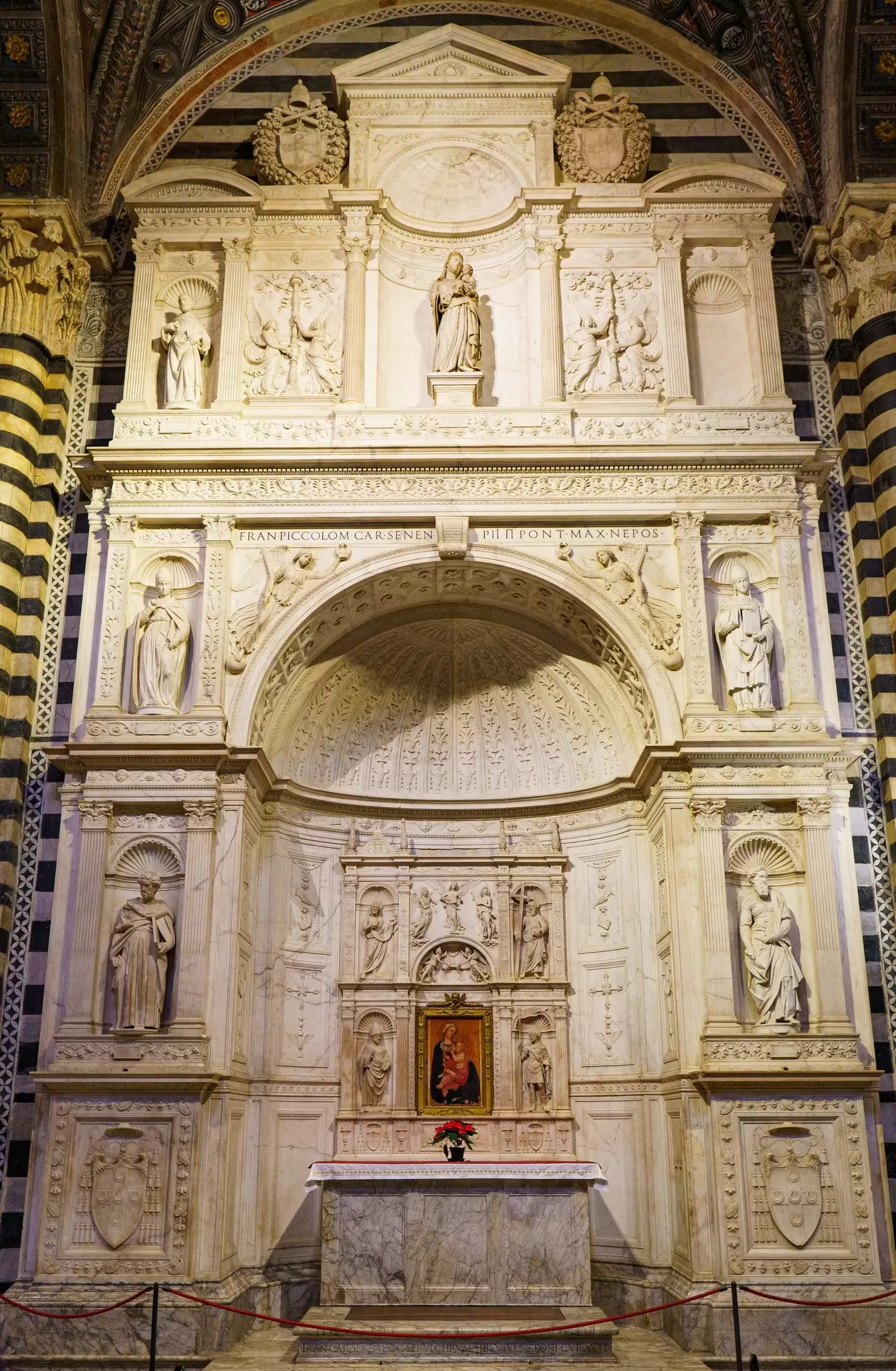
In the left nave, find the Altare Piccolomini by Andrea Bregno (1481–85), a wonderful Carrara marble altar commissioned in the 1480s and decorated by different artists in the following decades. Among them is Michelangelo, who contributed with the four niche statues representing St Peter, St Augustine, St Paul and St Gregory, created between 1501 and 1504.
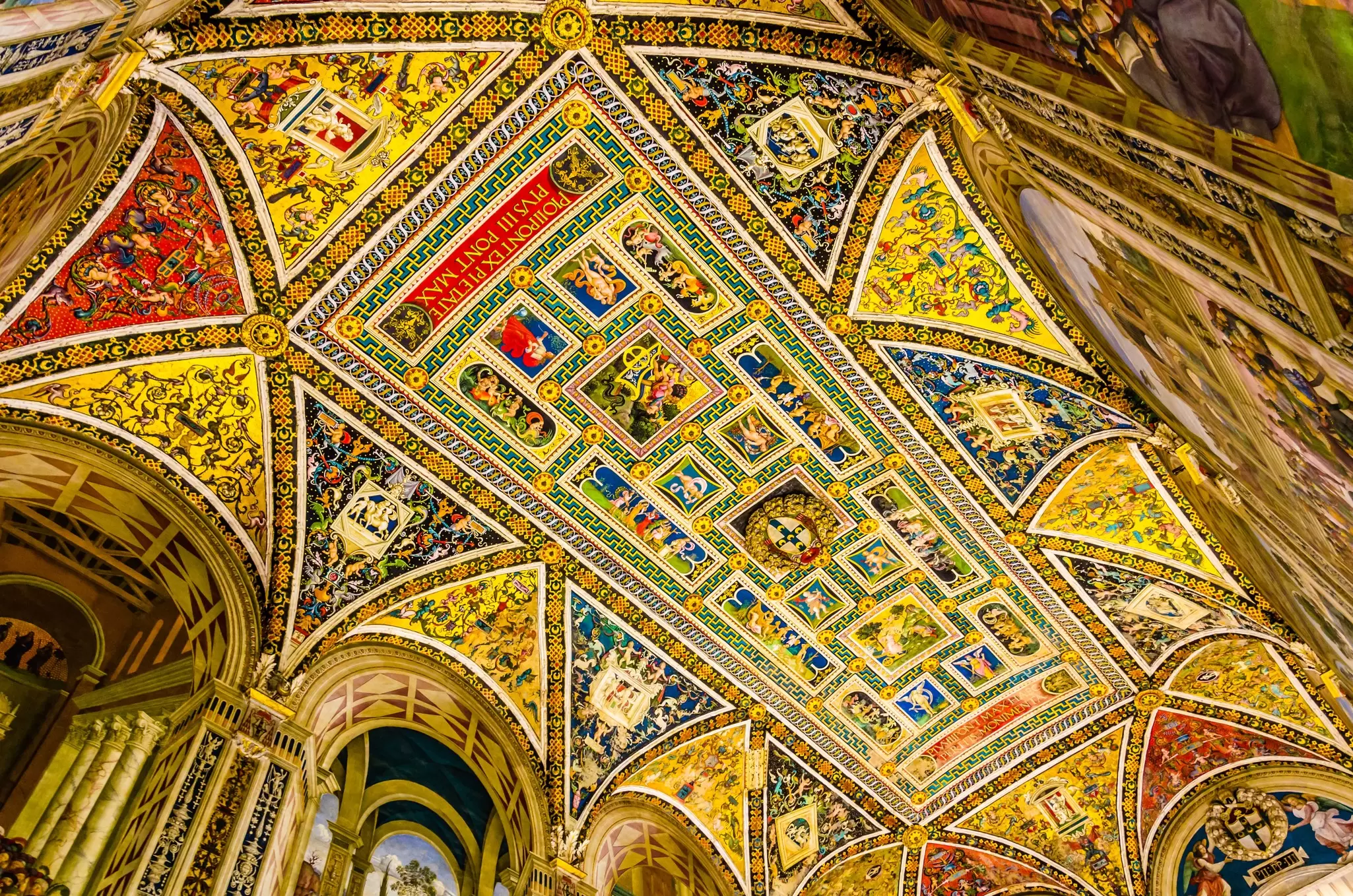
The Piccolomini Library
The cathedral is also home to the Piccolomini Library, built around 1495 to preserve the vast collection of manuscripts of Enea Silvio Bartolomeo Piccolomini, better known as Pope Pius II. Found in the left nave, the library is adorned by frescoes attributed to Pinturicchio representing scenes from the life of Pope Pius II.
La Porta del Cielo
For a jaw-dropping view of the Duomo’s interior, try to join one of the Porta del Cielo (Gate of Heaven) tours, which will give you access to the attics of the Cattedrale di Santa Maria Assunta.
You’ll walk around the cupola on the terraces via a 30-minute scenic route offering a unique perspective on the church’s treasure. The Porta del Cielo tours are not available year-round; check dates at operaduomo.siena.it/la-porta-del-cielo.