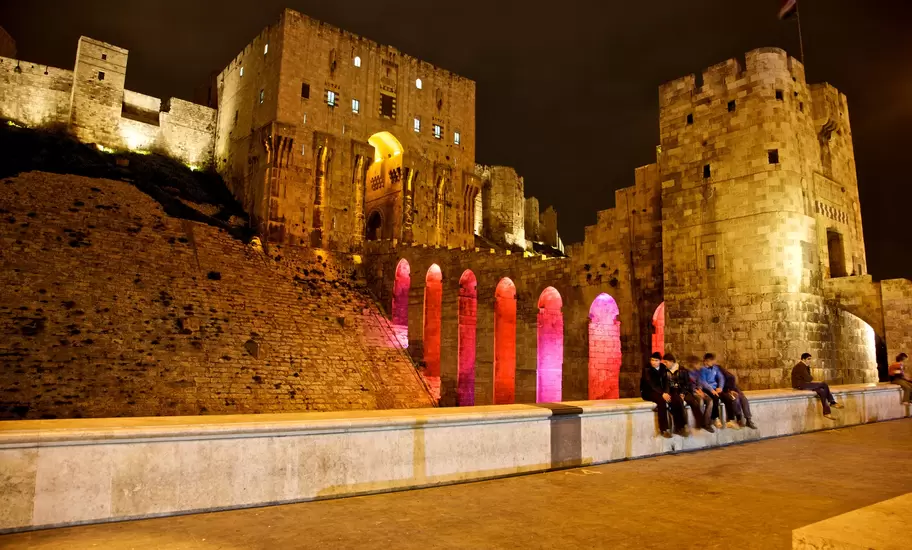
At the time of writing, Syria is one of the most dangerous places on the planet. To put it simply, you can’t go. And if you can, you shouldn’t.
The uprising against the Assad regime that began in early 2011 long ago became a civil war. Syrians themselves have paid the heaviest price – an estimated 200,000 have died in the conflict and millions have been forced into exile. Most such tragedies happen far away from the international spotlight. But Westerners, including journalists and aid workers, have also been targeted, very publicly so, both for kidnapping and execution. By visiting Syria now, you would run the risk of both.
Before it descended into conflict, Syria was one of the safest countries in the Middle East. In the old city of Damascus, it was easy to pass, without crossing any frontline, from predominantly Muslims areas of the city to those where Christians were in the majority. Church spires from the many denominations that have called Syria home for millennia rose within sight of mosque minarets. There were numerous shared spaces, too – the coffee shops, the growing number of art galleries, the hammams – where it was impossible to say whether the young men in earnest conversation were Muslim or Christian, Sunni or Alawite, Kurdish or Arab. It wasn't a paradise and tension arose from time to time. But Syria, urban Syria in particular, was one of the most tolerant and peaceful places in the Middle East.
Much of this was born from a shared history of unusual length. Damascus and Aleppo are among a handful of cities that claim to be the oldest continuously inhabited cities on earth. For at least 5000 years, and probably longer, Syria has seen conquering armies and fleeing refugees come and (only sometimes) leave. It absorbed the great religions, peoples and cultures, appropriating them as its own to form. The result was less coexistence than an intricate mosaic.
In this way, Syria's historic sites have always been an essential part of the country's fabric. Where else in the world but in Maaloula and other Christian towns close to Damascus was it still possible to hear people speak Aramaic, the language of Jesus? And where else could Muslim and Christian families mingle in a mosque courtyard at sunset as if no time at all had passed since the days when, fifteen centuries before, the Umayyads had ruled over Damascus?
Many sites also served as a backdrop to Syrian daily life. Private life is most often a carefully guarded secret, lived behind closed doors, in beautifully conceived private spaces like the Azem Palace in Damascus or the courtyard homes of Aleppo. But Syrians also love to come together outdoors. Very often, that meant enjoying their Friday, the day of rest, picknicking with family and friends alongside ancient Roman ruins such as Apamea or Palmyra. Or close to Crac des Chevaliers. Or within sight of the waterwheels of Hama.
In the cities, where open spaces are few, they promenaded through the souqs, buying ice creams from the famous Bakdash in Damascus' Souq al-Hamidiyya or seeking out sugared sweets in case guests dropped by later in the evening.
Most of these once-simple pleasures are no longer possible. Families have been torn apart, entire communities have fled to safety and no-one knows when they will be able to return. Until they can, these remain treasured memories from a more innocent time, for locals as for visitors who were fortunate enough to visit a Syria at peace.