Sri Lanka Getting there & around

Getting around

The only regular domestic flights are the flights between Jaffna and Colombo. Flights to Trincomalee were added following the cease-fire a few years ago but were suspended again following the drop in tourism after the 2004 tsunami. The flights are likely to start again if tourism picks up.

Travelling on public transport is therefore mostly a choice between buses and trains. Both are cheap. Trains can be crowded, but it’s nothing compared with the seemingly endless numbers of passengers that squash into ordinary buses. Trains are a bit slower than buses, but a seat on a train is preferable to standing on a bus. Even standing on a train is better than standing on a bus.

On the main roads from Colombo to Kandy, Negombo and Galle, buses cover around 40km to 50km per hour. On highways across the plains, it can be 60km or 70km an hour. In the Hill Country, it can slow to just 20km an hour.

All public transport gets particularly crowded around poya (full moon) holidays and their nearest weekends, so try to avoid travelling then if you can.

Hitching

Hitching is never entirely safe in any country in the world, and we don’t recommend it. In any case, Sri Lanka’s cheap fares make it an unnecessary option. Travellers who do decide to hitch should understand that they are taking a small but potentially serious risk; they can attempt to minimise this risk by travelling in pairs and letting someone know where they are planning to go.

^ Back to top

Bus & tram

Bus

Bus routes cover about 80% of the nation’s 90, 000km of roads. There are two kinds of bus in Sri Lanka – Central Transport Board (CTB) buses and private buses. CTB buses are usually painted yellow and ply most long-distance and local routes. Private bus companies have vehicles ranging from late-model Japanese coaches used on intercity-express runs to decrepit old minibuses that sputter and limp along city streets or short runs between towns and villages. Private air-con intercity buses cover all the major routes; for long-distance travel they are by far the most comfortable option.

Bus travel in Sri Lanka can be interesting. Vendors board to sell all sorts of snacks and even books on long-distance routes. Blind singers sometimes get on and work their way down the aisle, warbling away and collecting coins. Beggars may approach passengers with a litany of misfortunes – which they may also sing. Buses sometimes stop at temples so the driver and passengers can donate a few coins.

The first two seats on CTB buses are reserved for ‘clergy’ (Buddhist monks) and this is never ignored. If you want to guarantee a seat, you’ll need to board the bus at the beginning of its journey; Sri Lankans seem to know when to sprint after the right bus as it pulls in, and throw a bag or a handkerchief through the window to reserve a seat.

Finding the right bus at the chaotic bus stations in Colombo and Kandy can be very challenging. Virtually all of the destination signs hung over the bus parking areas are in Sinhala script only, and since there is no central ticket office, you must locate the right parking area and buy your bus ticket either from a small booth or on board the bus. Probably the best strategy is simply to walk through the station saying the name of your destination until someone leads you to the right bus.

In smaller towns it’s much easier, as there are usually separate bus stops for each destination or direction, and your hotel or guesthouse can tell you where these stops are.

Costs

In most cases, private bus companies run services parallel to CTB services. Intercity expresses charge about twice as much as CTB buses, but are more than twice as comfortable, and usually faster. Fares for CTB buses and ordinary private buses are very cheap. The journey between Kandy and Colombo costs Rs 70 on a CTB bus, Rs 80 to 120 on ordinary private buses and Rs 140 on an air-con intercity express. A bus trip from Colombo to Kataragama costs Rs 146 on an ordinary private bus and Rs 280 by intercity express.

Most buses have unbelievably small luggage compartments and they rarely have storage on the roof. For your own sake, travel light. If you have a large pack, you can buy an extra ticket for your bag.

Bus

Local buses go to most places, including villages outside main towns, for fares ranging from Rs 4 to 25. Their signboards are usually in Sinhala or Tamil, so you’ll have to ask which is the right bus.

^ Back to top

Car & motorcycle

Self-drive car hire is possible in Sri Lanka, though it is far more common to hire a car and driver for a day or more. If you’re on a relatively short visit to Sri Lanka on a midrange budget, the costs of hiring a car and driver can be quite reasonable.

When planning your itinerary, you can count on covering about 35km per hour in the Hill Country and 55km per hour in most of the rest of the country.

Motorcycling is an alternative for intrepid travellers. Distances are relatively short and some of the roads are a motorcyclist’s delight; the trick is to stay off the main highways. The quieter Hill Country roads offer some glorious views, and secondary roads along the coast and the plains are reasonably quick. There are motorcycle-hire agencies in Hikkaduwa and Kandy. In addition to a cash deposit you must provide your passport number and leave your airline ticket as security. The official size limit on imported motorbikes is 350cc.

Self-drive hire

Quickshaws Tours (258 3133; www.quickshaws.com; 3 Kalinga Pl, Col 5) and Ameri Rent-A-Car (258 1594; 30A Temple Lane, Col 3) are two Colombo-based companies offering self-drive car hire. Both have air-con Toyota Corollas from Rs 2400 per day, including insurance, tax and the first 100km; there is a Rs 18 charge for each kilometre in excess of 100km. Discounted weekly rates are also available. Generally you’re not allowed to take the car into national parks, wildlife sanctuaries or jungle, or along unsealed roads.

^ Back to top

Train

Sri Lanka’s rickety railways are a great way to cross the country. Although they are slow, trains travel short distances so there are few overnight or all-day ordeals to contend with. A train ride is almost always more relaxed than a bus ride.

There are three main lines. The coast line runs south from Colombo, past Aluthgama and Hikkaduwa to Galle and Matara. The main line pushes east from Colombo into the Hill Country, through Kandy, Nanu Oya (for Nuwara Eliya) and Ella to Badulla. The northern line launches from Colombo through Anuradhapura to Vavuniya (it once ran beyond Jaffna to the northern tip of Sri Lanka). One branch of the northern line reaches Trincomalee on the east coast, while another branch heads south to Polonnaruwa and Batticaloa.

The Puttalam line runs along the coast north from Colombo, although rail buses run between Chilaw and Puttalam. The Kelani Valley line winds 60km from Colombo to Avissawella.

Trains are often late. For long-distance trains, Sri Lankans sometimes measure the lateness in periods of the day: quarter of a day late, half a day late and so on.

There’s a helpful information desk (No 10) at Fort station in Colombo, and also an information office (244 0048; 9am-5pm Mon-Fri, 9am-1pm Sat), to the right of the main entrance, run by JF Tours. The staff can provide information on timetables and routes. Further information can also be found at www.railway.gov.lk/index.php.

Classes

There are three classes on Sri Lankan trains. Third class is dirt cheap and invariably crowded, but with a little luck you’ll get a seat on a bench. Second class has padded seats and fans that sometimes work, and it’s generally less crowded. There are no 2nd-class sleeping berths, only ‘sleeperettes’ (fold-down beds in a shared compartment. First class comes in three varieties, all with air-con – coaches, sleeping berths and observation saloons (with large windows) – but is available on relatively few lines.

Costs

As a sample, the intercity express from Kandy to Colombo costs Rs 250 in 1st class or Rs 125 in 2nd class. From Colombo to Anuradhapura, the intercity express costs Rs 520 in 1st class or Rs 290 in 2nd class.

^ Back to top

Travel documents

Reservations

Private buses cannot be booked before the day of travel; to book CTB buses you can call 011-258 1120.

Reservations

You can reserve places in 1st class and on intercity expresses. On four of the daily intercity services between Colombo and Kandy you can also book on 2nd-class sleeperettes.

On weekends and public holidays, it pays to make a booking for 24-seat observation saloons, which only run on the main line, as these carriages often fill up; the booking fee is Rs 50. The best seats to book are Nos 11, 12, 23 and 24, which have full window views. The observation saloon is at the end of the train and jolts around quite a lot.

Reservations can be made at stations up to 10 days before departure. You can book a return ticket up to 14 days before departure.

If travelling more than 80km, you can break your journey at any intermediate station for 24 hours without penalty. However, you must make fresh reservations for seats on the next leg.

^ Back to top

Local transport

Many Sri Lankan towns are small enough to walk around. In larger towns, you can get around by bus, taxi or three-wheeler.

Three-wheeler

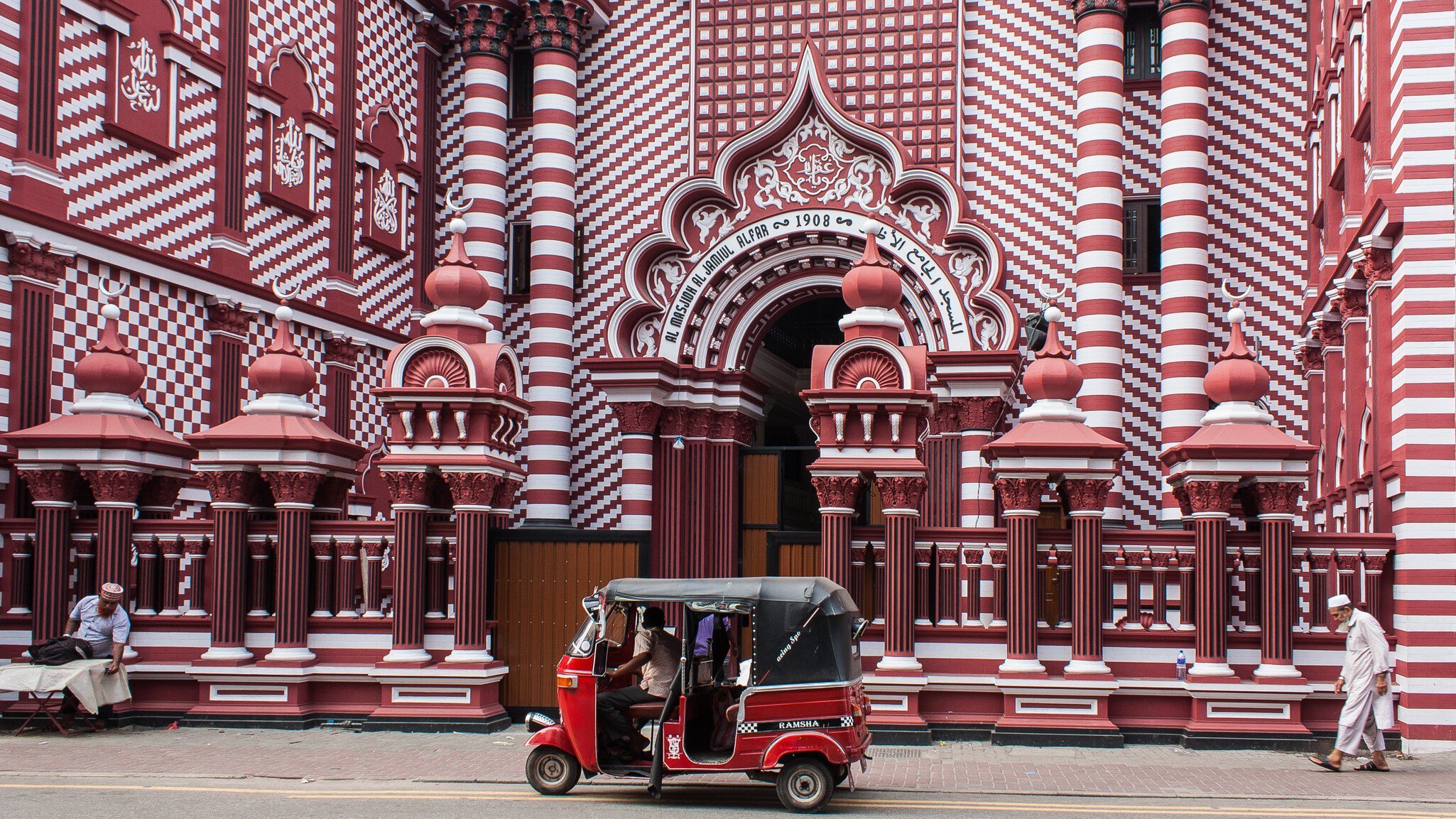
These vehicles, known in other parts of Asia as túk-túks, bajajs or autorickshaws, are everywhere: turn a corner and you’ll find one. Agree (or haggle your heart out) on the fare before you get in. Some keen drivers will offer to take you to the moon, but it’s no fun being in a three-wheeler for more an hour; believe us, this comes from hard experience. You may think that the driver is not obeying any road rules; you are probably right.

As a rule of thumb, a three-wheeler should cost no more than Rs 40 per kilometre. Three-wheelers and taxis waiting outside tourist hotels and similar places expect higher than usual fares.

^ Back to top

Air

Sri Lanka has two domestic airlines on the ColomboJaffna route: AeroLanka (in Colombo 011-250 5632; www.aerolanka.com) and Expo Aviation (in Colombo 011-257 6941; info@expoavi.com).

Checking in takes at least 2½ hours due to security measures.

Air taxis are another way of travelling internally. Sri Lankan Air Taxi (019-733 3355; www.srilankan.aero/airtaxi) offers charter services anywhere in the country, including a fairly regular flight to Ampara for US$200.

^ Back to top

Bicycle

Keen cyclists will probably find Sri Lanka a joy, apart from the uphill sections of the Hill Country and the major arteries out of Colombo. When heading out of Colombo in any direction, take a train out beyond the urban corridors before you start cycling.

It’s a good idea to start early in the day to avoid the heat, and to take lots of water and sun block. The distances you cover will be limited by the state of the roads – be prepared for a large amount of ‘eyes down’ cycling.

If you decide to bring your own bicycle, be sure to also bring a supply of spare tyres and tubes as these can suffer from the poor road surfaces. The normal bicycle tyre size in Sri Lanka is 28in by 1.5in. Some imported 27in tyres for 10-speed bikes are available but only in a few shops in Colombo and at high prices. Keep an eye on your bicycle at all times and use a good lock.

When taking a bicycle on a train, every part has to be described on the travel documents, so you should deliver the bicycle at least half an hour before departure. At Colombo’s Fort station you may want to allow even more time (up to two hours). It costs about twice the 2nd-class fare to take a bicycle on a train.

Hire

In terms of hired bicycles, those with gears are the exception rather than the rule. You’ll find that most range from merely adequate to desperately uncomfortable with dodgy brakes. Bikes imported from China and India are the norm. You should seriously consider bringing your own gear.

The National Mountain Biking Association (011-269 1505) in Colombo acts as a clearing house for information on mountain biking in Sri Lanka, and also arranges guides for individual or custom tours.

AdventureAsia (536 8468; 338 TB Jaya Mawatha, Col 10) and Adventure Sports Lanka (279 1584; actionlanka.com; 366/3 Rendapola Horagahakanda Lane, Talagama, Koswatta), both based in Colombo, arrange mountain-biking excursions in the Hill Country.

Purchase

You can buy mountain bikes at the following bike shops in Colombo. Expect to pay US$100 to US$450 for a new bike, depending on the quality. Most are made in India or China; the Chinese bikes are said to be sturdier and more reliable than the Indian bikes.

City Cycle Stores (011-250 4632; alamul@slt.lk; 117-119 Dam Str, Col 12)

Cycle Bazaar (011-268 6255; 82 Danister De Silva Mawatha, Col 8)

Suriyage (011-269 1505; suri@isplanka.lk; 524 Rider Tower, Maradana Rd, Col 10) Also repairs bikes and occasionally has used mountain bikes for sale for about half the cost of a new bike.

^ Back to top