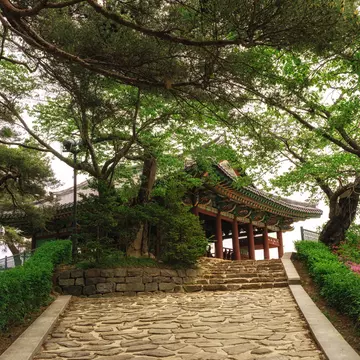
Gang·won-do

Advertisement

Introducing Gang·won-do

Gang·won-do, northeast of Seoul and bordering the ocean and North Korea, holds many of Korea’s natural gems. Roads wind through wildflower-dappled valleys, rivers chase and meander their way to the sea, and verdant green mountains cloaked in mist rise up suddenly. Come here to trade the crazy neonscape of Seoul for rural majesty, or visit the quiet but still fun cities of Chuncheon or Gangneung.

Advertisement

Gang·won-do has several of South Korea’s most beautiful national parks, including Seoraksan, whose evocative, jagged peaks seem like giant, nature-made sculptures and whose trails offer hours – even days – of hiking. More sedate pleasures can be found in the beaches of Gangneung and Naksan, where Seoulites arrive in droves in the summertime to sunbake on smooth, white-sand beaches and splash in the sea. Bungee jumping, skiing, cycling, and white-water rafting are other outdoor options. Most of the more beautiful parts of the province are found in obscure valleys with dramatic gorges, raging rivers and dense forests, and the sandy coves and rocky headlands south of Samcheok provide serene sea views.

Approaching the northern border you’ll see tank blockades, barbed wire and lots of military: North Korean spies still slip through from time to time, and it’s a bit odd to see lines of spotlights that illuminate the beaches – they’re not for tourists, they’re to spot intruders.

History

Historically the province has been isolated due to its rugged terrain, and during the Korean War it was the site of many fierce battles for strategic mountain tops. After the war, the area’s rich natural resources, including coal and timber, were industrialised, bringing road and rail links. With the closure of many coal mines during the 1990s, the province was forced to create alternative employment opportunities. Tourism was the solution.

In summer 2006 a 100-year rainy season brought torrential downpours, and with it flooding, landslides and death. The disaster killed over 60 people, washed away roads and trails (including many in the Seoraksan National Park and other hiking areas) and destroyed homes and businesses. By the time this book is published much will be back to normal thanks to aid and industrious rebuilding, but the memory of the loss is fresh and painful.

Last updated: Feb 17, 2009

Thorn Tree forum discussion

Recent posts

  1. JasonInJapan avatar
    Re: Favorite place to get away in Korea

    by JasonInJapan 03 May 2011

    I live on the coast in Gangwondo in Donghae, and there are lots of nice beaches here and in Samcheok and Gangneung. However the beaches…
  2. Jake_Kim avatar
    RE: Bus from Andong to Samcheok?

    by Jake_Kim 04 February 2011

    Katharina, I'm afraid there is no direct bus service between Andong and Samcheok, express or intercity altogether. Destinations served…
  3. dominic77 avatar
    RE: Nature in Korea

    by dominic77 12 July 2010

    In general: Koreans don't generally seem to care for conserving nature, and the amount of unnecessary development of good wildlife habitat…

See all Thorn Tree forum discussions for Gang·won-do

In our shop

Bags feeling light?
Coffee table looking bare?
Get your guidebooks, travel goods, even individual chapters, right here.

See all books in our shop

Hotels & Hostels

Check out all our reviewed and recommended accommodation and book online.

Find hotels & hostels

Travel Insurance

Going to South Korea? Make sure you're covered.

Get a quote

See all travel services

Advertisement