Things to do in Oslo
-
A
Det Kongelige Slott
King Harald V sleeps in Det Kongelige Slott, the royal palace, peering from a hill over the Karl Johans axis. Guided tours of 15 rooms are available in English, once daily at 14:00 (late June to mid-August). Tickets are difficult to obtain - ask the tourist office for details. The rest of the grounds comprise Slottsparken, an inviting public park that's free to enter. If you happen to be around at 13:30, watch the changing of the guard.
reviewed
-
B
Åpent Bakerei
A neighbourhood café that serves coffee in deep, cream-coloured bowls and has unbeatable breads and pastries. A freshly baked roll (Nkr14) topped with homemade røre syltetøy (stirred jam) and enjoyed on the bakery’s patio, makes for one of Oslo’s best and least expensive breakfasts.
reviewed
-
C
Mucho Mas
What it lacks in authenticity, Mucho Mas more than makes up for in cheese and portion size. The full Mexican repertoire is on offer, including tacos, nachos and burritos (which are enormous); all dishes are offered in meat or vegetarian versions. Well-priced beer helps put out the fire.
reviewed
-
D
Fru Hagen
The low-key and always full Fru Hagen, ‘Mrs Garden’, serves sandwiches and burgers, all with a healthy side portion of vegetables. Its location facing Olaf Ryes plass also makes it good for people-watching.
reviewed
-
E
Norwegian Folk Museum
Norway’s largest open-air museum and one of Oslo’s premier attractions is the Norwegian Folk Museum. The museum includes more than 140 buildings, mostly from the 17th and 18th centuries, gathered from around the country, rebuilt and organised according to region of origin. Paths wind past old barns, ele-vated stabbur (raised storehouses) and rough-timbered farmhouses with sod roofs sprouting wildflowers. The Gamlebyen (Old Town) section is a reproduction of an early-20th-century Norwegian town and includes a village shop and old petrol station; in summer (daily except Saturday) you can see weaving and pottery-making demonstrations. Another highlight is the restored st…
reviewed
-
F
Vikingskipshuset
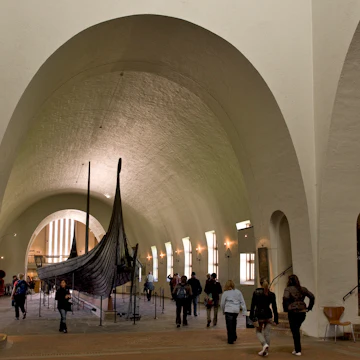
Even in repose, there is something intimidating about the sleek, dark hulls of the Viking ships Oseberg and Gokstad, which is why visitors to this unforgettable Vikingskipshuset often find themselves whispering. Only a few boards and fragments remain of a third ship, the Tune, built around the same time as the Gokstad and excavated in 1867 from the Oslofjord region. All were built of oak in the 9th century; the ships were pulled ashore and used as tombs for nobility, who were buried with all they expected to need in the hereafter: jewels, furniture, food, servants, intricately carved carriages and sleighs, tapestries and fierce-looking figures.
reviewed
-
G
Kon-Tiki Museum
A favourite among children, the worthwhile Kon-Tiki Museum is dedicated to the balsa raft Kon-Tiki, which Norwegian explorer Thor Heyerdahl sailed from Peru to Polynesia in 1947. The museum also displays the totora reed boat Ra II, built by Aymara people on the Bolivian island of Suriqui in Lake Titicaca. Heyerdahl used it to cross the Atlantic in 1970. For a full rundown on the life of this extraordinary explorer who achieved a lot in his lifetime, see the boxed text, p132.
reviewed
-
H
Ekeberg Restaurant
An early example of functionalist architecture, the 1929 Ekeberg Restaurant once attracted long lines of spectators eager to be seen enjoying a beer outside this angular, painfully white nonconformist building. After falling into disrepair in the 1980s, the restaurant was renovated and reopened with a classy menu and slick bar. If nothing else, go for the view.
reviewed
-
I
Holmenkollen Ski Jump
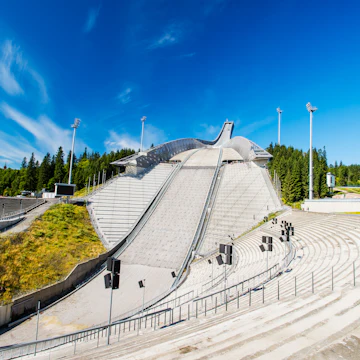
The Holmenkollen Ski Jump, perched on a hilltop overlooking Oslo, offers a panoramic view of the city and doubles as a concert venue. During Oslo's annual ski festival, held in March, it draws the world's best ski jumpers.
reviewed
-
J
Delicatessen
One of Grünerløkka's numerous cool-kid cafes, it features sturdy wooden tables and big windows that fold away in the summer to overlook a riverside park across the street. Good Italian sandwiches.
reviewed
Advertisement
-
K
Stockfleths
Founded in 1895, the award-winning Stockfleths is one of Oslo’s oldest coffee shops. It also serves thick slices of wholegrain bread with brown cheese, a favourite Norwegian snack.
reviewed
-
L
Tullins Café
This dimly lit café offers a little bit of everything, from salads and burgers to pasta and stir-fry dishes. It’s a favourite among students.
reviewed
-
M
Hotel Havana
International deli with everything from French cheese to Belgian chocolates. The chorizo and manchego sandwiches (Nkr55) are an especially good bet.
reviewed
-
N
Villa Paradiso
No-frills Italian food (mostly pizzas), pleasant service and family friendly.
reviewed
-
O
-
P
Bygdøy Peninsula
The Bygdøy Peninsula ( M0368) holds some of Oslo's top attractions. You can rush around all the sights in half a day, but allotting a few extra hours will be more rewarding.
Although only minutes from central Oslo, Bygdøy maintains its rural character. The royal family has a summer home here, as do many of Oslo's well-to-do residents. Ferry No 91 operates from early April to early October, making the 15-minute run to Bygdøy every 30 to 40 minutes from 08:45 with the last crossing returning from Bygdøy at around 18:30 in April and September, 21:15 in summer, with earlier final departures the rest of the year. Keep an eye out for the king's ship KS Norge on the ride over, …
reviewed
-
Q
Frognerparken
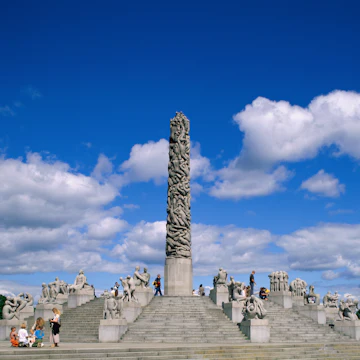
Frognerparken, which has as its centrepiece Vigeland Park, is an extraordinary open-air showcase of work by Norway's best-loved sculptor, Gustav Vigeland. Vigeland Park is brimming with nearly 212 granite and bronze Vigeland works. His highly charged work ranges from entwined lovers and tranquil elderly couples to contempt-ridden beggars. His most renowned work, Sinataggen (the 'Little Hot-Head'), portrays a London child in particularly ill humour.
It's a great place to visit in the evening after other sights have closed.
Near the southern entrance to the park lies Oslo City Museum (Oslo Bymuseum) housed in the 18th-century Frogner Manor (built on the site of a Viking-era …
reviewed
-
R
Norske Sjøfartsmuseum
The author Roald Dahl once said that in Norway, everyone seems to have a boat, and there is no better place to explore that theory than at the Norske Sjøfartsmuseum. The museum depicts Norway’s relationship with the sea, including the fishing and whaling industry, the seismic fleet (which searches for oil and gas), shipbuilding and wreck salvaging. Outside the museum there’s a seamen’s mem-orial commemorating the 4700 Norwegian sailors killed in WWII, and alongside is Roald Amundsen’s ship Gjøa, the first ship to completely transit the Northwest Passage (from 1903 to 1906). Other features of the museum include Norway’s largest collection of maritime art, a dried…
reviewed
-
Storedal Cultural Centre
This cultural centre is 11km northeast of Fredrikstad. King Magnus the Blind was born here in 1117; he took the throne at 13 years of age and earned his nickname at 18 when he was blinded by an enemy in Bergen. A later owner of the farm, Erling Stordahl, who was also blind, developed a monument to King Magnus, as well as a centre dedicated to blind and other disabled people. The most intriguing feature is the Ode til Lyset (Ode to the Light), a ‘sound sculpture’ by Arnold Haukeland and Arne Nordheim which, using photo cells and a computer in the farmhouse, transmutes the slightest fluctuations in natural light into haunting, ever-changing music. To get there, follow Rv110…
reviewed
-
S
Historical Museum
The highly recommended Historical Museum is actually three museums under one roof. Most interesting is the ground floor National Antiquities Collection (Oldsaksamlingen), with displays of Viking-era coins, jewellery and ornaments. Look out for the 9th-century Hon treasure, the largest such find in Scandinavia (2.5kg). A section on medieval religious art includes the doors and richly painted ceiling of the Ål stave church (built around 1300). The 2nd level has an Arctic exhibit and the Myntkabinettet, a collection of the earliest Norwegian coins from as early as AD 995. The 2nd level and top floor hold the Ethnographic Museum, with changing exhibitions on Asia, Africa and…
reviewed
Advertisement
-
T
Munch Museum
Edvard Munch (1863–1944) fans won’t want to miss the Munch Museum, which is dedicated to his life’s work and has most of the pieces not contained in the National Gallery. Security is high in the museum since the 2004 theft of The Scream and The Madonna, though both paintings were recovered in 2006. The museum provides a comprehensive look at the artist’s work, from dark (The Sick Child) to light (Spring Ploughing). With over 11,000 paintings, 4500 watercolours and 18,000 prints and sketching books bequeathed to the city by Munch himself, this is a landmark collection. To get there, take the T-bane to Tøyen, followed by a five-minute signposted walk.
reviewed
-
U
Vigeland Museum
For an in-depth look at Gustav Vigeland’s work, visit the Vigeland Museum, opposite the southern entrance to Frognerparken. It was built by the city in the 1920s as a home and workshop for the sculptor, in exchange for the donation of a significant proportion of his life’s work, and it contains his early collection of statuary and monuments to public figures, as well as plaster moulds, woodblock prints and sketches. When he died in 1943, his ashes were deposited in the tower and the museum was opened to the public four years later. Visiting the artist’s private apartments on the 3rd floor is possible, but must be arranged in advance (tours per group cost Nkr700 on top o…
reviewed
-
V
Town Hall
This twin-towered town hall, completed in 1950 to commemorate the city’s 900th anniversary, houses the city’s political administration. Something of an Oslo landmark, its red brick functionalist exterior is unusual, if not particularly imag-inative. The entrance is lined with wooden reliefs from Norse mythology and the interior halls and chambers are decorated with splashy and impressive frescoes and paintings by some of Norway’s most prominent artists. It’s here that the Nobel Peace Prize is awarded on 10 December each year. You can view the main hall for free from the front corridor. Guided tours (in English) are available at 10am, noon and 2pm Monday to Friday and on w…
reviewed
-
Roald Amundsen Centre
The renowned and noted polar explorer Roald Amundsen, who in 1911 was the first man to reach the South Pole, was born in 1872 at Hvidsten, midway between Fredrikstad and Sarpsborg. Although the family moved to Oslo when Roald was still a small child, the family home in Hvidsten, which was the base for a small shipbuilding and shipping business, is now the Roald Amundsen Centre, which is dedicated to the man’s life and expeditions. Standing surrounded by these quiet fields of southern Norway, it seems perhaps not so surprising that Amundsen set off to seek adventure so far from home. The centre is signposted about 11km east of Fredrikstad, along the Rv111 towards Sarpsborg…
reviewed
-
W
Henie-Onstad Art Centre
In Høvikodden, west of the centre, lies one of Norway’s best private art collections, the Henie-Onstad Art Centre, founded in the 1960s by Norwegian figure skater Sonja Henie and her husband Niels Onstad. The couple actively sought out collectible works of Joan Miró and Pablo Picasso, as well as assorted impressionist, abstract, expressionist and modern Norwegian works. When you’ve seen enough art you can head downstairs for a look at Sonja’s various skating medals and trophies. From Jernbanetorget, take any bus heading towards Sandvika and get off at Høvikodden.
reviewed