Health & safety
Before you go
Since most vaccines don’t produce immunity until at least two weeks after they’re given, visit a physician four to eight weeks before departure. Ask your doctor for an International Certificate of Vaccination (or ‘the yellow booklet’), which will list all the vaccinations you’ve received. This is mandatory for countries that require proof of yellow fever vaccination upon entry, but it’s a good idea to carry it wherever you travel.
Bring medications in their original, clearly labelled containers. A signed and dated letter from your physician describing your medical conditions and medications, including generic names, is also a good idea. If carrying syringes or needles, be sure to have a physician’s letter documenting their medical necessity.
Insurance
If your current health insurance doesn’t cover you for medical expenses incurred overseas, you should think about getting extra insurance. Find out in advance if your insurance plan will make payments directly to providers or reimburse you at a later date for overseas health expenditures. (In many countries doctors expect payment in cash.)
Powered by:
recommended by Lonely Planet
Recommended vaccinations
NZ has no vaccination requirements for any traveller. The World Health Organization recommends that all travellers should be covered for diphtheria, tetanus, measles, mumps, rubella, chickenpox and polio, as well as hepatitis B, regardless of their destination. Planning to travel abroad is an ideal time to ensure that all routine vaccination cover is complete. The consequences of these diseases can be severe and while NZ has high levels of childhood vaccination coverage, outbreaks of these diseases do occur.
Medical checklist
acetaminophen/paracetamol (Tylenol/Panadol) or aspirin
adhesive or paper tape
antibacterial ointment (eg Bactroban) for cuts and abrasions
antibiotics
antidiarrhoeal drugs (eg loperamide)
antihistamines for hay fever and allergic reactions
anti-inflammatory drugs (eg ibuprofen)
bandages, gauze, gauze rolls
DEET-containing insect repellent for the skin
iodine tablets or water filter for water purification
oral rehydration salts
permethrin-containing insect spray for clothing, tents and bed nets
pocketknife
scissors, safety pins, tweezers
steroid cream or cortisone for poison ivy and other allergic rashes
sun block
thermometer
Internet resources
You’ll find that there’s a wealth of travel health advice available on the internet. The World Health Organization (www.who.int/ith/) publishes an excellent book called International Travel and Health, which is revised annually and is available online at no cost. Another good website of general interest is MD Travel Health (www.mdtravelhealth.com), which provides complete travel health recommendations for every country and is updated daily.
Dangers & annoyances
Though often reported in loud and salacious detail by headline-hungry broadsheets, violent crime is not common in NZ. Auckland is considered the ‘crime capital’ of the country, but it’s very safe by most international city standards.
Theft, primarily from cars, is a major problem around NZ, and travellers are viewed as easy marks. Avoid leaving valuables in vehicles, no matter where it’s parked; the worst places to tempt fate are tourist parking areas and the car parks at trailheads. If the crown jewels simply must be left behind, pack them out of sight in the boot (trunk) of the car – but carry your passport with you, just in case.
Don’t underestimate the dangers posed by NZ’s unpredictable, ever-changing climate, especially in high-altitude areas.
NZ has thankfully been spared from the proliferation of venomous creatures found in neighbouring Australia (spiders, snakes, jelly- fish etc). Sharks hang out in NZ waters, but are well fed by the abundant marine life and rarely nibble on humans; that said, attacks on humans do occasionally occur. Much greater hazards in the ocean, however, are the rips and undertows that plague some beaches and can quickly drag swimmers out to sea. Take notice of local warnings when swimming, surfing or diving.
The islands’ roads are often made hazardous by speeding locals, wide-cornering campervans and traffic-ignorant sheep. Set yourself a reasonable itinerary instead of careening around the country at top speed and keep your eyes on the road no matter how photogenic the scenery may be.
In the annoyances category, NZ’s sandflies are a royal p.i.t.a.. Lather yourself with insect repellent in coastal areas.
In transit
Deep Vein Thrombosis (DVT)
Blood clots may form in the legs during plane flights, chiefly because of a prolonged period of immobility. The longer the flight, the greater the risk. The chief symptom of Deep Vein Thrombosis (DVT) is swelling or pain of the foot, ankle or calf, usually – but not always – on just one side. When a blood clot travels to the lungs, it may result in chest pain and difficulty breathing. Travellers with any of these symptoms should seek medical attention immediately.
To prevent the development of DVT on long flights, you should walk about the cabin, perform compressions of the leg muscles (ie flex the leg muscles while sitting), drink plenty of fluids and avoid alcohol and tobacco.
Jet lag & motion sickness
Jet lag is common when crossing more than five time zones, resulting in insomnia, fatigue, malaise and/or nausea. To avoid the effects of jet lag, try drinking plenty of nonalcoholic fluids and eating light meals. Upon arrival at your destination, get exposure to natural sunlight and readjust your schedule (for meals, sleep etc) as soon as possible.
Antihistamines such as dimenhydrinate (Dramamine) and meclizine (Antivert, Bonine) are usually the prefered choice for treating motion sickness. Their main side effect is drowsiness. A herbal alternative is ginger, which works like a charm for some people.
While you're there
Availability & cost of health care
Health insurance is essential for all travellers. While health care in NZ is of a high standard and not overly expensive by international standards, considerable costs can be built up and repatriation can be extremely expensive.
Health care in New Zealand
NZ does not have a government-funded system of public hospitals. All travellers are, however, covered for medical care resulting from accidents that occur while in NZ (eg motor vehicle accidents, adventure activity accidents) by the Accident Compensation Corporation (ACC). Costs incurred by treatment of a medical illness that occurs while in NZ will only be covered by travel insurance. For more details see www.moh.govt.nz and www.acc.co.nz.
NZ has excellent specialised public health facilities for women and children in the major centres. No specific health concerns exist for women but greater care for children is recommended to avoid environmental hazards such as heat, sunburn, cold and marine hazards.
The 24-hour, free-call Healthline (0800 611 116) offers health advice throughout NZ.
Self-care in New Zealand
In NZ it is possible to find yourself in a remote location where, in the event of a serious accident or illness, there may well be a significant delay in emergency services getting to you. This is usually the result of weather and rugged terrain, particularly on the South Island. Therefore, an increased level of self-reliance and preparation is essential. Consider taking a wilderness first-aid course (such as the one from the Wilderness Medicine Institute). In addition, you should carry a comprehensive first-aid kit that is appropriate for the activities planned. To be really safe, ensure that you have adequate means of communication – NZ has extensive mobile-phone coverage, but additional radio communication equipment is important for remote areas, and can usually be hired from Department of Conservation visitor centres in popular tramping areas.
Pharmaceutical supplies
Over-the-counter medications are widely available in NZ through private chemists. These include painkillers, antihistamines for allergies, and skin care products.
Some medications that are available over the counter in other countries are only available by a prescription obtained from a general practitioner. These include the oral contraceptive pill, most medications for asthma and all antibiotics. If you take a medication on a regular basis, bring an adequate supply and ensure you have details of the generic name, as brand names differ between countries. The majority of medications in use outside of the region are available.
Amoebic meningitis
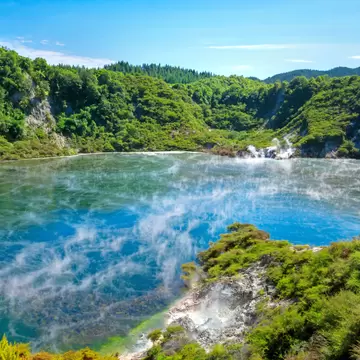
There is a small risk of developing amoebic meningitis as a result of bathing or swimming in geothermal pools in NZ – mostly in regions such as Rotorua and Taupo. In such pools, keeping the head above water to prevent movement of the organism up the nasal passage reduces the risk (which is pretty low to start with). Symptoms usually start three to seven days after swimming in a geothermal pool and early symptoms of this serious disease include headache, fever and vomiting. Urgent medical care is essential to differentiate the disease from other causes of meningitis and for appropriate treatment.
Giardiasis
The giardia parasite is widespread in the waterways of NZ. Drinking untreated water from streams and lakes is not recommended. Using water filters and boiling or treating water with iodine are effective ways of preventing the disease. Symptoms consist of intermittent bad-smelling diarrhoea, abdominal bloating and wind. Effective treatment is available (tinidazole or metronidazole).
Hepatitis C
This disease is a growing problem among intravenous drug users. Blood-transfusion services fully screen all blood before use.
HIV
The country’s HIV rates have stabilised after major media campaigns, and levels are similar to other Western countries. Clean needles and syringes are widely available.
Meningococcal disease
This occurs worldwide and is a risk with prolonged dormitory-style accommodation. A vaccine exists for some types of the disease (meningococcal A, C, Y and W).
Sexually transmitted diseases (STDs)
In NZ STDs (including gonorrhoea, chlamydia and herpes) occur at rates similar to most Western countries. The most common symptoms are pain on passing urine and a discharge. Infection can be present without symptoms, so seek medical screening after any unprotected sex with a new partner. Sexual health clinics are run as part of major hospitals.
Traveller’s diarrhoea
If you develop diarrhoea, be sure to drink plenty of fluids, preferably an oral rehydration solution containing lots of salt and sugar. A few loose stools don’t require treatment but if you start having more than four or five stools a day, you should start taking an antibiotic (usually a quinolone drug) and an antidiarrhoeal agent (such as loperamide). If diarrhoea is bloody, persists for more than 72 hours and/or is accompanied by fever, shaking chills or severe abdominal pain you should seek medical attention.
Hypothermia
This is a significant risk, especially during the winter months or year-round in the mountains of the North Island and all of the South Island. Mountain ranges and/or strong winds produce a high chill factor which can result in hypothermia, even in moderately cool temperatures. Early signs include the inability to perform fine movements (such as doing up buttons), shivering and a bad case of the ‘umbles’ (fumbles, mumbles, grumbles, stumbles). The key elements of treatment are changing the environment to one where heat loss is minimised, changing out of any wet clothing, adding dry clothes with wind- and water-proof layers, adding insulation and providing fuel (water and carbohydrate) to allow shivering to build the internal temperature. In severe hypothermia, shivering actually stops; this is a medical emergency requiring rapid evacuation in addition to the above measures.
Spider bites
NZ has two poisonous spiders, the native katipo (not very poisonous and uncommon to the point of being endangered) and the introduced (thanks, Australia) white-tailed spider (also uncommon). White-tailed spider bites have been known to cause ulcers that are very difficult to heal. Clean the wound thoroughly and seek medical assistance if an ulcer develops.
Surf beaches & drowning
NZ has exceptional surf beaches, particularly on the western, southern and eastern coasts. The power of the surf can fluctuate as a result of the varying slope of the seabed at many beaches. Check with local surf life-saving organisations before entering the surf and be aware of your own limitations and expertise.
Ultraviolet light exposure
NZ has one of the highest rates of skin cancer in the world, so you should monitor UV exposure closely. UV exposure is greatest between 10am and 4pm – avoid skin exposure during these times. Always use SPF30+ sunscreen, making sure you apply it 30 minutes before exposure and that you reapply regularly to minimise sun damage.
Water
Tap water is universally safe in NZ. Increasing numbers of streams, rivers and lakes, however, are being contaminated by bugs that cause diarrhoea, making water purification when tramping essential. The simplest way of purifying water is to boil it thoroughly. You should also consider purchasing a water filter. It’s very important when buying a filter to read the specifications so that you know exactly what it removes from the water and what it doesn’t. Simple filtering will not remove all dangerous organisms, so if you cannot boil water it should be treated chemically. Chlorine tablets will kill many pathogens, but not parasites such as giardia or amoebic cysts. Iodine is more effective in purifying water. Follow the directions carefully and remember that too much iodine can be harmful.
New Zealand
Things to do
- All things to do (3,857)
- Activities (1,374)
- Entertainment (472)
- Restaurants (951)
- Shopping (234)
- Sights (776)
- Tours (50)