Image gallery
Paddling away from Bozo fishing, Mali
Mali occupies the heart of a territory that once supported Africa’s greatest empires and is rich with historical resonance. This history bequeathed to Mali some of its most dramatic attractions – the legendary city of Timbuktu (Tombouctou), whose name has never lost its allure for travellers, the gloriously improbable mosque at Djenné and the bustling river port of Mopti are simply three among many.
Mali’s history has always been a story of its deserts and rivers. The lucrative trade routes of the Sahara once made the region among the world’s richest, and the Niger, one of the grand old rivers of Africa, is still the lifeblood of the country; to journey along the Niger River route (preferably on a slow boat to Timbuktu) is one of the continent’s great adventures.
But all of Mali is alive with a fascinating cultural mix of peoples, from the nomadic Tuareg people of the Sahara to the Niger fishing societies of the Bozo to the Dogon people clinging to the cliffs of the Falaise de Bandiagara. As a result, everywhere you go there are fascinating ceremonies, world-famous musical traditions with strong roots in the local soil, and traditional cultures as accessible to travellers as any you’ll find in Africa.
If you’re looking for a tranquil stay, you should probably look elsewhere.
Timbuktu, that most rhythmical of African names, has for centuries been synonymous with Africa’s mysterious inaccessibility, with an end-of-the-earth allure that some travellers just have to reach.
Gao, the former capital of the Songhaï Empire, is one of the most important towns of Mali’s illustrious past.
In Mopti, tourism is a contact sport, with more guides, pinasse owners and touts per square metre than anywhere else in Mali.
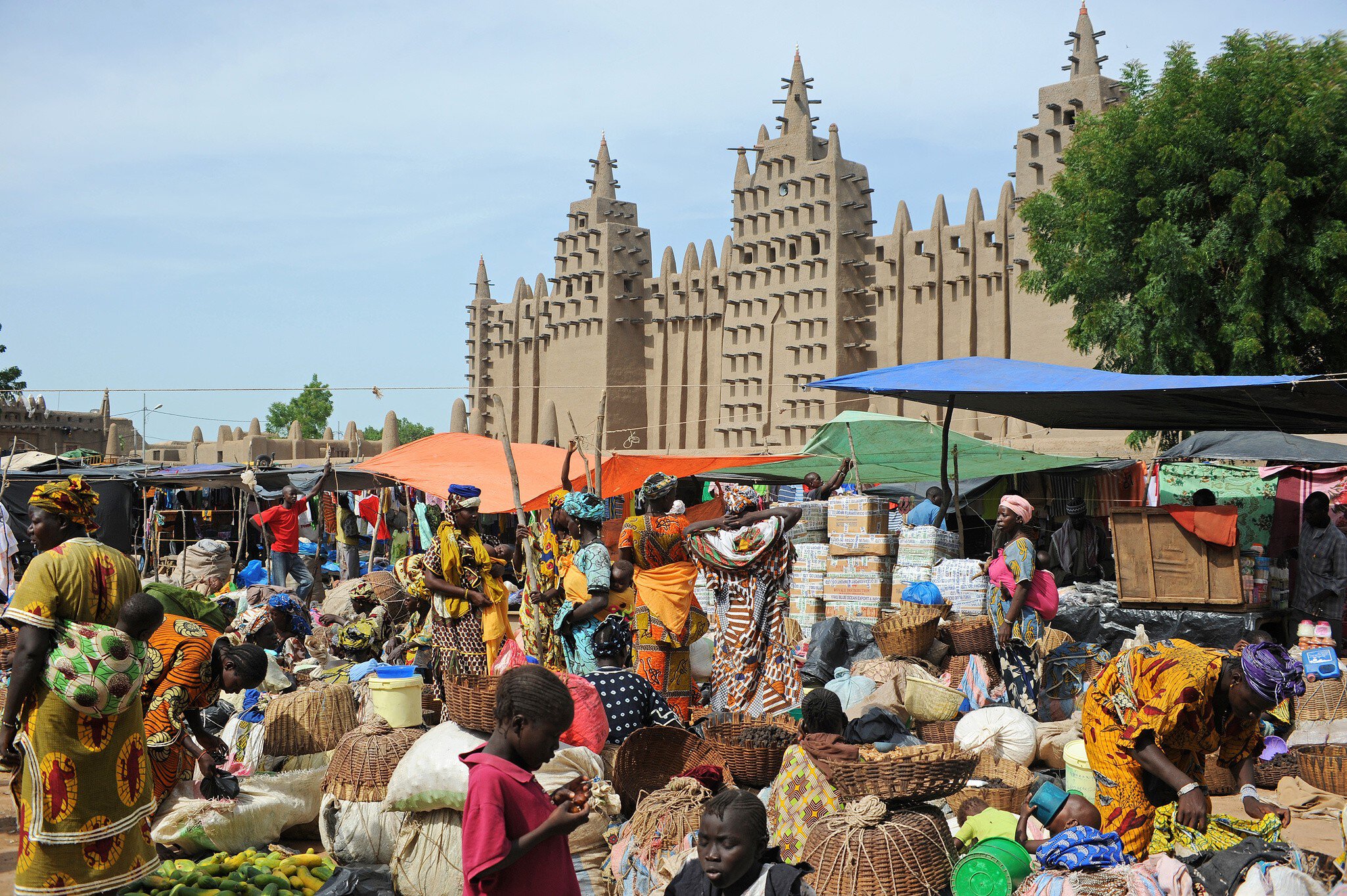
One of the premier sites in West Africa, World Heritage–listed Djenné, which sits on an island in the Bani River, is worth as much time as you can give it.
Subscribe now and receive a 20% discount on your next guidebook purchase
© 2013 Lonely Planet. All rights reserved. No part of this site may be reproduced without our written permission.