
Advertisement
Valle d'Aosta
While its Dolomite cousins tend to the Tyrolean, Aosta's nuances are French. The result is a hybrid culture known as Valdostan, a long-ago mingling of the French Provençal and northern Italian that is notable in the local architecture, the dining table and in the survival of an esoteric local language, Franco-Provençal or Valdôtain.

Getty Images


Trusted Partner
Stay connected in Valle d'Aosta
Holafly eSIM provides unlimited mobile data with no hidden fees, giving you peace of mind wherever you travel. Stay connected even after your plan ends with Always On. Use code LONELYPLANET for an exclusive discount.
Take your Italy trip with Lonely Planet Journeys
Time to book that trip to Italy
Lonely Planet Journeys takes you there with fully customizable trips to top destinations – all crafted by our local experts.


Top places to visit in Valle d'Aosta
Discover the best attractions in Valle d'Aosta from must-see sights to unexpected hidden gems.
-
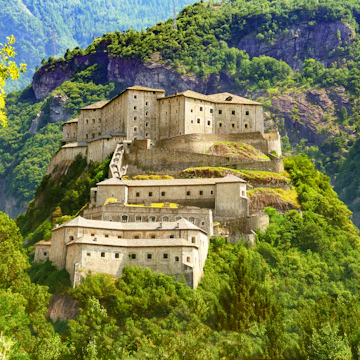 Attraction in Valle d'AostaForte di Bard
 -
 Attraction in Valle d'AostaGiardino Alpino Paradisia
 - Attraction in AostaCattedrale Santa Maria Assunta
- Attraction in AostaMuseo Archeologico Regionale
- Attraction in AostaPorta Praetoria
- Attraction in Valle d'AostaCastello di Verrès
- Attraction in Valle d'AostaCastello di Fénis
- Attraction in AostaTorre dei Balivi
Advertisement
Advertisement
Get a book. Get inspired. Get exploring.


in partnership with getyourguide
Book popular activities in Valle d'Aosta
Valle d'Aosta and beyond
-
 destinationAosta
Advertisement