Money & costs
Costs
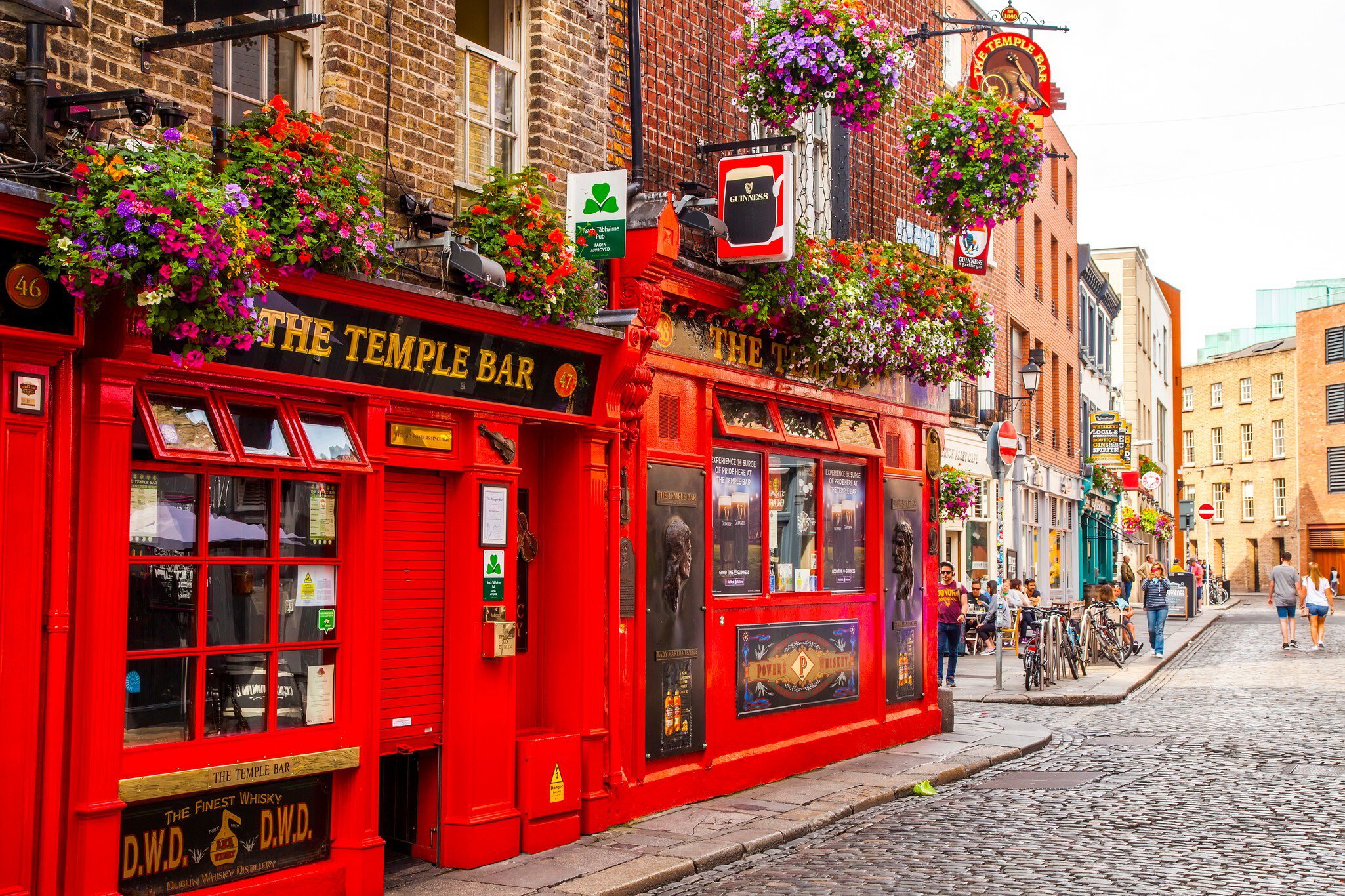
Wondering if Dublin is expensive is a bit like asking if Elizabeth Taylor owns a wedding dress. Dublin’s pricey tag is obvious, but if you think it’s bad for you, imagine what it’s like for those who live here. According to Mercer (the folks who do those cost-of-living indices), Dublin ranks 16th in the list of the world’s most expensive cities and comes eighth on the European list after London, Paris, Milan, Oslo, Copenhagen and every big town in Switzerland. You won’t find nearly as many rip-off merchants as you do in some of the major tourist destinations of continental Europe (well, apart from in the Temple Bar area and taxi drivers from the airport) but Dublin is very expensive these days and you don’t generally get value for money. Accommodation, meals, taxis, entertainment and shopping will all make your wallet sag and your purse pout.
Let’s start with the big expense: accommodation. Dublin’s got some pretty pricey pillows, and you won’t get much change out of €200 for the better bedrooms in the city centre; a midrange room will cost upwards of €100 in the low season, while those on a tight budget will have to settle for a hostel (where dorm beds cost at least €13) or those fleapits around the northern end of Gardiner St. If you’re willing to endure a little bit of taxi trauma or the tolerance test of public transport, hotels on the north side of the city or in the salubrious suburbs south of the Grand Canal will give you far more bang for your buck.
Then there’s food, that other great bugbear of the value-conscious Dubliner: memorable meals don’t even begin to register for less than €16 a main dish, while if you’re looking to spend no more than €10 on lunch, you’d better like sandwiches. Lunch and early bird specials – those three-course things that inevitably only ever include the menu’s less inviting choices – are ubiquitous and a good way to save a few euro.
So, between a place to crash and daily sustenance, you should factor in anything between €50 (at the truly budget end of the scale) and, well, the sky’s limit (ok, let’s say a minimum of €250) daily. Anything less than that and you’re performing miracles; anything more and we want you to take us on holiday.
But Dublin is about a hell of a lot more than sleeping and eating – let’s not forget the all-important nights out. The price of a pint hovers around the €4.70 mark, so you can calculate how drunk you can actually afford to get from there. And if you’re really popular, there’s the round system to contend with – whereby you take turns buying a round of drinks for the group. But that roughly works out even in the end, unless of course you’re only in for one or two and your 10 new friends are all looking thirsty.
Phew. And that’s the bad news. The good news is that you can also have a great time in Dublin without your plastic going into meltdown. Parks are all free, as are the National Gallery, National Museum, Museum of Natural History, Dublin City Gallery – The Hugh Lane and pretty much all of the city’s other gallery spaces – not to mention our favourite collection of all: the Chester Beatty Library. Cinemas all have an early-bird price for shows up to 2pm of about €5, while there’s absolutely no charge for strolling along the beach in Killiney, climbing Howth Head or enjoying the musical entertainment along Grafton St!
Tipping
The American-style gratuity has never been a part of Irish drinking culture, mostly because hard-pressed drinkers in less prosperous times would have needed every penny to continue keeping reality at bay. At best, a regular may opt to leave coppers on the bar for the bartender to pick up, but this practice would only happen in quieter bars among locals.
Which of course doesn’t mean that you can’t tip. If you want to reward your hard-working barkeep for good service (watch them sweat on a busy night and you’ll know how hard it is) feel absolutely free to do so. They’ll probably look at you with bemused gratitude.
Tipping
It’s industry standard these days to tip between 10% and 12% of the bill, unless the waiter has dumped the dinner in your lap and given you the finger, while the gratuity for exceptional service is only limited by your generosity and/or level of inebriation. If you’re really unhappy don’t be afraid to leave absolutely nothing, though it will very rarely come to that.
The rule of thumb is simple: the classier the restaurant, the classier the service, but even at midrange and basic places you will be treated with courtesy and attention. Dubliners are not especially obsequious and generally eschew the kind of I’m-your-slave-for-the-evening take on serving tables, but that doesn’t mean that you won’t get quality service with politeness and a smile. The real treat among Dublin waitstaff is a bit of personality – they might be serving your table but they’re not afraid to have a laugh and share a joke.
Money
Ireland’s currency is the euro (€), which is divided into 100 cents. While the notes are all the same throughout the 12 countries of the euro zone, the Irish coins feature a harp on the reverse side – but all non-Irish euro coins are also legal tender.
ATMs
All banks have ATMs. We’ve noticed recently that machines in the city centre quickly run out of smaller denominations (€10 and €20) on Friday night, and the smallest denomination they’ll dispense is €50. Some even run out of money altogether, and as cash deposits aren’t replenished until Monday morning, the machine stays out of order until then. We strongly recommend that if you’re staying in the city centre, you get your money out early on a Friday: not only will you avoid the problems described but you won’t have to face the enormous queues that form behind after about 8pm.
Changing money
You’ll get the best exchange rates at banks. Bureaux de change and other exchange facilities usually open for more hours but the rate and/or commission will be worse. Many post offices have a currency-exchange facility and are open on Saturday morning. There’s a cluster of banks located around College Green opposite Trinity College and all have exchange facilities.
Allied Irish Bank (679 9222; Westmoreland St; 10am-4pm Mon-Wed & Fri, 10am-5pm Thu)
Amex (605 7709; Dublin Tourism Centre, St Andrew’s St; 9am-5pm Mon-Sat)
Bank of Ireland (677 6801; 2 College Green; 10am-4pm Mon-Wed & Fri, 10am-5pm Thu)
First Rate (671 3233; 1 Westmoreland St; 8am-9pm Mon-Fri, 9am-9pm Sat, 10am-9pm Sun Jun-Sep, 9am-6pm Oct-May)
Thomas Cook (677 1721, 677 1307; 118 Grafton St; 9am-5.30pm Mon, Tue, Fri & Sat, 10am-5.30pm Wed, 9am-7pm Thu)
Credit cards
Visa and MasterCard are more widely accepted in Dublin than Amex or Diners Club, which are often not accepted in smaller establishments. You can also use credit cards to withdraw cash, but be sure to obtain a PIN from your bank before you leave. This service usually carries an extra charge, so if you’re withdrawing money, take out enough so that you don’t have to keep going back.
If a card is lost or stolen, inform the police and the issuing company as soon as possible; otherwise you may have to bear the cost of the thief’s purchases. Here are some 24-hour hotlines for cancelling your cards:
Amex (1800 282 728)
Diners Club (0818 300 026)
MasterCard (1800 557 378)
Visa (1800 558 002)
Travellers cheques
Most major brands of travellers cheques are accepted in Ireland. We recommend that you carry them in euros, as you can use them in other euro zone countries and avoid costly exchange rates. Amex and Thomas Cook travellers cheques are widely recognised and branches don’t charge commission for cashing their own cheques. Travellers cheques are rarely accepted for everyday transactions so you’ll need to cash them beforehand.
Eurocheques can be cashed in Dublin, but special arrangements must be made with your home bank before you travel if you are thinking of using personal cheques.
Dublin
Things to do
- Entertainment (135)
- Restaurants (91)
- Shopping (78)
- Sights (90)
- Hotels & hostels