Introducing San Andrés
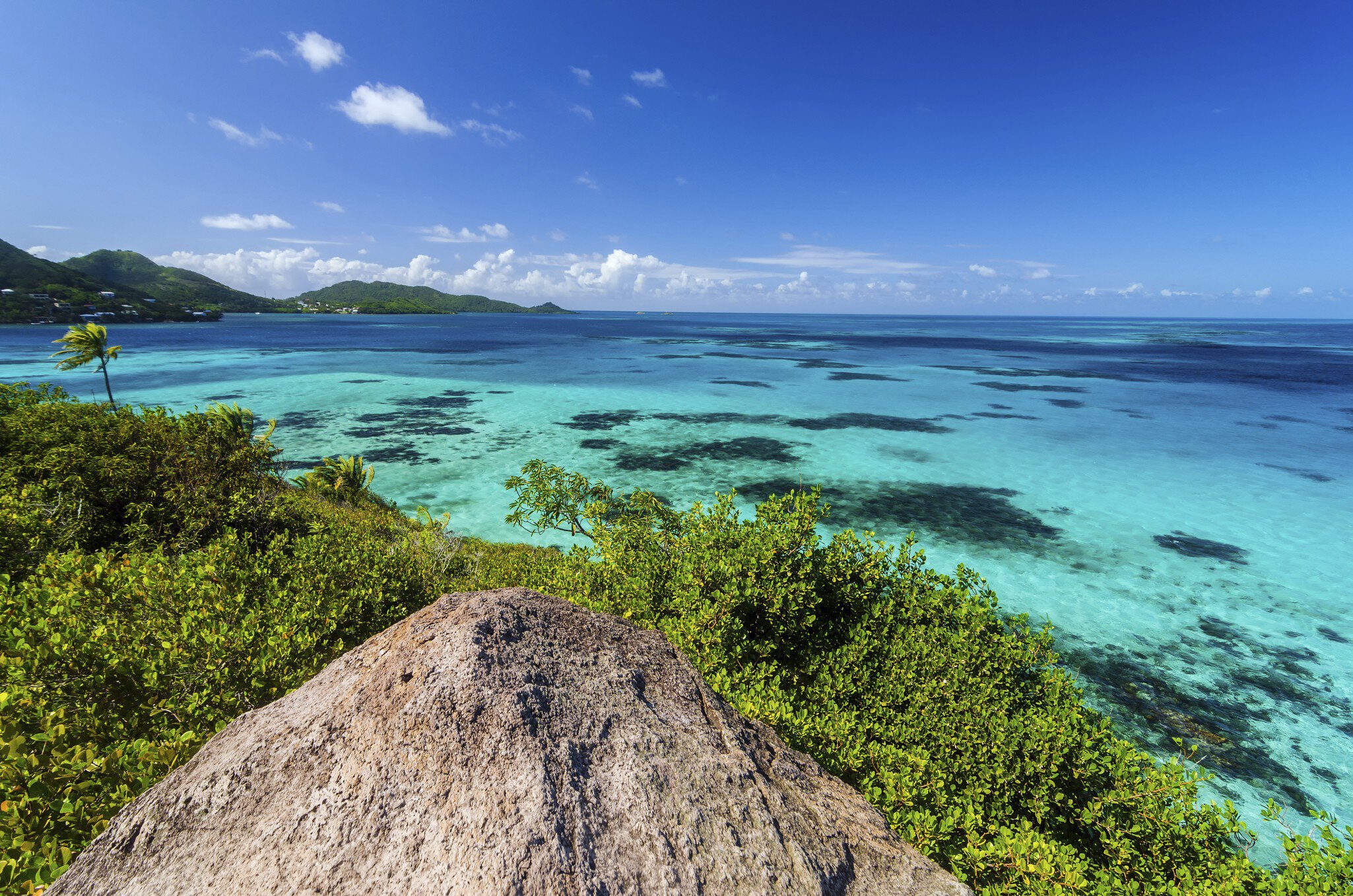
Covered in coconut palms and cut by sharp ravines that turn into rivers after rain, the seahorse-shaped San Andrés is the largest island in the archipelago, covering 27 sq km. It's the main commercial and administrative center of the archipelago. As the only transport hub to the mainland, it's the first and last place you are likely to see.
Advertisement
The town of San Andrés (known locally as El Centro), at the northern end of the island, is a hideous agglomeration of fero-concrete blocks that look as if they were thrown together with a pitchfork. Fortunately, new zoning laws prevent its expansion and a recently constructed brick promenade along the waterfront will somewhat ease any sore eyes.
San Andrés Town is packed with hotels, restaurants and shops; it has more than two-thirds of the island's population. There are two other small towns: La Loma in the central hilly region and San Luis on the eastern coast, both far less tourist-oriented than San Andrés Town. Both have fine English-Caribbean wooden architecture.
A 30km scenic paved road circles the island, and several minor roads cross inland, providing sufficient infrastructure to get around. It's relatively flat, with a small, low range crossing the island from north to south, reaching an altitude of 85m at the highest point.
San Andrés offers excellent scuba diving opportunities all around the island, but sunbathers should note that beaches are limited to the eastern coast. There's a pleasant beach at the northern end of the island, in San Andrés Town, but it can be crowded in the tourist season. Possibly the best beach is on the islet of Johnny Cay, just opposite San Andrés Town, though it gets very crowded in the high season.
The commercial aspect of San Andrés has been another magnet for Colombian visitors. But measures to liberalize the economy have caused San Andrés to lose a lot of its commercial attractiveness. Today many products can be bought at competitive or lower prices on the Colombian mainland. With the duty-free heyday over, the main focus of local government now is tourism.
In the past, San Andrés was used by foreign travelers as a bridge between Central America and Colombia, but connections and airfares have changed. It's no longer a popular transit point, but it still draws in foreign visitors seeking a taste of the Caribbean.
Last updated: Oct 20, 2009
Thorn Tree forum discussion
Recent posts
-
RE: san andres
by mcguinnessdave 23 April 2009
San Andrés is reasonably touristy, there are direct flights from Canada and the US I think. However it is easy enough to get away from…
-
Colombia in 2 weeks
by guilliod 04 September 2008
Hi folks, I'm planning a 2-week trip around Colombia in september and i'd like to share my itinerary with you guys. 20/09 – Brazil -Bo…
-
Itinerary advice - November
by mlebdv 01 October 2007
hi,
i would recommend doing your trip in reverse: start on the coast then head toward bogotá. why? november is major rainy season in…