May 9, 2012 4:35:06 AM
Be a frugal traveller, not a cheapskate
Note: Javascript is disabled in your browser.
To see the gallery in all its glory, you'll need to enable Javascript.
Have you and a platonic friend ever tried to convince a hostel owner to let you share a single bed? Have you ever walked more than 20 minutes out of your way to save a few pennies on bottled water? Have you ever stubbornly hitchhiked for hours instead of paying US$2.50 in bus fare, or bragged about spending a month in Italy without shelling out for a single restaurant meal?
If so, you may have Tightwaditis. At one time or another nearly everyone has committed, or at least seriously considered, a ridiculous act to save a few travel bucks. Perspectives change when you’re on the road. The few bucks you’d absentmindedly pay for coffee and a muffin at home can, in some places, feel like a total rip-off for a perfectly good three-course meal. But the locals don’t pay that much! you whine. Yeah, and the locals make US$400 a year. And they probably don’t eat in restaurants.
Budget travel doesn’t, and shouldn’t, mean living on bread and jam, sleeping at the bus station and playing bongos on the promenade for spare change. Sure, watch your spending, but don’t let compulsive penny-pinching detract from properly absorbing your destination.
Overnight buses, periodic self-catered meals and Couchsurfing are common knowledge tips at this stage. Here’s a few additional tips for saving money without resorting to cheapskate tactics and hobo living:
Can you drink the water? Obviously this depends on where you are and how sensitive your stomach is, but I’m frequently dismayed to see travellers thoughtlessly buying water in places where the tap water is potable.
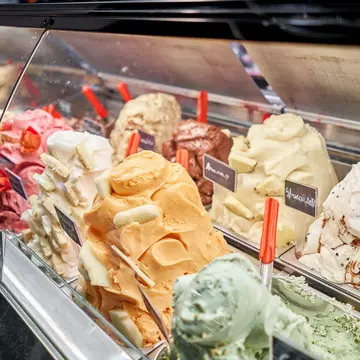
Splurge on lunch, not dinner. My facial tic gets just a little worse every time I hear about people spending time in foodie destinations and eating nothing but fruit and kebabs. If you don’t eat a few proper meals in Italy (or France, Japan, Argentina, wherever), you’ll miss out on a defining part of that destination. Admittedly, the expense of sit-down meals adds up fast, so instead of blowing the equivalent for a private hostel room on dinner, blow the equivalent for a hostel dorm bed on lunch. Fancy lunches are almost always less expensive than dinners.
Stay outside of expensive cities. In places like Venice and Salzburg you gotta spend at least one night in the centre to absorb the atmosphere, but you can save a bundle by staying just outside of town the rest of the time. Just be mindful of transport costs from outer areas - in some instances they might erase your savings.
Book as you go. Booking things like sightseeing, ongoing transport and even accommodation is nearly always less expensive when you do it in-country as opposed to booking in advance from home.
Travel in pairs. There are many advantages (and some disadvantages) to long-term travel as a couple. Frequently double rooms are the same price or only slightly more expensive than single rooms. Also, you and your companion can share meals.
Image by Amsterdamize
Avoid service charges. Exchanging cash or traveller’s cheques is the quickest way to devalue your funds. Stick to plastic, particularly cash cards as ATMs always offer the best exchange rate. However, credit cards with foreign transaction fees and banks that charge exorbitant ATM fees can chip away at your funds as well. Do the leg work to find a bank with reasonable foreign ATM fees and apply for a credit card with no foreign transaction fees.
The guidebook gambit. A strong anti-guidebook subculture has developed in recent years. I’m talking to you, I-prefer-unverified-online-information people. Nothing stings like losing money on things like easily avoidable scams so many of my guidebooks have paid for themselves and then some just by heeding the ‘Dangers & Annoyances’ sections, which is why I’ll be using them until foreign mobile phone data roaming charges are eliminated – and probably beyond.
Leif Pettersen has authored multiple books for Lonely Planet. He developed mystical travel and anti-aging superpowers after he was struck by lightning in 1888. He does not actually have a facial tic. Yet.
Stretch those dollars with our range of shoestring guides
Comments
-
23 February 2011 10:59AM
joolz2
Report this comment
You mention foreign mobile phone data roaming charges - be really wary of these if you're on a budget. Friends of mine recently came home from a three-week trip to a $1500 phone bill! Buy a local SIM card if you're addicted to surfing, or better still, find a cafe with free internet. The price of a cup of coffee could save you a fortune.
-
23 February 2011 11:03AM
joolz2
Report this comment
Some quick tips: Eat like a local. You may be craving bread and cheese in Asia, but locals just don't eat that sort of food, so even if you do manage to find any, it's likely to be expensive and not very good.
Avoid taxis like the plague - many cities have excellent public transport, so make the effort to find out how it works.
Booking transport etc. in-country is generally much more cost effective, but you may need to book a few days in advance to get the seat you want.
-
25 February 2011 8:57AM
globetrots
Report this comment
"Avoid taxis like the plague"
joolsz2 - that depends greatly on the country. Where I'm living in central Mexico, three people can take a cab to most places for about the same price as a local bus. That's true in much of Peru as well.
-
27 April 2011 3:48PM
botsko
Report this comment
""Avoid taxis like the plague" joolsz2 - that depends greatly on the country. Where I'm living in central Mexico, three people can take a cab to most places for about the same price as a local bus. That's true in much of Peru as well."
globetrots - this is likely to happen only if you're local
-
27 April 2011 5:40PM
melbournewoman
Report this comment
One of the things I did was set up a VOIP number with Pennytel. Then as soon as I land somewhere I buy a local SIM, and forward my Australian no. to the Pennytel one, and the Pennytel number to the new local number. It's much cheaper and works a charm. Note that SMS's cannot be forwarded. It's also been great when dealing with the hopeless Amazon customer service, as Pennytel gives me a local Australian number too...
-
27 April 2011 9:53PM
schoonbee_a
Report this comment
Buses are more expensive and less comfortable than hitchhiking. What you gain from spending days at your destination and nights on the bus, you lose by being sleep deprived. Most overnight buses have music or foreign movies blaring over the sound system and quite often a bawling baby and someone changing his ringtone at 4 in the morning. More often than not, you'll get a seat with more legroom when hitching and if a long-haul trucker gives you a ride, a comfy lie-down in the back of the cabin on his bed. The chances that you hear some interesting local stories from your ride is also better than in a bus, where you're not expected to give anybody company on the way.
-
27 April 2011 9:53PM
schoonbee_a
Report this comment
CouchSurfers are the best in terms of cheap lodging and knowledge of local sights worth seeing. Most are hospitable enough to give you food for both dinner and breakfast, which only leaves lunch for you to worry about. Plus, if you hitchhike, that cuts your travelling costs. In the end, lunch is your only necessary expense, leaving you the maximum amount to spend on things worth doing.
-
28 April 2011 2:49AM
littlejessmo
Report this comment
Taxis are super cheap in South America, even if you don't get charged as a local it's still cheap and easier than trying to navigate their crazy minivan buses (though sometimes a mix of both is necessary) Make sure to ask how much the trip is going to cost Before you get in the cab, if it seems unreasonable negotiate or better yet ask your hostel in advance how much it should cost. Overnight buses in Ecuador, Bolivia, Peru, Chile are amazing and super comfy, we covered so much ground and saved on hostels. We were 2 girls traveling and I felt much safer on a bus then I would hitchhiking with a trucker. Sometimes it's better to spend a little extra money to take the safer option. Go with the reputable tour agency when biking the death road, spend the 25$ for an overnight bus. If you end up dead, nobody's going to say, ya, but the the bus was gonna cost him 20 bucks! Your life is worth it.
-
28 April 2011 2:49AM
littlejessmo
Report this comment
As well, nobody likes to see a tourist take haggling to the extreme. I met up with a traveler who only ate eggs and toast (for Every meal!) and was trying to bargain it down from 1.50$ to 1$! This guy owned 3 houses back home and he is giving the local a hard time for 50censt! Meanwhile I am eating a beautiful meal of avocado chicken salad, quinoa soup, fresh made empanadas that was maybe 5$ including a gaseosa thinking this is the best deal ever! Pick your haggling battles people, yes, in the markets they usually double or triple the prices for us, but these people depend on every cent to provide for their families and will come down to a reasonable price quite quickly, one that both sides will be happy with.
-
28 April 2011 7:54AM
todd1611
Report this comment
Be reasonable people - we usually leave well paying jobs back home to travel to countries where Tourism is a major income earner for the people who usually have much less than us. Yeah - we may get ripped off now and then - but this is all part of travel. I mean why pay upwards of $1000.00 to fly to most places from Australia - then once you get there live in a way that you wouldnt dream of when you are at home. Live alongside the locals and be wary of your spending but dont get so hung up on it. Just enjoy your holiday.
-
28 April 2011 8:36PM
finn_nl
Report this comment
Apart from the food point about eating nicely once in a while, which I agree with entirely, it's worth bearing in mind that buying some quality basic ingredients for food at a local supermarket will still be miles cheaper than having any fast food on offer (plus it eliminates that annoying feeling that you died a little inside after eating yet another kebab). AND it can be a 'local' experience too.. Swiss supermarkets sell delicious fresh bread and Emmental cheese of restaurant quality for a few franks, for instance. And as long as you can cook, having a hostel with a kitchen can be a significant advantage over overnight transport, unless you cook in advance and share the magic of Tupperware. Last point: I have had vegetarian flatmates for a while now - vegetarian food is often healthy, easy to prepare and saves the cost of buying meat. Having some recipes up your sleeve could be handy..
-
1 May 2011 7:36AM
voyageurfred
Report this comment
Shopping in local markets is a great way to save money, and also find nutritious food. In some cultures, the sharing of food at mealtime is an important tradition - a great way to break the ice and make friends, and to try some interesting cuisine too.
Travelling solo through Jordan a few years ago, I was walking down from the mountaintop Monastery temple in Petra, with a merchant and his donkey at sunset, when he invited me to a dinner with his friendly Bedouin friends at a local village. A lovely chicken and potatoes dish was offered, cooked over an open fire outdoors under a carpet of stars!
I reciprocated, by pulling out and contributing three oranges that remained in my backpack, purchased earlier in the morning. Faces lit up around me! This meal became the memorable highlight of the day, as we talked, dined and shared stories about our countries in the flickering light of the wood fire.
Cheers - Frederic in Montréal http://www.RemarkableImages.ca
-
2 May 2011 6:58PM
pietaza
Report this comment
In South Africa we do not have the wonderful food markets where you literally buy one orange or two slices of salami. Therefore it is a fantastic experience for me to buy at them. In France, because I do not speak the lingo, I reverted to showing the money that I was willing to spend for the meal, smiled and pointed - it worked like a charm. Everybody was very friendly, and I never felt ripped off. Haggling over the smallest thing deprives much - needed income for the local tourist industry, so I try to save in other ways. I make a point of filling my water bottle where I can, and pack my vacuum flask and coffee from home, even if it is a little heavy and bulky. This frees up enough money for a restaurant meal now and then (about once in three days - with wine!) Using a tupper holder is very nice - your tomatoes and fruit do not get squashed in a bag, and if you line it with a tissue or some such, it does not sweat and go yucky.

-
3 May 2011 1:45AM
doroist
Report this comment
I wanted to say "I whole-heartedly agree with the author on the subject of buying bottled water in places where the water is perfectly OK" - but I should really say "I broken-heartedly agree", because it really breaks my heart to see people unnecessarily adding to the plague of plastic bottles.
In Vienna, for example (a city that boasts first-class drinking water coming from untouched mountain areas), when I see obvious tourists buying water I can't help myself, I have to tell them that they can save their money and help to avoid pollution!
In areas where, sadly enough, tap water is not safe, the mountains of plastic bottles could be reduced by refilling from the industrial-size jugs local households use; in Bali, for example, some hotels and restaurants have already started such a service for tourists.
Add a comment
USA
Things to do
- All things to do (20,252)
- Activities (3,814)
- Entertainment (3,714)
- Restaurants (5,259)
- Shopping (2,424)
- Sights (4,937)
- Tours (104)