Things to do in Seoul
-
A
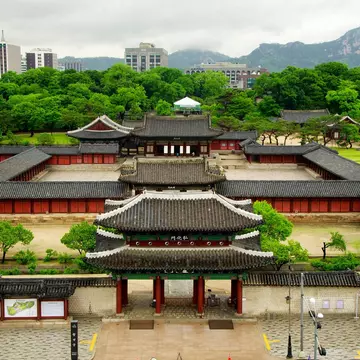
Gyeongbokgung
Originally built by King Taejo, the founder of the Joseon dynasty, the grandest of Seoul’s palaces served as the principal palace until 1592, when it was burnt down during the Japanese invasions. It lay in ruins for nearly 300 years until Heungseon Daewongun, regent and father of King Gojong, started to rebuild it in 1865. King Gojong moved in during 1868, but the expensive rebuilding project virtually bankrupted the government.
Two of the grandest architectural sights in Seoul are here. The first is the ornate two-storey Geunjeongjeon, the main palace building, where kings were crowned, met foreign envoys and conducted affairs of state. With its double-tiered stone pla…
reviewed
-
B
Seodaemun Prison
The prison, built in 1908, is a symbol of Japanese cruelty and oppression during their colonial rule of Korea from 1910 until 1945. The main hall has three floors of exhibitions, including lifelike re-creations of torture scenes in the nightmarish interrogation cells in the basement. Photographs of the prison and prison conditions are on view along with video footage. Not everything is translated into English.
Visitors can look around and go inside the original prison cell blocks where the independence fighters were held. Built to house 500 prisoners, up to 3500 were packed inside during the height of the anti-Japanese protests in 1919. There was no heating and the food w…
reviewed
-
C
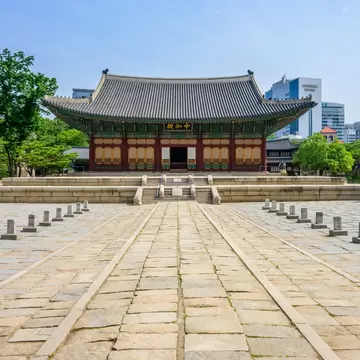
Changdeokgung
Generally, you can only look around this World Heritage palace on a 90-minute guided tour. However, on Thursdays between April and November, you can visit unescorted (adult/child W15,000/7500; 9.15am-6.30pm Apr-Nov, last entry 4.30pm). It’s much better going around at your own speed, plus you can see more of the palace and grounds than on the tour. An audio guide can be borrowed free of charge.
Changdeokgung was originally built in 1405 as a secondary palace, but when Gyeongbokgung (Seoul’s principal palace) was destroyed during the Japanese invasion in the 1590s, Changdeokgung became the primary palace until 1896. Like all Joseon palaces, it has a mountain behind it an…
reviewed
-
D
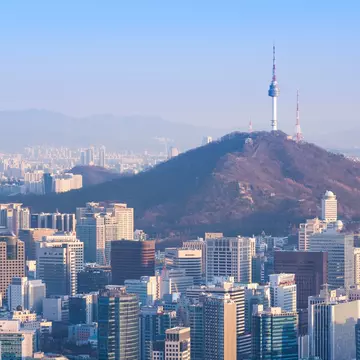
N Seoul Tower
As iconic as kimchi, N Seoul Tower offers panoramic but hazy views of the immense metropolis created almost from scratch after the Korean War. Daytime views are great, but if you come at sunset you can watch the great city morph into a galaxy of twinkling stars. Perched atop Namsan, you can eat in the budget Food Court (meals W7000; 10am-10pm) at ground level or in the more elegant Italian bistro, Sweetree (meals W5000-25,000; 10am-10pm), one floor up. The Beer Garden (5-11pm Mon-Fri, noon-11pm Sat & Sun) is another option. High up the tower is Hancook for Korean food and N Grill for expensive Western-style nouveau cuisine served in a revolving restaurant. Other than walk…
reviewed
-
E
BSD Dubu House
Over 20 varieties of spicy sundubu are on offer in this neat and clean basement restaurant decorated with collectables, but the traditional beef one is hard to beat. Add a raw egg to the sundubu, empty the rice into a bowl and add boiling water to the remaining rice to make burnt-rice tea. Side dishes include freshly fried fish.
reviewed
-
F
War Memorial & Museum
This huge museum documents the history of warfare in Korea and has an especially good section on the Korean War (1950–53). It takes at least three hours to browse the whole place, so arrive before 3pm. Only snacks are available. Don’t try to cover this museum and the National Museum of Korea in one day.
On the 1st floor are paintings and panoramic displays illustrating many fierce battles fought against invading Mongol, Japanese and Chinese armies. Many items are only vaguely dated, but there is a replica of one of Admiral Sun-sin’s famous iron-clad turtle warships (called geobukseon ), which he used to defeat the Japanese navy in the 1590s.
Upstairs, visitors can…
reviewed
-
Seolleung Park Royal Tombs
The spirit tablets of the Joseon kings and queens are in Jongmyo, but their tombs are scattered all around Seoul. The tombs are elaborate but mostly underground, and were the scene of regular ceremonies to remember and honour the dead. Walk over to the first tomb, that of King Seongjong (r 1469–94), who was a prolific author and father – he had 28 children by 12 wives and concubines. He died in Changdeokgung. Go around the side and you can walk up to the tomb for a closer look. The statuary includes human and animal guardians – some of the latter look like sheep. The stone lanterns are to guide the king’s spirit home. It’s a short walk to the second tomb, that of King Seo…
reviewed
-
G
COEX Mall
This vast underground maze of a mall is a top shopping and entertainment attraction that incorporates food courts, a department store, four hotels, the COEX Convention Centre, World Trade Centre and much more. The COEX Aquarium is the largest in Seoul, with thousands of fish and other sea creatures in 90 tanks. You can see live coral, sharks, turtles, rays and evil-looking piranhas swimming around in large tanks. Exquisite small creatures such as pulsating jellyfish, glass fish and sea horses are also on display. Feeding takes place daily (sharks at 1.30pm). The small Kimchi Museum sings the praises of pickled, peppery cabbage and its wondrous health benefits. The museum …
reviewed
-
H
Namsangol Hanok Village
Five differing yangban stone, wood and tile houses from the Joseon era have been moved here from different parts of Seoul. The architecture and furniture are austere and plain, and conjure up the lost world of Confucian gentlemen scholars, who wielded calligraphy brushes rather than swords. Scenes from the movie Untold Scandal, a 2003 Korean take on Dangerous Liaisons, were filmed here. Weavers, cooks, calligraphers and kite-makers can be spotted at the weekend, while rice-wine brewing and traditional music take place some evenings. At Chuseok (Harvest Festival) half of Seoul squashes in here for the traditional performances and festival atmosphere. At the time of writing…
reviewed
-
Seoul Grand Park
This zoo park is so large and spread out that a visit here is also a hiking trip. Walk straight ahead from the subway Exit 2 for five minutes to a large glass building. Here either walk for 15 minutes, take a tram train or turn right to catch the sky chairlift to the zoo entrance. Seoul’s best zoo is set among forested hillsides, and families picnic along the shady banks of a stream that runs through the park. It’s easy to spend all day here. The zoo is home to a long list of exotic creatures, including the ever-popular African ones. A huge aviary contains cranes, swans, pelicans and other large birds, and an indoor botanic garden houses a forest of cacti, numerous orchid…
reviewed
Advertisement
-
I
Garosu-Gil
This tree-lined street is filling up with more and more cute fashion boutiques, art galleries, music bars and cafés. French food, wine and style is much in evidence, but mixed in with the usual Italian and Asian styles. The street’s trendy newcomers are now spilling over into the side streets. Recommended places to pop into include La Cuba Latin Music Pub, Pain de Papa (unique breads), King Kong Steak (a reasonably-priced, stylish diner), Lone Costume (fashionista styles with attitude), bloom & goûté (real French choux pastry in a flower-scented pavement café), and Grandmother (Arabian Nights fantasy bar). From Apgujeong subway station exit 5, walk straight for 10 minute…
reviewed
-
J
National Museum of Contemporary Art
A large and impressive art gallery spread over three floors, this museum also has sculptures in the garden. The outstanding exhibit is The More the Better – a 1988 installation of 1000 flickering TV screens piled up into a pagoda shape by leading Korean video artist Nam June Paik. Viewing this exhibit is like channel hopping without a remote. Other exhibits by the same artist include a piano jukebox – log onto www.paikstudios.com to learn more about this artistic pioneer. The international section contains a sculpture made of dice and another one utilising squashed petrol cans. Overall, the permanent collection of Korean modern art is disappointing, a mishmash of pictures…
reviewed
-
K
Leeum Samsung Museum of Art
In Museum 1 visitors start on the 4th floor and descend a white staircase, a decor that contrasts with the black galleries, where the ancient Korean ceramic metal and art treasures are superbly lit to bring out their inner beauty. Museum 2 has an entirely different look, with outdoor lighting, natural construction materials and a collection of 20th-century Korean and international art. Museum 3 is reserved for special exhibitions. An audio guide costs W2000. Tours in English (free) start at 3pm on Saturday and Sunday.
reviewed
-
L
Seoul Folk Flea Market
Relocated to a new two-storey building that already looks worn, the 1st-floor stalls at the back have a fascinating collection of artworks, collectables and general bric-a-brac. You could root through this lot for hours hunting for hidden treasures – wooden masks and ink drawings, vintage golf clubs, battered trumpets, elephant-shaped teapots, Beatles LPs, valve radio… Follow the signs from the subway station exit, it’s only a few minutes’ walk.
reviewed
-
M
Bar Bliss
Away from the main gay strip, bar staff Ted and Lucky keep this a friendly and relaxing bar. A chill-out, relax-on-cushions, shisha-pipe zone is the latest feature, and the eclectic decor includes a reclining Buddha. Any night someone might start playing a guitar, and the cheese and crackers are tempting.
reviewed
-
N
Dolkemaeul Tofu House
The star here is the excellent sundubu (uncurdled tofu) cooked in a stone pot and served with hotpot rice, soup, fish and side dishes. Add an egg to the tofu, spoon the rice into a bowl and pour hot water from the kettle into the rice hotpot to make burnt-rice tea that takes away the spiciness.
reviewed
-
O
Luxury Noraebang
Sing along with the video songs in a range of mostly palatial rooms in this new breed of noraebang, open all night and providing a luxurious setting for acting out those rock-star fantasies. Check out the photos of the room styles before paying. The more expensive rooms can take 10 people.
reviewed
-
P
Pulhyanggi
Sit on chairs or floor cushions at this long-running, 2nd-storey restaurant where the popular attraction is the dozen or more items served up in the set meals. The mainly vegetarian sets offer traditional food such as sweet-and-sour mushrooms, sesame soup, acorn jelly, rice cakes and special teas.
reviewed
-
Q
Le Saint-Ex
The blackboard menu at this very French bistro with consistently good food and service is always tempting. A heater and even blankets are available for the outside patio. The W17,600 lunch sets are excellent, and in a sneaky move the irresistible desserts are always on display.
reviewed
-
R
Bukchon Museum
This hanok (traditional Korean one-storey wooden house with a tiled roof) is packed with curios and collectables, but is more of a shop than a museum as everything is for sale. Entry is free if you make a purchase, or buy an around ₩3000 cup of homemade tea.
reviewed
Advertisement
-
S
Mad for Garlic
The bare brick walls, the wine glass and wine bottle decor and the open-plan kitchen make this a top spot for atmosphere and couples. The Italian menu doesn’t disappoint, nor does the Dracula Killer starter. Bottles of wine start from W30,000.
reviewed
-
T
Club FF
A top live venue with up to eight bands playing at the weekend until midnight. Afterwards it becomes a dance club with DJs. Local bands such as Galaxy Express and Pink Elephant play here. The youthful groups let rip with attitude and style.
reviewed
-
U
Ahnkook Zen Centre
Buddhist teaching in English every Saturday from 2.30pm until 4pm.
reviewed
-
V
Spa Lei
Sorry fellas, this one is just for the ladies. Spa Lei is a luxurious spa providing excellent services in an immaculate, stylish environment. There are earthy tones of brown, grey and orange using a range of materials including stained wood, marble and rock. Joseon-era furniture, candelabras towering over gilt mirrors and winding vines add an antique touch. The saunas include the much-loved pinewood one, and you can hop from saltwater pool to ginseng, mineral and rose baths. The restaurant and café have patios. Staff are helpful and are used to dealing with foreigners. From Exit 5 go straight and take the second turning on the left. You’ll see Spa Lei in the basement to y…
reviewed
-
W
Bonjuk
Big bowls of tasty and healthy rice porridge feature in this chain of small, neat restaurants - try ginseng and chicken, mushroom and oyster, seafood, sweet pumpkin, or red bean.
reviewed