go to content go to search box go to global site navigation

Moldova

Things to do in Moldova

‹ Prev

of 4

  1. Orheiul Vechi

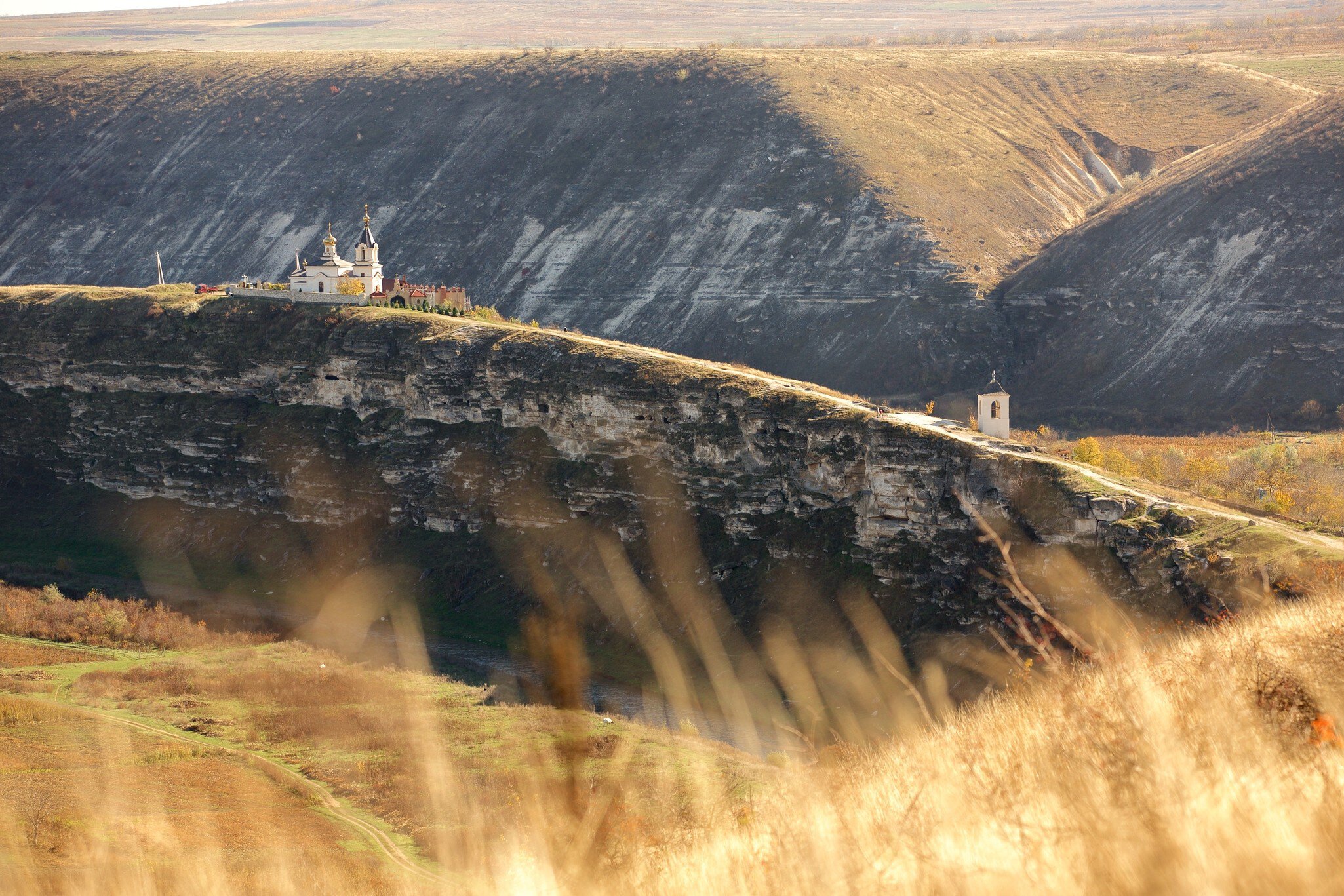
    Orheiul Vechi ('Old Orhei', marked on maps as the village of Trebujeni) is arguably Moldova's most fantastic sight. It's certainly among its most haunting places. The Orheiul Vechi Monastery Complex, carved into a massive limestone cliff in this wild, rocky, remote spot, draws visitors from around the globe.

    The Cave Monastery (Mănăstire în Peşteră), inside a cliff overlooking the gently meandering Răut River, was dug by Orthodox monks in the 13th century. It remained inhabited until the 18th century, and in 1996 a handful of monks returned to this secluded place of worship and are slowly restoring it. You can enter the cave via an entrance on the cliff's plateau.

    reviewed

  2. A

    Cactus Café

    This is a true winner. The eclectic interior décor (Wild West meets urban bohemian, but with grace and humour) is matched by the city's most creative menu. There are incredible breakfasts (a rarity in these parts), lots of vegetarian meals (soy meat!), wild plates such as turkey with bananas and the country's most killer gazpacho.

    reviewed

  3. B

    Dublin Irish Pub

    The atmosphere is always lively at this expensive but popular Celtic-cum-Moldovan Irish pub. While the bar is the highlight, the restaurant is a temptation as well with tantalising dishes such as Cock-a-leekie (leek with duck, chicken, prunes and veggies stewed in Guinness), 'slappy joe' and a classic Irish stew.

    reviewed

  4. Lake Valea Morilor

    Chişinău locals' favoured haunt is Lake Valea Morilor, just west of the centre. Steps lead to the lake and surrounding park from Str A Mateevici (opposite the university). Bus 29a from the city centre stops outside the university entrance to the park.

    reviewed

  5. C

    Beach

    The beach on the Valea Morilor Lake's northwestern shores gets packed with sunbathers and swimmers at weekends. You can hire canoes, rowing and paddle boats from the boat station on the lake's southern shores.

    reviewed

  6. D

    Cafe 7 Days

    A great selection of tasty Russian fast food like blini (stuffed pancakes) and Western imports like pizza, as well as salads are on offer at this modern, pleasant café.

    reviewed

  7. E

    Central Market

    The Central Market has since 1825 been the place where Moldovans haggle over prices for fresh produce. It's well worth a visit for its choice of fresh food and lively ambience. The market spreads out across a huge area along Str Mitropolit Varlaam, around the bus station. The constant activity of the bustling crowds and tradespeople is reminiscent of Istanbul.

    Porters scurry around with trolleys to carry goods away, cars honk like crazy as they madly try to squeeze through the bustling crowds, women spit out sunflower seeds and old men huddle in groups haggling for the best bargain. There's always something going on here at all times of the day or night.

    reviewed

  8. F

    National Archaeology & History Museum

    The National Archaeology & History Museum is the granddaddy of Chişinău's museums, and well worth visiting. It has archaeological artefacts from Orheiul Vechi including Golden Horde coins, Soviet-era weaponry and a huge WWII diorama on the 1st floor, where you can speak to a man who spent 12 years as a political prisoner at a worker's camp in desolate Vorkuta in northern Siberia.

    A statue of Lupoaica Romei (the wolf of Rome) and the abandoned children Romulus and Remus stands in front of the museum. To Moldovans, this is a symbol of their Latin ancestry.

    reviewed

  9. Walking

    No one can accuse Chişinău of being overburdened with tourist sights. Lacking in 'must-sees', it's more a pleasant city to wander about in and discover as you go. Sadly, little remains of its historic heart due to heavy bombing during WWII. There are still some great museums and parks, however, and it is fun to see how Communist iconography merges with symbols of Moldovan nationalism.

    Begin smack in the centre, where Chişinău's best-known parks oppose each other diagonally, forming two diamonds at the city's core.

    reviewed

  10. National Archaeology and History Museum

    The National Archaeology and History Museum is the granddaddy of Chişinău's museums. There are archaeological artefacts from Orheiul Vechi, including Golden Horde coins and Soviet-era weaponry. On the first floor there is a huge WWII diorama, where you can speak to a man who spent 12 years as a political prisoner at a worker's camp in Vorkuta.

    A statue of Lupoaica Romei (the wolf of Rome) and the abandoned children Romulus and Remus stands in front of the museum. To Moldovans, this is a symbol of their Latin ancestry.

    reviewed

  11. Advertisement

  12. Memorial Park

    Bounded by Str A Mateevici and Str Ismail is a Memorial Park, dominated by a victory memorial to the Soviet army in 1945. An eternal flame burns in the centre in memory of Chişinău's unknown soldiers who died in WWII. Soldiers' graves line the boundaries of the park and there is a small military cemetery at its northern end. In the centre of the park is a memorial to those who died during the fight for Moldovan independence in the early nineties.

    At the far northern end of the park is the civil cemetery.

    reviewed

  13. Parcul La Izvor

    Northwest of the centre on the road to Cojuşna and Ungheni is Chişinău's largest park, Parcul La Izvor, on Calea Eşilor. It is dominated by three interconnecting lakes, which you can explore with hired canoes and rowing boats. Opposite the park's southern entrance is a cable-car station that makes a three-minute journey across the valley. To get to the park, take trolleybus 1, 8 or 23 to the last stop. Maxitaxi (microbus) 11 runs from Str Studenţilor in the centre to Calea Eşilor.

    reviewed

  14. G

    Tiraspol National United Museum

    The Tiraspol National United Museum is the closest the city has to a local history museum, with an exhibit focusing on poet Nikolai Dimitriovich Zelinskogo, who founded the first Soviet school of chemistry. Opposite is the Presidential Palace, from where Igor Smirnov rules his mini-empire. The enormous ploshchad Konstitutii is bordered by ulitsa 25 Oktober and the park-lined concrete promenade along the Dniestr, a popular strolling area.

    reviewed

  15. H

    Pushkin Museum

    Several blocks northeast of the central parks is the Pushkin Museum, housed in a cottage where Russian poet Alexandr Pushkin (1799-1837) spent an exiled three years between 1820 and 1823. It was here that he wrote The Prisoner of the Caucacus and other classics - that is, when he wasn't involved in the amorous intrigues, hard drinking and occasional violence of his social circles in what was then a rough-around-the-edges distant outpost of the Russian empire.

    reviewed

  16. Grădina Publică Ştefan Cel Mare şi Sfint

    Grădina Publică Ştefan Cel Mare şi Sfint is the city's main strolling, cruising area. The park entrance is guarded by a 1928 statue of Ştefan himself. The medieval prince of Moldavia is the greatest symbol of Moldova's strong, brave past. Every Moldovan will be happy to tell you that during Ştefan's 40-year reign, he lost a mere two battles (out of anywhere from 34 to 47, depending on your source's level of enthusiasm).

    reviewed

  17. I

    Prokhlada

    Prokhlada This cavernous, sombre but friendly space is the best place in town for a meal or drink. Choose from six kinds of cognac as you view sports matches on a large TV screen. Dancing is encouraged, but often lonely. According to the sign outside you are not allowed to take in hand grenades, guns or gas bottles. But don't worry – that's just the old Transdniestran sense of humour in action!

    reviewed

  18. J

    Moldexpo

    Moldexpo, inside Parcul Valea Morilor, is an enormous international exhibition centre constantly hosting major expositions. Many tourists come here, however, to see the demoted Communist triumvirate of Lenin, Marx and Engels guarding the entrance. Though they were ignominiously moved here from a prize spot in front of the Parliament building, the pedestals are often overflowing with flowers.

    reviewed

  19. 1903 Memorial

    In Parcul Alunelul there is a 1903 Memorial to the Jews killed in the 1903 pogrom. The remains of the victims were moved here after the cemetery in which they were buried was bulldozed by the Communists in the 1960s. To get to the park and cemetery take bus 1 from B-dul Ştefan cel Mare and get off at the Parcul Alunelul stop. Cross the road and walk up the hill and along Str Milano.

    reviewed

  20. Cricova

    Cricova is the Grand Duke of Moldovan wineries. Its underground wine kingdom is one of Europe's biggest, with 120km (74mi) of labyrinthine roadways, 60 of which are used for wine storage. Up to 100m (328ft) under ground, the 'cellars' hold 1.25 million bottles of rare wine. You must be in private transport and have advance reservations to get into Cricova.

    reviewed

  21. K

    Museum of Headquarters

    The neoclassical House of Soviets (Dom Sovetov) towers over the eastern end of ulitsa 25 Oktober. Lenin's angry-looking bust peers out from its prime location smack in front of the building. Inside the building is a memorial to those who died in the 1992 conflict. Close by is the military-themed Museum of Headquarters .

    reviewed

  22. Advertisement

  23. Chişinău Ghetto Memorial

    North of the central bus station is a maze of run-down, dusty streets. Many of these formed the Chişinău Jewish ghetto. On the street leading east from B-dul Renaşterii to Str Fantalului is a Chişinău Ghetto Memorial to the martyrs and victims of the Chişinău ghetto, inscribed in Hebrew, Moldovan and Russian.

    reviewed

  24. L

    Beer House

    Of all Chişinău's hot dining places, you'll be returning to this brewery-cum-restaurant again and again - most likely for its four delicious home-brewed beers, but also for its excellent menu, which ranges from chicken wings and soups to rabbit and chicken grilled in cognac. Its relaxed ambience and impeccable service add to the charm.

    reviewed

  25. Zimbru Stadium

    Moldovans are big football fans and Chişinau has three stadiums to prove it. The new Zimbru Stadium is the city's first European regulation football stadium, located in Botanica. Moldovans like football so much, in fact, there's an American football team called the Chişinău Barbarians, who hold occasional matches, in full gear.

    reviewed

  26. M

    Chişinău History Museum

    Near the university is the Chişinău History Museum. It's a treat mainly for the old water tower (1892) it's housed in. The museum was inexplicably closed at the time of writing. This is the main meeting place for the Chişinău branch of the notorious Hash House Harriers. Their bimonthly runs and drink-fests to oblivion start here.

    reviewed

  27. N

    National Ethnographic and Nature Museum

    The National Ethnographic and Nature Museum has some pop art, lots of stuffed animals and exhibits covering the sciences of geology, botany and zoology. The highlight is a life-size reconstruction of a mammal skeleton that was discovered in the Rezina region in 1966. A few blocks south of here is the state university.

    reviewed