Sights in Middle East
-
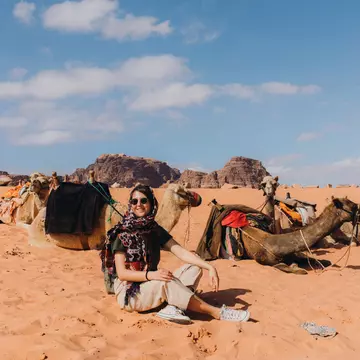
Wadi Rum Protected Area
Admission to Wadi Rum Protected Area is strictly controlled and all vehicles, camels and guides must be arranged either through or with the approval of the visitor centre. Essential items to bring along include a hat, preferably with a brim or a flap to keep the sun off your neck, sunscreen, sturdy footwear and plenty of water. If you are camping (including at the rest house), bring along a torch (flashlight), a book to read and a padlock (many tents are lockable).
reviewed
-
A
Souq Waqif
Currently enjoying the last phase of a major make-over, Souq Waqif is a wonderful place to explore. There has been a souq on this site for centuries, as this was the spot where the Bedouin would bring their sheep, goats and wool to trade for essentials. It grew into a scruffy warren of concrete alleyways in recent years but now its tourist potential has been recognised and it's been cleverly redeveloped to look like a 19th-century souq, with mud-rendered shops and exposed timber beams.
Despite the slight 'Disneyfication' of the area, the chief business of the souq continues unabated and it remains one of the most traditional market places in Doha. This is the place to…
reviewed
-
B
Romantheatre
The restored RomanTheatre is the most obvious and impressive remnant of Roman Philadelphia, and is the highlight of Amman for most foreign visitors. The theatre itself is cut into the northern side of a hill that once served as a necropolis and has a seating capacity of 6000. It was built on three tiers: the rulers, of course, sat closest to the action, the military had the middle section and the general public sat perched, squinting, way up the top. The theatre was probably built in the 2nd century AD during the reign of Antoninus Pius (AD 138–61). Theatres often had religious significance, and the small shrine above the top row of seats once housed a statue of the…
reviewed
-
C
Bauhaus Centre
Bauhaus fans will want to stop by the Bauhaus Centre which is loaded with souvenirs and artwork. The centre runs a Bauhaus city tour on Fridays.
Bauhaus style offers simplicity and egalitarianism, designed by architects who carried socialist ideals with them from Europe to Israel. One result of their collective beliefs is the flat roof, intended to be a communal area for all the residents of each building. Of the 4000 Bauhaus-style buildings in the city, just 360 have been renovated, the rest crumbing in the salty, humid sea air, which is not kind to the plaster used for the building façades. Despite its Unesco status, there are no public funds for the restoration of…
reviewed
-
D
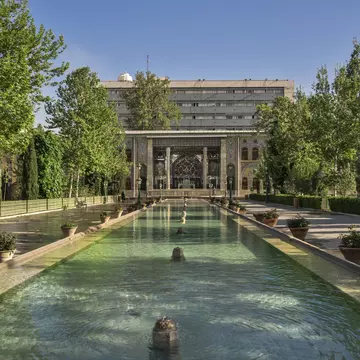
Golestan Palace Complex
In what was once the heart of Tehran is this monument to the glories and excesses of the Qajar rulers. A short walk south from Imam Khomeini Sq, the Golestan Palace complex is made up of several grand buildings set around a carefully manicured garden. Admission isn’t expensive but, annoyingly, you must buy a separate ticket for each building, and all at the front gate.
reviewed
-
Karak Castle
The entrance to the Karak Castle is at the southern end of Al Qala’a St. Throughout the castle, informative display boards give detailed descriptions of the history and function of each structure. Bring a torch (flashlight) to explore the darker regions, and watch your head on low doorways. Reconstruction and excavation work within the castle is ongoing. The main entrance, Ottoman’s Gate, is reached via a bridge over the dry moat. The Crusader’s Gate (old entrance) is not open to the public. From Ottoman’s Gate, pass the ticket office and take the path to the left. Resist the temptation to head into the vaulted corridor straight ahead and instead turn left and…
reviewed
-
E
Baha'i Gardens
With every tree trimmed to perfection and every blade of grass seemingly cut to the exact same height, the 18 terraces of the Baha'i Gardens are truly a sight to behold.
The gardens are one of the two great holy places for members of the Baha'i faith, an independent movement that originated in Persia in the middle of the 19th century. The Baha'i are based in the area because the faith's founder, Baha'ullah spent 25 years imprisoned in nearby Akko.
The Baha'i faith is one of the world's youngest religions, established only in the middle of the 19th century. Its central belief is in equality and unity, and it clings to the notion that many prophets have appeared throughout…
reviewed
-
F
Citadel (Jebel al-Qala'a)
The area known as the Citadel sits on the highest hill in Amman, Jebel al-Qala’a (about 850m above sea level), and is the site of ancient Rabbath-Ammon. Artefacts dating from the Bronze Age show that the hill was a fortress and/or agora (open space for commerce and politics) for thousands of years. The complex is surrounded by 1700m-long walls, which were rebuilt many times during the Bronze and Iron Ages, as well as the Roman, Byzantine and Umayyad periods. The Citadel ticket office is on the road leading up to the Citadel’s entrance. The Citadel’s most impressive series of historic buildings is the UmayyadPalace, which stretches out behind the National Archaeological…
reviewed
-
Dana Nature Reserve
The Dana Nature Reserve is one of Jordan’s hidden gems. The focal point of the reserve is the charming 15th-century stone village of Dana, which dangles beneath the King’s Highway on a precipice, commanding exceptional views of the valley below. The reserve is the largest in Jordan and includes a variety of terrain, from sandstone cliffs over 1500m high near Dana to a low point of 50m below sea level in Wadi Araba. Sheltered within the red rock escarpments are protected valleys that are home to a surprisingly diverse ecosystem. About 600 species of plants (ranging from citrus trees and juniper, to desert acacias and date palms) thrive in the reserve, together with 180…
reviewed
-
G
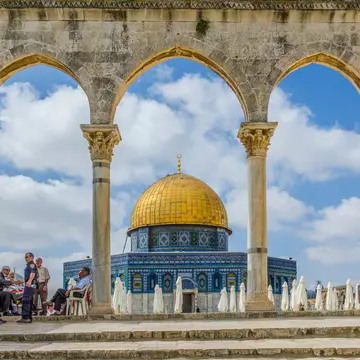
Dome of the Rock
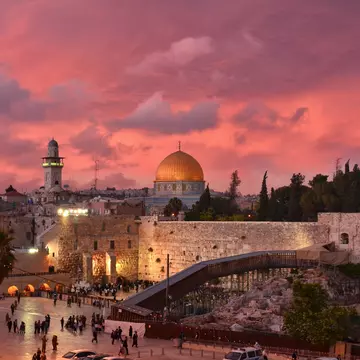
The jewel in the Temple Mount crown is the gold-plated Dome of the Rock, the enduring symbol of the city and undoubtedly one of the most photographed buildings on earth. As its name suggests, the dome covers the slab of stone sacred to both the Muslim and Jewish faiths. It was here that Abraham prepared to sacrifice his son and from which, according to Islamic tradition, the Prophet Mohammed launched himself heavenward to take his place alongside Allah.
The building was constructed between AD 688 and 691 under the patronage of the Umayyad caliph Abd al-Malik. His motives were shrewd as well as pious - the caliph was concerned that the imposing Christian Church of the Holy…
reviewed
Advertisement
-
H
Burj Khalifa
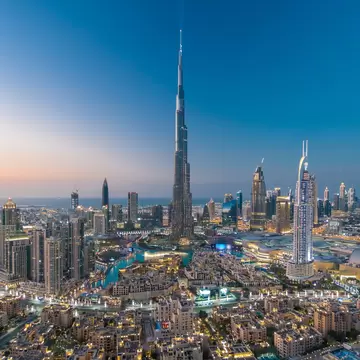
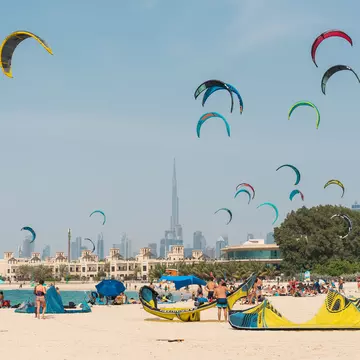
Call it impressive or preposterous, there’s no denying that Burj Khalifa is a ground-breaking feat of architecture and engineering. The world’s tallest building pierces the sky at 828m (seven times the height of Big Ben) and opened on 4 January 2010, only six years after excavations began. Up to 13,000 workers toiled day and night, at times putting up a new floor in as little as three days. Inside Dubai’s own ‘Tower of Babel’ is a mix of offices and apartments; at the time of writing, the sleek Armani Hotel was scheduled to open late in 2010. For visitors, the main attraction is the Observation Deck ‘At the Top’ on the 124th floor. From such lofty heights…
reviewed
-
I
Damascus Gate
The scene in front of the Damascus Gate is a microcosm of the Palestinian world - vendors heave goods in and out of the Old City, families picnic on the steps and Israeli soldiers tap their truncheons. You'll also spot elderly women from the villages trying to sell herbs and produce; most of them wear intricately embroidered dresses that are a part of their dowry and identity.
The gate itself dates in its present form from the time of Süleyman the Magnificent (who oversaw the gate's construction between 1537 and 1542), although there had been a gate here long before the arrival of the Turks. This was the main entrance to the city as early as the time of Agrippas, who…
reviewed
-
J
Khan As'ad Pasha
Just beyond the hammam is the grand entrance to Khan As'ad Pasha, arguably the finest and most ambitious piece of architecture in the Old City - a cathedral among khans. Built in 1752 under the patronage of As'ad Pasha al-Azem, it encompasses a vast space achieved through a beautiful arrangement of eight small domes around a larger circular aperture, allowing light to stream in above a circular pool. The domes are supported on four colossal grey-and-white piers that splay into elegant arches.
Beyond the khan, the souq intersects with Straight St.
reviewed
-
K
XVA Gallery
One of Dubai’s best-loved and most reputable galleries, XVA occupies a warren of rooms in a beautifully restored Bastakia courtyard residence. Curators showcase contemporary paintings, sculptures and art installations from regional and international artists. They also organise the annual Bastakiya Art Fair and art-house movie screenings (November to April). The complex also houses the delightful XVA cafe and boutique hotel.
reviewed
-
L
Bat Galim Beach
Ports tend to make a mess of the coast so it's not too surprising that Haifa's beaches are infamously toxic and strewn with garbage. Case in point is Bat Galim Beach , considered one of the best surf breaks in the country and host to international competitions - surfers constantly lament its piles of rusting metal, bricks, concrete, disused furniture and other refuse.
reviewed
-
Baalbek Ruins
The site houses the hexagonal court, a monumental propylaea, the hexagonal court, the Great Court (Sacrificial Courtyard, the Temple of Jupiter, the Temple of Bacchus and a free museum. A good free map of the site, entitled Heliopolis Baalbek 1898-1998: Rediscovering the Ruins is produced by the German Archaeological Institute and is available all over town.
ATerrific multilingual guides can be found (or will find you) around the ticket office. The entrance to the main site is currently at the southeastern end of the temple complex. Note that at the time of writing, a new entrance to the museum complex was planned and under execution: the new entrance, when finally…
reviewed
-
German Colony
At least once during your stay in Haifa, walk up Ben-Gurion Ave from Jaffa Rd and enjoy the splendour that is the German Colony backed by the cascading lights of the Baha'i Gardens. The colony (really just this street), was renovated in the 1990s into the city's premier address for shopping and dining, with many of its buildings restored and given plaques that describe the history of the area. Haifa's tourist information centre is also located here.
Part of the renovation required that the entire street be moved 168cm, so that its centre divide would line up with the staircase of Baha'i Gardens.
The colony was established in 1869 by the Templers (not to be confused with…
reviewed
-
Al-Bass site
Al-Bass site On the landward side of Tyre, about 20 minutes on foot from the other sites, is the enormous Al-Bass Archaeological site. A colonnaded east-west road, possibly a continuation of the road at Al-Mina site, takes you through a vast funerary complex containing dozens of highly decorated marble and stone sarcophagi.
The more elaborate have reliefs depicting scenes from Greek mythology and Homeric epics. Most are from the 2nd and 3rd century AD, but some date back as far as the 2nd century BC, and there are Byzantine coffins from as late as the 6th century.A huge, triple-bay monumental archway stands further along the colonnaded street. Originally the gateway to…
reviewed
-
M
Burj al-Arab
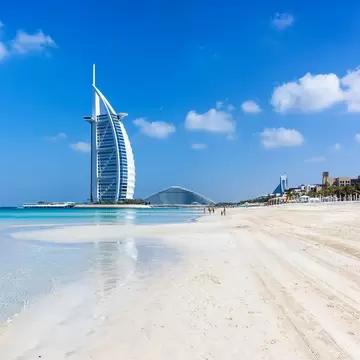
We’re suckers for trivia, so let’s kick off by telling you that the lobby of the Burj al-Arab is so high, the Statue of Liberty would fit quite nicely into it. Or that the sail-shaped building tops out at 321m, just a few metres shorter than the Eiffel Tower. And here’s one more: 1600 sq metres in the hotel are sheathed in gold leaf. OK, that’s enough. In its first decade since opening, the Burj al-Arab has been more than just the iconic symbol of a booming city in the sand; it has challenged preconceived ideas of what an Arab country in the Middle East can achieve. It’s built on an artificial island 280m offshore from the Jumeirah Beach Hotel, to which it is linked by a…
reviewed
-
The Peacock Throne
There has long been confusion about the origins of the Peacock (or Naderi) Throne that now sits in the National Jewels Museum. The real story is this: In 1798 Fath Ali Shah ordered a new throne to be built. His artists made quite a job of it, encrusting the vast throne that looks more like a bed with 26,733 gems.
Set into its top was a carved sun, studded with precious stones, so the throne became known as the Sun Throne. Later Fath Ali married Tavous Tajodoleh, nicknamed Tavous Khanoum or Lady Peacock, and the throne became known as the Peacock Throne in her honour.
Fath Ali certainly had a taste for gems, but one of his predecessors, Nader Shah, liked the finer things…
reviewed
Advertisement
-
N
Old Souq
True to its origins, Kuwait City has retained the old souq in all of its complex, bustling and convoluted glory in the city centre. Albeit partly housed now in a smart, modern building, complete with cubby-holes of lockable wooden shutters, it nonetheless exudes antique practices, from the sharp haggling over ribands of offal and tails of ox, to the quick-witted trading of olives and dates in the extensive food halls of Souq Marbarakia.
It's a wonderful place to idle a few hours, and indeed an entire lunch time could be spent sampling delicacies without ever setting foot in one of the numerous snack shops that line the outer rim of the souq. The souq also comprises the…
reviewed
-
O
Madinat Jumeirah
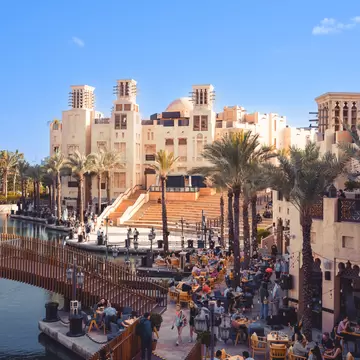
A city within a city, the Madinat Jumeirah is a Dubai must-see. There’s plenty to do at this fanciful hotel, shopping and entertainment complex with the Burj al-Arab in the background. Explore the Arabian-style architecture, snoop around the splendid Al-Qsar and Mina A’ Salam hotels, or get lost in the labyrinth of the souvenir-saturated souq. There are some exquisite details throughout, so if you see some stairs, take them – they might lead you to a secreted terrace with a mesmerising vista of the sprawling complex. If you’re a hotel guest, or have a restaurant reservation, you can catch the silent abras cruising along the 4km-long network of Venetian-style…
reviewed
-
P
National Archaeological Museum
The National Archaeological Museum is just northwest of the Temple of Hercules. It has a good collection of items spanning all eras of Jordanian and regional history, ranging from 6000-year-old skulls from Jericho to Umayyad period artwork. It also boasts some examples of the Dead Sea Scrolls found at Qumran in 1952, a copy of the Mesha Stele and assorted artefacts from Petra and Jerash. Most exhibits are well labelled in English.
Pride of place are three of the Ain Ghazal statues, which date back to 6500 BC as some of the world's earliest sculpture. Finds from the Citadel itself include the head from a statue of the Greek goddess Tyche and some Egyptian-style carvings.
…
reviewed
-
Arab Fund Building
Although not strictly open to the casual caller, the impressive Arab Fund Building, with a host of exceptionally beautiful rooms, is worth the trouble of gaining access. Call first to request an appointment and explain that you wish to see the building's interior and you'll be given a guided tour by one of the employees.
The gravity of the exterior belies the light and airy interior, designed upon Arabic architectural principles of integrity of space, decoration and function. The magnificent eight-storey atrium with wooden lattices, opening onto a transparent corridor or an exquisite hidden majlis (meeting room), is an exciting reinterpretation of a familiar theme.…
reviewed
-
Q
Bazar-e Vakil
Shiraz’s ancient trading district is comprised of several bazaars dating from different periods. The finest and most famous is the Bazar-e Vakil, a cruciform structure commissioned by Karim Khan as part of his plan to make Shiraz into a great trading centre. The wide vaulted brick avenues are masterpieces of Zand architecture, with the design ensuring the interior remains cool in summer and warm in winter. Today, it’s home to almost 200 stores selling carpets, handicrafts, spices and clothes and is one of the most atmospheric bazaars in Iran, especially in the early evening when it is fantastically photogenic. As usual, it’s best explored by wandering without concern…
reviewed