Things to do in San Cristóbal De Las Casas
-
A
Pizzería El Punto
Forget the cardboard crap that passes for pizza in some parts, these crispy pies are the best in town, bar none. The newest branch of this excellent pizzeria has a full bar, swanky black and red seating and a lovely balcony overlooking Real de Guadalupe.
reviewed
-
B
Croozy Scooters
Croozy Scooters rents bicycles and well-maintained Italika CS 125cc scooters. The price includes maps, locks and helmets (plus a repair kit and pump for bicycles); passport and deposit required.
reviewed
-
C
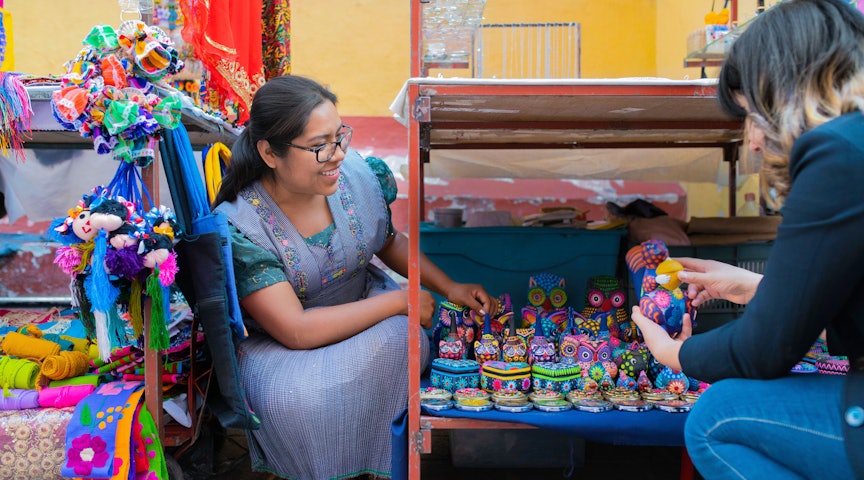
Sna Jolobil
Next to Santo Domingo, Sna Jolobil exhibits and sells some of the very best huipiles, blouses, skirts, rugs and other woven items, with prices ranging from a few dollars for small items to more than M$32,000 for the best huipiles (the fruit of many months’ work). Sna Jolobil is a cooperative of 800 indigenous women weavers from the Chiapas highlands, founded in the 1970s to foster the important indigenous art of backstrap-loom weaving. It has revived many half-forgotten techniques and designs.
reviewed
-
TierrAdentro
A popular gathering center for political progressives and coffee-swigging, laptop-toting locals (not that they’re mutually exclusive), this large indoor courtyard restaurant and café is a comfortable place to while away the hours. It’s run by Zapatista supporters, who hold frequent cultural events and conferences on local issues. A simple yet delicious menú compa (M$35) rotates daily, with hearty offerings such as rice and beans with handmade tortillas.
reviewed
-
D
Museo del Ámbar de Chiapas
Chiapas amber – fossilized pine resin, around 30 million years old – is known for its clarity and diverse colors. Most is mined around Simojovel, north of San Cristóbal. The Museo del Ámbar de Chiapas explains all things amber (with information sheets in English and other languages) and displays and sells some exquisitely carved items and insect-embedded pieces.
reviewed
-
E
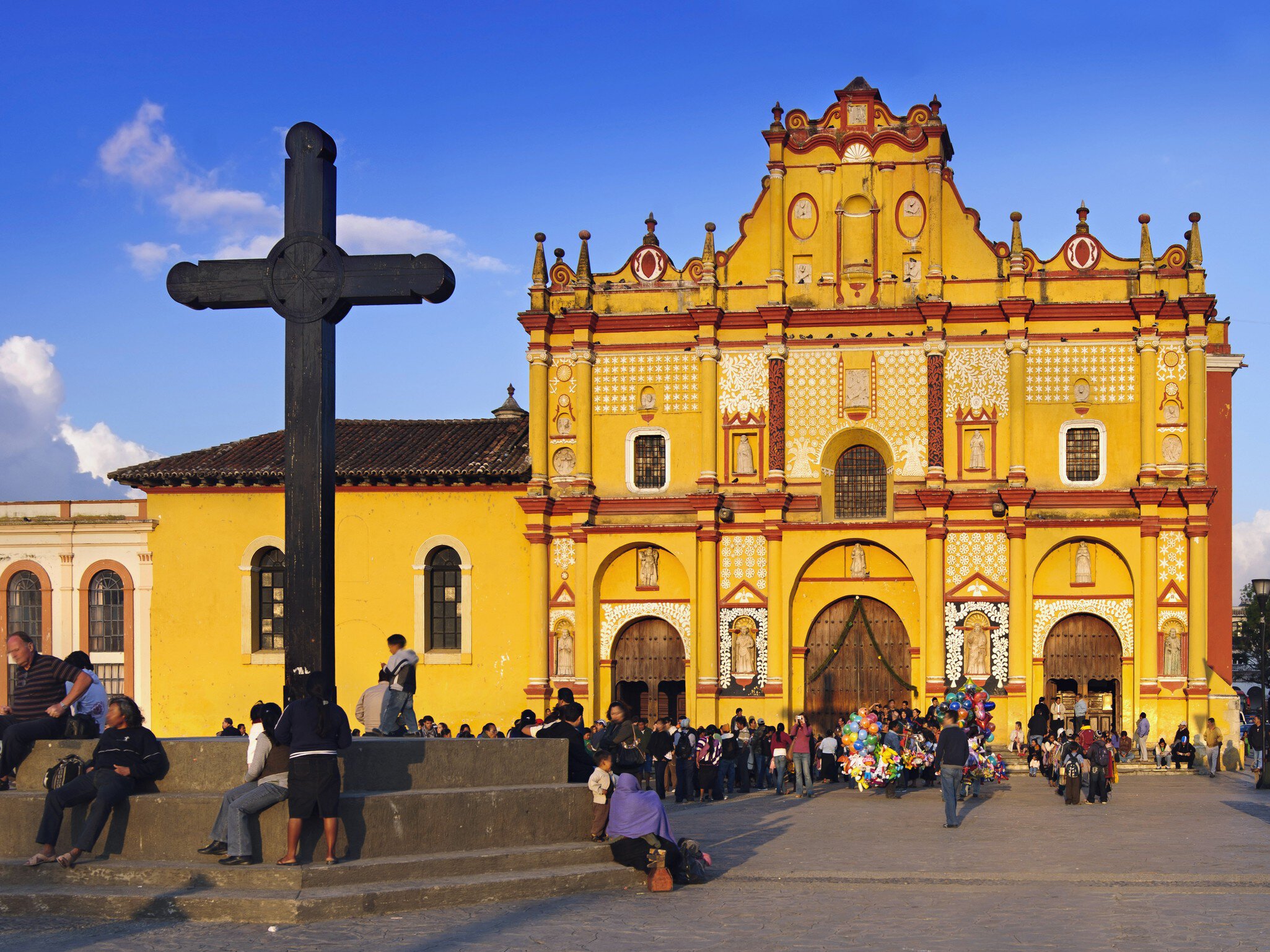
Cathedral
On the north side of the plaza, the cathedral was begun in 1528 but wasn't finally completed till 1815 because of several natural disasters. Sure enough, new earthquakes struck in 1816 and 1847, causing considerable damage, but it was restored again in 1920-22. The gold-leaf interior has five gilded altarpieces featuring 18th-century paintings by Miguel Cabrera.
reviewed
-
F
Alebrije
A fun, economical and busy cocina popular across from the Mercado Municipal, Alebrije serves freshly prepared food like enfrijoladas con pollo (tortillas with bean sauce, cheese and chicken), chilaquiles and pollo con verduras (chicken and vegetables) to a dedicated local clientele. A few vegetarian dishes are available.
reviewed
-
G
Anabanana
With five practically touching tables and a hand-lettered menu colored in with crayons, this long-time tortas and juice joint on the andador is a cozy choice for typical Mexican food and no-frills international options. Inexpensive breakfasts too.
reviewed
-
H
Taller Leñateros
A society of Maya artists, the ‘Woodlanders’ Workshop’ crafts exquisite handmade books, posters and fine art prints from recycled paper infused with local plants, using images inspired by traditional folk art. An open workshop, you can watch the art in progress.
reviewed
-
I
Kakao Natura
For something different, melt into a hot chocolate at the chocolatería Kakao Natura. The dozen or so varieties of artisanal chocolates (M$25 to M$38 per dozen) make fine gifts – if you can resist eating them yourself.
reviewed
Advertisement
-
J
La Viña de Bacco
At San Cristóbal’s first wine bar, chatty patrons spill out onto the street, a pedestrian block of the main drag. It’s a convivial place, pouring a large selection of Mexican options (among others), starting at a reasonable M$18 per glass.
reviewed
-
K
Museo del Jade
Particularly classy jewelry is sold here, with pre-Hispanic reproductions carved in jade and other precious materials. Inside is a small museum with replicas of ancient Olmec pieces and a full-size replica of Pakal's tomb at Palenque.
reviewed
-
Grutas de San Cristóbal
The entrance to this long cavern is among pine woods. The first half kilometer of the cave has a concrete walkway and is lit. The Mexican army took control of the land around the caves in 2003, though visitors are still welcome.
reviewed
-
Museo de la Medicina Maya
The award-winning Museo de la Medicina Maya introduces the system of traditional medicine used by many indigenous people in the Chiapas highlands. It's a 15-minute walk north from Calle Real de Guadalupe or around $18 by taxi.
reviewed
-
L
L’Eden
This quality restaurant’s tempting European and Mexican menu includes fondue suiza,sopa azteca and succulent meat dishes. There’s a lengthy wine list too, including French and Spanish vintages.
reviewed
-
M
La Paloma
La Paloma is an elegant, spacious restaurant with a glass atrium roof and greenery that includes bamboo and banana trees. The menu is creative and varied, with tasty pasta, beef, chicken and fish dishes.
reviewed
-
N
Emiliano’s Moustache
This large, enjoyable place specializes in tacos filled with combinations of meat, vegetable or cheese. The meat filetes are also excellent, and vegetarian possibilities exist.
reviewed
-
O
Nemi Zapata
A fair-trade store that sells products made by Zapatista communities: weavings, embroidery, coffee and honey, EZLN cards, posters and books.
reviewed
-
P
Mayambé
This superb courtyard restaurant boasts a wonderful Asian, Middle Eastern and Mediterranean menu, including plenty of vegetarian options.
reviewed
-
Q
Advertisement
-
R
-
S
El Caldero
Simple, friendly little El Caldero specializes in delicious, filling Mexican soups – pozole (shredded pork in broth), mondongo (tripe), caldo (broth) – with avocados, tortillas and various salsas. Great for an authentic and inexpensive local meal.
reviewed
-
T
Café Museo Café
This combined café and coffee museum is a venture of Coopcafé, a grouping of more than 17,000 small-scale, mainly indigenous, Chiapas coffee growers. The museum covers the history of coffee and its cultivation in Chiapas, from highly exploitative beginnings to the community-based indigenous coffee production that’s increasingly well marketed today. The information is translated into English and you can taste some of that flavorful organic coffee in the café.
reviewed
-
U
Templo de Santo Domingo
The 16th-century Templo de Santo Domingo is San Cristóbal’s most beautiful church, especially when its facade catches the late-afternoon sun. This baroque frontage, with its outstanding filigree stucco work, was added in the 17th century and includes the double-headed Hapsburg eagle, symbol of the Spanish monarchy in those days. The interior is lavishly gilded, especially the ornate pulpit.
reviewed
-
V
Centro Cultural El Carmen
The Arco de El Carmen, at the southern end of the Andador Turístico on Hidalgo, dates from the late 17th century and was once the city’s gateway. The ex-convent just east is a wonderful colonial building, with a large peaceful garden. It’s now the Centro Cultural El Carmen, hosting art and photography exhibitions and the occasional musical event.
reviewed