go to content go to search box go to global site navigation

Latvia

Things to do in Latvia

‹ Prev

of 6

  1. A

    Central Market

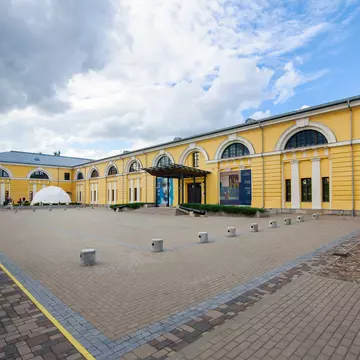
    Located in five huge hangars behind the bus station, this colourful, Soviet-style market is one of the largest in Europe and has Rīga's cheapest produce.

    A 1330 manuscript provides the first written reference, alluding to the market near the Dome Cathedral being moved to what is now called 'Riflemen Square', east of Akmens Bridge, where it remained until 1570, when it was moved to the banks of the Daugava to facilitate trading along the river.

    The market stayed on the Daugava for more than 350 years. By the mid-1600s when Rīga, then under Swedish rule, outgrew Stockholm, the market flourished with over 1000 merchants trading goods from all over the region.

    In 1930 the…

    reviewed

  2. B

    Latvian Ethnographic Open-Air Museum

    Located way out on the outskirts of the city, the Latvian Ethnographic Open-Air Museum is a Rīga essential. The dozens of farmhouses, churches and windmills on the grounds provide a record of bygone country life. The National Fair of Applied Arts (early June) and several festivals are held here. Take bus No 1 from the corner of Merķeļa iela and Tērbatas iela to the Brīvdabas muzejs stop.

    reviewed

  3. C

    Freedom Monument

    Over the canal from Līvu Laukums you'll find the Freedom Monument. During the Soviet years the Freedom Monument was off-limits, and placing flowers at its base was a crime for which people were deported to Siberia.

    Topped by a bronze female Liberty holding up three stars facing west, representing three regions of Latvia - Kurzeme, Vidzeme and Latgale - it bears the inscription Tēvzemei un Brīvībai (For Fatherland and Freedom).

    During the Soviet years the Freedom Monument was off-limits, and a statue of Lenin, facing the other way down Brīvības iela, was placed two blocks east. Lenin was removed on the night of 20 August 1991, after the collapse of the Moscow coup…

    reviewed

  4. D

    Lido atpūtas centrs

    With an ice-skating rink and its own outdoor ethnographic park, it's a huge draw for Latvian families. From the bus station it's an easy 15-minute ride out to the 'Lido' stop on tram 7.

    If you want to sample Latvian food look no further than the wildly popular buffet-style Lido restaurants. The chain's flagship enterprise is the gargantuan, amusement park-like Lido atpūtas centrs, where you can easily get lost amid endless buffet rows of pork knuckle, potato pancakes, fried cabbage and, oh, about a thousand other dishes.

    reviewed

  5. E

    Museum of the Occupation of Latvia

    Both the Soviet and Nazi occupations of Latvia during the last 65 years are chronicled in the chilling yet spirited Museum of the Occupation of Latvia. A gaggle of young tour guides gives free tours in English, and there's also a worthwhile one-hour audio guide available. Here you can also buy historical books on the occupation and dissident memoirs translated into English.

    reviewed

  6. F

    Essential

    Rīga's hottest club is a spectacle of beautiful bodies boogieing to some of Europe's top DJ talent in three dance chambers. Overzealous security aside, there's no safer bet if partying till dawn is your mission. Sorry, no local beer - just Coronas. Drink cocktails.

    reviewed

  7. G

    Vincents

    Inspired by Van Gogh, this fancy local institution boasts Rīga's finest European cuisine cooked up by Latvia's most famous chef, Mārtinš Rītinš.

    reviewed

  8. H

    Čili Pizza

    With five locations in Rīga and counting, this reliable Lithuanian chain is fast becoming ubiquitous. Another handy location is Raina bulv 15, New Town.

    reviewed

  9. I

    Turaidas muiža

    Turaidas muiža organizes various horse-riding activities, including treks and horse-drawn carriage rides around the national park.

    reviewed

  10. J

    Alus sēta

    Alus sēta is a Lido restaurant nestled in the Old Town.

    reviewed

  11. Advertisement

  12. K

    Turaida Museum Reserve

    The reserve's centrepiece is Turaida Castle, a red brick archbishops' castle founded in 1214 on the site of a Liv stronghold. It was blown up when lightning hit its gunpowder store in the 18th century. The restored castle is better viewed from afar, but a museum in the 15th-century granary offers an interesting account of the Livonian state from 1319 to 1561.

    On the path between the castle and the road is the small wooden-spired Turaida Church, built in 1750 and housing a small history exhibition.

    In the churchyard two lime trees shade the grave of the legendary Turaida Rose. The headstone bears the inscription 'Turaidas Roze 1601-1620' (Turaida means 'God's Garden' in…

    reviewed

  13. L

    Gūtmaņis Cave

    Gūtmaņis Cave is covered with graffiti going back to the 16th century - including the coats of arms of long-gone hunters. Legend has it the cave is named after a healer who allegedly cured the sick with water from it. This cave is most famous, however, for its role in the tragic legend of the 'Turaida Rose'.

    Sigulda's local beauty, Maija, was taken into Turaida Castle as a little girl when she was found among the wounded after a battle in 1601. She grew into a famous beauty courted by men from far and wide, but she loved Viktors, a gardener at Sigulda Castle. They would meet in a cave halfway between the two castles.

    One day a particularly desperate Polish officer…

    reviewed

  14. Karosta Prison

    A detention facility until 1997, today ghostly Karosta Prison offers a variety of tours. Originally built as an infirmary in 1900, the Soviets, Nazis and most recently the Latvians used the place as a military prison. Graffiti left behind by former inmates reveals the horrors incurred doing hard time here.

    Supposedly haunted, your tour guide will be happy to try to explain the unexplainable - light bulbs that mysteriously screw out of their sockets, doors that open without assistance and sudden eerie chills that descend upon a heated room. If you're craving some serious punishment, or just want to brag that you've spent the night in Latvian jail, sign up to become a…

    reviewed

  15. Fortress

    Daugavpils' most remarkable feature is the huge fortress, built by the Russians in 1810 on the northwestern side of town and occupied by the Soviet army until 1993. A red-brick bunker monument by the entrance states (in Russian and Latvian) that the Tatar poet Musa Jalil languished here from September to October 1942, in what was then the Nazi concentration camp Stalag 340.

    Tickets to the inner compound are sold at the former Soviet checkpoint. Once inside, you can follow the abandoned, run-down streets past boarded-up buildings and desolate parade areas. Part of the Soviet barracks - once home to some 6000 army personnel including 2500 army cadets attending the…

    reviewed

  16. Dock No 18

    From the castle, it is a two-minute walk to the Venta River. Ostas iela, a riverside promenade proffering interesting views of the bustling industrial port on the opposite riverbank, leads east along the water. Between April and November the Hecogs Jēkabs boat sails around the mouth of the Venta River, a 45-minute trip; it departs six times daily from dock No 18.

    The Sea Stone (1998), at the far eastern end of the walkway, is a massive boulder dug out from a depth of 17.5m when the port canal was deepened. It is one of several sculptures to line the scenic promenade. Look out for Feldbergs' Seven Mental Meteorites (1996) and the monument to Krišjānis Valdemārs (2000),…

    reviewed

  17. Turaida Church

    On the path to the Turaida Castle in the Turaida Museum Reserve is the small wooden-spired Turaida Church, built in 1750 and housing a small history exhibition. In the churchyard two lime trees shade the grave of the legendary Turaida Rose. The headstone bears the inscription 'Turaidas Roze 1601-1620'. Viktors - a gardener local beauty Maija loved - is said to have buried Maija and planted one of the trees, then disappeared without trace.

    The hillside behind the church is known as Daina Hill (Dainu kalns) and shelters the Daina Hill Song Garden. The daina (poetic folk song) is a major Latvian tradition, and the hillside is dotted with sculptures dedicated to epic Latvian…

    reviewed

  18. South Mole

    Ventspils' prime attraction is its coastline, which is laced with a sandy, dune-backed beach stretching south from the river mouth, about 2km west of the town centre. You can reach it along Viļņu iela (or Medņu iela), which branches off Vasarnīcu iela, or take bus 10 along Lielais prospekts. Breakwaters poke 1km or so out to sea from the mouth of the river to form Ventspils' Sea Gates, with a narrow entrance that makes it treacherous for shipping if there's any sea running.

    A popular pastime is to walk or cycle 1km from the northern end of the beach, along the South Mole walkway, to the lighthouse at the end of the southern breakwater.

    reviewed

  19. Knights' Stronghold

    Little remains of the Knights' Stronghold, built between 1207 and 1226 among woods on the northeastern edge of Sigulda. The castle hasn't been repaired since the Great Northern War, but its ruins are perhaps more evocative because of that. There's a great view through the trees to the archbishop's reconstructed Turaida Castle, on the far side of the valley. On the way to the ruins from town, you pass Sigulda Church (Siguldas baznīca), built in 1225 and rebuilt in the 17th and 18th centuries, and also the 19th-century New Sigulda Castle (Siguldas jaunā pils), the former residence of Prince Kropotkin and now a sanatorium.

    reviewed

  20. M

    Vecais Kapteinis

    Hands down, the best meal we had in Latvia. The innovative dishes, best described as upmarket Latvian fusion, are rich in flavour and nothing short of delicious. Meat, fish and seafood comprise much of the giant menu, but there are a few pasta and vegetarian offerings as well. The ambience is almost as delightful as the cuisine. In a stunning timber-framed building dating to 1773, whitewashed walls, candles and a seafaring theme cultivate a romantic vibe.

    Other highlights include a long, global wine list, quiet music and glasses of absinthe served in the traditional fashion and guaranteed to knock your socks off.

    reviewed

  21. Regional Studies & Art Museum

    The Regional Studies & Art Museum, inside an Art-Nouveau house guarded by two stone lions, has an exhibition of high-quality reproductions of abstract painter Mark Rothko's paintings.

    Rothko was borne in Daugavpils in 1903 and lived in the city until 1913, when his family moved to the USA. Although long recognized throughout the Western world, Rothko's work remained relatively anonymous in his home country until the collapse of the Soviet Union. Today the museum is striving to awaken national interest in the artist through its exhibition and educational programmes in local schools.

    reviewed

  22. Advertisement

  23. Aglona Basilica

    Aglona Basilica is Latvia's most important pilgrimage site and the leading Roman Catholic shrine in the nation. The church was built in 1699, but it's since been engulfed by an enormous courtyard that was created for Pope John Paul II's visit in 1993.

    One of the basilica's 10 altars guards a miraculous icon of the Virgin Mary, said to have saved Aglona from the plague in 1708.

    Every year on Ascension Day (15 August) pilgrims gather here. A candlelight procession the night before precedes the religious celebration.

    reviewed

  24. Jūrmala Park

    Covers nearly 0.5 sq km of parkland. With woodlands and dunes, this park is perfect for strolling. Grand wooden Art-Nouveau summer homes, constructed by Liepāja's wealthy citizens from the 1870s onward, grace the streets around the park. If your wanders have left you parched, stop by one of the many beer gardens or cafés scattered around the grounds. You can also partake in a game of miniature golf or tennis or check out the skate park.

    reviewed

  25. N

    Liepāja History & Art Museum

    A collection of carved amber ornaments dating back 1500 years is just one of the highlights of a visit to the Liepāja History & Art Museum. Other exhibits include impressive Stone and Bronze Age artefacts unearthed on local archaeological digs, an interesting collection of old jewellery and weapons and vintage memorabilia from both world wars. At the seaside end of the same street is a monument to sailors and fishermen who died at sea.

    reviewed

  26. O

    St Peter's

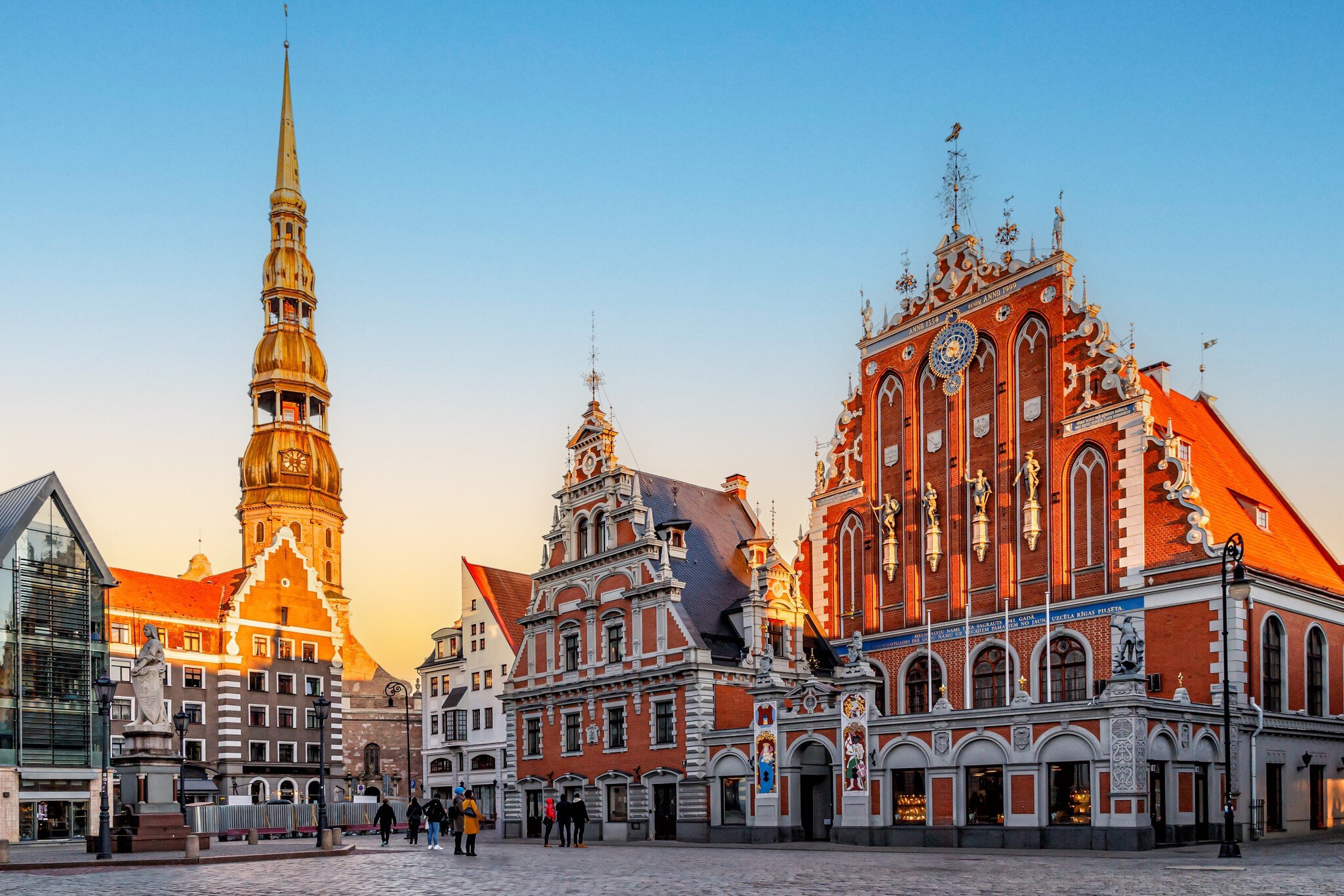
    Rīga's skyline centrepiece is gothic St Peter's, thought to be about 800 years old. Don't miss the view from its famed spire, which has been rebuilt three times in the same baroque form. Legend has it that in 1667 builders threw glass from the top - the number of pieces it broke into was the number of years it would stand. It landed on straw and didn't break, and a year later it burned down. The spire's current incarnation dates to 1973.

    reviewed

  27. P

    Bobsled Track

    Sigulda's 1200m artificial Bobsled Track was built for the former Soviet bobsleigh team. Today, the track hosts a portion of the European luge championships every January. In winter you can fly down the 16-bend track at 80km/h in a five-person Vuchko tourist bob, while summer speed fiends can ride a wheel bob. If your stomach is not up to it, scale the viewing tower instead for a panoramic view of the bobsled run snaking into the valley.

    reviewed