Things to do in Luang Prabang
-
A
Big Brother Mouse
Pop into Big Brother Mouse and pick up some books to distribute to local children. Books cost 15,000 kip each and the idea behind the programme is to encourage visitors to hand out something more beneficial than candy, while promoting literacy. Run by a retired American publisher, the staff is made up of Laotian college and high-school students, all of whom contribute to the content, illustrations, and admin of the office. You can also purchase books at the night market or make a donation to support the production of new material, and the office gladly accepts volunteers when the need arises.
reviewed
-
B
Lao Lao Garden
Superlative Thai, Lao and Western fare graces the long menu at this hip, alfresco restaurant, where tables tumble into a hilly, candlelit garden. The Lao barbecue here is a must – diners are served a basket of raw meat and vegetables, which they cook at their own leisure on a round hotplate in the centre of the table. It’s about as much fun as dinner gets.
reviewed
-
C
Pathana Boupha Antique House
In an impressive old French mansion, Pathana Boupha carries antique statuary, jewellery, silverwork, Royal Lao government currency and old photos, mostly from the Lao owners’ private collection. It also sells high-quality textiles from various ethnic groups. The late patriarch designed many of the costumes and ornaments used in the former Royal Palace.
reviewed
-
D
JoMa Bakery Café
Arguably the best bakery in town, JoMa has alfresco tables along the street or in a spacious air-con dining room. A great menu of sandwiches, soups and salads joins the large bread and pastry selection, and the coffee is excellent.
reviewed
-
Tiger Trails
Single- and multi-day trips involving trekking, rafting and cycling around Luang Prabang. Longer trips to Muang Ngoi or Muang Khua and accommodation homestays. Tiger Trails also has an elephant camp about 15km outside of Luang Prabang on the banks of the Nam Khan, where it offers elephant treks and mahout (elephant trainer) courses. This company places a strong emphasis on conservation and community support. Prices range from US$29 to US$40 per day.
reviewed
-
E
Kopnoi
This shop targets the discerning shopper with east-meets-west clothing in natural fabrics and dyes, designer jewellery, homewares and handicrafts, books on Lao cuisine, architecture and crafts, packaged spices and teas and local art.
reviewed
-
F
L’Etranger Books & Tea
New and used books about Laos and Southeast Asia, plus book rental and books bought for cash or trade credit. Art is showcased on the 2nd floor, which doubles as a tea lounge.
reviewed
-
G
Wat Xieng Thong
Near the northern tip of the peninsula formed by the Mekong River and the Nam Khan is Luang Prabang’s most magnificent temple, Wat Xieng Thong. King Setthathirat ordered the construction of Wat Xieng Thong’s sǐm (ordination hall) in 1560, and the compound remained under royal patronage until 1975. Wat Xieng Thong was placed within easy reach of the Mekong. The hǎw tąi (Tripitaka library) was added in 1828, and the haw kąwng (drum tower) in 1961.
reviewed
-
Best of Laos and Cambodia
15 days (Luang Prabang)
A spectacular journey through the heart of Laos and Cambodia.
Not LP reviewed
from USD$2,690 -
H
Somchanh Restaurant
This simple but pleasant outdoor place near the cluster of guesthouses in Ban Wat That serves a large selection of Lao and Luang Prabang dishes, including the best choice of vegetarian Lao food in town. Dining areas are divided between tables on a slight bluff near the kitchen and seating across the road on the riverbank.
reviewed
Advertisement
-
I
Lala Café
A refreshing variation from the ubiquitous burger-and-pizza selection greets diners at this trendy little spot. Gracing the menu are Greek dishes, massaman curries and a kicking spicy catfish and mango salad. Dine in the intimate café or at the tables on the riverbank across the road.
reviewed
-
J
Royal Theatre
Inside the Royal Palace Museum compound, local performers put on a show that includes a bąasǐi ceremony, traditional dance and folk music. There are traditional dances of Lao ethnic minorities such as the Phoo Noi and Hmong people.
reviewed
-
K
Restaurant Brasserie L’Elephant
One of Luang Prabang’s most elegant eateries features wooden floors, subdued lighting and Lao antiques. The menu is mostly French but you’ll find other treats such as New Zealand rib eye with gorgonzola cheese sauce, and delectable seafood.
reviewed
-
L
Lao Red Cross
Housed in a nicely preserved Lao-French building with half-timbered walls. Proceeds go towards the Lao Red Cross so really any visit here is an act of pure selflessness. Take your own towel or sarong.
reviewed
-
M
Nisha Restaurant
This place serves Indian specialities, Western breakfasts and Lao dishes, both veg and nonveg.
reviewed
-
N
Night Stalls
Some of the cheapest and tastiest dishes in town can be found at the night stalls that emerge at dusk on streets running off Th Sisavangvong where the night market takes place. The main congregation is one street north of Th Kitsarat, where you can dine on a whole barbequed pig's head, superb vegetarian dishes and noodles, and just about everything in between. There's even a 'vegan' stall.
reviewed
-
O
Tamarind
Chic little Tamarind injects a great deal of style into the Luang Prabang dining scene, inventing its very own make of ‘Mod-Lao’ cuisine. The à la carte menu boasts delicious sampling platters with bamboo dip, stuffed lemongrass and meuyang – DIY parcels of noodles, herbs, fish and chilli pastes, and vegetables. With a day’s notice they also serve banquets (per person US$6 to US$8) with variations like a Lao Celebration Feast (Pun Pa), and the degustation-style Adventurous Lao Gourmet. Dishes include whole fish, marinated in local herbs, stuffed with lemongrass and barbecued in banana leaves, traditional eggplant and meat stew, or Lao-style barbequed pork. Meals are…
reviewed
-
P
Wat Ho Pha Bang
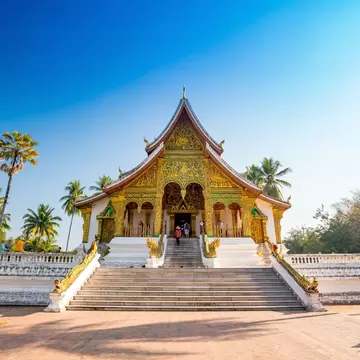
The Pha Bang is a 83cm tall Buddha cast of a gold, silver and bronze alloy, and is said to weigh 53.4kg. Legend has it the image was cast around the 1st century AD in Sri Lanka and later presented to Khmer King Phaya Sirichantha, who in turn gave it to King Fa Ngum in 1359 as a Buddhist legitimiser of Lao sovereignty. A project planned before the monarchy was abolished in 1975, construction on this highly ornate pavilion began in 1993.
Upon completion the highly revered Pha Bang will be moved from palace museum where it currently rsides, to an altar in the centre of the pavilion.
Since stylistically it's obviously of Khmer origin, its casting most likely took place nearer…
reviewed
-
Wat Wisunarat
Originally built in 1513 during the reign of Chao Wisunarat (King Visoun), Wat Wisunarat is the oldest operating temple in Luang Prabang. It was rebuilt between 1896 and 1898 following an 1887 fire set by Black Flag Haw raiders. The original was wooden, and in the brick and stucco restoration the builders tried to make the balustraded windows of the sǐm appear to be fashioned of lathed wood (an old South Indian and Khmer contrivance that is uncommon in Lao architecture). The front roof that slopes sideways over the terrace is another unique feature. Inside the high-ceilinged sǐm is a collection of gilded wooden ‘Calling for Rain’ Buddhas and 15th- to 16th-century Luang…
reviewed
-
Q
Wat Xieng Muan
The sǐm (ordination hall) at Wat Xieng Muan dates back to 1879, though the monastery site is much older. The sculpture inside is impressive and the ceiling is painted with gold nagas (mythical water serpents), an uncommon motif in this position - possibly a Thai Lü influence. Also notable is the elaborate háang thíen (candle rail) with nagas at either end.
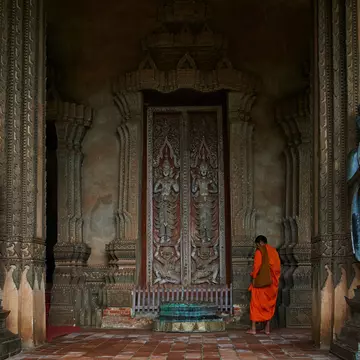
Wat Xieng Maen, in the village of Xieng Maen, was founded in 1592 by Chao Naw Kaewkumman, son of Setthathirat, but it fell into ruin and had to be rebuilt in 1927. The newer sǐm contains a few artefacts dating from the original temple, including the original doors. This spot is especially sacred to Xieng Maen…
reviewed
Advertisement
-
Wat Tham Xieng Maen
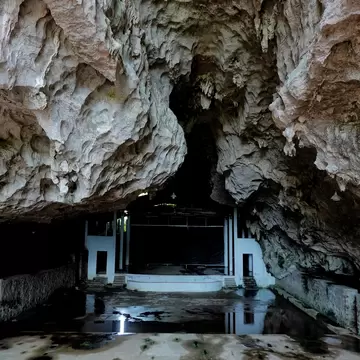
Founded in 1889 and since abandoned, Wat Tham Xieng Maen is in a 100m-deep limestone cave called Tham Sakkarin Savannakuha, a little northwest of Wat Long Khun. Many Buddha images from temples that have been torched or otherwise fallen into decay are kept here; during Bun Pi Mai Lao many local worshippers come to Wat Tham to pay homage and cleanse the images. The large stone-block entrance built around the mouth of the cave displays good relief work on stair pedestals, and is flanked by two large ruined spirit houses and a couple of plumeria (frangipani) trees. An iron gate across the cave mouth is usually locked; inquire at Wat Long Khun and someone will come and unlock…
reviewed
-
R
Wat Pa Huak
The decaying sǐm at Wat Pa Huak - on the lower northern slope of Phu Si, near the Royal Palace Museum - has a splendid carved wood and mosaic façade showing Buddha riding Airavata, the three-headed elephant of Hindu mythology (in which he is usually depicted as Lord Indra's mount). The gilded and carved front doors are often locked, but during the day there's usually an attendant nearby who will open the doors for a tip of a couple of hundred kip.
Inside, the original 19th-century murals have excellent colour, considering the lack of any restoration. The murals show historic scenes along the Mekong River, including visits by Chinese diplomats and warriors arriving by…
reviewed
-
S
Wat Mai Suwannaphumaham
Inaugurated in 1821 (some sources claim 1797), Wat Mai succeeded Wat Aham as the residence of the Sangkharat until that position moved to Pha That Luang in Vientiane. The five-tiered roof of the wooden sǐm follows the standard Luang Prabang style, but the roofed front veranda, with its gables angled towards the sides of the chapel rather than towards the front, is an anomaly. This unusual plan may have been influenced by local vernacular architecture, as exemplified in the old wooden house just across the street from Wat Mai. The front veranda is also remarkable for its decorated columns and the sumptuous gold relief walls that recount the tale of Vessantara (Pha Wet in…
reviewed
-
T
Wat Long Khun
Wat Long Khun, almost directly across the Mekong River from Wat Xieng Thong, is the best place to disembark by boat for Xieng Maen explorations if you’re chartering a boat. This wat features a nicely decorated portico, vintage 1937, plus older sections from the 18th century and a few fading Jataka murals. When the coronation of a Luang Prabang king was pending, it was customary for him to spend three days in retreat at Wat Long Khun before ascending the throne. A restoration project, completed in 1995 by the Department of Museums and Archaeology, with the assistance of the Ecole Française d’Extrême Orient, has brought new life and beauty to the monastery buildings.
reviewed
-
U
Handicraft Night Market
Every evening this market assembles along Th Sisavangvong from the Royal Palace Museum to Th Kitsarat, closing this section of the street off to motor vehicles. It’s one of Luang Prabang’s biggest tourist lures. Low-lit and quiet, it’s devoid of hard selling and is possibly the most tranquil market in Asia. Tens of dozens of traders sell silk scarves and wall hangings, plus Hmong appliqué blankets, T-shirts, clothing, shoes, paper, silver, bags, ceramics, bamboo lamps and more. It’s incredibly cheap and because you’re injecting currency directly into the local economy you have to feel good about spending dosh here.
reviewed