Sights in Tokyo
-
A
Tsukiji Central Fish Market
If it lives in the sea, it's probably for sale in the Central Fish Market, where acres and acres of fish and fish products pass hands in a lively, almost chaotic atmosphere. Everything is allotted its own area, and a quick scan of the loading docks will reveal mountains of octopus, rows of giant tuna, endless varieties of shellfish and tanks upon tanks of live exotic fish.
About 2246 tonnes of fish, worth over 1.8 billion yen (US$15.5 million), are sold here daily; that's 615,409 tonnes of fish worth some US$4.25 billion a year. It's not unheard of for a single tuna to fetch an incredible around ¥20 million!
The auctions are not officially open to the general public, but…
reviewed
-
B
Roppongi Hills
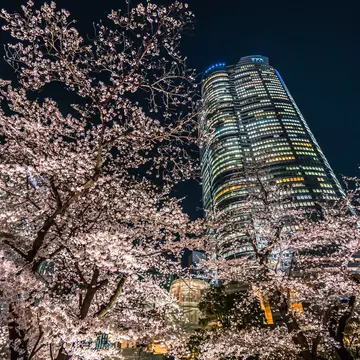
Opened in 2003 to an incredible amount of fanfare, Roppongi Hills was the dream of real-estate developer Mori Minoru, who long envisaged a transformation of Roppongi. Since then, an incredible amount of lofty praise has been vaulted at the complex, which is arguably the most architecturally arresting sight in Tokyo – architects including Jon Jerde, Maki and Associates, and Kohn Pedersen Fox Associates worked on the various buildings. The result is a feast for the eyes, enhanced by public art such as Louise Bourgeois’ giant, spiny alfresco spider called Maman and the benches-cum-sculptures along Keyakizaka-dōri. With expertly drawn lines of steel and glass, expansive…
reviewed
-
C
Akihabara Electric Town (Denki-Gai)
What the Tsukiji Central Fish Market is to the food trade, Akihabara is to Japan’s legendary electronics industry: bustling, busy and fun to watch, and you don’t have to get up early in the morning to catch the action (afternoon is prime time). Akihabara can no longer claim exclusive rights to the title of the city’s electronics centre (thanks to increased competition from denser hubs like Shinjuku and Ikebukuro), yet it is still quite the scene. Akihabara is where many items are market-tested, so even if you have no intention of shopping now, it’s worth a peek to see what you may be buying two years hence. As the electronics business has moved elsewhere (Korea, China and…
reviewed
-
D
Ueno Zoo (Ueno Dōbutsu-en)
Japan’s oldest zoo was established in 1882, and is home to lions and tigers and bears (oh my!). The biggest attractions are normally the giant pandas, but the zoo’s only remaining panda, Ling Ling, passed away in 2008. As we went to press, a pair of new pandas was reportedly due to arrive from China in early 2011. If you object to zoos in general, this one probably won’t change your opinion, what with small enclosures for the animals and a facility that’s generally showing its age. On the other hand it’s larger than you’d think, given the obvious space constraints of Tokyo. Plus, all of the big-name animals from around the globe are well represented here. If you’re…
reviewed
-
E
Golden Gai
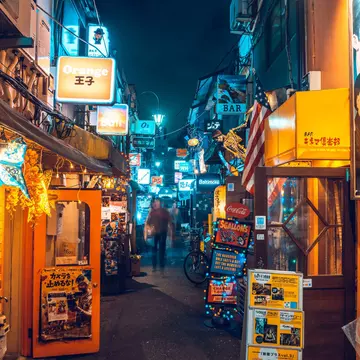
This ramshackle block of tiny bars became golden just in time for the ‘64 Olympics. By day, there’s not much to see here except for dozens of stray cats. But by night, the closet-sized bars, some accessed by stairways steep enough to bruise your shins as you ascend, light up and fill up, mostly with off-duty office workers. There’s been much speculation about the demise of Golden Gai’s rickety structures and narrow alleyways, but for the moment it seems a new generation is buying in and quietly setting up shop.
reviewed
-
F
Asakusa-Jinja (Asakusa Shrine)
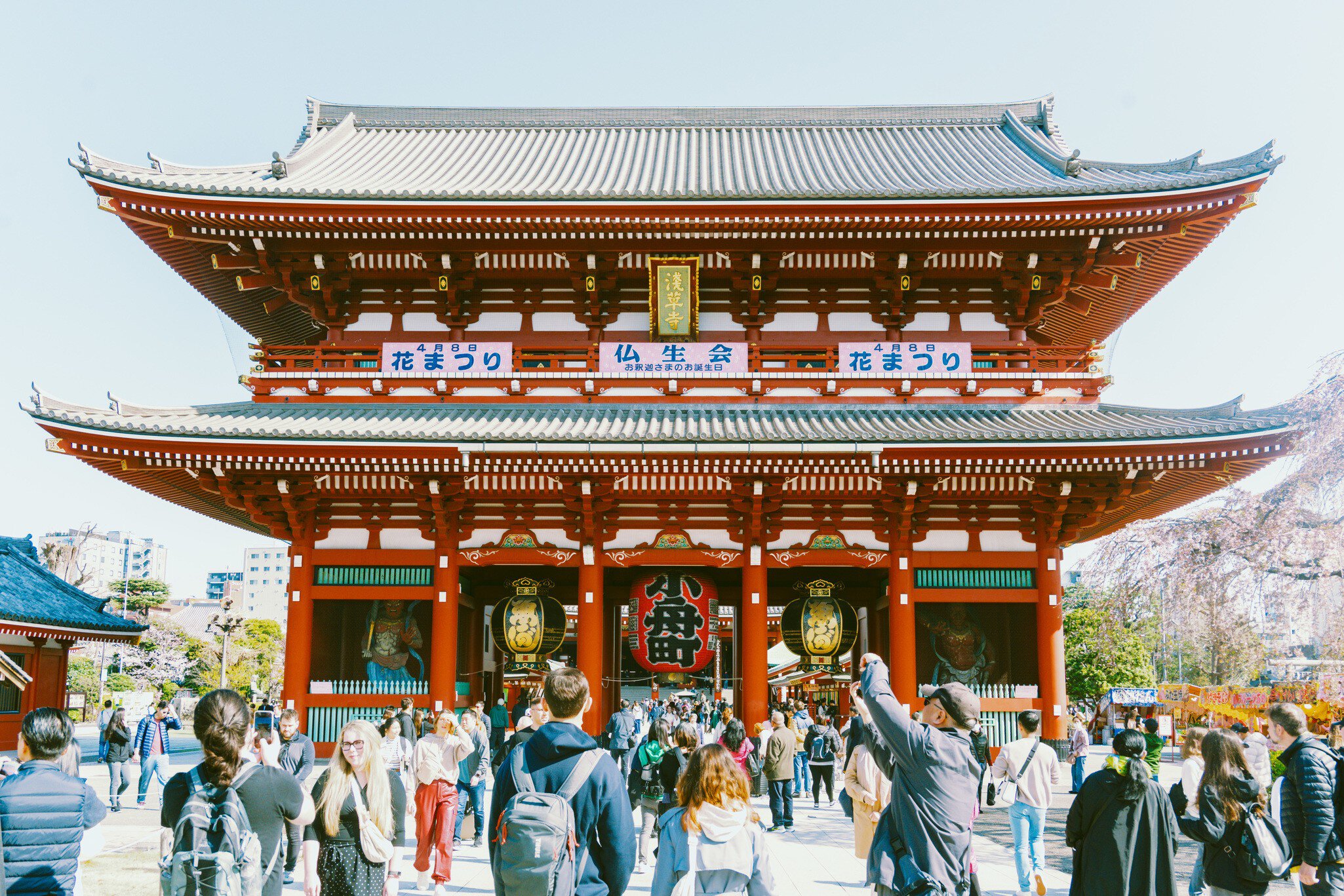
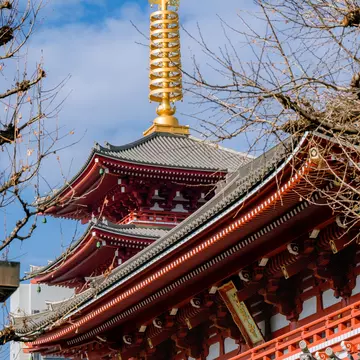
The proximity of this Shintō shrine, behind Sensō-ji and to the right, testifies to the coexistence of Japan’s two major religions. Asakusa-jinja was built in honour of the brothers who discovered the Kannon statue and is renowned as a fine example of an architectural style called gongen-zukuri. It’s also the epicentre of one of Tokyo’s most important festivals, the Sanja Matsuri, a three-day extravaganza of costumed parades, some 100 lurching mikoshi (portable shrines) and stripped-to-the-waist yakuza sporting remarkable tattoos. Niten-mon, thegate that marks one of the entryways to Asakusa-jinja, was erected in 1618 as a private entrance to the temple for the…
reviewed
-
G
Meiji-jingū
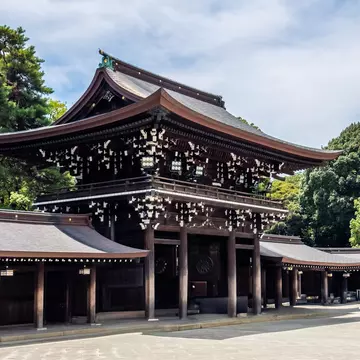
Completed in 1920, the shrine was built in memory of Emperor Meiji and Empress Shōken, though the current structure dates from 1958, as the original was destroyed in WWII. Meiji-jingū is the largest Shintō shrine in Tokyo and boasts the nation's largest torii (shrine gates), made from Japanese cypress. The shrine swells with over a million visitors during the New Year festivities. It's well worth visiting at any time, however; if you're lucky you'll catch a surprisingly sombre Shintō wedding processional, which makes a wonderful photo op.
The shrine's inner garden, Meiji-jingū-gyoen , is almost deserted on weekdays. It's especially beautiful in June, when the irises…
reviewed
-
H
Higashi-Gyōen (Imperial Palace East Garden)
Higashi-gyōen is the only corner of the Imperial Palace proper that is regularly open to the public, and it makes for a pleasant retreat from the grinding hustle and bustle of Tokyo. Here you can get up-close-and-personal views of the massive stones used to build the castle walls, and even climb the ruins of one of the keeps, off the upper lawn. Although entry is free, the number of visitors at any one time is limited, so it never feels crowded. Entry here is through one of three gates: Ōte-mon on the east side and Hirakawa-mon and Kitahanebashi-mon on the north side. Most people enter through Ōte-mon, which is situated closest to Tokyo Station, and was the principal…
reviewed
-
I
Tokyo Tower
Tokyo Tower proves that Japan always has to one-up the competition. Tokyo's first TV broadcasting tower is a duplicate of Paris' Eiffel Tower; however, the orange-and-white behemoth stands at 333m – 13m higher than the icon of modernity in the City of Light. In the 1890s, Paris' steel tower was an emblem of the incoming age of machines and international progress, but Tokyo Tower, constructed over 60 years later, lacks the 'wow' impact that Eiffel achieved. Instead, the retro spire provides a strange old-school counterpoint to the ultramodern developments of Roppongi Hills and Tokyo Midtown nearby. Tokyo Tower is, however, quite the sight for sore eyes after dark – the…
reviewed
-
J
Institute for Nature Study (Shizen Kyōiku-en)
Although the 200,000 sq metres of this land was the estate of a daimyō some six centuries ago and was the site of gunpowder warehouses in the early Meiji period, you’d scarcely know it now. Since 1949, this garden has been part of the Tokyo National Museum and aims to preserve the local flora in undisciplined profusion. There are wonderful walks through its forests, marshes and ponds, making this one of Tokyo’s least known and most appealing getaways. And there is a bonus: admission is limited to 300 people at any one time.
reviewed
Advertisement
-
K
Chinzan-Sō
This lovely, hilly 66,000-sq-metre strolling garden was part of the estate of a Meiji-era politician and statesman, and lining its many pathways are a number of antiquities transported from all over Japan. Most notable is a 16.7m three-storey pagoda, estimated at nearly a millennium old, which was transported from the Hiroshima area, as well as lanterns, monuments and torii. We don’t particularly love the contemporary construction of hotels and wedding halls around it, but all that is forgotten in the garden’s lovely soba shop Mucha-an.
reviewed
-
Tokyo Dome Attractions
Tokyo Dome is surrounded by the amusement park Tokyo Dome Attractions with the usual assortment of coasters and spinners, as well as a healthy smattering of bars, restaurants and shops. If you don’t want to invest in an all-day pass offering access to all of the rides, tickets are available for individual rides (¥200 to ¥1000) with no additional admission charge. Check the website for extended hours.
reviewed
-
L
Amusement Park
This nostalgia-inducing amusement park, Japan’s oldest, dates back to 1853, and is an absolute delight for the young ones, who can clamber over rides, dress up in old Edo style and watch ninja and samurai shows. If you’re having trouble finding the entrance, just listen for the delighted shrieking, as well as the rollercoaster creaking and whooshing along its ageing wooden tracks.
reviewed
-
M
Tokyo Metropolitan Children’s Hall
Boasts six kid-friendly storeys and a number of ingenious play areas – check out the human-body maze or get messy in the hands-on art studio where children can make pottery and origami. It’s 300m northeast of Shibuya Station, next to Mitake-kōen.
reviewed
-
N
Kyōkyo (Imperial Palace)
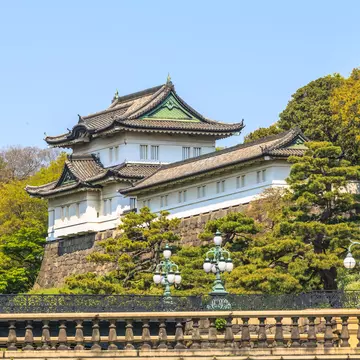
The Imperial Palace is the permanent residence of Japan's emperor and imperial family. Given the recent birth of future emperor Prince Hisahito, the frequent nervous breakdowns of Princess Masako and the debate regarding Princess Aiko's right of ascension, new stories surrounding the imperial family are splashed across the Japanese tabloids on a daily basis.
Of course, unlike their royal counterparts in the UK, life in the Imperial Palace is rigidly controlled by a secretive organisation known as the Imperial Household Agency, which keeps any potential scandals under wraps.
Completed in 1968, the palace itself is a somewhat staid, contemporary reconstruction of the Meiji…
reviewed
-
O
Yasukuni-Jinja (Yasukuni Shrine)
If you’ve kept up with international headlines, you might recall several news stories about citizens of China, Korea and other Asian nations taking to the streets when Japanese politicians (such as former Prime Minister Junichiro Koizumi) visited Yasukuni-jinja. Literally ‘For the Peace of the Country Shrine’, Yasukuni is the memorial shrine to Japan’s war dead, around 2.5 million souls who died in combat. However, although the conservative right wing in Japan stands by its patriotic duty to honour its war dead, the complete story is just a little more controversial (to say the least). To put things in perspective, it’s important to fully understand the history of…
reviewed
-
Ueno-Kōen (Ueno Park)
Tokyo’s oldest public park has several names: its Sunday name, which no one ever uses, is Ueno Onshi Kōen; some locals dub it Ueno no Oyama (Ueno Mountain); and English speakers call it Ueno Park. Whichever you prefer, Ueno-Kōen makes for a pleasant city escape. There are two entrances to the park: the main one takes you straight into the museum and art gallery area, a course that might leave you worn out before you get to Ueno’s temples. For these, it’s better to start at the southern entrance between JR Ueno Station and Keisei Ueno Station, and do a little temple-viewing en route to the museums. From the JR Station, take the Ikenohata exit and turn right. Just around…
reviewed
-
P
Tokyo National Museum (Tokyo Kokuritsu Hakubutsukan)
If you visit only one museum in Tokyo, make it this one. The Tokyo National Museum’s grand buildings hold the world’s largest collection of Japanese art, and you could easily spend many hours perusing the galleries here. The building dates from 1939, and is in the imperial style, which fuses Western and Japanese architectural motifs. The museum has four galleries, the most important of which is the Honkan (Main Gallery). For an introduction to Japanese art history from Jōmon to Edo in one fell swoop, head to the 2nd floor. Other galleries include ancient pottery, religious sculpture, arms and armour, exquisite lacquerware and calligraphy. The Gallery of Hōryū-ji…
reviewed
-
Sumida-Gawa river cruise
Travelling by suijo-bus (water bus) down the Sumida River not only gets you a faceful of fresh air, but brings you closer to Tokyo’s riverborne heritage, showing off a more home-grown perspective of the city than a subway spin will. When you’re hemmed in by concrete and glass, it’s easy to forget that Tokyo’s vibrant river systems are the arteries through which its commerce has traditionally flowed, from the Edo period to the present day.
Down at water level, you see the huge timber- and landfill-hauling barges, the occasional lone fisherman and the yakata-bune – floating restaurants where, traditionally, customers seated on tatami (woven-floor matting) eat ayu
reviewed
-
Q
Sengaku-ji
Follow the steps up to find the tombs of the famous 47 rōnin – soldiers without a samurai – who followed their master Ako to death after he pulled a sword on a rival.
reviewed
Advertisement
-
R
Tokyo University (Tokyo Daigaku)
Most kids in Japan dream of gaining admission to Tokyo University, Japan’s most prestigious institution of higher learning. As with the Ivy League colleges and Oxbridge in the US and UK, admission here practically assures later admission to the halls of power in both business and government. With that in mind, high-school students spend years studying at home and in cram schools for Tōdai’s rigorous admission exam. The campus itself is not beautiful, but does hold historical interest. In 1968–69 Tōdai became the centre of a national crisis when students thrice took over the main administrative building, Yasuda Hall, ousting the school’s president and other administrators…
reviewed
-
S
Kabukichō
Tokyo’s most notorious red-light district, which lies east of Shinjuku Station and north of Yasukuni-dōri, is made up of soaplands (bathhouse that offer sexual services), love hotels, peep shows, pink cabarets, porn booths, ‘nurse’ pubs, prostitutes and strip shows, all well attended by drunken salarymen out for the night. Female voices wail out invitations in accents from the Philippines, Thailand and China as well as Japan, while Japanese punks eke out a living passing out ads for karaoke boxes and peep shows. For the ladies, there are ‘men’s’ bars, with photos of foppish Japanese blokes with shaggy hair dyed along the spectrum from platinum to auburn, peering out from…
reviewed
-
T
National Diet Building
Built on a site once inhabited by feudal lords, the National Diet was completed in 1936 with its landmark pyramid-shaped dome. The chambers – the Shūgi-in or House of Representatives (the Upper House) and the Sangi-in or House of Councillors (the Lower House) – have witnessed fist fights and wrestling matches over the occasional hot-button issue. Recently things have been a bit more sedate. Free 60-minute tours of the Sangi-in are available when the Diet is not in session (ring the day before to confirm); they take in the public gallery, the emperor’s room (from where he addresses the Diet at the start of each session) and central hall (featuring a floor mosaic of a…
reviewed
-
U
Love Hotel Hill
Anyone who thinks that Japan is all about raked pebble gardens, geisha in kimono and Zen meditation hasn’t strolled through Love Hotel Hill. Just west of central Shibuya, this neighbourhood offers one of the largest concentrations of love hotels in Tokyo, where men and women out on the prowl hope the night will end. Depending on your tastes, you can bed down in a variety of themed hotels ranging from miniature Gothic castles and kitschy Arabian palaces to traditional Japanese-themed inns and Balinese-inspired resorts. Although choosing where to go is the best part of visiting a love hotel (well, aside from the actual act itself), our personal favourite is a particular…
reviewed
-
V
Tokyo Opera City
Since opening in 1997, Tokyo Opera City has been recognised as one of the world’s most acoustically perfect concert halls, and this in a city that embraces classical music with fervour. It’s also one of the most architecturally daring, like a giant indoor A-frame. Even if you are unable to make it to a concert, Tokyo Opera City is called home by two of Tokyo’s best art spaces. The two storeys of the Tokyo Opera City Art Gallery showcase temporary exhibits from new and established Japanese artists to fashion in Antwerp. Meanwhile the NTT Intercommunication Centre has an excellent collection of cutting-edge works and installations that address the myriad intersections…
reviewed