Things to do in Osaka
-
Dōtombori
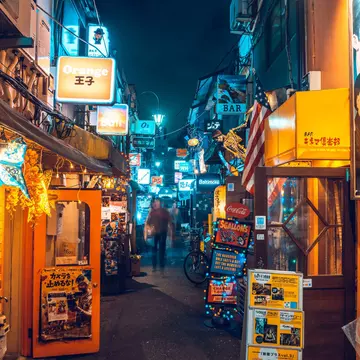
Dōtombori is Osaka's liveliest nightlife area. It's centred on Dōtombori-gawa and Dōtombori Arcade (道頓堀), a strip of restaurants and theatres where a peculiar type of Darwinism is the rule for both people and shops: survival of the flashiest. In the evening, head to Ebisu-bashi bridge to sample the glittering nightscape, which brings to mind a scene from the science-fiction movie Blade Runner. Nearby, the banks of the Dōtombori-gawa have recently been turned into attractive pedestrian walkways and this is the best vantage point for the neon madness above.
Only a short walk south of Dōtombori Arcade you'll find Hōzen-ji (法善寺), a tiny temple hidden down a narrow…
reviewed
-
Universal Studios Japan
Universal Studios Japan is Osaka's answer to Tokyo Disneyland. Closely based on its two sister parks in the USA, the park features a wide variety of rides, shows, restaurants and other attractions; hours vary seasonally.
To get there, take the JR Loop line to Nishi-kujō Station, switch to one of the distinctively painted Universal Studio shuttle trains and get off at Universal City Station. From Osaka Station the trip costs ¥170 and takes about 15 minutes. There are also some direct trains from Osaka Station (ask at the tourist office for times; the price is the same).
reviewed
-
Osaka Aquarium
Osaka Aquarium is easily one of the best aquariums in the world and it's well worth a visit, particularly if you've got kids or if you love sharks. The aquarium is built around a vast central tank, which houses the star attractions: one whale shark and one manta. But these are only the beginning: you'll also find a huge variety of other sharks, including leopard sharks, zebra sharks and hammerhead sharks. There are also countless other species of rays and fish.
A walkway winds its way around the main tank and past displays of life found on eight different ocean levels. The giant spider crabs in the Japan Ocean Deeps section look like alien invaders from another planet.…
reviewed
-
A
Osaka-jō
This castle was built as a display of power by Toyotomi Hideyoshi after he achieved his goal of unifying Japan. One hundred thousand workers toiled for three years to construct an 'impregnable' granite castle, finishing the job in 1583. However, it was destroyed just 32 years later, in 1615, by the armies of Tokugawa Ieyasu.
Within 10 years the castle had been rebuilt by the Tokugawa forces, but it was to suffer a further calamity when another generation of the Tokugawa clan razed it rather than let it fall to the forces of the Meiji Restoration in 1868.
The present structure is a 1931 concrete reconstruction of the original, which was refurbished in 1997. The interior of…
reviewed
-
Dōtombori Arcade
Dōtombori Arcade (Dōtombori Chūō-ku; Namba Station on the Midōsuji, Yotsubashi or Sennichimae subway line) is the heart of Minami, and it's crammed with eateries. This is not the place to go for refined dining, but if you want heaping portions of tasty food in a very casual atmosphere, this place can be a lot of fun. And because it sees a lot of tourists, most of the big restaurants here have English menus.
reviewed
-
B
Chibō
A great okonomiyaki specialist. There's an English sign in addition to the English menu. Try the house special Dōtombori yaki, a toothsome treat with pork, beef, squid, shrimp and cheese for ¥1550. Some tables look out over the canal. Last orders an hour before closing.
reviewed
-
C
Kani Dōraku Honten
This crab specialist does all kinds of imaginative things with the unfortunate crustaceans. If the main branch is full, there’s an annexe just down the road.
reviewed
-
D
Murphy's
This is one of the oldest Irish-style pubs in Japan, and a good place to rub shoulders with local expats and Japanese. It's on the 6th floor of the Reed Plaza Shinsaibashi building, a futuristic building with what looks like a rocket moulded on the front.
reviewed
-
E
Maru
A great place for a cheap lunch or dinner while in Kita is the Shin-Umeda Shokudō-Gai which is located down the escalators and to the right of the main exit of Hankyū Umeda station (just past the McDonald's). There are heaps of good restaurants here that vie for the lunch-dinner custom with cheap set meals, many of which are displayed outside, making ordering easier. Our favourite spot here is a sashimi and grilled fish specialist called Maru station (on the Hankyū line), where the lunchtime sashimi set meal costs about ¥800. It also serves oden, the classic Japanese winter dish of meat, vegetables and tofu stewed in broth. To get there, exit Hankyu= station via the…
reviewed
-
F
Umeda Sky Building
Just northwest of Osaka Station, the Umeda Sky building is Osaka's most dramatic piece of modern architecture. The twin-tower complex looks like a space-age version of Paris' Arc de Triomphe. The view from the top is impressive, particularly after sunset, when the lights of the Osaka–Kōbe conurbation spread out like a magic carpet in all directions.
There are two observation galleries: one outdoors on the roof and one indoors on the floor below. Getting to the top is half the fun, as you take a glassed-in escalator for the final five storeys (definitely not for vertigo sufferers). Tickets for the observation decks include the escalator ride and can be purchased on the…
reviewed
Advertisement
-
G
Shitennō-ji
Founded in 593, Shitennō-ji has the distinction of being one of the oldest Buddhist temples in Japan, although none of the present buildings are originals. Unfortunately, most are the usual concrete reproductions, with the exception of the big stone torii (shrine gate) that dates back to 1294, making it the oldest of its kind in Japan. Apart from the torii, there is little of real historical significance, and the absence of greenery in the raked-gravel grounds makes for a rather desolate atmosphere. The adjoining museum is of limited interest.
Take the southern exit from the station, cross to the left side of the road and take the small road that goes off at an angle away…
reviewed
-
Sumiyoshi Taisha
This shrine is dedicated to Shintō deities associated with the sea and sea travel, in commemoration of a safe passage to Korea by a 3rd-century empress. Having survived the bombing in WWII, Sumiyoshi Taisha actually has a couple of buildings that date back to 1810. The shrine was founded in the early 3rd century and the buildings that can be seen today are faithful replicas of the ancient originals. They offer visitors a rare opportunity to see a Shintō shrine that predates the influence of Chinese Buddhist architectural styles.
The shrine is next to both Sumiyoshi-taisha Station on the Nankai main line and Sumiyoshi-tori-mae Station on the Hankai line (the tram line…
reviewed
-
H
Genroku Sushi
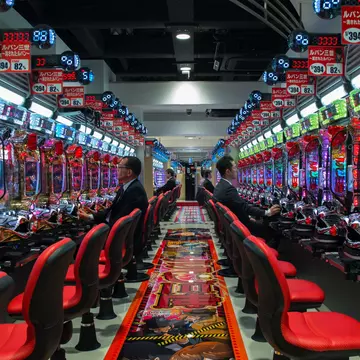
Of course, Minami is all about shōtengai (shopping arcades) and the Sennichi-Mae Arcade is one of the biggest. In addition to all the pachinko parlours here, you'll find lots of cheap, casual restaurants like Genroku Sushi a bustling automatic sushi place where plates of sushi cost a mere ¥130, and Izumoya an old unagi (eel) specialist that serves tasty dishes like mamushi nami (small unagi over rice) for ¥700, or the larger tokujō (special unagi, ¥1400). It's on the corner with a brownish marble front.
reviewed
-
Hōzen-ji & Fudō-myōō statue
Only a short walk south of Dōtombori Arcade you'll find Hōzen-ji, a tiny temple hidden down a narrow alley. The temple is built around a moss-covered Fudō-myōō statue. This statue is a favourite of people employed in mizu shobai (water trade) who pause before work to throw some water on the moss-covered statue. Nearby, you'll find Hōzen-ji Yokochō, a tiny alley filled with traditional restaurants and bars.
reviewed
-
Tsūten-kaku
For something completely different, take a walk through this retro entertainment district just west of Tennō-ji-kōen. At the heart of it all you'll find crusty old Tsūten-kaku tower, a 103m-high structure that dates back to 1912 (the present tower was rebuilt in 1969). When the tower first went up it symbolised everything new and exciting about this once-happening neighbourhood (shin-sekai is Japanese for 'New World').
reviewed
-
I
Museum of Oriental Ceramics
With more than 2700 pieces in its permanent exhibits, this museum has one of the finest collections of Chinese and Korean ceramics anywhere in the world. At any one time, approximately 300 of the gorgeous pieces from the permanent collection are on display, and there are often special exhibits (which cost extra). Last entry 4.30pm.
To get to the museum, go to Yodoyabashi Station on either the Midō-suji line or the Keihan line (different stations). Walk north to the river and cross to Nakano-shima. Turn right, pass the city hall on your left, bear left with the road, and look for the squat brown brick building.
reviewed
-
Osaka Human Rights Museum
The Osaka Human Rights Museum which goes by two names, is dedicated to the suffering of Japan's Burakumin people and other oppressed groups, including Koreans, the handicapped, the Ainu and women. The most fascinating exhibits deal with the Burakumin, outcasts in Japan's four-tiered caste system that was officially outlawed in 1879 under the Emancipation Edict issued by the Meiji government.
reviewed
-
Dōjima Hana
If you crave something a little kotteri (rich and fatty), we recommend the tasty tonkatsu (pork cutlets) at this restaurant a stone's throw from the excellent Junkudō bookshop. We recommend the rōsukatsu teishoku (pork cutlet roast teishoku; small/medium ¥700/800). There is a limited picture menu and an English sign.
reviewed
-
J
National Bunraku Theatre
Although bunraku (puppet theatre) did not originate in Osaka, the art form was popularised at this theatre. Today it is attempting to revive the fortunes of bunraku. Performances are only held at certain times of the year: check with the tourist information offices. Tickets normally start at around ¥2300; earphones and programme guides in English are available.
reviewed
-
Kyoto and Nara Day Tour including Golden Pavilion and Todaiji Temple from Osaka
10 hours (Departs Osaka, Japan)
by Viator
Enjoy seeing the main sights of both Kyoto and Nara in one day. This day tour takes you to Nijo Castle, Kinkakuji Temple (Golden Pavilion), Kyoto Imperial…Not LP reviewed
from USD$163.90 Advertisement
-
K
Osaka City Hall
Sandwiched between Dōjima-gawa and Tosabori-gawa, this island ( M0638) is a pleasant oasis of trees and riverside walkways in the midst of Osaka's unrelenting grey. It's also home to Osaka City Hall, the Museum of Oriental Ceramics and Nakano-shima-kōen. The latter park, on the eastern end of the island, is a good place for an afternoon stroll or picnic lunch.
reviewed
-
Open-Air Museum of Old Japanese Farmhouses
In Ryokuchi-kōen, this fine open-air museum features 11 traditional Japanese country houses and other structures brought here from all over Japan. All have been painstakingly reconstructed and filled with period-era tools and other displays. Most impressive is the giant gasshō-zukuri (thatch-roofed) farmhouse from Gifu-ken.
The parklike setting, with plenty of trees and bamboo, gives the museum a pleasantly rustic air – and the whole place comes alive with fiery red maple leaves during the November foliage season. For anyone even remotely interested in traditional Japanese architecture, we highly recommend this excellent attraction. An English-language pamphlet is…
reviewed
-
Giant Ferris Wheel
Before hitting the main attractions, you might want to get some perspective on it all by taking a whirl on the Giant Ferris Wheel . Said to be the largest Ferris wheel in the world, the 112m-high wheel offers unbeatable views of Osaka, Osaka Bay and Kōbe. Give it a whirl at night to enjoy the vast carpet of lights formed by the Osaka/Kōbe conurbation.
reviewed
-
L
Osaka Nōgaku Hall
A five-minute walk east of Osaka Station, this hall holds nō (stylised dance-drama) shows about twice a month, most of which cost ¥5000 to ¥6000.
reviewed
-
Org…Organic Life
At this open-plan, casual café you can grab a light meal or a quick pick-me-up while exploring Kita. You can get a pasta or risotto lunch for very little, and finish it off with cake and coffee. It's easy to spot, with an English sign. There's no English menu, but there is a picture menu and 'pasta lunch' or 'risotto lunch' will get your point across.
reviewed