go to content go to search box go to global site navigation

Kyoto

Sights in Kyoto

‹ Prev

of 5

  1. A

    Fushimi-Inari Taisha

    This stunning shrine complex was dedicated to the gods of rice and sake by the Hata family in the 8th century. As the role of agriculture diminished, deities were enrolled to ensure prosperity in business. Nowadays, the shrine is one of Japan's most popular, and is the head shrine for some 30,000 Inari shrines scattered the length and breadth of Japan.

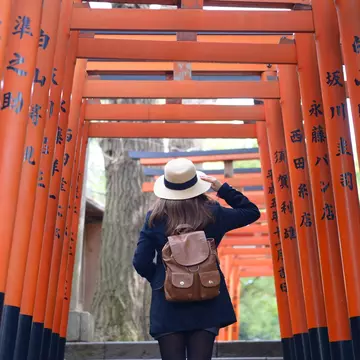
    The entire complex sprawls across the wooded slopes of Inari-yama. A pathway wanders 4km up the mountain and is lined with thousands of red torii. There are also dozens of stone foxes. The fox is considered the messenger of Inari, the god of the rice harvest (and, later on, business). The Japanese traditionally see the fox…

    reviewed

  2. B

    Arashiyama Monkey Park Iwatayama

    Home to some 200 Japanese monkeys of all sizes and ages, this park is fun for kids and animal lovers of all ages.

    Though it is common to spot wild monkeys in the nearby mountains, here you can see them close up. It makes for an excellent photo opportunity, not only for the monkeys but for the panoramic view over Kyoto. Refreshingly, it is the animals who are free to roam while the humans who feed them are caged in a box!

    Just be warned: it's a steep climb up the hill to get to the monkeys. If it's a hot day, you're going to be drenched by the time you get to the spot where they gather.

    The entrance to the park is up a flight of steps just upstream of the Tōgetsu-kyō bridge…

    reviewed

  3. C

    Kiyomizu-dera

    This ancient temple was first built in 798, but the present buildings are reconstructions dating from 1633. As an affiliate of the Hossō school of Buddhism, which originated in Nara, it has successfully survived the many intrigues of local Kyoto schools of Buddhism through the centuries and is now one of the most famous landmarks of the city (for which reason it can get very crowded during spring and autumn).

    The main hall has a huge veranda that is supported by pillars and juts out over the hillside. Just below this hall is the waterfall Otowa-no-taki, where visitors drink sacred waters believed to bestow health and longevity. Dotted around the precincts are other halls…

    reviewed

  4. D

    Nijō-jō

    This castle was built in 1603 as the official Kyoto residence of the first Tokugawa shōgun, Ieyasu. The ostentatious style of its construction was intended as a demonstration of Ieyasu's prestige and also to signal the demise of the emperor's power. As a safeguard against treachery, Ieyasu had the interior fitted with 'nightingale' floors, as well as concealed chambers where bodyguards could keep watch.

    After passing through the grand Kara-mon gate, you enter Ninomaru Palace, which is divided into five buildings with numerous chambers. The Ohiroma Yon-no-Ma (Fourth Chamber) has spectacular screen paintings. Don't miss the excellent Ninomaru Palace Garden, which was…

    reviewed

  5. E

    Gion District

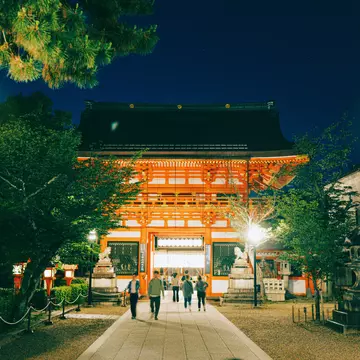
    Gion is the famous entertainment and geisha quarter on the eastern bank of the Kamo-gawa. While Gion’s true origins were in teahouses catering to weary visitors to Yasaka-jinja, by the mid-18th century the area was Kyoto’s largest pleasure district. Despite the looming modern architecture, congested traffic and contemporary nightlife establishments that have cut a swathe through its historical beauty, there are still some places left in Gion for an enjoyable walk. It looks quite drab by day, but comes alive with people and lights in the evening. Hanami-kōji runs north to south and bisects Shijō-dōri. The southern section is lined with 17th-century traditional…

    reviewed

  6. F

    Kyoto International Manga Museum

    This fine museum has a collection of some 300,000 manga (Japanese comic books). Located in an old elementary school building, the museum is the perfect introduction to the art of manga. While most of the manga and displays are in Japanese, the collection of translated works is growing.

    In addition to the galleries that show both the historical development of manga and original artwork done in manga style, there are beginners' workshops and portrait drawings on weekends. Visitors with children will appreciate the children's library and the occasional performances of kami-shibai (humorous traditional Japanese sliding-picture shows), not to mention the Astroturf lawn where…

    reviewed

  7. G

    Nishiki Market

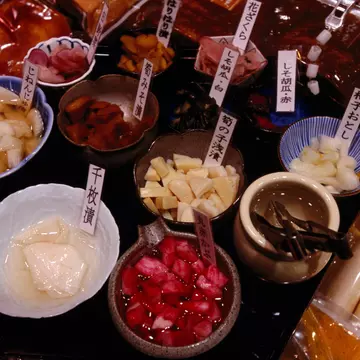
    If you are interested in seeing all the really weird and wonderful foods that go into Kyoto cuisine, wander through Nishiki Market. It's in the centre of town, one block north of (and parallel to) Shijō-dōri, running west off Teramachi Shopping arcade and ending shortly before Daimaru department store. This market is a great place to visit on a rainy day or if you need a break from temple-hopping. The variety of foods on display is staggering, and the frequent cries of Irasshaimase! (Welcome!) are heart-warming.

    reviewed

  8. H

    Nanzen-ji

    This is one of our favourite temples in Kyoto, with its expansive grounds and numerous subtemples. It began as a retirement villa for Emperor Kameyama but was dedicated as a Zen temple on his death in 1291. Civil war in the 15th century destroyed most of the temple; the present buildings date from the 17th century. It operates now as headquarters for the Rinzai school of Zen.

    At its entrance stands the massive San-mon. Steps lead up to the 2nd storey, which has a fine view over the city. Beyond the gate is the main hall of the temple, above which you will find the Hōjō, where the Leaping Tiger Garden is a classic Zen garden well worth a look. (Try to ignore the annoying…

    reviewed

  9. I

    Ginkaku-ji

    Ginkaku-ji is one of Kyoto's premier sights. In 1482 Shōgun Ashikaga Yoshimasa constructed a villa here as a genteel retreat from the turmoil of civil war. The villa's name translates as 'Silver Pavilion', but the shōgun's ambition to cover the building with silver was never realised. After Yoshimasa's death, the villa was converted into a temple.

    Walkways lead through the gardens, which include meticulously raked cones of white sand (said to be symbolic of a mountain and a lake), tall pines and a pond in front of the temple. A path also leads up the mountainside through the trees.

    Note that Ginkaku-ji is one of the city's most popular sites, and it is almost always…

    reviewed

  10. J

    Ryōan-ji

    This temple belongs to the Rinzai school of Zen and was founded in 1450. The main attraction is the garden arranged in the kare-sansui style. An austere collection of 15 rocks, apparently adrift in a sea of sand, is enclosed by an earthen wall. The designer, who remains unknown, provided no explanation.

    The viewing platform for the garden can be packed solid but the other parts of the temple grounds are also interesting and less crowded. Among these, Kyoyo-chi pond is perhaps the most beautiful, particularly in autumn. If you want to enjoy the kare-sansui garden without the crowds, try to come right at opening time.

    From Keihan Sanjō Station, take bus 59 to the Ryōan-ji-mae…

    reviewed

  11. Advertisement

  12. K

    Kinkaku-ji

    Kyoto's famed 'Golden Pavilion', Kinkaku-ji is one of Japan's best-known sights. The original building was built in 1397 as a retirement villa for Shōgun Ashikaga Yoshimitsu. His son converted it into a temple.

    In 1950 a young monk consummated his obsession with the temple by burning it to the ground. The monk's story was fictionalised in Mishima Yukio's The Golden Pavilion. In 1955 a full reconstruction was completed that exactly followed the original design, but the gold-foil covering was extended to the lower floors.

    Note that this temple can be packed almost any day of the year. We recommend going early in the day or just before closing.

    To get to the temple from Kyoto…

    reviewed

  13. L

    Chion-in

    Chion-in was established in 1234 on the site where Hōnen, one of the most famous figures in Japanes Buddhism, taught his brand of Buddhism (Jōdo, or Pure Land, Buddhism) and eventually fasted to death. Today, the temple serves as the headquarters of the Jōdo sect, the most popular sect of Buddhism in Japan. It's the most popular pilgrimage temple in Kyoto and it's always a hive of activity. For visitors with a taste for the grand, this temple is sure to satisfy.

    The oldest of the present buildings date back to the 17th century. The two-storey San-mon, a Buddhist temple gate at the main entrance, is the largest temple gate in Japan and prepares you for the massive scale…

    reviewed

  14. M

    Daitoku-ji

    Daitoku-ji is a separate world within Kyoto – a collection of Zen temples, raked gravel gardens and wandering lanes. It is one of the most rewarding destinations in this part of the city, particularly for those with an interest in Japanese gardens. The name Daitoku-ji confusingly refers to both the main temple here and the entire complex, which contains a total of 24 temples and subtemples. We discuss three of them here, but another five are open to the public.

    The eponymous Daitoku-ji is on the eastern side of the grounds. It was founded in 1319, burnt down in the next century and rebuilt in the 16th century. The San-mon contains an image of the famous tea master,…

    reviewed

  15. N

    Kitano Tenman-gū

    This is a fine, spacious shrine on Imadegawa-dōri. If you're in town on the 25th of any month, be sure to catch the Tenjin-san market-fair here. It's one of Kyoto's two biggest markets and is a great place to pick up some interesting souvenirs.

    From Kyoto Station, take bus 50 and get off at the Kitano-Tenmangū-mae stop. From Keihan Sanjō Station, take bus 10 to the same stop.

    reviewed

  16. O

    Togetsu-Kyō

    This bridge is the dominant landmark in Arashiyama and is just a few minutes on foot from either the Keifuku line or Hankyū line Arashiyama Stations. The original crossing, constructed in 1606, was about 100m upriver from the present bridge. On 13 April jūsan-mairi, an important rite of passage for local children aged 13, takes place here. Boys and girls (many in kimono), after paying respects at Hōrin-ji and receiving a blessing for wisdom, cross the bridge under strict parental order not to look back towards the temple until they’ve reached the northern side of the bridge. Not heeding this instruction is believed to bring bad luck for life! From July to mid-September,…

    reviewed

  17. P

    Heian-jingū

    This impressive shrine complex was built in 1895 to commemorate the 1100th anniversary of the founding of Kyoto. The buildings are colourful replicas, reduced to two-thirds of the size of the Kyoto Gosho of the Heian period.

    The spacious garden, with its large pond and Chinese-inspired bridge, is also meant to represent the kind of garden that was popular in the Heian period. About 500m in front of the shrine there is a massive orange torii (Shintō shrine gate). Although it appears to be entirely separate from the shrine, this is actually considered the main entrance to the shrine itself.

    Two major events are held at the shrine: Jidai Matsuri (Festival of the Ages), on 22…

    reviewed

  18. Q

    Eikan-dō

    Eikan-dō is a large temple famed for its varied architecture, gardens and works of art. It was founded in 855 by the priest Shinshō, but the name was changed to Eikan-dō in the 11th century to honour the philanthropic priest Eikan.

    In the Amida-dō Hall, at the southern end of the complex, is the statue of Mikaeri Amida (Buddha Glancing Backwards). From the Amida-dō Hall, head north to the end of the covered walkway. Change into the sandals provided, then climb the steep steps up the mountainside to the Tahō-tō (Tahō Pagoda), where there's a fine view across the city.

    Note that this temple is one of the city's most popular fall foliage spots; while it is stunning in…

    reviewed

  19. R

    Pontochō

    There are few streets in Asia that rival this narrow pedestrian-only walkway for atmosphere. Not much to look at by day, the street comes alive by night, with wonderful lanterns, traditional wooden exteriors and elegant Kyotoites disappearing into the doorways of elite old restaurants and bars.

    Once the city’s red-light district, Pontochō is located between the Kamo-gawa and Kiyamachi-dōri. Many of the restaurants and teahouses can be difficult to enter, but a number of reasonably priced, accessible places can be found. Even if you have no intention of patronising one of the businesses here, it makes a nice stroll in the evening, perhaps combined with a walk in nearby…

    reviewed

  20. S

    Tetsugaku-no-Michi (Path of Philosophy)

    The Tetsugaku-no-Michi is a pedestrian path that runs along a canal near the base of the Higashiyama. It's lined with cherry trees and a host of other blooming trees and flowers. It takes its name from one of its most famous strollers: 20th-century philosopher Nishida Kitarō, who is said to have meandered along the path lost in thought. It only takes 30 minutes to complete the walk, which starts just north of Eikan-dō and ends at Ginkaku-ji.

    reviewed

  21. T

    Shōren-in

    This temple is hard to miss, with the giant camphor trees growing just outside its walls. Shōren-in was originally the residence of the chief abbot of the Tendai school of Buddhism. The present building dates from 1895, but the main hall has sliding screens with paintings from the 16th and 17th centuries. Often overlooked by the crowds that descend on other Higashiyama temples, this is a pleasant place to sit and think while gazing out over the beautiful gardens.

    The temple is a five-minute walk north of Chion-in.

    reviewed

  22. Advertisement

  23. U

    Kōdai-ji

    This temple was founded in 1605 by Kita-no-Mandokoro in memory of her late husband, Toyotomi Hideyoshi. The extensive grounds include gardens that were designed by the famed landscape architect Kobori Enshū, and teahouses designed by the renowned master of the tea ceremony, Sen-no-Rikyū.

    The temple is a 10-minute walk north of Kiyomizu-dera. Check at the TIC for the scheduling of special night-time illuminations of the temple (when the gardens are lit by multicoloured spotlights).

    reviewed

  24. V

    Sanjūsangen-dō Temple

    The original Sanjūsangen-dō was built in 1164 at the request of the retired emperor Go-shirakawa. The temple's name refers to the 33 (sanjūsan) bays between the pillars of this long, narrow building, which houses 1001 statues of the 1000-armed Kannon (the Buddhist goddess of mercy). The largest Kannon is flanked on either side by 500 smaller Kannon images, neatly lined up in rows.

    There are an awful lot of arms, but if you're picky and think the 1000-armed statues don't have the required number of limbs, then you should remember to calculate according to the nifty Buddhist mathematical formula that holds that 40 arms are the equivalent of 1000 arms, because each saves…

    reviewed

  25. W

    Hiei-zan & Enryaku-ji

    A visit to 848m-high Hiei-zan and the vast Enryaku-ji complex is a good way to spend half a day hiking, poking around temples and enjoying the atmosphere of a key site in Japanese history.

    Enryaku-ji was founded in 788 by Saichō, also known as Dengyō-daishi, the priest who established the Tendai school. The complex is divided into three sections – Tōtō, Saitō and Yokawa. The Tōtō (eastern pagoda section) contains the Kompon Chū-dō (primary central hall), which is the most important building in the complex. The flames on the three Dharma (the law, in Sanskrit) lamps in front of the altar have been kept lit for over 1200 years. The Daikō-dō (great lecture hall)…

    reviewed

  26. X

    Nishi Hongan-ji

    In 1591 Toyotomi Hideyoshi built this temple, known as Hongan-ji, as the new headquarters for the Jōdo Shin-shū (True Pure Land) school of Buddhism, which had accumulated immense power. Later, Tokugawa Ieyasu saw this power as a threat and sought to weaken it by encouraging a breakaway faction of this school to found Higashi Hongan-ji (higashi means 'east') in 1602. The original Hongan-ji then became known as Nishi Hongan-ji (nishi means 'west'). It now functions as the headquarters of the Hongan-ji branch of the Jōdo Shin-shū school, with over 10,000 temples and 12 million followers worldwide.

    The temple contains five buildings, featuring some of the finest examples…

    reviewed

  27. Kurama-dera

    This temple was established in 770 by the monk Gantei from Nara's Tōshōdai-ji. After seeing a vision of the deity Bishamon-ten, guardian of the northern quarter of the Buddhist heaven, Gantei established Kurama-dera just below the peak of Kurama-yama. Originally under the Tendai sect, Kurama has been independent since 1949, describing its own brand of Buddhism as Kurama Kyō.

    The entrance to the temple is just up the hill from the Eiden Eizan main line's Kurama Station. A tram goes to the top for ¥100; alternatively, hike up by following the main path past the tram station. The trail is worth taking if it's not too hot, as it winds through a forest of towering old-growth…

    reviewed