IschiaSights

Sights in Ischia

‹ Prev

of 2

  1. A

    Museo Archeologico di Pithecusae

    The town's other cultural heavyweight is the Museo Archeologico di Pithecusae, housed in the elegant Villa Arbusto, former pad of Angelo Rizzoli. The villa overlooks Monte Vico, site of the ancient settlement and acropolis of Pithecusae, and its collection features important finds from the island's Hellenic settlement, from imported earthenware to parts of the acropolis itself. Older still are the fragments of Mycenaen pottery and Bronze Age vases from Casamicciola.

    The collection spans Ischia's development from Neolithic to Roman times. A highlight is the legendary 7th-century Nestor's Cup in Sala (Room) II. The three Homeric verses scratched onto its side read: 'I am Ne…

    reviewed

  2. B

    Area Archeologica di Santa Restituta

    Beneath Chiesa di Santa Restituta is the must-see Area Archeologica di Santa Restituta. Excavations undertaken between 1951 and 1974 have uncovered parts of an ancient Greek kiln, Roman temple and street, 4th-century burial amphorae and an early Christian basilica. Rows of cabinets display other ancient objects, from Roman bracelets and votive gifts to a 3300-year-old stove from Procida.

    The ground-floor collection goes back to the future, with exquisite 17th-century pastori (nativity scene figurines), colourful 18th-century ceramics, high camp clerical garb and the 18th-century wooden statue of Santa Restituta still used in the annual procession in the Bay of San Montano…

    reviewed

  3. Il Sorgeto

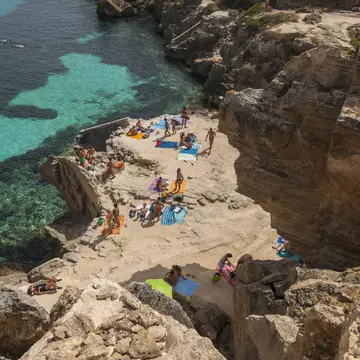
    From the pier, brightly painted water taxis reach some of the island's best beaches, including the intimate cove of Il Sorgeto, with its steamy thermal spring. Sorgeto can also be reached on foot down a poorly signposted path from the village of Panza.

    A world away from north-coast crowds, tiny Sant'Angelo is the most chic spot on the island. Quiet laneways spill down the hill, flanked by chic boutiques, galleries, frangipani and sunning cats. At the bottom on Piazetta Ottorino Troia, tanned Italians sip Campari soda and take in late-night summer music concerts. Keeping an eye on it all is the great hulking scoglio (rock), joined to the village by a long sandbar sprinkle…

    reviewed

  4. C

    Negombo

    Recover from museum fatigue at Negombo. Part spa resort, part botanical wonderland, its combination of Zen-like thermal pools, hammam, contemporary sculpture and private beach on San Montano Bay draws a younger crowd than many other Ischian spa spots. There's a Japanese labyrinth pool for weary feet, a decent tavola calda (snack bar) for growling stomachs and enough massage and beauty treatments to keep you oooh-ing all day long. Those arriving by car or scooter can park on site for a small daily fee.

    For a free dip in the bay, follow the signs to the spiaggia (beach) out the front of Negombo.

    reviewed

  5. D

    Giardini Pubblici

    On Corso Vittoria Colonna, past Via F D'Avalos, emerald-green gates on the left lead into the lush Giardini Pubblici. Head further east and you'll hit the heart-stealing Spiaggia dei Pescatori (Fishermen's Beach), a technicolour spectacle of brightly painted fishing boats, bronzed flesh, lurid beach umbrellas and mothers on balconies calling in their chubby kids for lunch.

    From here, Corso Vittoria Colonna becomes Via Pontano, ending at Via Seminario. Recently pedestrianised, Via Seminario is Ischia Ponte's prime passeggiata (stroll) strip, attracting the occasional film shoot.

    reviewed

  6. La Colombaia

    The neo-Renaissance villa La Colombaia is the former pad of Italian film director Luchino Visconti. Born into one of Milan's wealthiest families in 1906, his 1969 film The Damned, about a wealthy German family that turns fascist, received an Academy Award nomination for best screenplay.

    His recently restored whitewashed bachelor pad now houses an arts foundation, which includes a documentary library focussing on Visconti and cinema history, as well as costumes, set pieces and stills from his films. It's also a venue for the Ischia Film Festival.

    reviewed

  7. E

    Museo Angelo Rizzoli

    The Museo Archeologico di Pithecusae also houses the Museo Angelo Rizzoli, which pays homage to the man who turned humble little Lacco into a celebrity hotspot in the 1950s. Cool paparazzi shots and clippings of a Hitchcock-esque Rizzoli and his famous pals decorate rooms once host to the likes of Gina Lollabrigida, Grace Kelly and Federico Fellini.

    Equally striking are the villa's gardens, complete with lemon trees, fountain, a children's playground and star-worthy views towards the Campi Flegrei.

    reviewed

  8. Terme Cavascuro

    For a fabulously atmospheric spa experience, catch a water taxi to Cavascura (one way around €3.50) and follow the signs 300 metres down a rocky gorge to Terme Cavascuro. Wedged between soaring cliffs, this historic frills-free outdoor spa is Ischia's oldest. Soak in old Roman baths hewn into the cliff, sweat it out in a grotto, then (for an extra fee) top it all off with a mud wrap, manicure or massage. The sulphurous waters are reputedly beneficial for rheumatic, bronchial and skin conditions.

    reviewed

  9. F

    Parco Termale Aphrodite Apollon

    A spectacular, if partly strenuous, 2 km walk above the coast from Sant'Angelo also reaches the spa, passing on its way the faded luxury of Parco Termale Aphrodite Apollon. Beyond its ivy-clad entrance is a rambling complex of gyms, saunas, lush terraced gardens and 12 differently heated pools, including one for hydro-cycling. Beauty treatments include tailored kinesiology therapies, wine facials and soothing mud showers. Buffed and balanced, flaunt that new bod at the beach bar below.

    reviewed

  10. G

    Santa Maria della Scala

    On the shore stands the 15th-century watchtower Torre del Mare, now bell tower to Ischia's cathedral Santa Maria della Scala. The current church, designed by Antonio Massinetti and completed in 1751, stands on the site of two older churches, one built in the 13th century and the other in the 17th century. Inside its peeling interior you'll find the original 14th-century baptismal font, Romanesque wooden crucifix and an 18th-century canvas by Giacinto Diano.

    reviewed

  11. Advertisement

  12. La Mortella

    On the west coast, Ischia’s own Garden of Eden can be found at La Mortella. More than 1000 rare and exotic plants flourish in the grounds, which were designed by Russell Page and inspired by the Moorish gardens of Granada’s Alhambra in Spain. They were established by Sir William Walton, the late British composer, and his wife, who made La Mortella their home in 1949. Classical music concerts are staged in the gardens in spring and autumn.

    reviewed

  13. H

    Chiesa di Santa Maria del Soccorso

    On the western edge of town, perched high above the sea, the Chiesa di Santa Maria del Soccorso is a Tex-Mex vision in white. The church was originally part of a 14th-century Augustinian monastery; its side chapel and dome were added in 1791 and 1854 respectively, the latter rebuilt after the 1883 earthquake. Most beautiful are the 18th-century mismatched majolica tiles adorning the semicircular staircase out the front. From here, the views are heavenly.

    reviewed

  14. I

    Castello Aragonese

    Ischia’s most famous landmark, the Castello Aragonese, sits on a rocky islet just off Ischia Ponte. A sprawling complex comprising a 14th-century cathedral and several smaller churches, it largely dates to the 1400s, when King Alfonso of Aragon gave an older Angevin fortress a makeover. Inside, the Museo delle Armi (Weaponry Museum) has a curious collection of torture tools, kinky illustrations and medieval armoury.

    reviewed

  15. Chiesa dell'Immocolata

    The 18th-century Chiesa dell'Immocolata is well preserved with its Greek-cross plan and look-at-me dome studded with curved tympanum windows. Commissioned by the adjoining Convento delle Clarisse (Convent for Clarisse nuns; in town), it was left in its minimalist state after building funds ran out. When the nuns' own lives expired, they were left to decompose sitting upright on stone chairs in the macabre Cimitero delle Monache Clarisse.

    reviewed

  16. Convento delle Clarisse

    The 18th-century Chiesa dell'Immocolata (in town) is well preserved with its Greek-cross plan and look-at-me dome studded with curved tympanum windows. Commissioned by the adjoining Convento delle Clarisse, it was left in its minimalist state after building funds ran out. When the nuns' own lives expired, they were left to decompose sitting upright on stone chairs in the macabre Cimitero delle Monache Clarisse.

    reviewed

  17. J

    Chiesa di Santa Restituta

    In Piazza Restituta you'll find the Terme Regina Isabella and pretty-in-pink Chiesa di Santa Restituta, rebuilt after the 1883 earthquake. According to legend, the martyred Restituta was washed ashore on nearby San Montano Beach in the 4th century on a boat steered from Tunisia by a seaworthy angel. Every May, residents re-enact her arrival on the beach.

    reviewed

  18. K

    Museo Civico del Torrione

    Long before the invasion of sarongs and sunscreen, Forio was the hapless target of medieval pirate raids. One of the 12 watchtowers built to defend its frazzled citizens houses the Museo Civico del Torrione . Dating from 1480, this former Bourbon prison now exhibits the works of painter and sculptor Giovanni Maltese, who once lived in the tower.

    reviewed

  19. Cattedrale dell'Assunta

    Further up lie the sunbaked, stuccoed ruins of the 14th-century Cattedrale dell'Assunta. Built to replace the cathedral destroyed in the eruption of Monte Arso in 1301, it was restyled in the 18th century before collapsing under British canonfire in 1809. The 11th-century crypt below features snippets of 14th-century frescoes inspired by Giotto.

    reviewed

  20. L

    Il Fungo

    In the 1950s and 1960s, French starlets and European royalty came to play at the legendary Terme Regina Isabella spa resort. The stars may have gone but one local icon remains, sprouting out of the sea: the iconic Il Fungo (The Mushroom) is a 10-metre volcanic rock formation spat out by Monte Epomeo thousands of years ago.

    reviewed

  21. M

    Giardini Poseidon

    South of Forio, spa lovers can soak and splash at the sprawling Giardini Poseidon. Breathe in as you ponder a mind-boggling choice of treatments and facilities, which include saunas, Jacuzzis and baby-blue pools filled with salubrious mineral waters. If it's all too stressful, settle for the dazzling private beach below.

    reviewed

  22. Advertisement

  23. N

    Cappella di San Nicola di Bari

    The little church near the top is the 15th-century Cappella di San Nicola di Bari, which features a pretty majolica floor. The adjoining hermitage was built in the 18th century by an island governor who, after narrowly escaping death, swapped politics for poverty and spent the rest of his days here in saintly solitude.

    reviewed

  24. O

    Palazzo Malcoviti

    Detour left into Via Marina. The sombre grey building at the water's edge is the 16th-century Palazzo Malcoviti, featured in The Talented Mister Ripley and French film Oh Plan D'Soleil.Originally built as a watchtower, it patiently waits for the next film crew to give it a fresh lick of paint.

    reviewed

  25. Carcere Borbonico

    Heading back into daylight and further up the islet you will find the elegant, hexagonal Chiesa di San Pietro a Pantaniello and sombre Carcere Borbonico, one-time prison pad for leading figures of the Risorgimento (the 19th-century Italian unification movement), such as Poerio, Pironti, Nusco and Settembrini.

    reviewed

  26. P

    Museo del Mare

    Ischia's maritime history is lovingly documented at the modest Museo del Mare . Objects include cult ex-votos from sailors to saints, ancient urns, beautifully crafted model ships and revealing photographs of island life in the 20th century, including the arrival of Ischia's first American car in 1958.

    reviewed

  27. Museo delle Armi

    Channel your inner masochist at the Museo delle Armi, with its small but curious collection of medieval skull clamp, feet-crushing vice, his and her chastity belts, and kinky illustrations. More substantial is the collection of medieval Italian and German armoury.

    reviewed