HamadanThings to do

Things to do in Hamadan

  1. Hegmataneh Hill

    In the mud beneath this scraggy low hill lies Hamadan’s ancient Median and Achaemenid city site. Small sections of the total area have been fitfully excavated by several teams over the last century, most extensively in the 1990s. The most interesting of several shed-covered ‘trenches’ allows you to walk above the excavations of earthen walls using plank walkways on wobbly scaffolding. The walls’ gold and silver coatings are long gone of course and it’s hard to envisage the lumpy remnants as having once constituted one of the world’s great cities. A nicely presented museum tries to fill the mental gap, showing some of the archaeological finds including large amphorae, Se…

    reviewed

  2. Buali Sina (Avicenna) Mausoleum

    Hamadan’s icon is the BuAli Sina (Avicenna) Mausoleum a 1954 tower that looks something like a vast, unfinished concrete missile. It is loosely modelled on Qabus’s 1000-year-old tower in Gonbad-e Kavus, which Buali probably saw inaugurated. Paying the entry fee (entry from west) allows you to see the single-room museum of Avicenna memorabilia, his tombstone, a small library and a display on medicinal herbs. But the tower itself is better observed from a distance.

    reviewed

  3. Alaviyan Dome

    The Alaviyan Dome is now a misnomer, as the 12th-century green dome, immortalised in a Khaqani reference, has long since been removed. The dome-less brick tower remains famous for the whirling floral stucco added in the Ilkhanid era. This ornamentation enraptured Robert Byron in Road to Oxiana, but frankly it’s ugly. In the crypt (narrow steps down from the interior at the back) is the plain-blue tiled Alaviyan family tomb covered with votive Islamic embroidery.

    reviewed

  4. Jameh Mosque

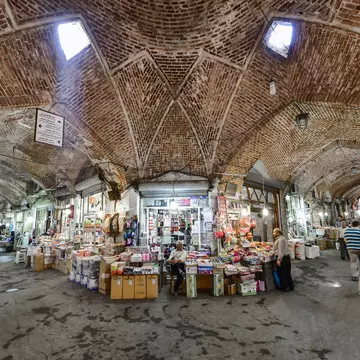
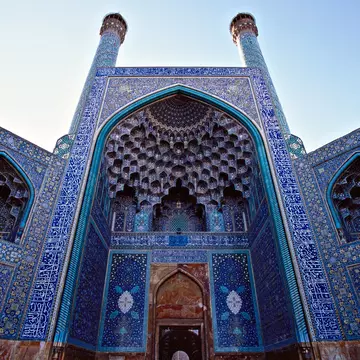
    A vaulted passage of the bazaar leads into the courtyard of the large Qajar-era Jameh Mosque. The off-line south iwan leads into a hall (currently under restoration) over which there’s an impressively large brick dome. The new north iwan is lavished with patterned blue tilework that continues on four of the mosque’s six minarets. Some areas are restricted to men only.

    reviewed

  5. Esther & Mordecai Tomb Tower

    This vaguely Tolkeinesque, 14th-century tomb tower was once Iran’s most important Jewish pilgrimage site. These days visitors are few and far between and some of the Hebrew inscriptions have been repainted so often by those who evidently couldn’t understand them, that they have become stylised beyond readability.

    reviewed

  6. Sang-e Shir

    A walrus-sized lump of rock eroded beyond recognition by the rubbing of hands over 2300 years. Supposedly once a lion, you'd never look twice at were it not the only surviving 'monument' from the ancient city of Ecbatana whose gates it once guarded. Some claim it was carved at the behest of Alexander the Great.

    reviewed

  7. Chaykhuneh Baharestan

    This atmospheric, if decidedly down-market 100% male teahouse is charmingly adorned with metalwork, sepia photos and Quranic murals. It’s ideal for a greasy fried-egg breakfast, cheap abgusht (aka dizi) lunch or a puff on the qalyan, and is populated by photogenically haggard old white-beards.

    reviewed

  8. Delta Sofrakhane Sonati

    Tea (IR5000) comes in ceramic Lalejin pots, women can smoke qalyan on carpeted bed-seats without undue attention and the chicken ‘biriyani’ comes on a flaming plate. Don’t miss the scrumptious kashka bademjan (IR12,000), eggplant paste with yoghurt, mint and roasted red peppers.

    reviewed

  9. Hezaroyek Shab

    This cosy if slightly garish restaurant is quite a trek from the centre (IR5000 dar baste taxi) but there’s a wide Irano-European menu and owner Pari Bakhtiyari speaks fluent English. Call ahead.

    reviewed

  10. Baba Taher Mausoleum

    It looks like a failed prototype for Thunderbird 3. There’s little reason to go inside unless you enjoy Persian calligraphy, inscribed here on some gently opalescent stone wall-slabs.

    reviewed

  11. Advertisement

  12. Kaktus

    Down easy-to-miss stairs, Kaktus remains one of Hamadan’s most popular middle-class kabab restaurants. It’s tastefully lit if not imaginatively decorated.

    reviewed

  13. Kaghazi Pizza-Coffee

    Pine furniture and a few African masks bring some character to this gently stylish two-room café whose pizzas are refreshingly crispy and thin-crusted.

    reviewed

  14. Union of Carpet Co-operatives

    Hamadan region is famous for its leatherwork, wooden inlay, ceramics and carpets. Try contacting the Union of Carpet Co-operatives.

    reviewed

  15. Pottery Shops

    pottery shops sell colourful, locally famous pottery from Lalejin.

    reviewed