Things to do in Crete
-
A
Universal Diver
Universal Diver is a PADI dive centre offering all levels of scuba diving.
reviewed
-
Knossos
The ruins of Knossos (k-nos-os) were uncovered in 1900 by the British archaeologist Sir Arthur Evans. Heinrich Schliemann, the legendary discoverer of ancient Troy, had his eye on the spot, believing an ancient city was buried there, but he was unable to strike a deal with the local landowner in Turkish-controlled Crete.
Intrigued by Schliemann's discovery of engraved seals in Crete, and later pottery finds in Kamares, Evans sailed to Crete in 1894 and set in train the purchase of a share of the Knossos site, which gave him exclusive rights to the excavation. He returned five years later and began digging with a group of Cretan workmen. The first treasure to be unearthed…
reviewed
-
Waves on the Rock
The unassuming fishing hamlet of Ravdouha Beach, on the western side of the rugged Rodopou Peninsula, is one of the area's hidden gastronomic treats. Follow the signs to Ravdoucha until you reach a fork in the road. To the left, a rough dirt road leads 700m to the Waves on the Rock run by fisherman Theodoris Falelakis, who serves excellent fresh fish. If you really feel like getting away from it all there are also five rooms upstairs with kitchenette and air-con.
reviewed
-
Thalassino Ageri
It can be tricky to find, but this solitary fish taverna in a tiny port amongst the ruins of Hania's old tanneries is one of the most delightful eateries in Crete. Apart from the superb setting they have fresh fish and excellent mezedes such as tender octopus in wine vinegar and melt-in-your-mouth calamari as well as a delicious fisherman's salad. Take a taxi or follow Venizelou around the coast turning left at Noel St as soon as you veer away from the coast.
reviewed
-
B
Yiorgos Hatziparaskos
One of the last traditional filo masters in all of Greece, Yiorgos Hatziparaskos still makes super-fine pastry by hand in his traditional workshop. The highlight is when he throws the dough into a giant bubble before stretching it over a huge table. His wife Katerina encourages passers-by to watch the spectacle and try some of best baklava and kataifi they will ever eat.
reviewed
-
Koukouvagia
If you have wheels then take a 10-minute drive up to hill where the great statesman Eleftherios Venizelos is buried. This owl-themed café and bar (with an extraordinary owl décor collection) enjoys panoramic views of Hania. It's a cool place to hang on summer's nights. The pita creations are excellent, as are the large selection of cakes and desserts.
reviewed
-
C
Tamam
Housed in an old hammam, Tamam presents a superb selection of vegetarian specialities - try the spicy avocado dip on potato - and inspired dishes such as the Tas kebab veal with spices and yoghurt or the Beyendi chicken with creamy aubergine purée.
reviewed
-
D
Pelagos
For an excellent selection of fresh fish and seafood, this place is generally considered the best (and priciest) restaurant in Agios Nikolaos. The mezedes are excellent. It's in a beautifully restored house with an ambient garden.
reviewed
-
Akrogiali
One of the best seafood restaurant in Hania, Akrogiali is on the beach side of the new town. The fish is fresh and the accompaniments are superb. The airy restaurant opens onto the seafront giving you a great view of the sunset.
reviewed
-
E
Lemonokipos
Dine among the lemon trees in the lovely courtyard of this well-respected taverna in the old quarter. It's good, typical Cretan fare, with a decent range of vegetarian dishes and lots of tasty appetisers.
reviewed
Advertisement
-
F
Blue Adventures Diving
This outfit offers a PADI certification course and daily diving trips around Hania, including beginner dives. There are also snorkelling trips and cruise options if you just want to go along for the ride.
reviewed
-
G
Sitia Beach
This unassuming place on the beach makes a decent pizza but it is more highly recommended for home-style cooking that appears daily on the specials board. Try the pork with lemon and rice.
reviewed
-
Megaro
This recently refurbished place on the corner of the square is popular with locals around the district. The owner fishes from his own boat and the menu also includes Cretan specialities.
reviewed
-
H
Kapilio
Popular with students, this Serb-run mezedopoleio has a mixed menu with a range of special set menus that include raki, wine salad and a main dish.
reviewed
-
Diktina
This place has had an upmarket facelift and looks more like a city restaurant than a fish taverna but it has sea views and a range of reliable fish dishes.
reviewed
-
I
Sarri's
Tucked away in the back streets, Sarri's is a good spot for breakfast, lunch or dinner on the shady garden terrace. Check the daily specials board.
reviewed
-
J
Othonas
The touristy-on-the-outside but decent Othonas is recommended for traditional Cretan food. It's a member of Concred and uses quality produce.
reviewed
-
Ammoudara Beach
Ammoudara Beach, 3km from town, is a little better thank the town beaches and supports a fairly busy restaurant and accommodation scene.
reviewed
-
K
Michelas
Near the meat section of the food market, this place has been serving great fresh, and cheap traditional cuisine for 75 years.
reviewed
-
L
Diktynna Travel
Organises a range of cultural and ecotourism activities, including cooking classes.
reviewed
Advertisement
-
M
Archaeological Museum of Iraklio
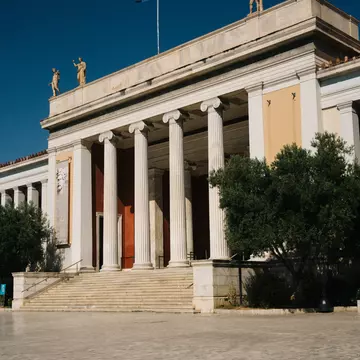
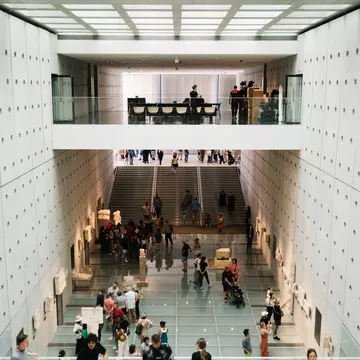
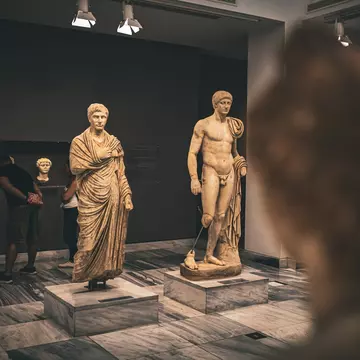
The outstanding Archaeological Museum of Iraklio is second in size and importance only to the National Archaeological Museum in Athens because of its unique and extensive Minoan collection. The museum recently underwent a major restoration.
The collection covers Cretan civilization from Neolithic times until the Roman empire and includes pottery, jewellery, figurines and sarcophagi, as well as some famous frescoes, mostly from Knossos and Agia Triada. All testify to the remarkable imagination and advanced skills of the Minoans. Among the highlights are the famous Minoan frescoes from Knossos, including the Procession fresco, the Griffin Fresco (from the Throne Room), the…
reviewed
-
Hiking the Gorge
The hike from Xyloskalo (the name of the steep stone pathway with wooden rails that gives access to the gorge), to Agia Roumeli on the coast takes from about four hours for the sprinters to six hours for the strollers. Early in the season it's sometimes necessary to wade through the stream. Later, as the flow drops, it's possible to use rocks as stepping stones.
The Samaria Gorge hike is not a Sunday stroll; it is long and, at times, hard. Do not attempt it if you are not used to walking. If you find that the going is too tough within the first hour, there are park wardens with donkeys who will take you back to the beginning. They will be on the look out for stragglers.
…
reviewed
-
Dikteon Cave
Lasithi's major sight is the Dikteon Cave, just outside the village of Psyhro. Here, according to legend, Rhea hid the newborn Zeus from Cronos, his offspring-gobbling father.
The cave, also known as the Psyhro Cave, covers 2200 sq metres and features both stalactites and stalagmites. It was excavated in 1900 by the British archaeologist David Hogarth, who found numerous votives indicating it was a place of cult worship. These finds are housed in the Archaeological Museum in Iraklio.
The cave began to be used for cult worship in the Middle Minoan period and continued, though less intensely, up to the 1st century AD. An altar for offerings and sacrifices was in the upper…
reviewed
-
Phaestos
Pottery deposits indicate that the site was inhabited in the Neolithic era around 4000 BC, when the first settlers established themselves on the slopes of Kastri Hill. The first palace was built around 2000 BC and then destroyed by the earthquake that levelled many Minoan palaces. The ruins were covered with a layer of lime and debris, which formed the base of a new palace that was begun around 1700 BC. It, too, was destroyed in the catastrophe that befell the island in 1450 BC.
In the intervening centuries Phaestos was the political and administrative centre of the Mesara Plain. Ancient texts refer to the palace's importance and note that it minted its own coins.…
reviewed
-
Phaestos
Phaestos was the second most important palace city of Minoan Crete. Of all the Minoan sites, Phaestos (fes-tos) has the most awe-inspiring location, with all-embracing views of the Mesara Plain and Mt Psiloritis. The layout of the palace is identical to Knossos, with rooms arranged around a central court.
In contrast to Knossos, Phaestos has yielded very few frescoes. It seems the palace walls were mostly covered with a layer of white gypsum; there has been no reconstruction. Like the other palatial period complexes, this one had an old palace that was destroyed at the end of the Middle Minoan period. Unlike the other sites, parts of this old palace have been excavated…
reviewed