Things to do in Athens
-
A
Acropolis
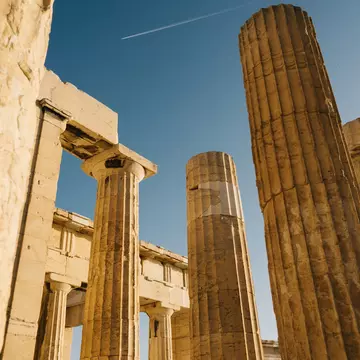
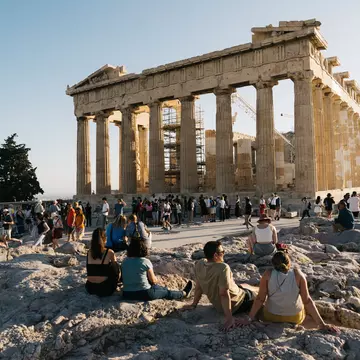
The magnificent Acropolis defines and dominates Athens. Unlike other cities where the main attractions are on the outskirts of town, the sacred rock on which the ancient Greek temples were built rises spectacularly above the centre of the city. The main entrance is from Dionysiou Areopagitou near the Odeon of Herodes Atticus, or from Theorias if you’re coming from Plaka (there’s another entrance near the Kanellopoulos Museum). Large bags must be left at the main entrance cloakroom.
reviewed
-
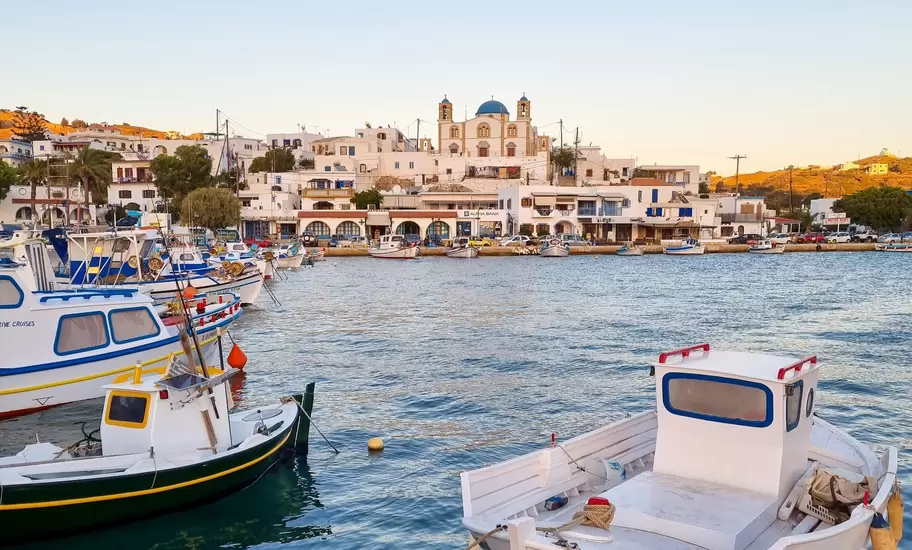
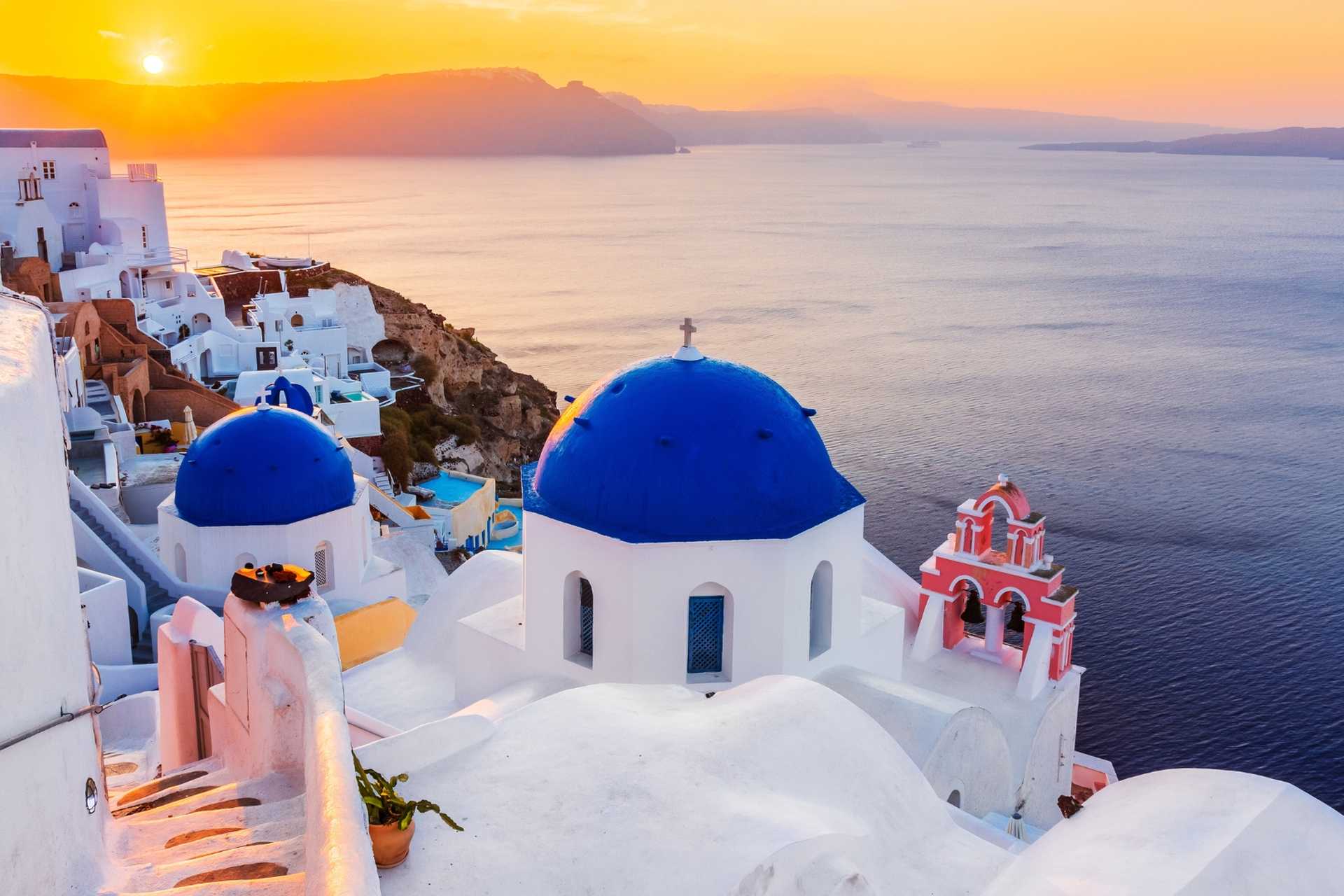
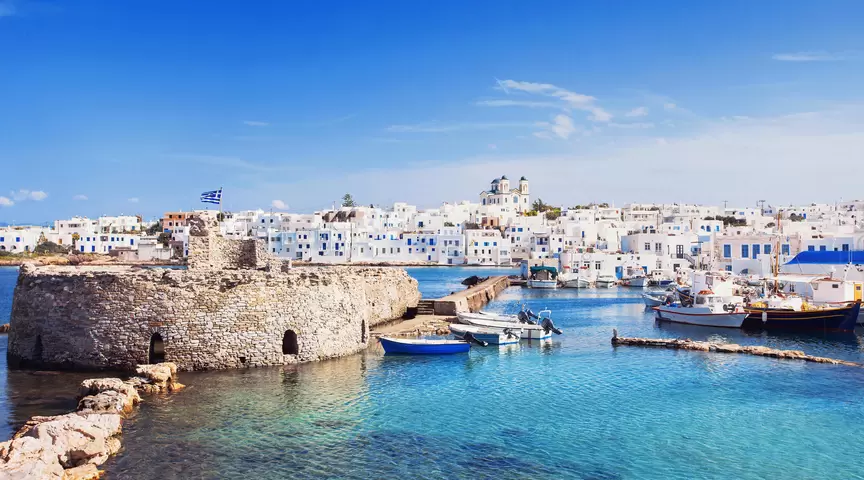
Hydra, Poros and Egina Day Cruise from Athens
11 hours (Departs Athens, Greece)
by Viator
Take a cruise from Athens to the fabulous Greek islands of Hydra, Poros and Egina for a relaxing day on the sea. With all your transport, transfers and lunch or…Not LP reviewed
from USD$124.14 -
B
Paradosiako
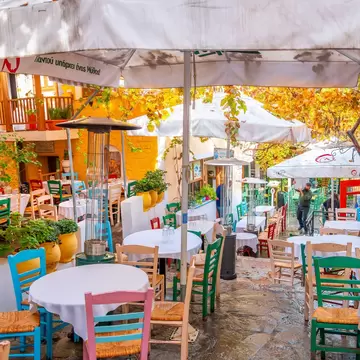
For great traditional fare at very fair prices you can't beat this inconspicuous, no-frills taverna on the periphery of Plaka, with a few tables on the footpath. There's a basic menu but it's best to choose from the daily specials, which include fresh and delicious seafood. Get there early before the locals arrive.
reviewed
-
Delphi Day Trip from Athens
10 hours (Departs Athens, Greece)
by Viator
Explore one of the most famous sites of classical Greece on a day trip from Athens to magical Delphi. Famous for its theater, Temple of Apollo and ancient ruins…Not LP reviewed
-
C
Kanellopoulos Museum
The imposing 1884 mansion on the northern slope of the Acropolis houses the Kanellopoulos family’s extensive collection, donated to the state in 1976. After a major refurbishment and expansion, it was due to open in late 2008. The collection includes jewellery, clay-and-stone vases and figurines, weapons, Byzantine icons, bronzes and objets d’art dating from every period of Greek history.
reviewed
-
D
Booze Cooperativa
By day, this laid-back arty hangout is full of hip young Athenians playing chess and backgammon and working on their Macs (with free wi-fi) on the 6m-long table; later it transforms into a happening bar that rocks till late. The basement hosts art exhibitions and there’s a theatre upstairs.
reviewed
-
E
Kalipateira
In a neoclassic building overlooking an archaeological dig, young Athenians gather for long sessions over carafes of ouzo, snacking on one of the pikilies (mixed mezedhes). There are acoustic rembetika (Greek blues) and Cretan live music Thursday to Sunday.
reviewed
-
F
Bios
A multifaceted venue popular with an alternative arty crowd and with a lively café and bar. At times you’ll find videos screening, performances on the rooftop, films in the tiny cinema, live bands and exhibitions in various spaces in the rambling former paint factory.
reviewed
-
G
Brettos
A Plaka landmark, this quaint bar has a stunning backlit wall of coloured bottles, old wine barrels and an authentic old-fashioned character. It’s a quiet spot for a night- (or day-) cap, with a tempting range of homemade brews to imbibe or take away.
reviewed
-
H
Varsos
This huge patisserie has been making traditional sweets and dairy products since 1892. Dine in the old-style café, or sit outside in the courtyard and sample the famous rice pudding, honey pastries, honey or scrumptious cheese pies.
reviewed
Advertisement
-
I
Strofi
This charming old-style taverna’s rooftop terrace has superb Acropolis views, and a reasonable array of taverna classics. It used to be a hang-out for theatre performers, as the photos of its famous guests attest.
reviewed
-
J
Athens Municipal Art Gallery
The municipality’s rich collection includes more than 2300 works from leading 19th- and 20th-century Greek artists, including works from the acclaimed ‘30s generation, as well as a fine collection of engravings.
reviewed
-
K
Koukos
A great collection of Italian pewter picture frames, platters, jugs, replicas of Greek monk’s hip flasks and other items. Koukos also stocks a range of antique ceramics and original silver handcrafted jewellery.
reviewed
-
L
Skoufaki
One of the first to open on Kolonaki’s popular bar strip, heading away from the square, Skoufaki is a cosy, arty hangout with good coffee and a friendly upbeat evening crowd.
reviewed
-
M
Lena’s Bio
There are only a few seats inside, but this is a great place for wholesome organic food, snacks and salads, as well as a range of fresh produce and deli items to take away.
reviewed
-
N
Thission
Across from the Acropolis, this is a lovely old-style cinema in a garden setting. Sit towards the back if you want to catch a glimpse of the glowing edifice.
reviewed
-
Plaka & Anafiotika
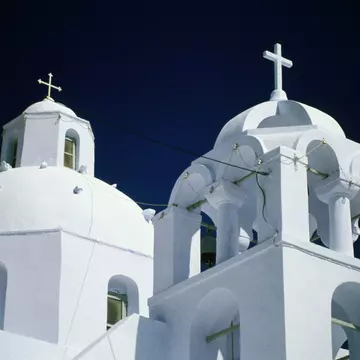
The historic neighbourhood under the Acropolis retains its charm despite being overrun by tourists in summer. Head beyond the tourist drag, however, and you'll find the Anafiotika quarter, one of the most picturesque and quiet pockets of the city. In this village-like labyrinth of quiet, narrow, windy streets, bougainvillea cascade over whitewashed Cycladic-style cube houses while bright pots of colour decorate the balconies and rooftops.
Apart from the forever-reclining cats, washing hanging in the breeze is often the only evidence of habitation. The houses were built by tradesmen from the small island of Anafi, brought in to build the king's palace during the renovation…
reviewed
-
O
Temple of Olympian Zeus
The colossal Temple of Olympian Zeus (or Olympeion) is the largest in Greece and took more than 700 years to build. Fifteen of the original 104 massive (17m-high) Corinthian columns survive, along with the one that toppled over in a gale in 1852. Peisistratos began building the temple in the 6th century BC on the western bank of the Ilissos River, at the site of a smaller temple (590–560 BC) dedicated to the cult of Olympian Zeus (its foundations can be seen on the site), but construction stalled due to lack of funds. A succession of leaders tried to finish the job, making adjustments along the way, which explains inconsistencies in the temple. Hadrian finally finished th…
reviewed
-
P
Statue of Athena Promachos
Along the Panathenaic Way, which cuts across the middle of the Acropolis, you will see the foundations of pedestals for the statues that once lined the path, including one that held Pheidias' 9m-high statue of Athena Promachos (promachos means 'champion'). Symbolising Athenian invincibility against the Persians, the helmeted goddess held a shield in her left hand and a spear in her right. The statue was carted off to Constantinople by Emperor Theodosius in AD 426.
By 1204 it had lost its spear, so the hand appeared to be gesturing. This led the inhabitants to believe that the statue had beckoned the crusaders to the city, so they smashed it to pieces.
reviewed
-
3-Day Classical Greece Tour: Epidaurus, Mycenae, Nafplion, Olympia, Delphi
by Viator
Take a three-day tour of the essential sites of classical Greece: Epidaurus, Mycenae, Nafplion, Olympia and Delphi. You'll visit famous archaeological sites and…Not LP reviewed
Advertisement
-
Q
Theatre of Dionysos
The original 6th-century timber theatre was built on the site of the Festival of the Great Dionysia. During Athens’ golden age, the theatre hosted productions of the works of Aeschylus, Sophocles, Euripides and Aristophanes. Reconstructed in stone and marble between 342 and 326 BC, the theatre had seating for more than 17,000 spectators (spread over 64 tiers, of which only about 20 tiers survive) and an altar to Dionysos in the orchestra pit. The Pentelic marble thrones on the lower levels were for dignitaries and priests – including a grand one in the centre for the Priest of Dionysos, identifiable by the lions’ paws, satyrs and griffins carved on the back.
reviewed
-
R
Panathenaic Stadium
The first modern Olympic Games, in 1896, were held in the imposing Panathenaic (or Panathenian) marble stadium, on the site of the original 4th-century BC stadium built for Panathenaic athletic contests. The Romans held gladiatorial contests where thousands of wild animals were slaughtered and it was later rebuilt by Herodes Atticus for the Panathenaic Festival in AD 144. The stadium was completely restored for the 1896 Olympics and for the 2004 Games. The stadium, which is known as the Kalimarmaron (meaning ‘beautiful marble’), made a stunning backdrop to the archery competition and the marathon finish. Public access is limited, but it is a site to behold.
reviewed
-
S
Tower of the Winds
The well-preserved Tower of the Winds was built in the 1st century BC by a Syrian astronomer named Andronicus. The octagonal monument of Pentelic marble is an ingenious construction that functioned as a sundial, weather vane, water clock and compass. Each side represents a point of the compass, and has a relief of a figure floating through the air, which depicts the wind associated with that particular point. Beneath each of the reliefs are the faint markings of sundials.
The weather vane, which disappeared long ago, was a bronze Triton that revolved on top of the tower. The Turks allowed dervishes to use the tower.
reviewed
-
Athens Half-Day Sightseeing Tour
5 hours (Departs Athens, Greece)
by Viator
From the Acropolis to Omonia Square, you'll see all the famous sites of ancient and modern Athens on this comprehensive morning tour. Offering a perfect overvie…Not LP reviewed
-
4-Day Classical Greece Tour: Epidaurus, Mycenae, Olympia, Delphi, Meteora
by Viator
Escape the modern world and take a four-day tour of the essential sites of classical Greece: Epidaurus, Mycenae, Nafplion, Olympia, Delphi and Meteora. You'll v…Not LP reviewed