go to content go to search box go to global site navigation

Germany

Sights in Germany

‹ Prev

of 58

  1. A

    Reichstag

    The quarter's historical anchor is the 1894 Reichstag, where the German parliament, the Bundestag, has been hammering out its policies since 1999. This followed a total makeover by Lord Norman Foster who preserved only the building's historical shell while adding the striking glass dome. It's well worth queuing for the lift ride to the top to take in the knock-out panorama and close-ups of the dome and the mirror-clad funnel at its centre. Queues are shortest early morning and at night. You can skip 'em altogether if you're disabled, happen to have a kid in a stroller, are on an organised tour or have reservations for the pricey restaurant on top. In these cases, proceed…

    reviewed

  2. B

    DDR Museum

    In East Germany kids were put through collective potty training, engineers earned little more than farmers and everyone, it seems, went on nudist holidays. Such are the fascinating nuggets you’ll learn at the small, interactive DDR (Deutsche Demokratische Republik) Museum dedicated to teaching the rest of us about daily life behind the Iron Curtain. Small and delightfully interactive, this is where you can turn the ignition key of an authentic Trabant car or learn how to dance the Lipsi, the GDR’s answer to rock ‘n’ roll. A must for Good Bye Lenin! fans. Lest you get the impression that life in the GDR was cute and wholesome, though, you might want to follow up a…

    reviewed

  3. C

    Kölner Dom

    Cologne’s geographical and spiritual heart – and its single-biggest tourist draw – is the magnificent Kölner Dom. With its soaring twin spires, this is the Mt Everest of cathedrals, jam-packed with art and treasures. Its loftiness and dignified ambience leave only the most jaded of visitors untouched.

    Construction began in 1248 in the French Gothic style but proceeded slowly and was eventually halted in 1560 when funds ran out. The half-built church lingered for nearly 300 years and even suffered a stint as a horse stable and prison when Napoleon occupied the town. A few decades later, a generous cash infusion from Prussian King Friedrich Wilhelm IV finally led to…

    reviewed

  4. D

    Kunsthaus Tacheles

    After the fall of the Wall, this graffiti-slathered art squat became a permanent fixture on Oranienburger Strasse, drawing locals and tourists to its galleries, cultural venues, bizarre sculptures and beer garden. Although over time it lost much of its anarchic edge, it was still one of the few bastions of alternative spirit in this heavily gentrified area. Now the Tacheles too has fallen victim to development. Things started going downhill in 1998 when the land was sold to property investors. The group went bankrupt and so the creditor bank decided to recoup its losses by auctioning off the plot. Initial attempts to evict the artists and clear the space in summer 2010…

    reviewed

  5. E

    NS Dokumentationszentrum

    Cologne's Third Reich history is poignantly documented in the NS Documentation Centre. In the basement of this otherwise mundane-looking building was the local Gestapo prison where scores of people were interrogated, tortured and killed. Inscriptions on the basement cell walls offer a gut-wrenching record of the emotional and physical pain endured by inmates. Executions often occurred in the courtyard.

    reviewed

  6. F

    Brandenburg Gate

    A symbol of division during the Cold War, this landmark now epitomises German reunification. The 1791 structure by Carl Gotthard Langhans is the only surviving one of 18 city gates and is crowned by the Quadriga sculpture, a horse-drawn chariot piloted by the winged goddess of victory.

    reviewed

  7. G

    Deutsches Museum

    If you’re one of those people for whom science is an unfathomable turn off, a visit to the Deutsches Museum might just show you that physics and engineering are more fun than you thought. Spending a few hours in this temple to technology is an eye-opening journey of discovery and the exhibitions and demonstrations will certainly be a hit with young minds.

    There are tons of interactive displays (including glass blowing and paper-making), live demonstrations and experiments, model coal and salt mines, and engaging sections on cave paintings, geodesy, microelectronics and astronomy. In fact, it can be pretty overwhelming after a while, so it's best to prioritise what you…

    reviewed

  8. H

    Rathaus

    Hamburg’s baroque Rathaus is one of Europe’s most opulent, renowned for the Emperor’s Hall and the Great Hall, with its spectacular coffered ceiling. There are no fewer than 647 rooms here, but the guided 40-minute tours only take in a small number.

    reviewed

  9. I

    Grosse Freiheit

    Just north of the S-Bahn station is the Grosse Freiheit . Grosse Freiheit literally means 'great freedom' street, an apt name with its bright lights, dark doorways and live sex nightclubs. Smarmy doormen try to lure the passing crowd into clubs; if you're interested, ask about the conditions of entry.

    Admission tends to be fairly low, but it's the mandatory drink minimum that drives up the cost. Ask at the bar how much drinks cost; we've heard reports of people being charged nearly €100 for a couple of watery cocktails.

    As for Reeperbahn itself, even those not interested in strip shows usually pay a quick trip to Hamburg's vast red-light thoroughfare of the Reeperbahn…

    reviewed

  10. Teufelsberg

    It may have a terrifying name, but at 115m high, the Teufelsberg (Devil’s Mountain), just south of the Olympic grounds, ain’t no Matterhorn. It is, however, the tallest of Berlin’s 20 ‘rubble mountains’, built by citizens, initially most of them women, during the clean-up of their bomb-ravaged city after WWII. It took 20 years to pile up 25 million cubic metres of debris. The curious domed structure up on top used to be a listening station operated by the Allies during the Cold War. The hill that was born from destruction is now a fun zone, especially in snowy winters when hordes of squealing kids toboggan or ski down its gentle slopes. At other times you can explore the…

    reviewed

  11. Advertisement

  12. J

    Black Forest

    Home of the cuckoo clock, the Schwarzwald (Black Forest) gets its name from its dark, slightly sinister canopy of evergreens: this is where Hansel and Gretel encountered the wicked witch. The vast expanse of hills, valleys, rivers and forests stretch from the swish spa town of Baden-Baden to the Swiss border, and from the Rhine almost to Lake Constance.

    Twenty minutes walk - or a five-minute bike ride - fom populated spots will almost always put you out in nature - in the middle of quiet countryside dotted with traditional farmhouses and amiable dairy cows, perhaps, or in a thick forest where Little Red Riding Hood's wolf may lurk.

    The northern section, with its hilly but…

    reviewed

  13. K

    East Side Gallery

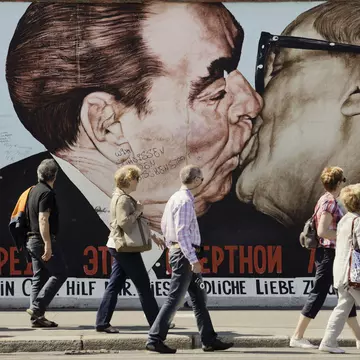
    The year was 1989. After 28 years, the Berlin Wall, that grim and grey divider of humanity, had finally met its maker. Most of the Wall was quickly dismantled, but along Mühlenstrasse, paralleling the Spree, a 1.3km stretch was spared. It became the East Side Gallery, the world’s largest open-air gallery, drenched in over 100 murals. Dozens of international artists translated the era’s global euphoria and optimism into a mix of political statements, drug-induced musings and truly artistic visions. Birgit Kinder’s Test the Best, showing a Trabi bursting through the Wall, The Mortal Kiss by Dimitri Vrubel, which has Erich Honecker and Leonid Brezhnev locking lips, and…

    reviewed

  14. Süllberg Hill

    Once, a former fishing village and haven for cut-throats, the suburb Blankenese now boasts some of the finest and most expensive houses in Germany. For visitors, the area's attraction lies in its hillside labyrinth of narrow, cobbled streets, with a network of 58 stairways (4864 steps in total!) connecting them.

    The best views of the Elbe (nearly 3km wide here) and the container ships putting out to sea are enjoyed from the 75m-high Süllberg hill (head through the restaurant at the summit). Getting off bus 48 at Weseberg - having passed the clutch of beachfront restaurants and cafés and reached the summit of the following hill - you'll see a sign pointing to the nearby…

    reviewed

  15. Schloss Colditz

    High on a crag above the sleepy town of Colditz, some 46km southeast of Leipzig, is the imposing Schloss Colditz, a Renaissance palace that's seen stints as a hunting lodge, a poorhouse and a mental hospital. Mostly, though, it's famous as Oflag IVC, a WWII-era high-security prison for Allied officers, including a nephew of Winston Churchill. Most astounding, perhaps, is a 44m-long tunnel below the chapel that French officers dug in 1941-42, before the Germans caught them. You can see some of these contraptions, along with lots of photographs, in the small but fascinating Fluchtmuseum (Escape Museum) within the palace. Several inmates wrote down their experiences later,…

    reviewed

  16. L

    Classic Remise Berlin

    Tucked in among factories, industrial buildings and tenements across the Spree and about 1km east of Schloss Charlottenburg, Meilenwerk is a place of pilgrimage for those who worship at the altar of the auto. Lined up for inspection inside the vast, slickly converted 19th-century tram depot are limited-edition beauties by Alfa Romeo, logo-less mystery cars, sleek racing wheels like the Maserati Ghibli, lovable veterans like the old VW Beetle and rarities like a GDR-made EMW 327. There are hundreds of other old-timers, classic and new cars, yet this is no museum: it’s a ‘Forum for Driving Culture’ that also harbours repair shops, car clubs and dealerships. Best of all:…

    reviewed

  17. Olympic Stadium

    Even though it was put through a total modernisation for the 2006 FIFA World Cup, it’s hard not to remember the Nazi legacy when visiting the Olympic Stadium. The bombastic bulk of the Colosseum-like structure undoubtedly remains, although it’s now softened by the addition of a spidery oval roof. These days, the more than 74,000 seats are often filled with fans cheering on the local Hertha BSC football (soccer) team, the Pope or Madonna. Call ahead to make sure the stadium is open for touring. Multilingual audioguides are available for an additional €2.50.

    reviewed

  18. Port of Hamburg

    Each year about 12,000 ships deliver and take on millions of tonnes of goods here. The port accounts for 12 percent of Hamburg's entire surface area. Two vessels that aren't going anywhere are the 1896 windjammer Rickmer Rickmers, which now serves as a museum and restaurant, and the Cap San Diego, a behemoth built in Hamburg during the 1960s.

    To the west of St Pauli, a sturdy grey structure is topped by a giant copper cupola. This striking piece of architecture is the entrance to the St Pauli Elbtunnel, a 426m (1400ft) passage under the river, built in 1911.

    reviewed

  19. M

    Museum Ludwig

    The distinctive building facade and unorthodox roofline signal that the Museum Ludwig is no ordinary museum. Considered a mecca of postmodern art, it actually presents a survey of all major 20th-century genres. There’s plenty of American pop art, including Andy Warhol’s Brillo Boxes, alongside a comprehensive Picasso collection and plenty of works by Sigmar Polke. Fans of German expressionism will get their fill here as much as those with a penchant for such Russian avant-gardists as Kasimir Malewitsch and Ljubow Popowa.

    Admission is also good for the Foto-Museum Agfa Foto-Historama, a collection of compelling historic photographs.

    reviewed

  20. N

    Deutsches Historisches Museum

    This engaging museum zeroes in on two millennia of German history in all its gore and glory; not in a nutshell but on two floors of a Prussian-era armoury. Check out the Nazi globe, the pain-wrecked faces of dying warrior sculptures in the courtyard, and the temporary exhibits in the boldly modern annex designed by IM Pei.

    reviewed

  21. O

    Rheinuferpromenade

    Burgplatz marks the beginning of the Rheinuferpromenade, whose cafes and benches fill with people in fine weather, creating an almost Mediterranean flair.

    reviewed

  22. Advertisement

  23. P

    Elbphilharmonie

    A squat brown-brick former warehouse at the far west of HafenCity is the base for the architecturally bold new Elbphilharmonie, which will become a major concert hall. Pritzker Prize–winning Swiss architects Herzog & de Meuron are responsible for the design, which captivates with its details like the 1096 individually curved glass panes. Also captivating for locals is the building's planned completion date, which was once 2010. But like butterflies in the spring, new dates have flitted by and 2015 is now being mooted. While the budget soars, it is hoped that a Westin Hotel will open in part of the complex in 2013.

    reviewed

  24. Q

    Stasimuseum

    The former head office of the Ministry of State Security is now the Stasi Museum, where you can marvel at cunningly low-tech surveillance devices (hidden in watering cans, rocks, even neckties), a prisoner transport van with teensy, lightless cells and the obsessively neat offices of Stasi chief Erich Mielke. Panelling is in German only and exhibits are not always self-explanatory, so you may want to invest a few euros in the English-language booklet. From the U-Bahn station, turn north on Ruschestrasse, then turn right after about 100m and walk another 50m across a parking lot towards the buildings straight in front of you.

    reviewed

  25. R

    Tierpark Hagenbeck

    The 2500 animals that live in Hamburg's zoo have open enclosures over 27 hectares. In addition to elephants, tigers, orang-utans, toucans and other creatures, you'll find a replica Nepalese temple, Japanese garden, art-deco gate and a huge aquarium. A petting zoo, pony rides, a miniature railway and playground mean you'll have to drag the kids away at the end of the day. It is 5km northwest of the centre; take the U2 to Hagenbecks Tierpark

    reviewed

  26. S

    Neues Museum

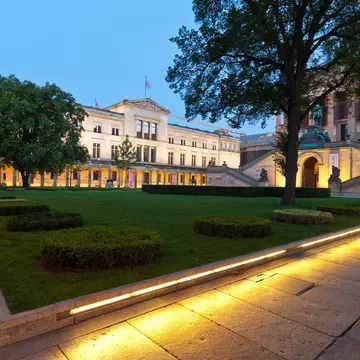
    Open since October 2009, the New Museum is a shining beacon on Museumsinsel thanks in equal part to its stellar exhibits and to David Chipperfield’s glorious reconstruction. Just like the original museum, a Friedrich August Stüler design of 1859, the building harbours the Egyptian Museum and Papyrus Collection as well as the Museum of Pre- and Early History. This is where you come for an audience with Berlin’s most beautiful woman, the 3330-year-old Queen Nefertiti, she of the long, graceful neck and timeless good looks. The bust was part of the treasure trove unearthed by a Berlin expedition of archaeologists around 1912 while sifting through the sands of Armana. This…

    reviewed

  27. T

    Gutenberg Museum

    A heady experience for anyone excited by books, the Gutenberg Museum takes a panoramic look at the technology that made the world as we know it possible. Highlights include very early printed masterpieces – kept safe in a walk-in vault – such as three extremely rare (and valuable) examples of Gutenberg’s original 42-line Bible. Many of the signs are in English; a quarter-hour film is available in seven languages.

    In the museum’s Druckladen across tiny Seilergasse, you can try out Gutenberg’s technology yourself on the condition that you’re at least five years old. You’ll be instructed in the art of hand-setting type – backwards, of course. Nearby, master craftsmen…

    reviewed