-
Alter Jüdischer Friedhof
What looks like a small park was in fact Berlin's first Jewish cemetery, destroyed by the Nazis in 1943. Some 12,000 people were buried here between 1672 and 1827, including the philosopher Moses Mendelssohn, although his tombstone is just a copy.
-
Bauhaus Archiv/Museum fur Gestaltung
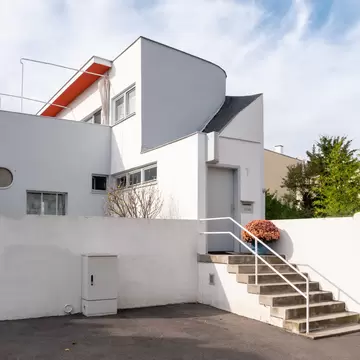
The Bauhaus Archive/Museum of Design is devoted to the members of the Bauhaus School, who laid the basis for much of contemporary design and architecture. Founded in Weimar by Berlin architect Walter Gropius, it aimed to unite art with everyday functionality, from doorknobs and radiators to the layout of entire districts and apartment blocks.
-
Berliner Rathaus
The hulking 1860 town hall is where Berlin's governing mayor (currently Klaus Wowereit) and his senators make their offices. It sits smack dab in the city's geographical centre and is nicknamed 'Rotes Rathaus' (Red Town Hall) in reference to the colour of its bricks - not (necessarily) the political leanings of its occupants.
-
Berliner Zoo & Aquarium
The Zoologischer Garten is Germany's oldest zoo. It is located in the southwest corner of the Tiergarten, Berlin's green lung, which began life as a hunting ground for the Great Elector, Friedrich Wilhelm (who ruled from 1640-88) and was turned into a park in the 18th century. Around 14,000 animals representing 1500 species roam the grounds.
-
Brandenburg Gate
A symbol of division during the Cold War, this landmark now epitomises German reunification. The 1791 structure by Carl Gotthard Langhans is the only surviving one of 18 city gates and is crowned by the Quadriga sculpture, a horse-drawn chariot piloted by the winged goddess of victory.
-
Brandenburger Tor
The restored landmark Brandenburger Tor (Brandenburg Gate), a symbol of division during the Cold War, now epitomises German reunification. It was against this backdrop in 1987 that then-US president Ronald Reagan uttered the now famous words: 'Mr Gorbachev - tear down this wall.' Two years later, the Wall was history.
-
Checkpoint Charlie Museum
The Checkpoint Charlie Museum is all that remains of the famed tower that symbolised East-West tension during the Cold War. The tower itself was unceremoniously craned away a few months after the border reopened. In 2001, a replica guardhouse was returned to the site (the original is in the Allierten Museum in Zehlendorf).
-
Contemporary Fine Arts
There's usually an exciting exhibit going on at this progressive gallery which specialises in young artists, both emerging and already established. Its roster of artists includes Cecily Brown and Berlin-based phenoms Jonathan Meese and Daniel Richter.
-
Ddr Museum
In East Germany, kids were put through collective potty training, engineers earned little more than farmers and everyone, it seems, went on nudist holidays. Such are the fascinating nuggets you'll learn at this small, interactive museum dedicated to teaching the rest of us about daily life across the Iron Curtain. A must for Goodbye, Lenin fans.
-
Deutsche Guggenheim Berlin
If you've seen any other Guggenheim museum, especially those in New York and Bilbao, this small, minimalist gallery space - a joint venture between Deutsche Bank and the Guggenheim Foundation - is likely to be disappointing. Curators mount several exhibits a year featuring international contemporary artists of some renown.
-
Advertisement
-
Deutsches Technikmuseum
It's easy to spend an entire day at the giant Deutsches Technikmuseum and the sizable Museumpark. The museum's 14 departments examine technology throughout the ages - from printing and transport to computers - with interactive stations. Demonstrations of historical machines and models take place throughout the museum.
-
Dz Bank
Bland on the outside, this bank building packs a visual punch past those heavy doors thanks to the warped imagination of architect Frank Gehry. Filling the atrium is a conference room shaped like a bizarrely morphed sculpture vaguely reminiscent of...a fish. See it to believe it.
-
Flughafen Tempelhof
This Nazi-built airport is reportedly the world's second-largest building after the Pentagon, but its ties to aviation go back to its airfield days. In 1909 Orville Wright set a world record right here when flying his aircraft 172m above ground. Tempelhof had its finest hour during the 1948 Berlin Airlift . There are plans to close it, but the decision isn't final yet.
-
Galerie Eigen+Art
It's always worth checking out what's on the walls of this cutting-edge gallery. Owner Gerd Lybke has a keen eye for new German talent, whom he often shepherds to international fame. Success stories include Neo Rauch and Martin Eder.
-
Gemäldegalerie
If you only have time for one art museum, make it the Gemäldegalerie (Picture Gallery), a spectacular showcase of European painting from the 13-18th centuries in a glorious building designed by Munich architects Hilmer & Sattler. The collection is famous for its quality and breadth. It's especially strong when it comes to Van Dyk, Hals, Rubens and Rembrandt.
-
Gendarmenmarkt
Berlin's most graceful square was named after the Gens d'Armes, a Prussian regiment consisting of French Huguenot immigrants. Local Huguenots worshipped at the Französischer Dom (French Cathedral), where a small museum now chronicles their story. The cathedral closely mirrors the Deutscher Dom (German Cathedral) opposite, home to a hopelessly academic political exhibit. In the middle is Schinkel's beautiful Konzerthaus .
-
Hamburger Bahnhof - Museum Für Gegenwart
Berlin's premier contemporary art museum has a star-studded collection, including works by Andy Warhol, Roy Lichtenstein and Anselm Kiefer as well as an entire wing of Joseph Beuys. Occupying a cleverly converted 19th-century railway station and adjacent 300m-long warehouse, it also has great temporary exhibits, a well-stocked art bookshop and a popular café called Sarah Wiener im Hamburger Bahnhof.
-
Haus Am Checkpoint Charlie
The Cold War years, especially the history and horror of the Berlin Wall, are engrossingly if haphazardly chronicled in this private museum. The best bits are about ingenious escapes to the West in hot-air balloons, tunnels, concealed compartments in cars and even a one-man submarine. There is a lift but it doesn't go to all the floors.
-
Heckmannhöfe
This series of courtyards of a former machine factory feels like a peaceful oasis, with benches, a fountain and unique shops like the traditional candy kitchen called Bonbonmacherei. It links Auguststrasse with Oranienburger Strasse where the entrance is just past the Café Orange.
-
Hitler's Bunker
The site of the bunker where Hitler met his maker is now a parking lot, but an explanatory panel chronicles his final days, shows a diagram of the vast bunker network, technical data on how it was constructed and what happened to it after WWII.
-
Advertisement
-
Hotel Adlon Kempinski
Overlooking the Brandenburg Gate, Berlin's poshest caravanserais was the original Grand Hotel , where the 1932 movie starring Greta Garbo was filmed. A celeb magnet since its 1907 opening, it has sheltered Charlie Chaplin, Albert Einstein and even Michael Jackson. Remember him dangling his baby out the window? It happened at the Adlon.
-
Humboldt Universität
Marx and Engels studied and the Brothers Grimm and Albert Einstein taught at Berlin's oldest university, housed inside a former royal palace since 1810. Booksellers usually set up by the main entrance, below the statues of its founder, philosopher Wilhelm von Humboldt, and his explorer brother Alexander.
-
Jewish Museum
The history of German Jews and their contributions to culture, art, science and other fields are creatively chronicled in this sprawling museum in a spectacular building by Daniel Libeskind.
-
Jüdischer Friedhof
Composer Giacomo Meyerbeer and artist Max Liebermann are among the prominent Berliners buried in the city's second Jewish cemetery, which opened in 1827. WWII brought vandalism and bomb damage, but the leafy grounds are still dotted with beautiful tombstones and memorials. Men must cover their heads.
-
Jüdisches Museum
Berlin's Jüdisches Museum, the largest Jewish Museum in Europe, celebrates the achievements of German Jews and their contribution to culture, art, science and other fields. An architectural work of art, the building and its contents are a major destination in Berlin.