BrittanySights

Sights in Brittany

‹ Prev

of 2

  1. Cathedral St-Corentin

    At the centre of the city stands this impressive cathedral, the distinctive kink built into its soaring light-filled interior said by some to symbolise Christ's head inclined on one shoulder as he was dying on the cross. Begun in 1239, the cathedral wasn't completed until the 1850s, with the seamless addition of its dramatic twin spires. Between them, high on the west facade, is an equestrian statue of King Gradlon, the city's mythical 5th-century founder.

    reviewed

  2. Cathédrale St-Vincent

    The town’s centrepiece was constructed between the 12th and 18th centuries, but damage during WWII was severe. A mosaic plaque on the floor of the nave marks the spot where Jacques Cartier received the blessing of the bishop of St-Malo before his ‘voyage of discovery’ to Canada in 1535. Cartier’s tomb – all that remains of it post-1944 is his entombed head – is in a chapel on the north side of the choir.

    reviewed

  3. A

    Île du Grand Bé

    At low tide, cross the beach to walk out via the Porte des Bés to the rocky islet of Île du Grand Bé, where the great St-Malo-born 18th-century writer Chateaubriand is buried. Once the tide rushes in, the causeway remains impassable for about six hours; check tide times with the tourist office. Depths can be deceptive; if you get caught out, stay on the islet until the tide subsides.

    About 100m beyond the Île du Grand Bé is the Vauban-built 17th-centuryFort du Petit Bé, also accessible at low tide.

    reviewed

  4. B

    Musée du Château

    Within the Château de St-Malo, built by the dukes of Brittany in the 15th and 16th centuries, is the Musée du Château, also known as the Musée d'Histoire de la Ville (city history museum). The museum's most interesting exhibits – the history of cod fishing on the Grand Banks and photos of St-Malo after WWII – are in the Tour Générale.

    reviewed

  5. C

    Musée Départemental Breton

    Recessed behind a magnificent stone courtyard beside the cathedral, this museum is housed in the former bishop's palace. Superb exhibits showcase Breton history, furniture, costumes, crafts and archaeology. Adjoining the museum is the Jardin de l'Évêché.

    For even more serenity, pop into the hidden, flower-filled Jardin de la Retraite, secluded behind high walls.

    Following the switchback path just east of the tourist office up the 72m-high Mont Frugy rewards with captivating city views.

    reviewed

  6. D

    Mémorial 39–45

    Constructed in the mid-18th century, Fort de la Cité was used as a German base during WWII. One of the bunkers now houses the Mémorial 39–45, which depicts St-Malo's violent WWII history and liberation, and includes a 45-minute film in French. Some guided visits are conducted in English; call ahead to confirm times.

    reviewed

  7. E

    Maison du Patrimoine

    Between 15 June and 15 September, the walled town can also be accessed through this old house, which has exhibits on the town's history – ask for an English-language brochure. Once you're within the walls, rue Vauban and place St-Guénolé outside are enchanting for their old stone houses converted into shops, restaurants and galleries.

    reviewed

  8. F

    Grand Aquarium

    Allow around two hours to see St-Malo's excellent aquarium. About 4km south of the city centre, it's a great wet-weather alternative for kids, with a minisubmarine descent and a bassin tactile (touch pool), where you can fondle rays, turbot – even a baby shark. Bus C1 from the train station passes by every half-hour.

    reviewed

  9. Château de Keriolet

    This impressive building is an exquisite example of 19th-century architecture. Its intriguing Russian connections are revealed during a guided tour. The castle is a well-signed five-minute drive from town (turn right just before the large Leclerc supermarket).

    reviewed

  10. G

    Musée des Beaux-Arts

    The ground-floor halls are home to some fairly morbid 16th- to 20th-century European paintings, but things lighten up on the upper levels of the town's main art museum. A room dedicated to Quimper-born poet Max Jacob includes sketches by Picasso.

    reviewed

  11. Advertisement

  12. H

    Fort National

    The ramparts' northern stretch looks across to the remains of this former prison, built by Vauban in 1689. Standing atop a rocky outcrop, the fort can only be accessed at low tide. Ask at the tourist office for times of tours during your stay.

    reviewed

  13. I

    Musée International du Long Cours Cap-Hornier

    Housed in the 14th-century Tour Solidor, this museum presents the life of the hardy sailors who followed the dangerous Cape Horn route around the southern tip of South America. It also offers superb views from the top of the tower.

    reviewed

  14. J

    Maison Courtin

    One of Concarneau's last functioning canneries, Maison Courtin, conducts tours including a film of the cannery in peak production and free sampling. Contact the cannery or the tourist office for tour times.

    reviewed

  15. K

    La Maison de Corsaire

    You can visit this 18th-century mansion and historic monument, once owned by corsair (privateer) François Auguste Magon. Guided tours are in French; descriptions are available in English.

    reviewed

  16. L

    Marinarium

    Founded in 1859, the Concarneau Marinarium is the world's oldest institute of marine biology. Alongside its 10 aquariums are exhibits on oceanography and marine flora and fauna.

    reviewed

  17. M

    Musée de la Pêche

    Concarneau's seafaring traditions, offshore fishing trawlers, model ships and fishing exhibits feature at the ever-popular Musée de la Pêche, in the middle of the walled town.

    reviewed

  18. Fort du Petit Bé

    About 100m beyond the Île du Grand Bé is the Vauban-built 17th-century Fort du Petit Bé, also accessible at low tide.

    reviewed

  19. N

    Jardin de la Retraite

    Pop into the hidden, flower-filled Jardin de la Retraite, secluded behind high walls.

    reviewed

  20. O

    Walled City

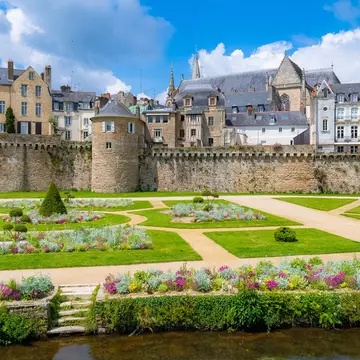
    St-Malo's first inhabitants originally lived in St-Servan but later moved to this former island, which became linked to the mainland by the sandy isthmus of Le Sillon in the 13th century. For the best views of the walled city, stroll along the top of the ramparts, constructed at the end of the 17th century under the military architect Vauban, and measuring just over a mile. There's free access at several places, including all the main city gates.

    reviewed

  21. P

    Musée International du Long Cours Cap-Hornier

    Musée International du Long Cours Cap-Hornier is in the 14th-century Tour Solidor. Presenting the life of the hardy sailors who followed the Cape Horn route, it offers superb views from the top of the tower.

    reviewed

  22. Advertisement

  23. Q

    Musée du Château

    The museum's most interesting exhibits - the history of cod fishing on the Grand Banks and photos of St-Malo after WWII - are in the Tour Générale.

    reviewed

  24. R

    Mémorial 39-45

    The pretty fishing port of St-Servan sits southwest of the walled city. Constructed in the mid-18th century, Fort de la Cité was used as a German base during WWII. One of the bunkers now houses Mémorial 39-45, which depicts St-Malo's violent WWII history and liberation and includes a 45-minute film in French. Some guided visits are conducted in English; call ahead to confirm times.

    reviewed

  25. S

    La Maison de Corsaire

    La Maison de Corsaire, once owned by corsair (privateer) François Auguste Magon, is an 18th-century mansion and historic monument. Guided tours are in French; descriptions are available in English.

    reviewed

  26. T

    Île du Grand Bé

    At low tide, cross the beach to walk out via the Porte des Bés to this rocky islet, where the great St-Malo-born 18th-century writer Chateaubriand is buried. Once the tide rushes in, the causeway remains impassable for about six hours - check tide times with the tourist office. Depths can be deceptive; if you get caught out, stay on the islet until the tide subsides.

    reviewed

  27. U

    Grand Aquarium

    Allow around two hours to see the excellent Grand Aquarium. About 4km south of the city centre, it's a great wet-weather alternative for kids with mini-submarine descent and bassin tactile (touch pool), where you can fondle rays, turbot - even a baby shark. Bus No 5, direction Grassinais, passes by every half-hour.

    reviewed