Sights in Fiji
-
Mariamma Temple
The South Indian fire-walking festival is held here during July or August. Of all Fiji's cultural rituals, the extraordinary art of fire walking is perhaps the most impressive. Watching men display the poise of a lead ballerina while they traverse a pit of blazing embers without combusting is truly baffling. Even more mystifying is the fact that, originally, this ritual was practised in Fiji only on the tiny island of Beqa, and by two neighbouring and disparate cultures - Indigenous Fijian and Hindu - for completely different reasons.
Indigenous Fijian firewalking is known as vilavilairevo (literally 'jumping into the oven'). Hindu fire walking is part of an annual…
reviewed
-
Colo-i-Suva Forest Park
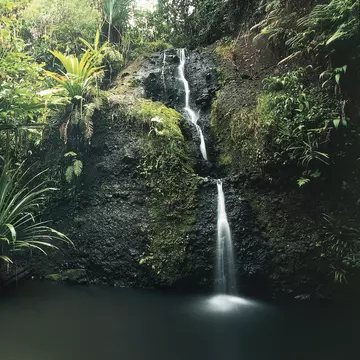
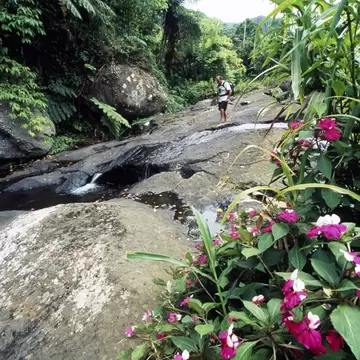
This lush rainforest park, pronounced tholo-ee-soo-va, is a 2.5-sq-km oasis teeming with vivid and melodic birdlife and tropical flora. The 6.5km of walking trails navigate clear natural pools and gorgeous vistas, with just a touch of Indiana Jones in the rope swings over water and stone steps across streams. Sitting at an altitude of 120m to 180m, it's a cool and peaceful respite from Suva's urban hubbub.
Flowing through the forest is the Waisila Creek, which makes its way down to the Waimanu River and is the water catchment for the Nausori/Nasinu areas. The creek gives rise to natural swimming holes, and there are picnic tables, shelters and change rooms as well as a…
reviewed
-
A
University of the South Pacific
- Suva, Fiji
- Sights › University
With beautiful lawns and excellent facilities, the USP's Laucala Campus offers some picturesque strolling and fascinating people watching. The campus includes a small botanical garden and the Oceania Centre for Arts & Culture. This is the biggest of USP's campuses, and with more than 11,000 students it attracts attendees and staff from all over the South Pacific as well as the USA, New Zealand and Australia.
Mingling among Fijian students you're likely to see young academics from the Cook Islands, Kiribati, Tonga, Vanuatu and Western Samoa. The university itself is jointly owned by the governments of 12 Pacific countries and is a fee-paying institution. Many students rely…
reviewed
-
Sri Siva Subramaniya Swami Temple
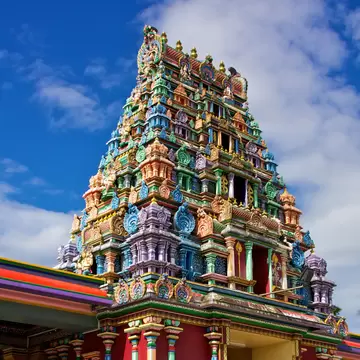
At the base of Main St, away from the commercial hype, this peaceful Hindu temple strikes a vibrant pose against a dramatic mountainous backdrop. It is a tranquil spot to reflect and distance yourself from Nadi's boisterous main drag. The prolific wooden carvings of Hindu deities travelled all the way from India, as did the artists who dressed the temple in its colourful coat and impressive ceiling frescos.
You can wander around the main temple to see the Hindu Lord Shiva's various forms, all incarnations being manifestations of the One Supreme Lord. This is a Murugan temple and worship of Lord Murugan is equivalent to the worship of nature. He is the guardian deity of…
reviewed
-
B
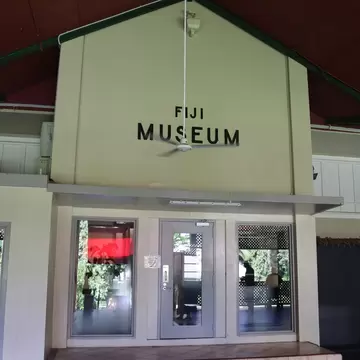
Fiji Museum
This excellent museum captivates visitors with a journey into Fiji's archaeological, political, cultural and linguistic evolution. Original examples of musical instruments, cooking apparatus, jewellery - including chiefs' whale tooth necklaces - and a daunting array of Fijian war clubs and cannibal utensils offer a vivid insight into traditional life.
The growing influence of other South Pacific and European cultures on the Fijian islands is also demonstrated through exhibits on pottery, fishing methods and trade.
Taking centre stage is the massive Ratu Finau (1913); Fiji's last waqa tabus (double hulled canoe), which measures 13.43m in length and includes an enclosed…
reviewed
-
C
Albert Park
Charles Kingsford Smith was the first aviator to cross the Pacific, flying in his little Fokker trimotor, The Southern Cross, from California to Australia. The longest leg of the flight was the 34-hour trip from Hawaii to Fiji. Suva's Albert Park, with its hill at one end and the Grand Pacific Hotel at the other, was made into a makeshift landing strip for his arrival. Trees were still being cleared after Smith had already left Hawaii.
Kingsford Smith and his crew arrived on 6 June 1928, and were welcomed by a crowd of thousands, including colonial dignitaries who had gathered at the Grand Pacific Hotel to witness and celebrate this major event. Because the park was too…
reviewed
-
Nananu-i-Ra
This pocket-sized paradise is a must on any northern Viti Levu itinerary. Beautifully hilly, the 3.5-sq-km island is surrounded by scalloped bays, white-sand beaches and mangroves. A history of cattle grazing has cleared much of the dense vegetation and today rolling hills of grass dominate the interior.
It's only 3km north of Ellington Wharf, but the atypical landscape and small enclave of upmarket holiday homes exaggerates the distance. Nananu-i-Ra is an excellent option for those who want an offshore-island experience but minimal boating and associated cost. It's also renowned for windsurfing and diving. The island has no roads and no village - most of the residents…
reviewed
-
Koroyanitu National Heritage Park
If you are a keen walker or nature lover, the Koroyanitu National Heritage Park is definitely worth a visit. There are six villages within the park that cooperate as part of an ecotourism project. They maintain the landscape and tracks, and subsequently earn tourist dollars through village stays and manning the office.
Those who make the climb to the summit of Castle Rock, from Nase Lodge, will be rewarded with panoramic views of the Mamanucas and Yasawas. A marked track leads its way up; it takes about four hours (one way). There is also a two-hour hike that takes in a waterfall, the terraced gardens at Tunutunu and the Navuratu village site. A full-day hike to Mt…
reviewed
-
Parliament of Fiji
Opened in June 1992, the Parliament Complex must be one of the world's most striking political hubs. Designed in post-1987-atmosphere, the aim of maintaining indigenous-Fijian values is apparent through the open-air corridors, traditional arts and structures and masi cloths throughout. The main building, vale ne bose lawa (parliament house), takes its form from the traditional vale (family house) and has a ceremonial access from Ratu Sukuna Rd.
It's advisable to call ahead if you want to tour the grounds, but you can also obtain a Visitors Pass from the guard at the main entrance. It's also possible to sit in on a parliamentary session by calling in advance.
reviewed
-
Mamanuca Group
The Mamanucas are movie stars, Fiji's glittering jet set, forever photographed, and valued more for their natural beauty than any contribution they make to the national culture. Many of the 20-or-so islands take day-trippers from the mainland, who gorge themselves on buffets washed down with chilled Fiji Bitter, and sunbake on white sand beneath coconut palms.
The ocean around the islands has some excellent dive sites and Fiji's gnarliest surf spots. The snorkelling here is generally fantastic with the clear waters offering fascinating windows into the undersea world. Judging from the activities nights in most of the resorts, the Mamanucas are the crab-racing capital of…
reviewed
Advertisement
-
D
Thurston Gardens
After visiting the museum, ponder on your new found knowledge with a wander through these compact but beautiful gardens ( M032A). The dense conglomeration of native flora and surrounding lawns are less manicured and more scattered haphazardly but heavy landscaping would detract from the tropical element. The colourful vegetation will generate appreciative murmurs from the casual visitor and much of the vegetation is also labelled for the benefit of avid horticulturalists.
Crisscrossing walking trails traverse the park, and bench seating provides sensory-fatigue relief. It's a lovely spot for a picnic, particularly if you camp yourself under one of the grand and stately…
reviewed
-
Sigatoka Sand Dunes
One of Fiji's natural highlights, these impressive dunes are a ripple of peppery monoliths skirting the shoreline near the mouth of the Sigatoka River. Windblown and rugged, they stand around 5km (3.1mi) long, up to 1km (0.6mi) wide and on average about 20m (65ft) high, rising to about 60m (197ft) at the western end.
Do not expect golden Sahara-like dunes, as the fine sand is a grey-brown colour and largely covered with vines and shrubs. The dunes have been forming over millions of years and archaeological excavations here have uncovered pottery more than 2600 years old, as well as one of the largest burial sites in the Pacific.
reviewed
-
Fiji Museum
In the heart of Thurston Gardens, this excellent museum captivates visitors with a journey into Fiji's archaeological, political, cultural and linguistic evolution. There's original musical instruments, cooking apparatus, and jewellery - including chiefs' whale-tooth necklaces, and a daunting array of Fijian war clubs and cannibal utensils.
The growing influence of other South Pacific and European cultures on the Fijian islands is also demonstrated through exhibits on pottery, fishing methods and trade; while descriptions throughout bestow a heightened understanding and awareness of the country's customs and people.
reviewed
-
E
Copra Shed Marina
Dating back to 1880 and originally one of Fiji's first copra mills, the Copra Shed Marina has been rebuilt into Savusavu's service hub for tourists and expats. In one visit you can book a flight or a boat, check your email, buy postcards, pick up your laundry, swig a beer and devour a pizza. Toilets and hot showers are available for yachties.
There is even a small historical display, and a couple of units for rent upstairs. Moorings in the pretty harbour between Savusavu and Nawi Islet cost around F$10/around F$220 for a day/month in high season, and F$7/F$150 for a day/month in low season.
reviewed
-
Bouma National Heritage Park
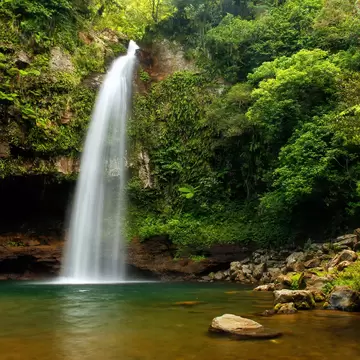
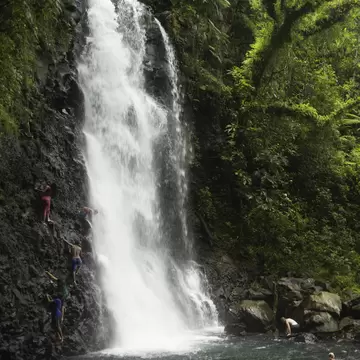
This national park protects over 80% of Taveuni's total area, covering about 150 sq km (57 sq mi) of rainforest and coastal forest. The park has the three Tavoro Waterfalls near the falls' visitor centre, each with natural swimming pools. The first waterfall is about 24m (78ft) high and only 10 minutes' walk along a flat cultivated path.
The second waterfall, 30 or 40 minutes along, is a bit smaller but also has a good swimming pool. The track is quite steep in places but has steps, handrails and lookout spots to rest. If you are a keen walker, try the Vidawa Rainforest Trail.
reviewed
-
National Stadium
Fijians are fanatical about their rugby and, even if you aren't that keen on the game, it's worth going to a match. The season lasts from April to September and teams tough it here at the National Stadium. The atmosphere is huge. Ask at the Fiji Visitors Bureau if there will be a match during your stay. You can also catch players training hard at Albert Park during the week.
reviewed
-
Colo-i-Suva Forest Park
This lush rainforest park is a 2.5-sq-km oasis teeming with vivid and melodic birdlife and tropical flora. The 6.5km (4mi) of walking trails navigate clear natural pools and gorgeous vistas, with just a touch of Indiana Jones in the rope swings over water and stone steps across streams. It's a cool and peaceful respite from Suva's urban hubbub.
reviewed
-
Parliament of Fiji
Opened in June 1992, Fiji's parliament complex must be one of the world's most striking political hubs. Designed in post-1987-atmosphere, the aim of maintaining indigenous-Fijian values is apparent through the open-air corridors, traditional arts and structures and masi cloths throughout.
reviewed
-
F
Holy Trinity Cathedral
Holy Trinity Cathedral, with its unique boat-shaped interior, interesting Fijian tapestries and wood-beamed ceiling is a peaceful retreat. The gigantic tree in front of the church is a showcase of Pacific plants with cacti and ferns making themselves at home in its branches.
reviewed
-
Nananu-i-Ra
Off the northern coast, Nananu-i-Ra is only a short hop from the mainland and offers calm swimming and snorkelling seas, and self-catering accommodation. Kids can also partake in kayaking and windsurfing here.
reviewed
Advertisement
-
G
Roman Catholic Cathedral
The 1902 Roman Catholic Cathedral, at the corner of Murray and Pratt Sts is built of sandstone imported from Sydney and is one of Suva's most prominent landmarks; unfortunately, it's most often locked.
reviewed
-
H
Centenary Methodist Church
For a rousing chorus of song on a Sunday morning, head to the Centenary Methodist Church; the pitch is more invigorating than dulcet and it often fills the surrounding streets.
reviewed
-
Coral Coast Scenic Railway
A day on the Coral Coast Scenic Railway is a fun way for kids to gain an appreciation of Fiji's landscape and the barbecue lunch at Natadola Beach is a family-oriented affair.
reviewed
-
Mount Batilamu Trek
Mount Batilamu Trek has trips to the Koroyanitu National Heritage Park. Inside the park is the village of Abaca. This is an easy day trip from Nadi or Lautoka.
reviewed
-
I
Shree Laxmi Narayan Temple
Shree Laxmi Narayan Temple is just east of downtown and coloured bright orange and blue. There is generally a caretaker around to let you in for a look.
reviewed