Things to do in Xī’ān
-
Terracotta Warriors Essential Full Day Tour from Xi'an
9 hours (Departs Xian, China)
by Viator
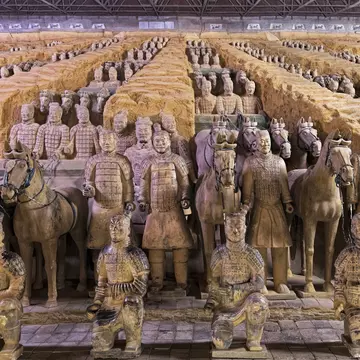
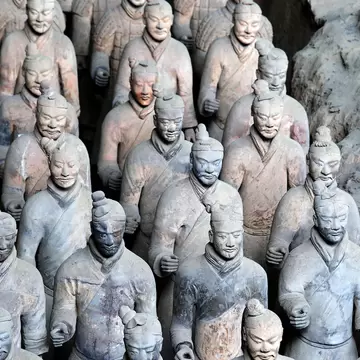
Xi'an is home to the world-famous Terracotta Warriors Army and Horses, one of the most significant archeological excavations of the 20th century. This full-day …
Not LP reviewed
-
A
King Town No 1
Red tableware and an inviting, modern interior set this place apart from its old-school neighbours. Downstairs serves tempting homestyle dishes; upstairs is a classier Sichuanese-Cantonese restaurant(English menu).
reviewed
-
B
Shaanxi History Museum
Shaanxi's museum is often touted as one of China's best, but if you come after visiting some of Xī'ān's surrounding sights you may feel you're not seeing much that is new. Nevertheless, the museum makes for a comprehensive and illuminating stroll through ancient Cháng'ān, and most exhibits include labels and explanations in English.
The ground floor covers prehistory and the early dynastic period. Particularly impressive are several enormous Shang- and Western Zhou-dynasty bronze tripods (dǐng), Qin burial objects, bronze arrows and crossbows, and four original terracotta warrior statues.
Upstairs, the second section is devoted primarily to Han-dynasty relics. The high…
reviewed
-
C
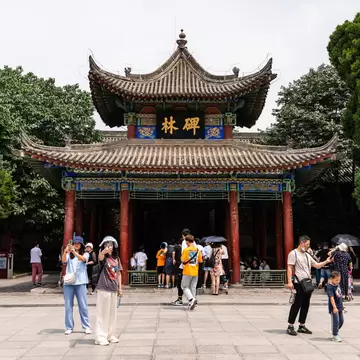
Forest of Stelae Museum
Housed in Xī'ān's Confucius Temple, this museum holds over 1000 stone stelae (inscribed tablets), including the nine Confucian classics and some exemplary calligraphy. The second gallery holds a Nestorian tablet (AD 781), the earliest recorded account of Christianity in China. (The Nestorians professed that Christ was both human and divine, for which they were booted out of the Church in 431.) The fourth gallery holds a collection of ancient maps and portraits, and is where rubbings (copies) are made, an interesting process to watch.
The highlight, though, is the fantastic sculpture gallery (across from the gift shop), which contains animal guardians from the Tang dynast…
reviewed
-
D
City Walls
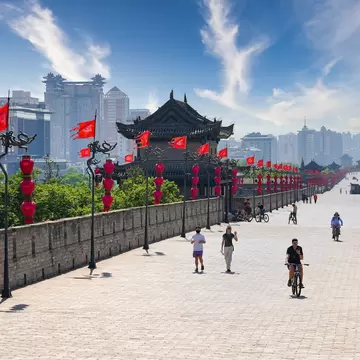
Xī'ān is one of the few cities in China where the old city walls are still standing. Built in 1370 during the Ming dynasty, the 12m-high walls are surrounded by a dry moat and form a rectangle with a perimeter of 14km.
Most sections have been restored or rebuilt, and it is now possible to walk the entirety of the walls in a leisurely four hours. You can also cycle from the South Gate (bike hire Y20 for 100 minutes, Y200 deposit). The truly lazy can be whisked around in a golf cart for Y200. Access ramps are located inside the major gates, with the exception of the South Gate, where the entrance is outside the walls; there's another entrance inside the walls beside the Fo…
reviewed
-
E
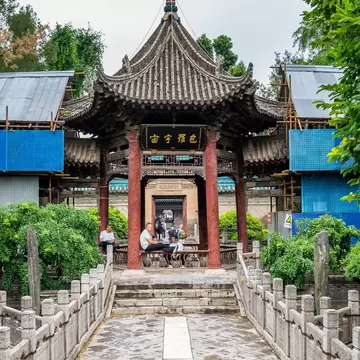
Great Mosque
One of the largest mosques in China, the Great Mosque is a fascinating blend of Chinese and Islamic architecture. Facing west (towards Mecca) instead of the usual south, the mosque begins with a classic Chinese temple feature, the spirit wall, designed to keep demons at bay. The gardens, too, with their rocks, pagodas and archways are obviously Chinese, with the exception of the four palm trees at the entrance. Arab influence, meanwhile, extends from the central minaret (cleverly disguised as a pagoda) to the enormous turquoise-roofed Prayer Hall (not open to visitors) at the back of the complex, as well as the elegant calligraphy gracing most entryways. The present build…
reviewed
-
F
Folk House
This well-rounded historic residence also serves as an art gallery, entertainment centre and teahouse. Originally the home of the Qing bureaucrat Gao Yuesong, it's a fine example of a courtyard home and has been tastefully restored. There are reception rooms, bedrooms, servants' quarters, an ancestral temple and a study (now the teahouse).
Tours start with an optional marionette or shadow-puppet demonstration (Y10). As the complex currently belongs to the Shaanxi Artists Association, there's an art gallery here where you can pick up reasonably priced traditional Chinese art. Confusingly, despite the address, this place isn't at No 144, but is about 20m down the street.
reviewed
-
G
Little Goose Pagoda
The Little Goose Pagoda is in the pleasant grounds of Jianfu Temple. The top of the pagoda was shaken off by an earthquake in the middle of the 16th century, but the rest of the 43m-high structure is intact.
Jianfu Temple was originally built in AD 684 to bless the afterlife of the late Emperor Gaozong. The pagoda, a rather delicate building of 15 progressively smaller tiers, was built from AD 707-709 and housed Buddhist scriptures brought back from India by the pilgrim Yi Jing.
You can mount the pagoda for a worthy panorama of Xī'ān.
Bus 610 runs here from the Bell Tower; from the South Gate take bus 203.
reviewed
-
H
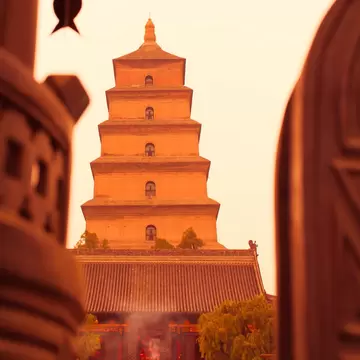
Big Goose Pagoda
Xī'ān's most famous landmark, this pagoda dominates the surrounding modern buildings. One of China's best examples of a Tang-style pagoda (squarish rather than round), it was completed in AD 652 to house the Buddhist sutras brought back from India by the monk Xuan Zang. Xuan spent the last 19 years of his life translating scriptures with a crack team of linguist monks; many of these translations are still used today. His travels also inspired one of the best-known works of Chinese literature, Journey to the West.
Surrounding the pagoda is Dà Cí'ēn Temple (大慈恩寺; Dàcí'ēn Sì), one of the largest temples in Tang Cháng'ān. The buildings today date from the Qing dynasty.…
reviewed
-
Xiyang Shi
Xiyang Shi is a narrow alley that is probably the best stop for souvenirs. You'll find terracotta warriors, Huxian farmer paintings, shadow puppets, lanterns, tea ware, 'antiques', Mao memorabilia, T-shirts…you name it. Quality varies (almost everything is fake), so check purchases carefully and bargain hard - but don't confuse this with being rude. Smiling always helps.
reviewed
Advertisement
-
I
Temple of the Eight Immortals
Xī'ān's largest Taoist temple dates back to the Song dynasty and is still an active place of worship. Supposedly built on the site of an ancient wine shop, it was constructed to protect against subterranean divine thunder. Scenes from Taoist mythology are painted around the courtyard. Empress Cixi, the mother of the Last Emperor, stayed here in 1901 after fleeing Beijing during the Boxer Rebellion. There's a small antique market opposite, which is busiest on Sundays and Wednesdays.
Bus 502 runs close by the temple (eastbound from Xi Xinjie).
reviewed
-
Xi'an To Kashgar
22 days (ex Xian)
by Intrepid
Travel to China and visit Kashgar's exotic old town, Camp beneath the stars in the Taklamakan Desert, Relax beside the pristine waters of Heavenly Lake, Follow …Not LP reviewed
from USD$1,675 -
Máogōng Xiāngcàiguǎn
A statue of the Chairman overlooks diners at this slick place across the road from the Little Goose Pagoda. The menu features Húnán classics, such as spicy chicken and boiled frog (Y38), most of which have a fiery kick that Mao, who liked his food hot, would have approved of.
reviewed
-
J
Drum Tower
While the Bell Tower originally held a bell that was rung at dawn, the Drum Tower marked nightfall. It too dates from the 14th century and was later rebuilt in the 1700s. Musical performances are held inside from 09:00 to 11:30 and 14:30 to 17:30. Close by, a covered market sells dried fruits and delicious cakes.
reviewed
-
K
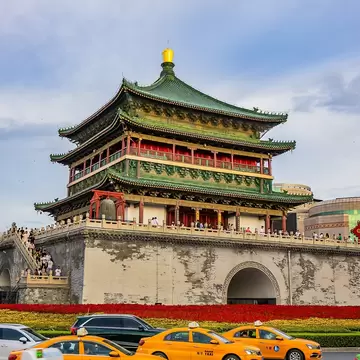
Bell Tower
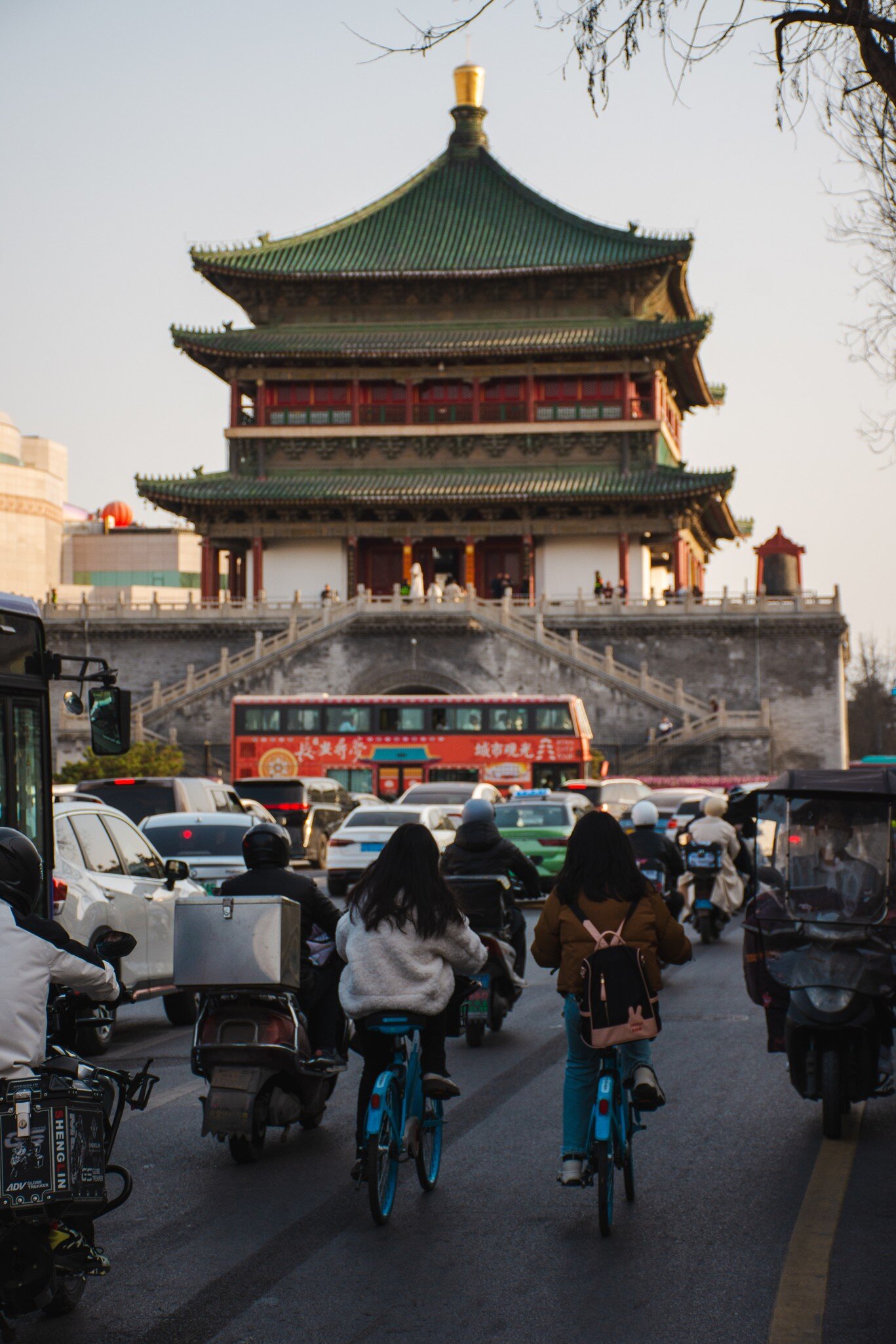
The Bell Tower originally held a large bell that was rung at dawn; it dates from the 14th century and was later rebuilt in the 1700s. Initially it stood two blocks to the west. Musical performances are held inside from 09:00 to 11:30 and 14:30 to 17:30. It is entered through the underpass on the north side.
reviewed
-
Terracotta Warriors and Xian
3 days (Xian)
View the extraordinary Terracotta Warriors and explore Xian town.
Not LP reviewed
from USD$590 -
L
8th Route Army Memorial
The Communist Party's austere Xī'ān headquarters, the 8th Route Army Memorial, were located here from 1937 to 1946. The memorial consists primarily of old photos (no English) and one room dedicated to the activist Helen Foster Snow, the wife of journalist Edgar Snow.
reviewed
-
M
Lǎo Sūn Jiā
Xī'ān's most famous restaurant (over a century old) is as well known for its perfunctory service as it is for the steaming bowls of yángròu pàomó it specialises in. They still go down a treat. There's no English sign; look for the big red characters on the 2nd-floor window.
reviewed
-
Dé Fā Cháng
Dumplings are the speciality here: banquets are a minimum five courses and feature every sort of dumpling shape you could possibly conceive of, from walnuts to flowers to stars and even miniature animals (thankfully these cost extra). Bizarre but delicious.
reviewed
-
Xian To Ulaanbaatar
41 days (ex Xi'an)
by Intrepid
Visit the tombs of Qing emperors, Drink yak butter tea in Mongolia, Drink yak butter tea in Mongolia, Cycle through charming Chengde, Marvel at the Terracotta W…Not LP reviewed
from USD$3,585 Advertisement
-
Beijing To Xian
17 days (ex Beijing)
by Intrepid
Lose yourself in busy Beijing, Visit the tombs of Qing emperors, Cycle through charming Chengde, Mosey along the astonishing Great Wall, Delight your tastebuds …Not LP reviewed
from USD$1,460 -
Xi'an To Luang Prabang
29 days (ex Xi'an)
by Intrepid
Chill out in Laos' historic Luang Prabang, Explore the remote Nam Ha National Park, Join pilgrims to visit China's Emei Shan , Try a spicy Sichuan hot pot, Come…Not LP reviewed
from USD$2,330 -
Luang Prabang To Xi'an
29 days (ex Luang Prabang)
by Intrepid
Chill out in lovely Luang Prabang, Explore the remote Nam Ha National Park, Join pilgrims at Emei Shan , Sample a spicy Sichuan hot pot, Come face-to-face with …Not LP reviewed
from USD$2,330 -
N
Wǔyī Fàndiàn
This frenetic and noisy cafeteria-style restaurant is good for northern staples, such as dumplings and noodles, and the pick-and-choose format is perfect for the Chinese-challenged. It's normally packed out with locals craving postshopping sustenance.
reviewed
-
Fountain and Music Show
Xī'ān has enough going on at night to keep almost everyone occupied. A number of travellers enjoy the evening fountain and music show at the Big Goose Pagoda Sq; it's the largest in Asia.
reviewed